




Georgian Period Shelving Unit
A georgian period shelving unit brings timeless architectural balance to a room, offering practical tiers for display crafted in rich timbers.
Georgian Period Shelving Unit
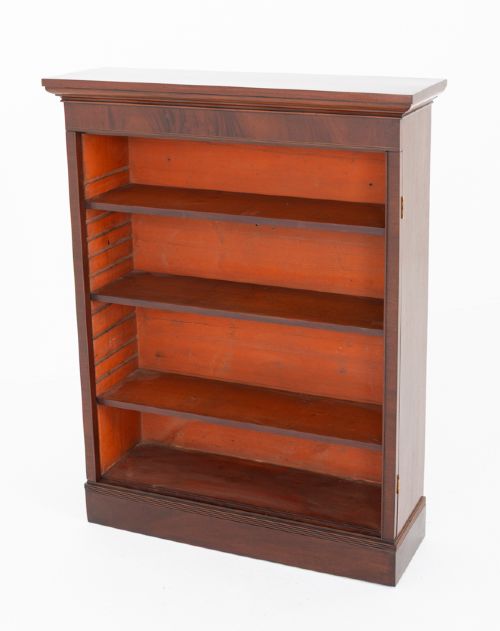
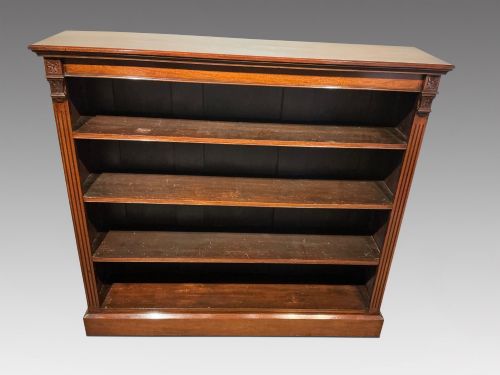
A georgian period shelving unit encompasses open bookcases, multi-tiered whatnots, etageres, and hanging wall shelves dating from the late eighteenth and early nineteenth centuries. These pieces were designed to display books, ceramics, and ornaments with architectural clarity and refinement.
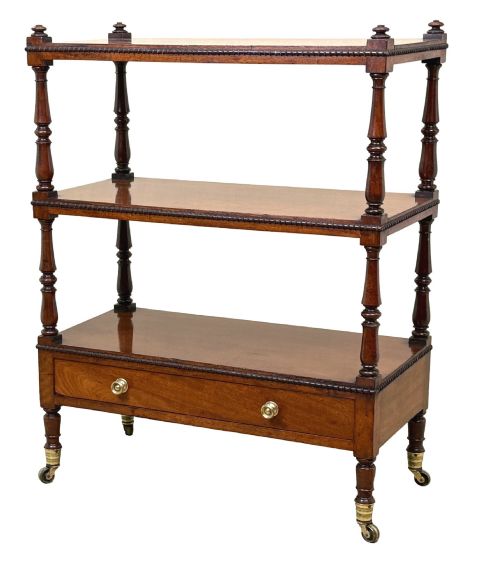
The versions most frequently encountered on this page belong to the Regency and George III eras, spanning mahogany, satinwood, and oak. They range from compact wall-mounted shelves to substantial breakfront bookcases and multi-tier etageres.
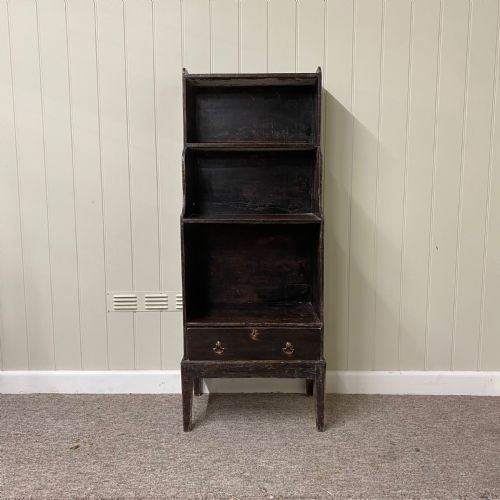
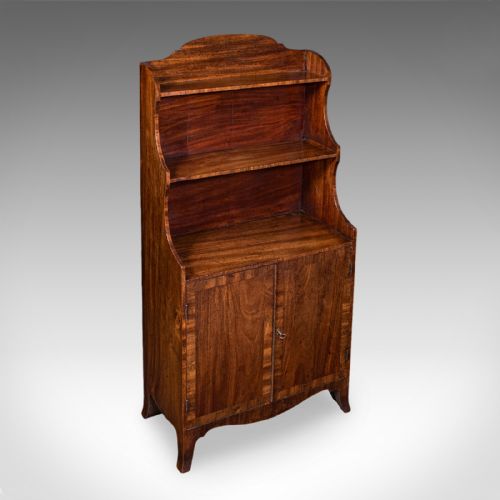
Makers and workshops of the period utilised distinct forms such as the waterfall bookcase and the octagonal whatnot. Each object reflects the changing domestic requirements of polite society for accessible display and storage.
Materials and construction
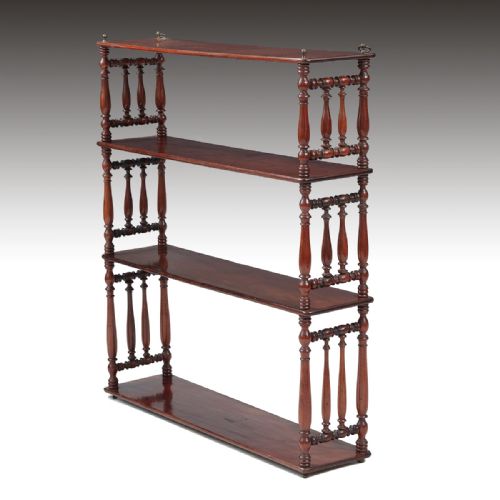
Makers built these pieces primarily from solid mahogany and flame mahogany veneer, often enhanced by contrasting satinwood or oak highlights. Brass details appear on specific Regency examples to accent the structural lines and support hanging configurations.
Joinery relied on traditional cabinet-making techniques suited to the particular form, whether freestanding etageres with multiple tiers or wall-mounted hanging shelves. Veneers were carefully selected to showcase grain patterns across expansive bookcase fronts and tier tops.
Georgian Period Shelving Unit Retail Price Guide 2026
Typical asking prices for georgian period shelving unit among the pieces listed under this phrase on Sellingantiques today, from the lower quarter to the upper quarter. They describe what is for sale here now, not the wider market.
Listings span the Georgian, Regency, George III, George IV, and Victorian periods, showcasing mahogany, satinwood, oak, and brass.
Judging quality in shelving units
Quality reveals itself in the selection of timbers, particularly the choice of flame mahogany and the fidelity of the veneer work across prominent surfaces. Finer pieces demonstrate superior proportion, balanced tier spacing, and restraint in ornamental detail.
Construction integrity separates standard utility items from works of distinction, visible in the precision of joints, the weight of the timber used for upright supports, and the crispness of turned or reeded columns.
Gillows
The Georgian Period Shelving Unit Glossary
- Whatnot
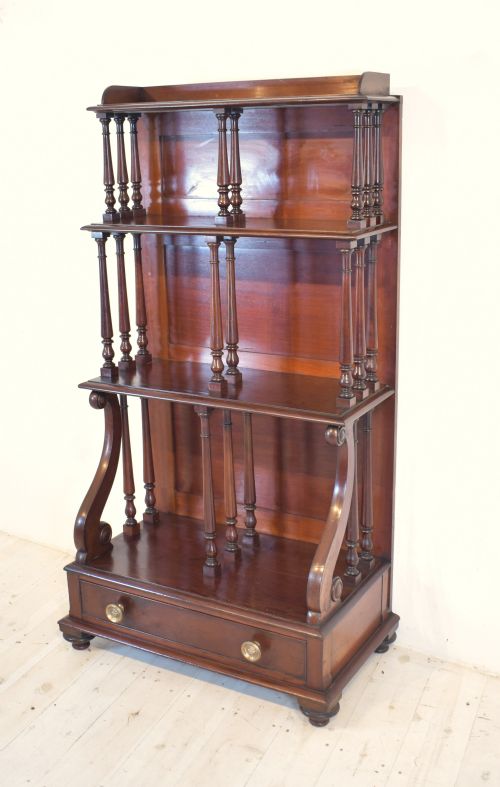
- A freestanding open piece of furniture with multiple tiers used for displaying ornaments or books. It developed in the late eighteenth century and gained popularity through the Regency period.
- Etagere
- A set of open shelves for displaying small objects, similar in function to a whatnot. The term often describes French-influenced multi-tiered stands found in English collections.
- Waterfall bookcase
- A shelving unit where each successive tier is slightly deeper than the one above, creating a stepped profile resembling a cascade. This form became particularly popular during the Regency era.
- Breakfront
- A cabinet or bookcase design where the central section projects forward from the flanking wings. This architectural arrangement creates depth and shadow on larger library pieces.
- Satinwood
- A pale, hard timber from tropical trees with a lustrous, light-reflecting grain. It was prized by cabinet-makers for fine inlay and veneering work.
Georgian Period Shelving Unit: Frequently Asked Questions
What is a whatnot shelf?
A whatnot is a multi-tiered freestanding shelving unit designed specifically for displaying small decorative objects, porcelain, or books within reach in a principal room.
First appearing in the late eighteenth century, these pieces evolved through the Regency and Victorian eras into versatile items found in both formal drawing rooms and private libraries.
How do I identify a Regency bookcase?
Regency bookcases and shelving units typically exhibit classical proportions, clean architectural lines, and often incorporate specific woods like mahogany or satinwood alongside brass mounts.
They frequently feature open shelving, such as the distinctive stepped waterfall design or tiered etageres, reflecting the neoclassical tastes of the early nineteenth century.
Where were hanging shelves used?
Hanging shelves were designed to be mounted directly to walls in smaller parlours, studies, or bedrooms where floor space was limited but display area was required.
These pieces allowed owners to keep frequently read volumes or small decorative items close at hand without crowding the floor with freestanding furniture.
What is the difference between an etagere and a bookcase?
An etagere is generally a lighter, open-tiered stand meant for display rather than the heavy storage of extensive libraries. Bookcases are typically more robust structures designed to house collections of books securely.
In practice during the Georgian and Regency periods, these terms sometimes overlapped, particularly with versatile multi-tier pieces utilised for mixed purposes.