
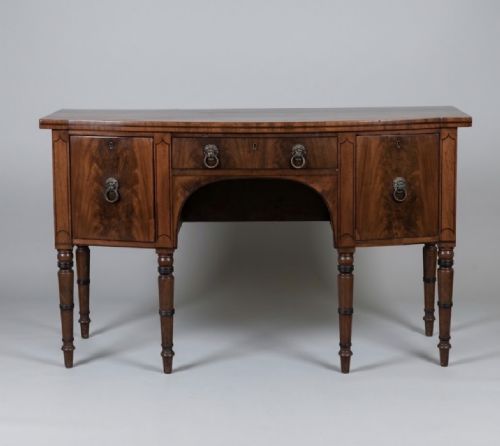
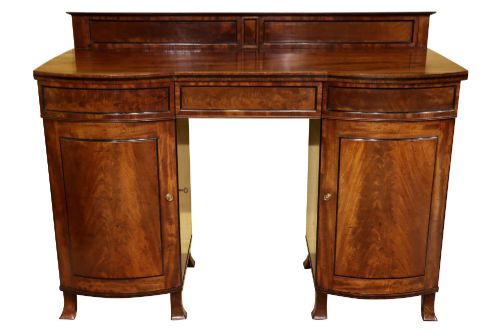
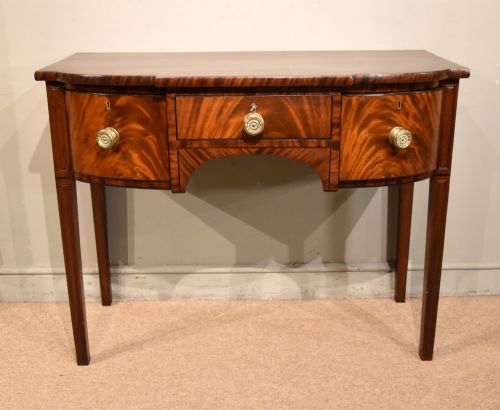
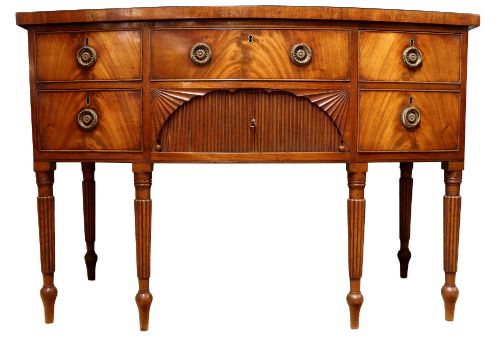


Georgian Period Buffet Server
A georgian period buffet server brings robust timber and refined proportions into a dining room, offering ample surface and storage for service.
Georgian Period Buffet Server
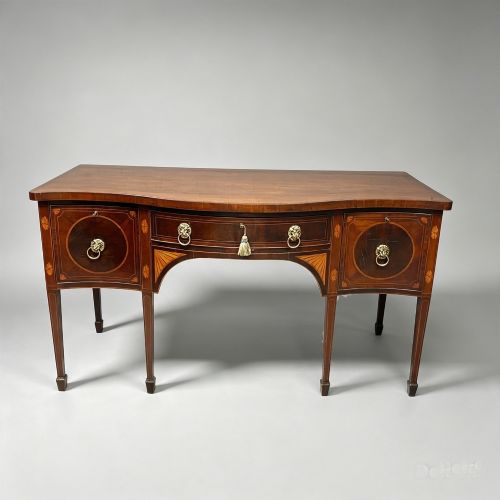
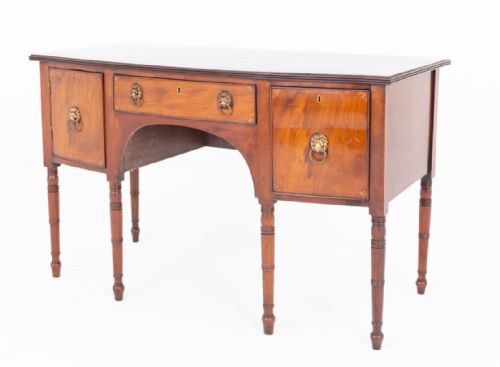
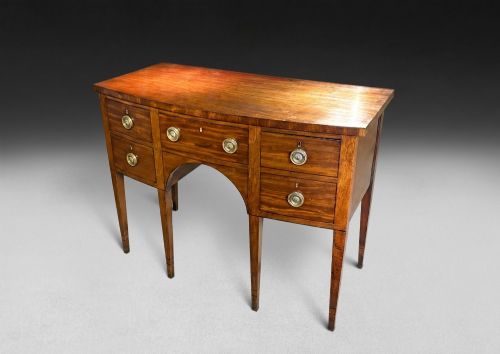
When you search for a georgian period buffet server, you encounter forms that span sideboards, serving tables, and pedestals from the eighteenth and nineteenth centuries. These pieces were built for the formal dining rooms of substantial houses, designed to hold plate, wine, and dishes during large meals.
The version you are most likely to meet on this page is a mahogany sideboard or serving table dating from the Regency or George III periods. They appear with bow fronts, serpentine outlines, or pedestal configurations that reflect the prevailing taste of their era.
How they were made
Cabinetmakers constructed these servers primarily using solid mahogany and flame mahogany veneer over secondary timbers like oak. The surfaces often received detailed embellishments through boxwood and satinwood inlay, creating sharp contrasts in the grain.
Structural hardware relied heavily on brass, appearing as handles, gallery rails, and pedestals. Joinery was executed by hand, allowing craftsmen to shape difficult curves such as the bow front and the serpentine edge.
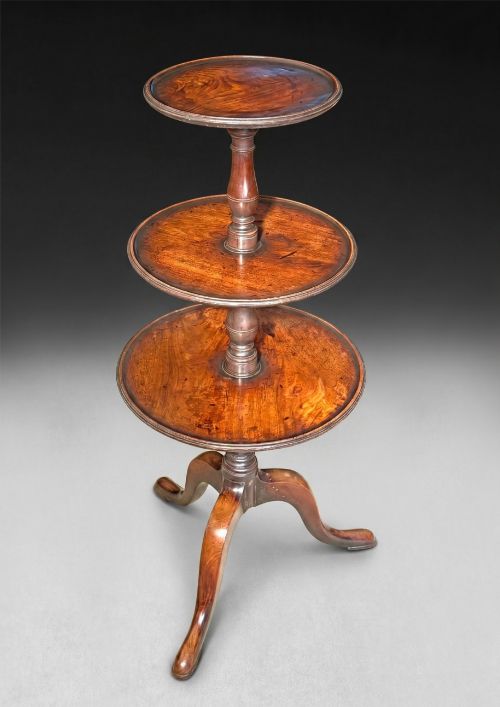
The object forms recorded here range from large serpentine sideboards and pedestal servers to compact dumb waiters and chiffoniers.
What varies in quality
The distinction between ordinary and exceptional examples rests on the selection of timber and the precision of the cabinetwork. Pieces featuring matched flame mahogany veneers and fine satinwood inlay require a higher degree of skill from the maker.
Proportion and the handling of complex outlines also dictate the standing of a server. Serpentine and bow-fronted forms demand exact geometry, whereas simpler straight-fronted carcases offer a more utilitarian execution of the same function.
Gillows
The Georgian Period Buffet Server Glossary
- Serpentine
- A front outline that curves outward in the centre and curves inward toward the ends. This shape requires considerable skill in woodworking to execute properly.
- Bow front
- A convex curved front that projects outward in a smooth arc. It is a common feature on Regency and George III servers.
- Flame mahogany
- A veneer cut from the branch junction of a mahogany tree, showing a distinctive flamelike grain pattern. It was favoured for high-status cabinet fronts.
- Dumb waiter
- A tiered stand used in dining rooms for holding dishes and serving without servants present. These pieces often feature graduated circular trays on a central column.
- Chiffonier
- A small sideboard or cabinet equipped with shelves or doors. This form emerged during the Regency period for smaller reception rooms.
Georgian Period Buffet Server: Frequently Asked Questions
What is a georgian period buffet server used for?
These pieces served as auxiliary furniture in the dining room, holding silver, linens, and dishes during formal meals.
They also provided a stable surface for pouring wine and arranging food before it was brought to the main table.
How do I identify a George III server?
George III pieces typically date from the second half of the eighteenth century and show restrained classical proportions.
They frequently employ mahogany with subtle stringing or satinwood inlay rather than the heavier architectural mounts seen later.
What is the difference between a sideboard and a serving table?
A serving table is generally an open frame with legs and a top, lacking the enclosed cupboards and drawers of a sideboard.
Sideboards evolved to include integral cellarets and deep storage compartments for bottles and tableware.
How should I care for mahogany furniture?
Keep mahogany timber away from direct sunlight and strong heat sources to prevent the wood from drying and splitting.
Apply a traditional wax polish occasionally to maintain the sheen of the veneer without building up a heavy residue.