

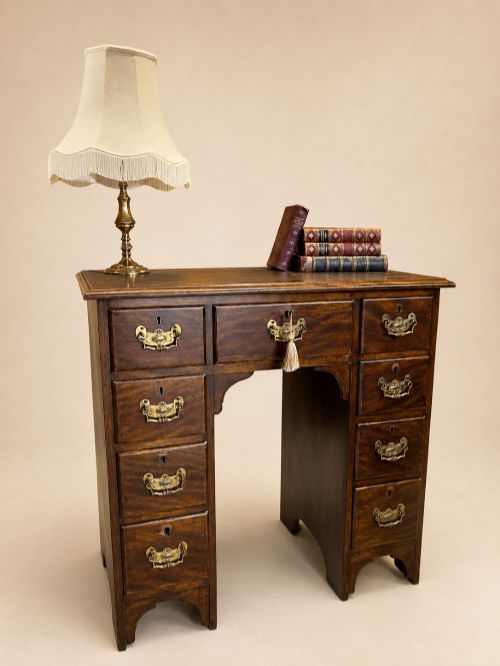
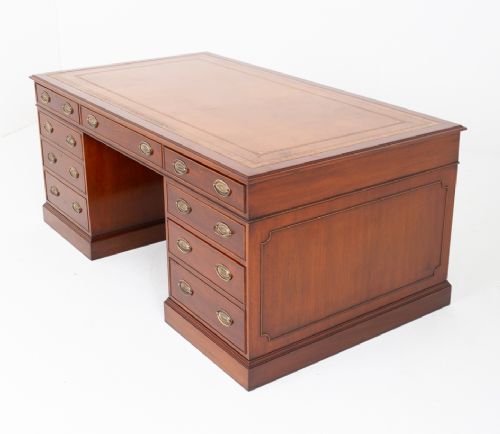
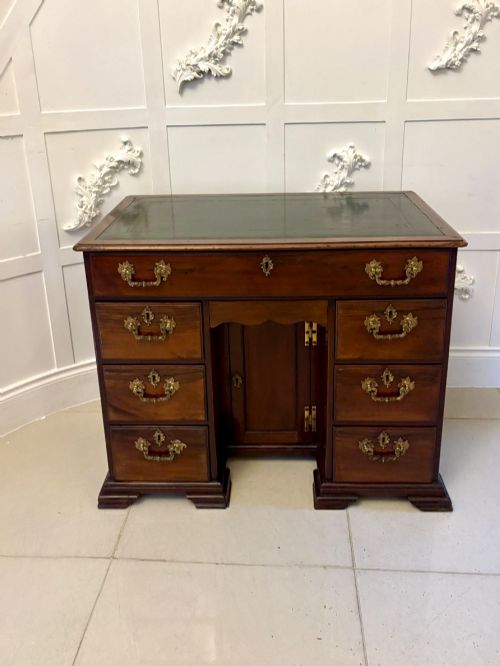
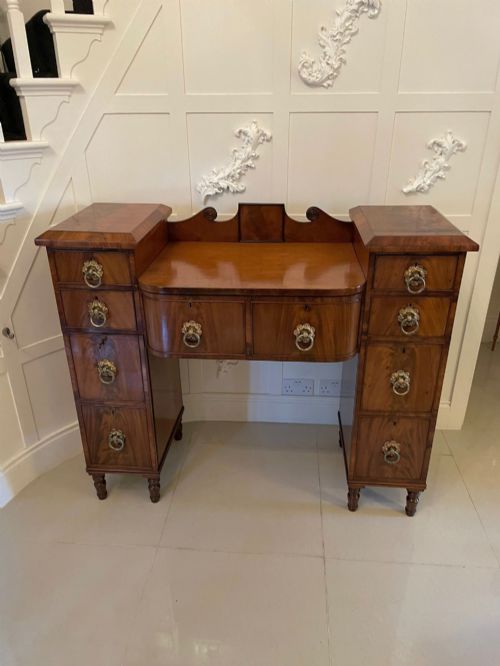
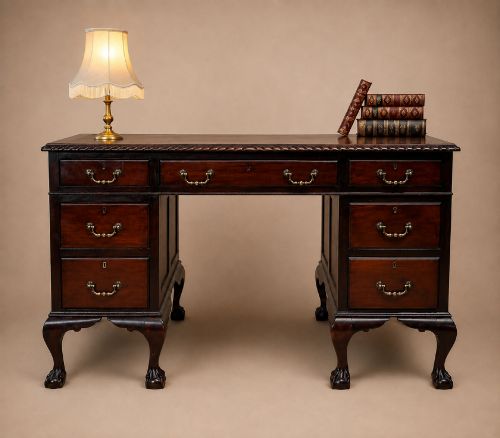
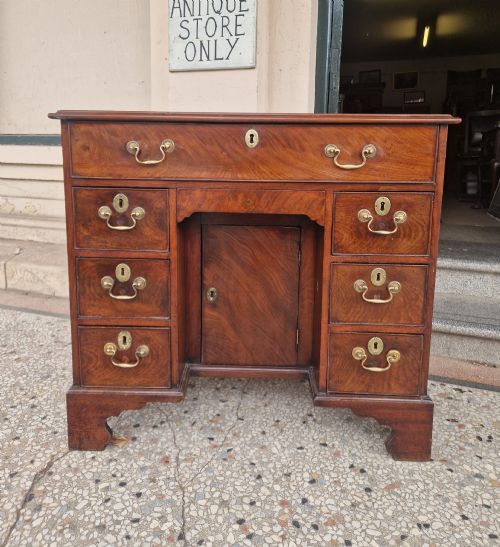
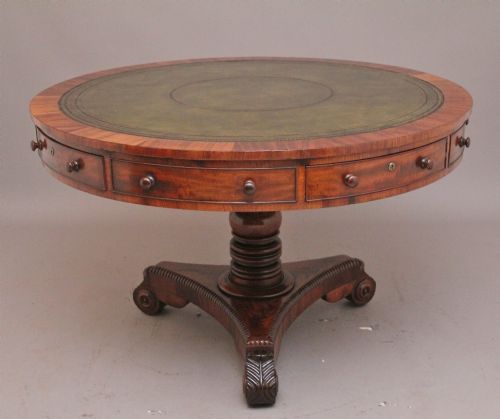
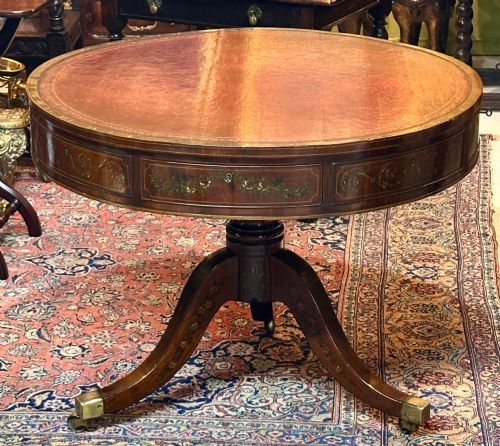
Georgian Pedestal Writing Desk
A georgian pedestal writing desk offers a dignified workspace defined by twin pedestals and fitted drawers, built to last centuries.
Georgian Pedestal Writing Desk
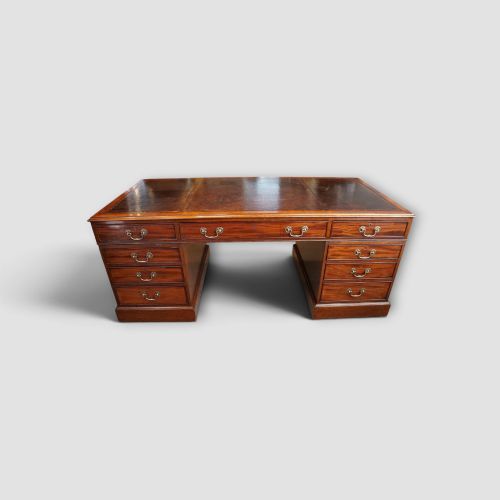
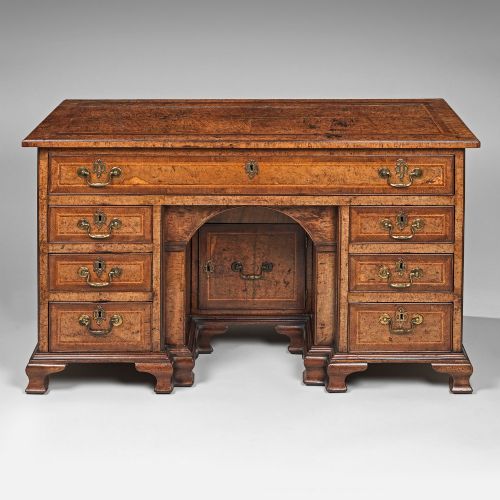
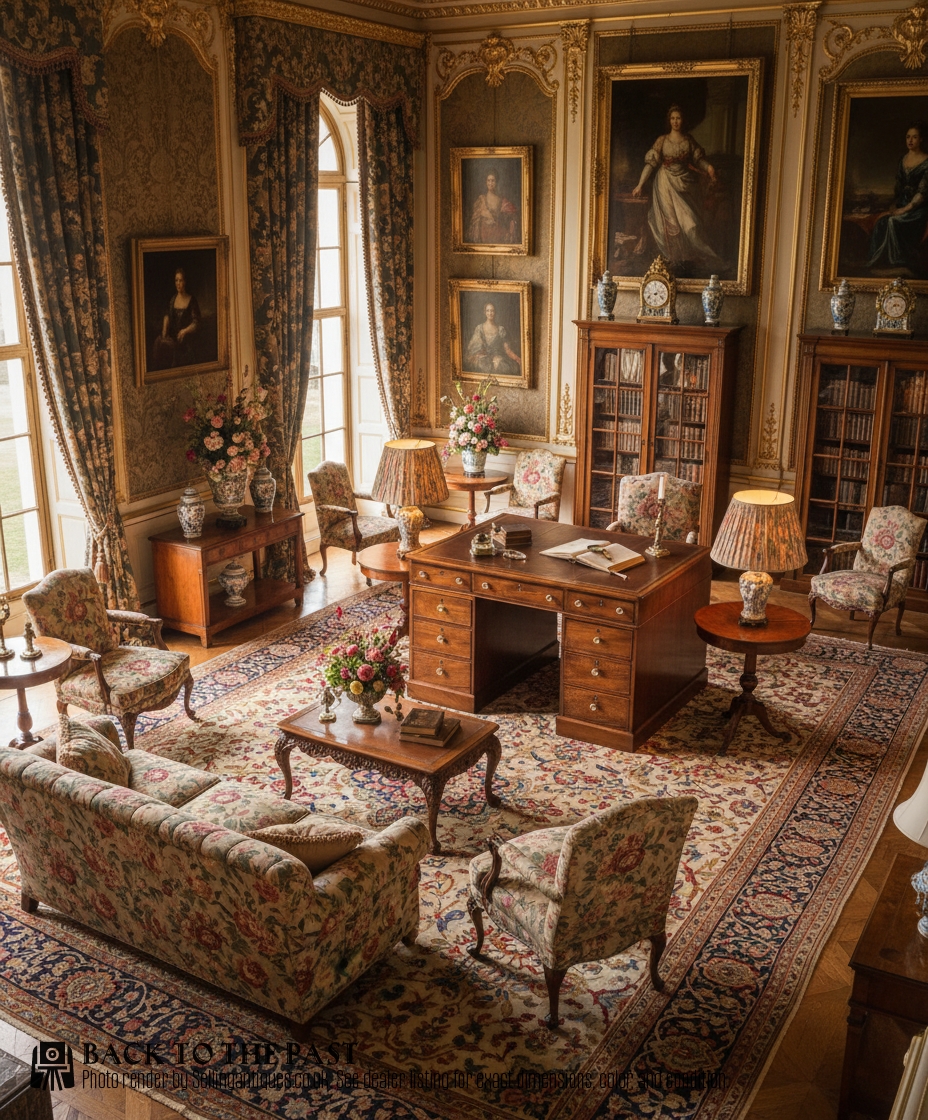
A georgian pedestal writing desk is a substantial item of furniture designed for study or estate management, comprising two banks of drawers supporting a shared writing surface. The evidence shows these desks appearing in various forms from the eighteenth and nineteenth centuries, alongside later revival pieces produced in the twentieth century.
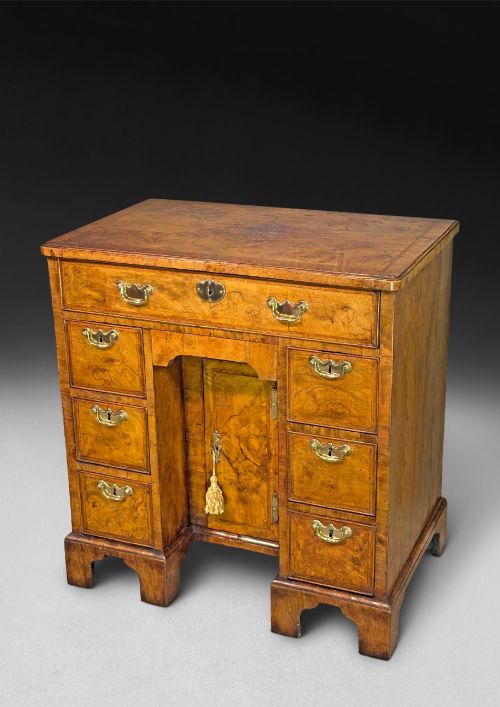
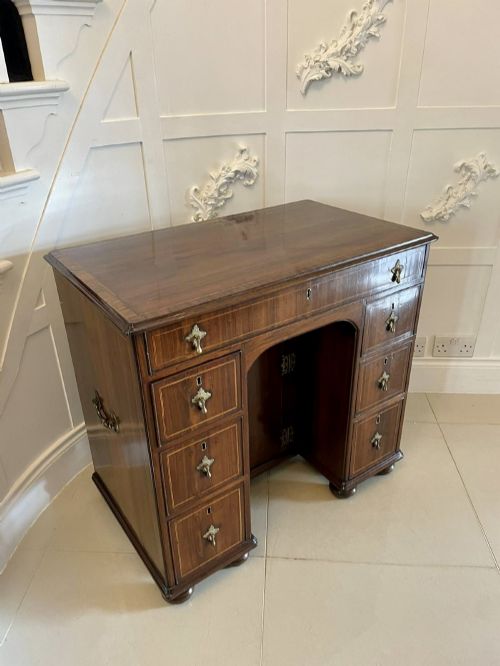
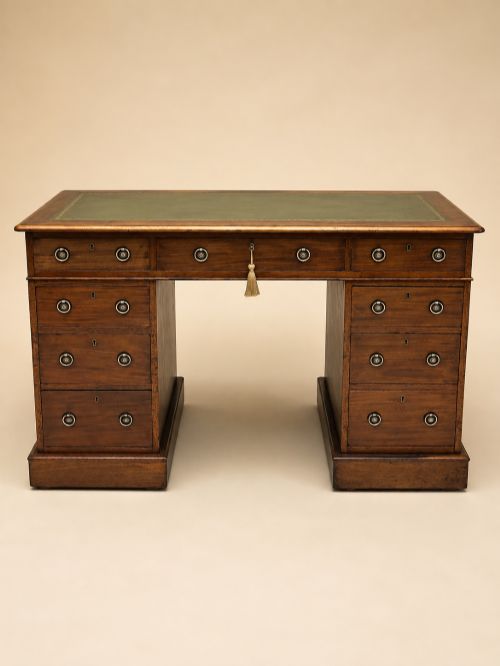
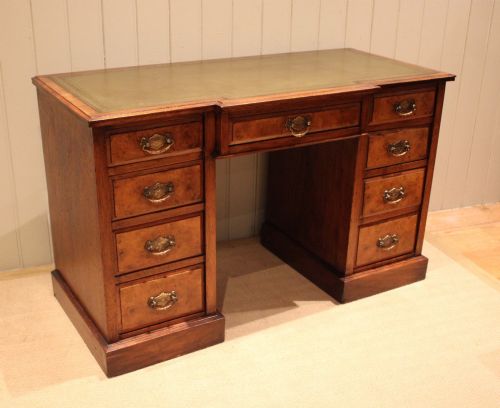
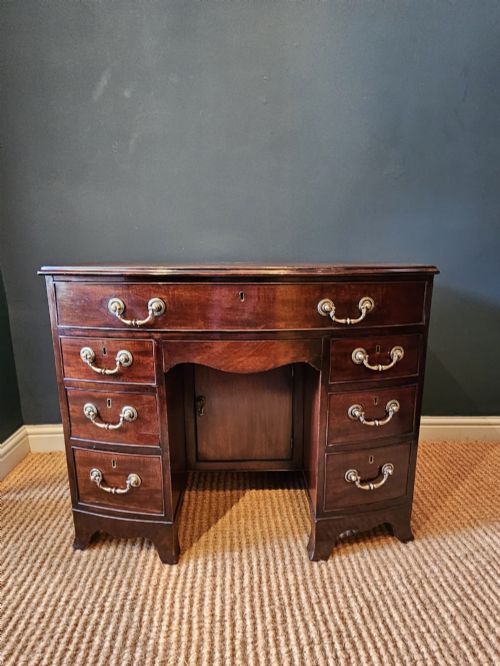
Buyers will encounter mahogany and walnut examples most frequently, often featuring inset leather writing surfaces and multiple small drawers arranged around a central kneehole. The selection ranges from compact kneehole desks to large partners desks designed for two users facing one another.
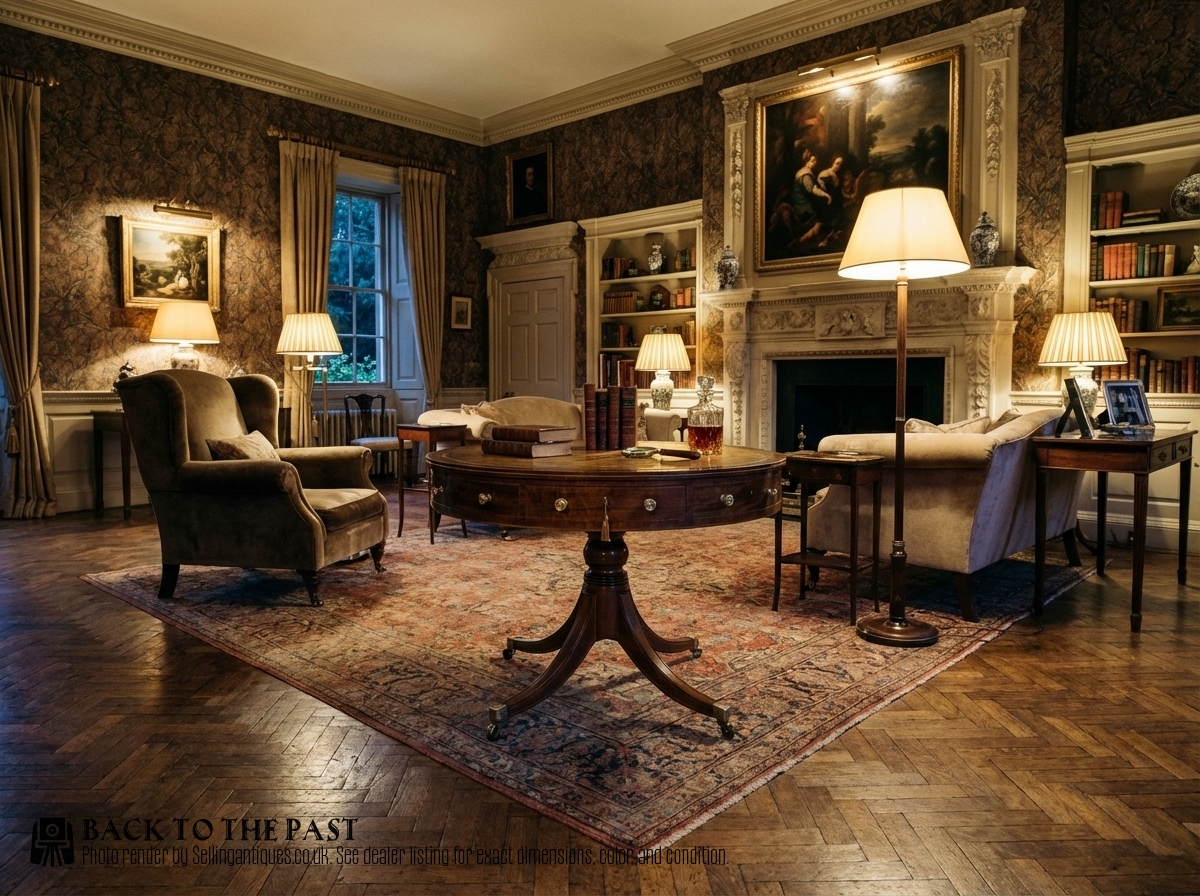
How They Were Made
Cabinet makers utilised dense timber such as mahogany, walnut, and burr walnut, frequently applying fine veneers over secondary woods to create figured surfaces. Brass handles, escutcheons, and drawer pulls provide functional hardware that complements the dark polished timber.
Writing surfaces incorporated tooled leather inserts, secured to the desk top with decorative borders. Joinery relied on traditional dovetailed drawer construction and panelled pedestal carcases designed to support heavy use.
Listings span the eighteenth, nineteenth, and twentieth centuries, including Georgian, Regency, and Victorian periods alongside later revival pieces.
What Varies in Quality
The choice and figure of the timber dictate much of the visual impact, with highly figured burr walnut and fiddleback walnut sitting at the upper end of the scale compared to plain grain. Timber selection extends to secondary woods used inside the drawers, where solid oak or mahogany indicates higher standards than softer alternatives.
Proportion and execution of detail mark the distinction between standard utilitarian items and superior cabinet work. Crisp mouldings, well-chosen brass hardware, and thoughtful scaling of the pedestals relative to the top reveal the skill of the original maker.
The Georgian Pedestal Writing Desk Glossary
- Kneehole desk
- A compact pedestal desk featuring a central recess for the legs, flanked by two banks of small drawers.
- Partners desk
- A large double-sided pedestal desk designed with drawers and cupboards accessible from both front and back.
- Secretaire
- A desk form incorporating a drop-front writing drawer that conceals a fitted interior of small compartments and pigeonholes.
- Escutcheon
- A protective brass plate surrounding a keyhole on a drawer or cabinet door.
- Burr walnut
- Timber taken from the warted excrescence of a walnut tree, producing highly twisted, decorative grain patterns used for veneering.
Georgian Pedestal Writing Desk: Frequently Asked Questions
What is a partners desk?
A partners desk is a large pedestal writing desk built with drawers and storage on both sides, allowing two people to work face-to-face.
These pieces were traditionally used in libraries, studies, and administrative offices where space was shared.
How do I identify a Georgian desk?
Georgian desks date from the reigns of the Georges spanning the eighteenth century and into the early nineteenth century. They are typically constructed from solid mahogany or walnut with hand-dovetailed drawer joints and traditional brass hardware.
Later revival pieces replicate these forms but often show different secondary woods and modern construction methods upon close inspection.
Are all these desks made of mahogany?
Mahogany is common, but the evidence shows many examples constructed from walnut, burr walnut, oak, satinwood, and rosewood. Some pieces also incorporate pine or secondary timbers within the internal drawer framing.
Timber choice often aligns with the specific period and the fashion of the workshop that produced the desk.
What is a kneehole desk?
A kneehole desk is a specific form of pedestal desk featuring a central open space for the user's knees, with narrow drawers overhead and stacked drawers in each pedestal column.
This layout provides substantial storage without requiring the massive footprint of a full partners desk.
Do these desks have leather tops?
Many pedestal desks and writing tables feature inset leather writing surfaces, often decorated with gold tooling around the perimeter.
While some examples retain their original leather, others have been restored or replaced during the long working life of the furniture.