




Georgian Pastoral Prints
Georgian pastoral prints bring rural idylls to the wall, capturing shepherd scenes and rustic farm life through glass, paper and copper plate.
Georgian Pastoral Prints
When you search for georgian pastoral prints, you encounter framed works depicting rural subjects like piping shepherds, cowmen and returning woodmen. These pieces span the eighteenth and nineteenth centuries, taking the form of reverse glass paintings, hand-coloured engravings and mezzotints.
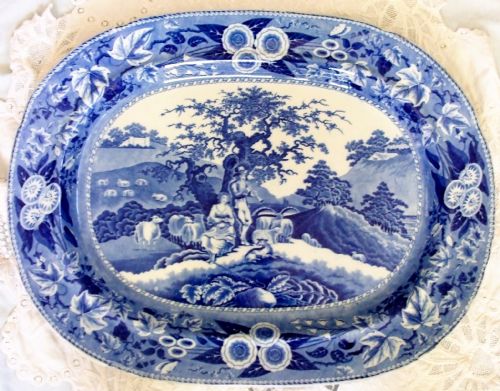
The inventory shows a strong representation of framed prints alongside related blue and white transfer pottery featuring similar pastoral scenes. You also meet works after artists such as Henry William Banbury, Claude Lorraine, John Boydell and George Morland.
Origins stretch from Georgian and Regency workshops into the Victorian era, offering varied interpretations of pastoral life. Collectors find both wall art and decorative plates carrying these rural themes.
Materials and methods
Makers produced these works using paper for engravings and mezzotints, alongside specialist glass for reverse prints. Printers applied hand-colouring or sepia ink to copper plate impressions.
Potters utilised earthenware and pearlware bodies for blue and white transfer plates, platters, jugs and footbaths. Workshops finished framed pieces with wood, gold leaf and gilt wood mouldings.
Listings feature paper, glass, earthenware and pearlware across the Georgian, Regency and Victorian periods.
Judging quality in pastoral prints
Quality rests upon the clarity of the impression and the precision of the hand-colouring applied to the paper or glass. Stronger pieces display crisp lines in the engraving and well-preserved pigments without fading.
The framing and housing contribute significantly to the overall merit of the piece. Original glass, secure wood frames and well-preserved gilt or gold leaf finishes elevate the presentation of the artwork.
Henry William Banbury·Claude Lorraine·John Boydell·George Morland·Brameld and Co·Don Pottery
The Georgian Pastoral Prints Glossary
- Mezzotint
- A printmaking process where the copper plate is roughened to produce tones of grey and black. It allows for subtle gradations of light and shadow suited to pastoral scenes.
- Reverse glass print
- An image painted or transferred directly onto the back of a glass sheet and viewed from the front. This technique gives the surface a glossy, luminous finish.
- Transfer printing
- A method of decorating pottery by pulling a design from an engraved copper plate onto tissue paper and pressing it onto the ceramic body. It enabled detailed blue and white rural scenes on plates and platters.
- Pearlware
- A refined earthenware developed in the late eighteenth century with a bluish glaze that pooled in recesses. It served as a popular canvas for blue and white transfer patterns.
Georgian Pastoral Prints: Frequently Asked Questions
What subjects do these prints show?
These works depict rural scenes, including shepherds, cowmen, feeding pigs and finding bird nests. They reflect a romanticised view of eighteenth and nineteenth-century country life.
Such imagery appeared on framed wall art, reverse glass paintings and transfer-printed earthenware pottery alike.
How do I date a glass print?
Dating relies on the style of the mounting, the type of glass used and the characteristics of the pigments. Many reverse glass examples date from the Georgian and Regency periods.
Examining the backing boards and framing materials often provides further clues to the age of the piece.
Are these works hand-coloured?
Many of the engravings and mezzotints feature hand-colouring applied over the printed ink lines. This adds depth and tint to the rustic clothing and natural landscape backgrounds.
Printers and publishers employed skilled colourists to finish the impressions before framing.
How should I hang these framed prints?
Display these works away from direct sunlight to protect the paper, pigments and hand-colouring from fading. Ensure the wall fixings match the weight of the wood and gilt frames.
Glass prints require particular care regarding stable humidity and secure hanging due to their fragile medium.