

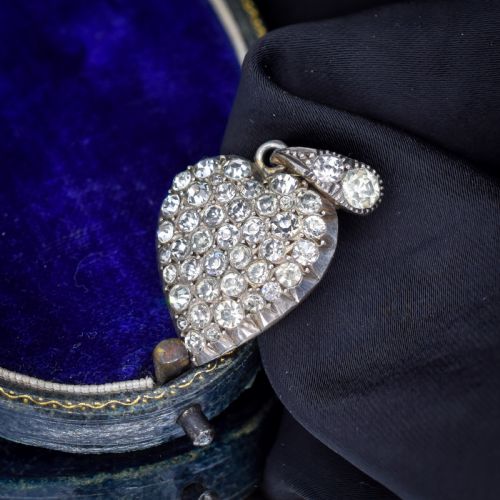
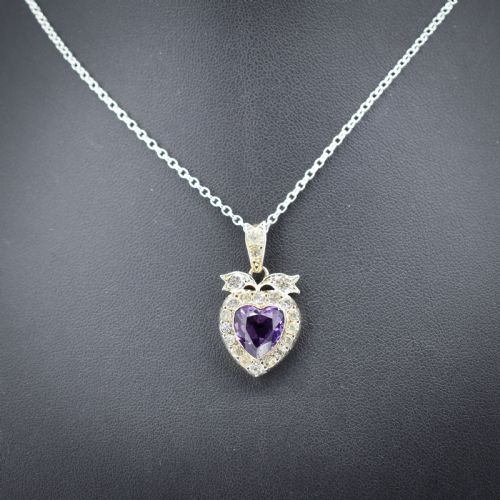


Georgian Paste Pendant
A georgian paste pendant catches the candle-light with hand-cut brilliance, offering high-society sparkle without the diamond price.
Georgian Paste Pendant
When you search for a georgian paste pendant, you are looking at eighteenth-century and later neck ornaments set with brilliant lead glass rather than mined stones. These pieces range from simple silver hearts to elaborate gold crosses and sunbursts.
The version you are most likely to meet on this page is the silver-mounted pendant, often featuring foiled stones or the distinctive black dot paste that simulates an old mine-cut diamond facet.
Makers fashioned these jewels as versatile adornments, sometimes mounting them as combined pendants and brooches or linking them into rivières and drop chain necklaces.
How they were made
Artisans shaped paste glass by hand, cutting and polishing each piece to mimic genuine gems like diamonds, amethysts, and aquamarines. These hand-cut stones were then set into silver, gold, or silver-gilt mountings.
Craftsmen frequently placed coloured foil behind the glass to deepen the hue and enhance reflectivity, a defining characteristic of the period's jewellery production.
Georgian Paste Pendant Retail Price Guide 2026
Typical asking prices for georgian paste pendant among the pieces listed under this phrase on Sellingantiques today, from the lower quarter to the upper quarter. They describe what is for sale here now, not the wider market.
Listings feature silver and gold materials alongside paste glass, pearls, and amethysts across Georgian, Victorian, and Edwardian periods.
What varies in quality
The distinction between ordinary and exceptional work lies in the precision of the stone-cutting and the integrity of the foil backing. Finer examples display crisp facet lines and securely closed-back settings that protect the delicate foils from moisture.
Design complexity also separates pieces, moving from simple single stones to intricate multi-part configurations like crosses, harps, and floral lavaliers that demand superior metalsmithing.
The Georgian Paste Pendant Glossary
- Paste
- Hand-cut lead glass used in historic jewellery to imitate gemstones. It captures light differently than modern synthetic stones due to its high lead content.
- Foiled
- A thin layer of coloured metal sheet placed behind a transparent stone or paste to brighten its colour and increase sparkle. This technique is typical of eighteenth-century work.
- Black dot paste
- A deliberate dark spot applied to the culet of a paste stone to imitate the open decay or culet of an old mine-cut diamond. It is a key indicator of authentic Georgian manufacture.
- Rivière
- A necklace composed of a continuous line of gemstones or paste stones of similar size or graduating smoothly. They sit closely around the base of the neck.
Georgian Paste Pendant: Frequently Asked Questions
How do I wear a paste pendant?
These pendants look best suspended from a simple antique chain that lets the historic metalwork and hand-cut stones take prominence. Many pieces from this era double as brooches, giving you multiple ways to pin or hang them.
Pair them with evening attire or simple daily wear to let the candlelight play off the foiled glass without competition from modern diamonds.
Are these pendants fragile?
Paste glass is softer than mined gemstone material and requires gentle handling to avoid scratching the surface facets. Because many Georgian pieces use closed-back settings with foil, you must keep them entirely away from water to prevent tarnishing the backing.
Store each piece in a lined box away from other jewellery so the silver or gold mounts do not rub against the glass.
How can I tell Georgian paste from later copies?
Genuine Georgian pieces show hand-cut facets that are slightly irregular compared to machine-cut Victorian or twentieth-century stones. Look for closed silver backs and the characteristic dark foil or black dot inclusions beneath the glass.
The overall weight and the handmade nature of the collet settings also provide strong clues to an eighteenth-century origin.
Why do some stones look darker than others?
The darkening is often caused by age-related oxidation of the metal foil placed behind the glass. This natural patina changes the reflection over centuries, giving the paste a softer, more mysterious depth than it had when newly made.
Some makers also used dark foils intentionally to create dramatic contrast in evening lighting.