




Georgian Paper Stand
A georgian paper stand brings orderly charm to a room, holding sheets with the understated grace of the Regency and George III periods.
Georgian Paper Stand
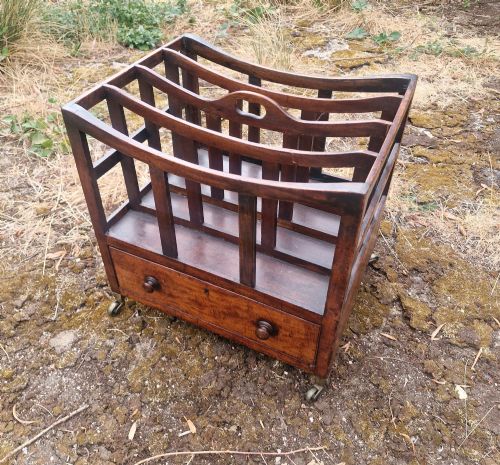
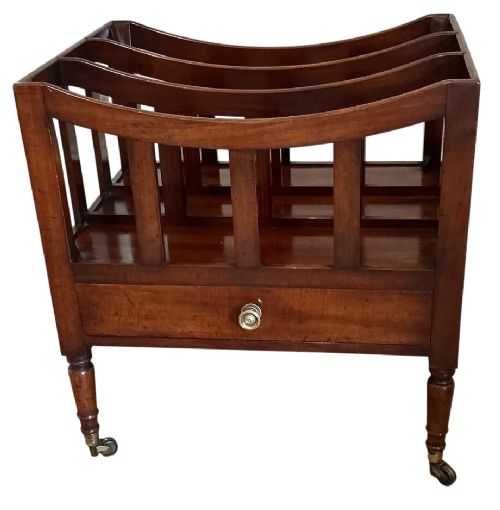
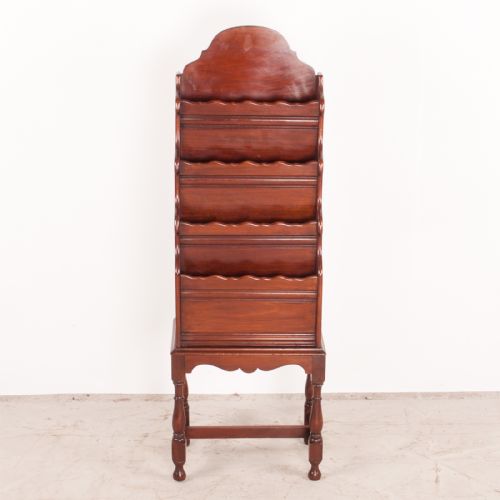
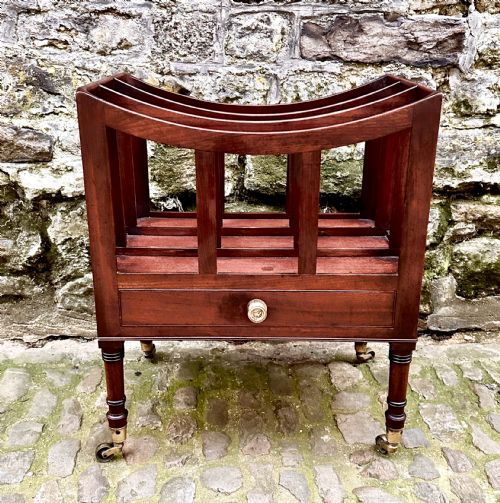
A georgian paper stand encompasses pieces designed to hold newspapers, magazines, folios, and music sheets, frequently designated as canterburys or magazine tidies in the evidence. These furnishings span the Georgian, Regency, George III, George IV, and William IV periods, extending occasionally into later revival styles.
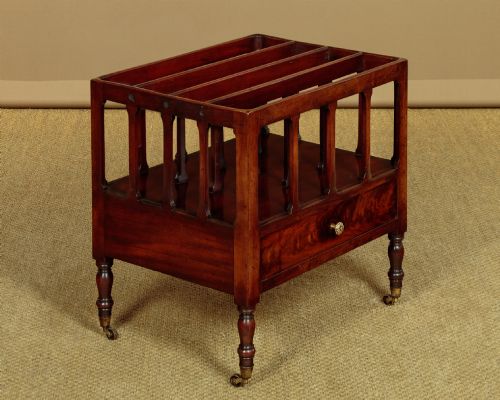
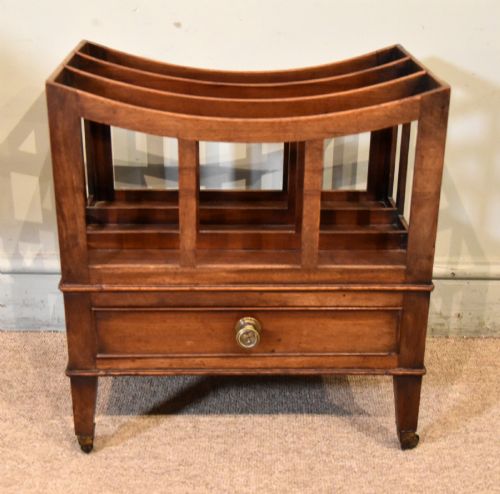
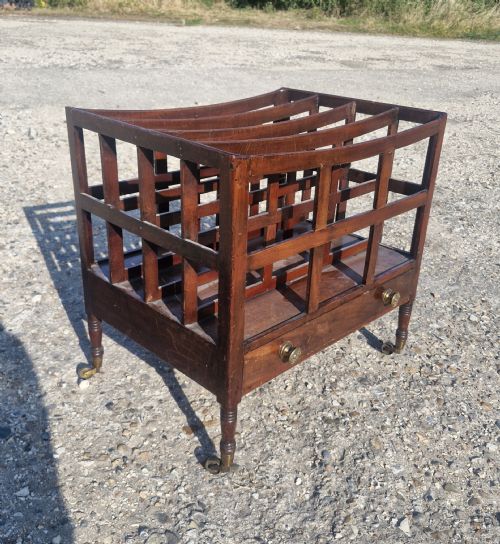
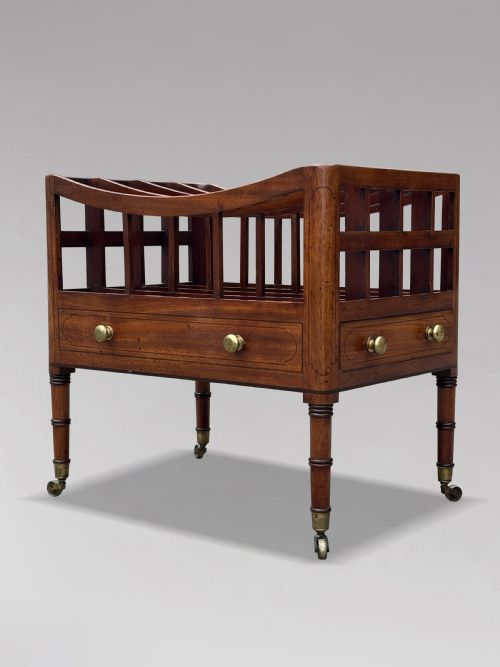
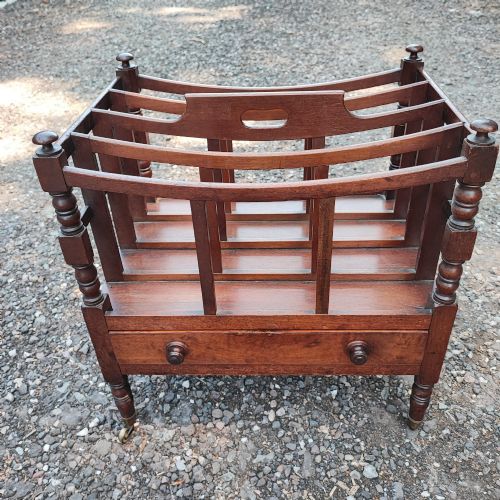
The version most commonly met on this page is the mahogany canterbury, often featuring partitioned sections for upright storage and a low under-tier with turned legs or castors. Alongside these stands, related forms appear, including folio cabinets, music stands, and book press tables designed for paper storage.
Materials and construction methods
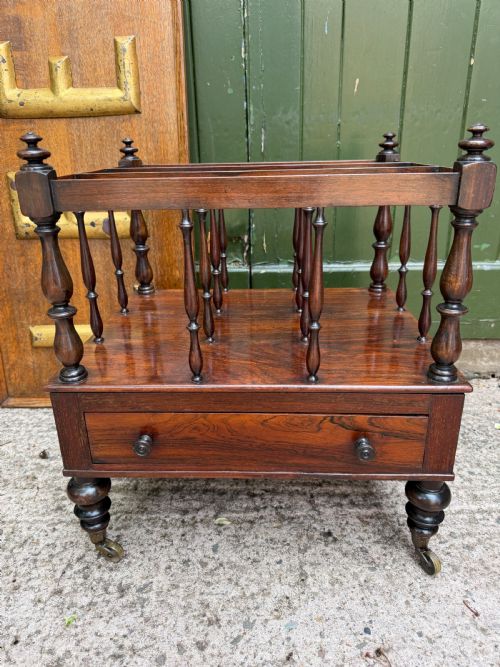
Cabinetmakers utilised rich hardwoods such as mahogany and rosewood, frequently shaping the timber with turned supports, brass castors, and pierced scroll divisions. Inlaid banding in ebony and detailed carvings like Prince of Wales feathers add refinement to the structural framework.
Surfaces demonstrate traditional joinery appropriate for freestanding furniture meant to be moved about the floor. Details such as boat-shaped troughs and slatted or panelled divisions show careful attention to both utility and visual balance.
Georgian Paper Stand Retail Price Guide 2026
Typical asking prices for georgian paper stand among the pieces listed under this phrase on Sellingantiques today, from the lower quarter to the upper quarter. They describe what is for sale here now, not the wider market.
Listings feature paper stands from the Georgian, Regency, and Victorian eras, constructed primarily in mahogany and rosewood.
Distinctions in quality
Quality rests in the choice of timber figure, the crispness of turned members, and the integrity of the joinery across the partitions and under-tiers. Rosewood examples with fine grain patterns or subtle banding stand apart from simpler utility pieces.
Proportion and execution define the better examples, where slatted divisions, brass castors, and drawer fittings operate with harmony and balance. The distinction lies in whether the piece remains a sturdy, elegant object of its period or a simpler utilitarian container.
G and J Cary·Loudon
The Georgian Paper Stand Glossary
- Canterbury
- A low stand with divisions for holding sheet music, newspapers, or periodicals, often fitted with a drawer below and castors for mobility. This form serves as the primary type found within these listings.
- Folio cabinet
- A standing piece or cabinet intended for the storage of large loose papers, prints, or folios. These provide enclosed protection compared to open slat stands.
- Whatnot
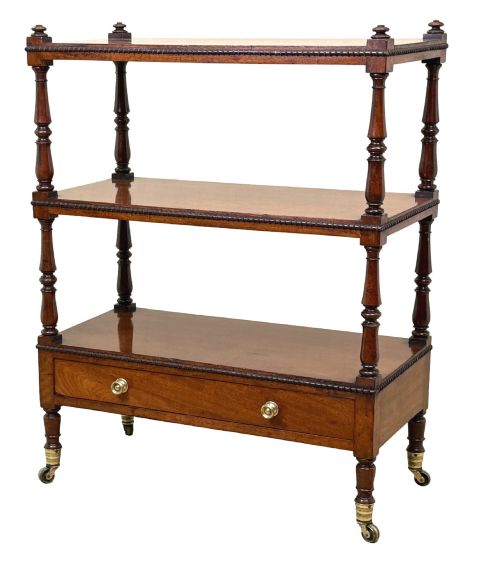
- A set of open shelves standing on legs, utilised for displaying or holding books, papers, and small objects. Versions from the early nineteenth century sometimes combine shelf storage with music stand functions.
- Boat shaped
- A descriptive term for a trough-like chassis curving upward at the ends, frequently seen on Regency canterburys. This silhouette softens the rectangular lines of standard paper storage.
- Prince of Wales feathers
- A carved decorative motif depicting three ostrich feathers emerging from a coronet. This detail appears on select rosewood pieces to signal finer cabinet work.
Georgian Paper Stand: Frequently Asked Questions
What is a georgian paper stand used for?
These stands served to organise newspapers, periodicals, folios, and sheet music within the main rooms of a house. Their compartmentalised design kept loose papers tidy and accessible near seating areas.
Today, they function similarly in domestic settings, providing a practical method for storing magazines and large books while adding period character to a room.
How do I tell a Regency piece from a George III one?
George III pieces often display straight-grained mahogany, restrained proportions, and classic classical lines associated with the late eighteenth century. Regency examples frequently incorporate rosewood, bold curves, brass inlay, and boat-shaped profiles.
Examining the secondary woods, leg turnings, and overall silhouette helps clarify the transition of taste between the late 1700s and the early decades of the 1800s.
Are these stands sturdy enough for daily use?
Built from solid timbers like mahogany and rosewood, these furnishings were constructed for everyday domestic utility in nineteenth-century homes. Their robust frames and caster wheels made them practical for regular repositioning.
Modern placement in a living space follows this tradition, as the sturdy partitions comfortably support current magazines and printed folios.
What is the difference between a canterbury and a magazine rack?
A canterbury is a traditional nineteenth-century term for a partitioned stand with feet or castors, designed specifically for music sheets and periodicals. Magazine rack is often used interchangeably in later contexts or modern descriptions for the same form.
Both types share the core purpose of vertical paper storage, though older canterburys frequently include a small drawer beneath the main compartments.