




Georgian Music Storage
Georgian music storage pieces are elegant wooden stands and cabinets designed to keep sheet music tidy.
Georgian Music Storage
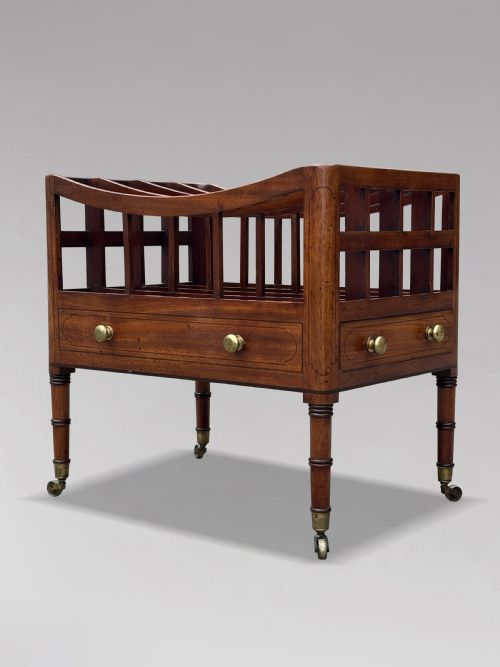
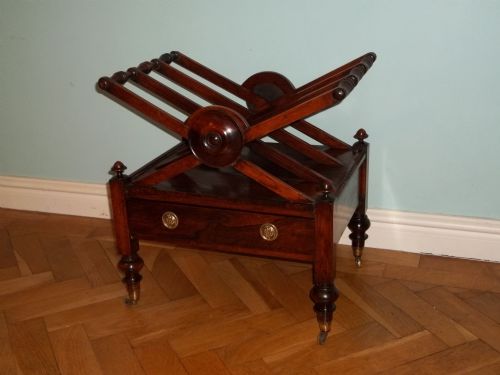
When you search for georgian music storage, you encounter functional furniture designed for organising sheet music, newspapers and folios in period interiors. The most common form on this page is the canterbury, an open-slatted rack often fitted with a carrying handle and a small drawer below.
These items originate across the eighteenth and nineteenth centuries, spanning George III, Regency and George IV periods. Alongside dedicated music canterburys, you also find folio cabinets and occasional cabinets constructed to house paper collections.
How they were made
Cabinet makers relied primarily on dense timbers such as mahogany, Cuban mahogany and rosewood to build sturdy frames capable of supporting heavy paper loads. Finer examples incorporate decorative details including boxwood, satinwood inlay and ebony banding.
Functional elements such as brass castors and carrying handles appear frequently on canterburys to allow easy movement across carpeted drawing rooms. Slatted divisions are integrated directly into the upper framework to keep individual sheets upright and sorted.
Georgian Music Storage Retail Price Guide 2026
Typical asking prices for georgian music storage among the pieces listed under this phrase on Sellingantiques today, from the lower quarter to the upper quarter. They describe what is for sale here now, not the wider market.
Listings feature woods including Cuban mahogany, rosewood, boxwood, satinwood inlay, ebony and birds eye maple across various periods.
What varies in quality
The choice of timber heavily dictates the standing of a piece, with richly figured Cuban mahogany and dense rosewood marking out superior examples. Subtle craftsmanship in the banding, inlay work and the turning of carrying handles separates standard workshop output from finer furniture.
Structural integrity of the slatted divisions and the smooth movement of any underslung drawers indicate the care taken during original construction. Pieces retaining their original brass castors and uncompromised timber patination hold greater visual coherence.
The Georgian Music Storage Glossary
- Canterbury
- A low stand with upright divisions used for holding sheet music, folios or newspapers. It typically includes a carrying handle and sometimes a small drawer.
- Folio Cabinet
- A tall or compact cabinet designed specifically to store large sheets of paper, prints or music scores flat. These pieces often feature multiple internal shelves or drawers.
- Regency
- A British design period spanning the early nineteenth century characterised by classical influences and darker timbers like rosewood. Pieces from this era often display clean architectural lines.
- Inlay
- A decorative technique where contrasting woods such as boxwood or satinwood are fitted into the primary timber surface. This creates geometric borders or pictorial motifs.
- Cuban Mahogany
- A dense, dark variety of mahogany prized for its rich grain patterns and deep colour. It was widely utilised in high-end British cabinet making during the Georgian era.
Georgian Music Storage: Frequently Asked Questions
What is a canterbury used for?
A canterbury was originally designed to hold sheet music, scores and books near a piano or seating area. Owners also used them to keep current newspapers and periodical sheets tidy.
The vertical slatted divisions kept papers upright and separated for quick selection during musical evenings. Lower drawers provided extra space for smaller accessories.
How do you date a georgian piece?
Dating relies on identifying the prevailing stylistic traits, construction methods and timber choices of specific monarchs. George III pieces often feature straight mahogany lines, whereas Regency items introduce rosewood and brass accents.
Hardware such as castors and handles also offer clues to the manufacturing decade. Comparing the joinery style to known period examples confirms the era.
Where should I place a music cabinet?
These items suit living rooms, studies or music rooms where they can sit near seating or an instrument. Their compact footprints allow them to fit easily beside armchairs or against panelled walls.
Keep them away from direct heat sources and strong sunlight to protect the polished mahogany or rosewood surfaces from fading.
Are these stands strong enough for modern use?
Solid mahogany and rosewood frames provide robust structural integrity for holding magazines, folios and modern books. The sturdy vertical divisions are built to bear weight.
Care should be taken when moving them, particularly if the piece relies on original brass castors. Lifting them by the handle rather than dragging protects the legs.