
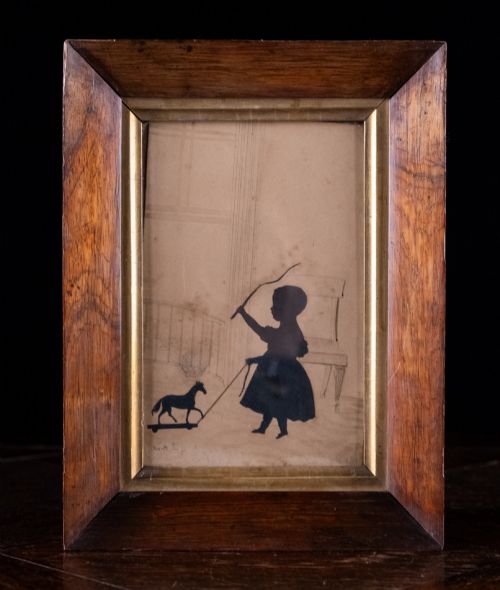


Georgian Paper Cut Artwork
Georgian paper cut artwork brings delicate silhouettes and intricate paper pictures into your home, offering a glimpse into early portraiture.
Georgian Paper Cut Artwork
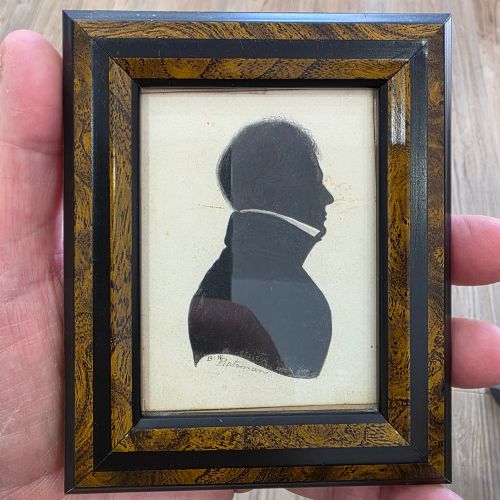
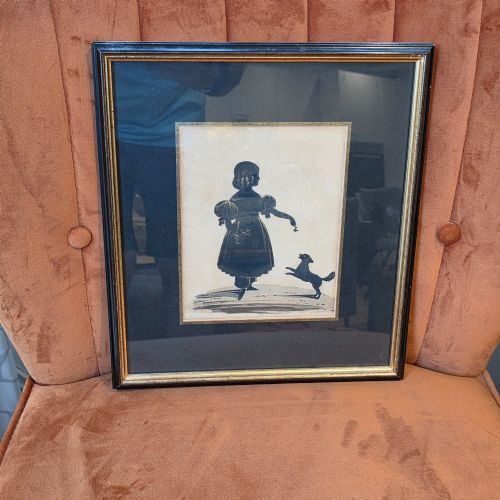
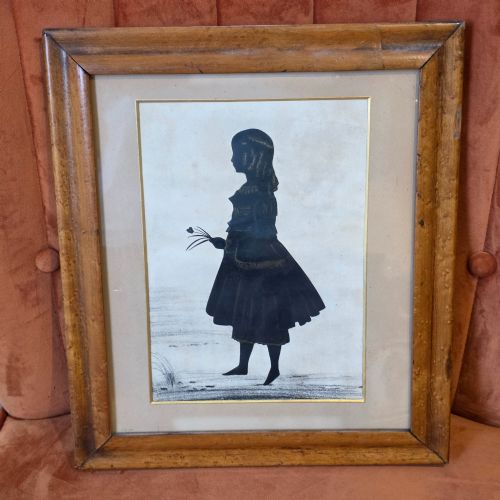
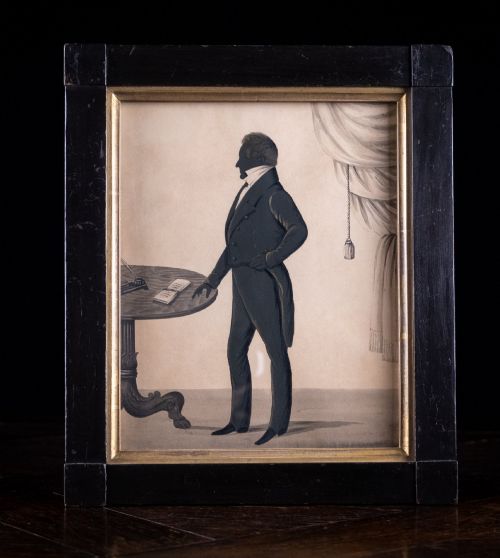
When you search for georgian paper cut artwork, you encounter delicate silhouettes and detailed paper pictures created during the nineteenth century. These pieces capture gentlemen, ladies, children, and floral scenes rendered through careful cutting and mounting.
The objects on this page predominantly take the form of framed wall art, silhouette portraits, and portrait miniatures. You will find works spanning the Regency, William IV, and early Victorian periods, often preserved behind glass in period frames.
Makers and studios such as the Hubard Gallery and artists like Augustin Edouart shaped this tradition, producing both intimate single portraits and elaborate conversation pieces. These artworks offer a direct connection to the portraiture of the early 1800s.
How they were made
Finished paper cuttings were mounted behind glass and housed within wooden frames, frequently utilising rosewood, maple, or frames embellished with gold leaf and brass fittings. This combination of paper, ink, and protective framing ensured the delicate cuttings survived down the centuries.
Listings feature paper, ink, watercolour, and gold leaf set within rosewood and maple frames from the 19th century and the Regency period.
What varies in quality
The precision of the cutting distinguishes finer examples of georgian paper cut artwork from simpler items. Mastery of line allows artists to convey distinct likenesses and textures using only paper and occasional watercolour highlights.
The quality of the framing and mounting significantly affects the presentation, with original maple or rosewood surrounds and gold leaf details elevating the piece. Comprehensive provenance or attribution to known practitioners like Augustin Edouart or the Hubard Gallery also influences distinction.
William James Hubard·Augustin Edouart·Bateman
The Georgian Paper Cut Artwork Glossary
- Silhouette
- A portrait profile filled in with a solid dark colour, typically cut from paper and mounted on a contrasting background. This form served as a popular and affordable precursor to photographic portraits.
- Conversation piece
- An informal portrait depicting a group of figures engaged in a narrative scene or daily activity. These artworks often show families or children with pets in domestic settings.
- Gilded silhouette
- A paper cut or painted portrait enhanced with gold leaf accents to highlight costume details or jewellery. This technique added richness and luminosity to monochrome profiles.
- Portrait miniature
- A small-scale painting or paper cut artwork designed for intimate viewing. These compact pieces were frequently framed to hang on walls or sit on surfaces.
- Regency
- The historical period spanning the early nineteenth century, noted for distinctive neoclassical aesthetics in art and framing. Works from this era often display refined elegance and balanced composition.
Georgian Paper Cut Artwork: Frequently Asked Questions
What is georgian paper cut artwork?
Georgian paper cut artwork comprises framed silhouettes, botanical pictures, and portrait miniatures created during the early nineteenth century. These pieces utilise hand-cut paper, ink, and watercolour to depict people and scenes.
Artists worked with fine materials to capture likenesses before the advent of photography. Surviving examples remain preserved in period frames behind glass.
Who made these paper cuttings?
Professional silhouettists and travelling artists produced these works, sometimes working from dedicated establishments like the Hubard Gallery in London. Well-documented practitioners included Augustin Edouart and artists signing as Bateman.
Many pieces also record the work of anonymous cutters who supplied portraits to families across the country.
How do I care for paper art?
Paper art requires protection from direct sunlight to prevent fading of the paper, ink, and watercolour elements. Keeping pieces in stable environmental conditions prevents moisture damage to the paper and frame.
Original glass and backing papers should generally remain undisturbed to preserve the integrity of the antique assembly.