
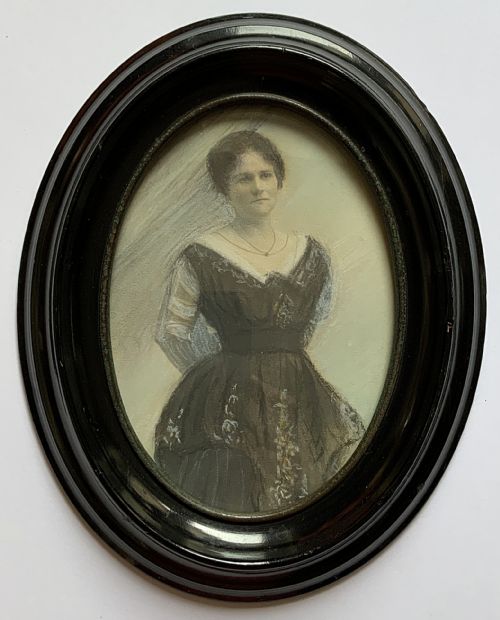
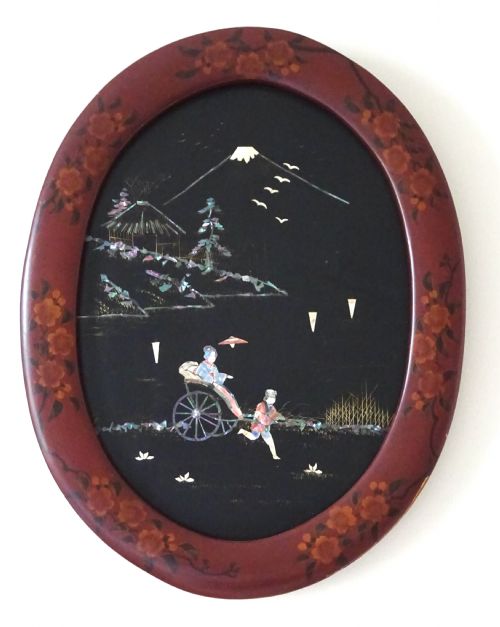


Black Oval Picture Frame
A black oval picture frame holds small portraits, silhouettes, and textile works from the Georgian, Regency, and Victorian eras.
Black Oval Picture Frame
A black oval picture frame provides a distinct dark border for miniature portraits, silhouettes, and woolwork pictures originating from the Georgian, Regency, and Victorian periods. These enclosures frequently accompany delicate works on paper, card, and silk rather than large oils.
The versions most commonly met here utilise ebonised wood or black glass, often paired with gilt brass mounts or verre églomisé surrounds. Their curved contours complement the intimate scale of silhouette portraits and painted miniatures.
Collectors seek them both to house existing small works of art and to display them as decorative wall pieces in traditional interiors. The dark framing tone creates a strong visual contrast against light walls.
How they were made
Makers shaped wood into curved profiles before applying ebonised finishes to achieve a deep black surface. Other examples employ black glass or mezzotint glass settings to frame miniature watercolours and silhouettes.
Gilt brass highlights and interior bezels frequently accent the dark outer borders, providing a refined contrast. Original wooden backing boards and hanging loops complete the construction of these period surrounds.
Listings feature periods from Georgian to Victorian, alongside materials including ebonised wood, brass, glass, and paper.
What varies in quality
The crispness of the oval moulding and the retention of original gilt brass accents set finer examples apart from simpler replacements. Superior pieces retain their original glass and backing materials intact.
The depth of the ebonised finish and the condition of any verre églomisé borders influence the overall visual impact. Uniformity in the curve of the timber frame reflects greater skill in the original joinery.
John Miers·George Atkinson·Del Buono
The Black Oval Picture Frame Glossary
- Ebonised wood
- Timber treated to resemble ebony, creating a dense black finish popular for nineteenth-century frames. This technique gives a smooth, dark surface that highlights interior gilt details.
- Verre églomisé
- A process of applying gold or silver leaf to glass with a design etched into the metal, frequently used for decorative borders on period frames. It adds a reflective, layered frame around portraits.
- Silhouette
- A portrait profile filled in with a solid dark colour, usually black, cut from paper or painted on card. These small works define the contents typically found inside oval surrounds.
- Mezzotint glass
- Dark glass panels used in framing to enhance contrast for silhouettes and prints. This material provides a deep tone behind the glazed aperture.
- Regency
- An English design period spanning the early nineteenth century characterised by classical revival motifs. Frames from this era often feature delicate brass fittings and refined oval proportions.
Black Oval Picture Frame: Frequently Asked Questions
What periods do these frames date from?
The evidence shows examples originating from the Georgian, Regency, and Victorian eras, alongside mid-nineteenth-century items. These periods cover the primary decades when oval portrait framing was widely practiced.
Specific dates within the listings range from around eighteen hundred through to the late nineteenth century, reflecting diverse traditional woodworking styles.
What types of art are inside them?
The enclosures house miniature portraits, silhouette portraits, watercolour paintings, and silk embroideries. Small woolwork pictures and hand-coloured prints also appear within these surrounds.
Such contents reflect the intimate scale typical of domestic portraiture and decorative art from the nineteenth century.
Are the glass panels original?
Many listings specify original components such as mezzotint black glass or early glass covers. Original glazing often exhibits minor surface variations consistent with age.
Buyers should examine specific descriptions to confirm whether the glass and gilt wood frames remain together as originally paired.
How do I hang an oval frame?
Most period examples feature small metal hanging loops affixed to the upper wooden backing or frame edge. These allow for secure placement on picture rails or wall hooks.
Due to their relatively lightweight construction, standard picture hooks suit their scale while maintaining balance for the curved shape.