




Georgian Panelled Mule Chest
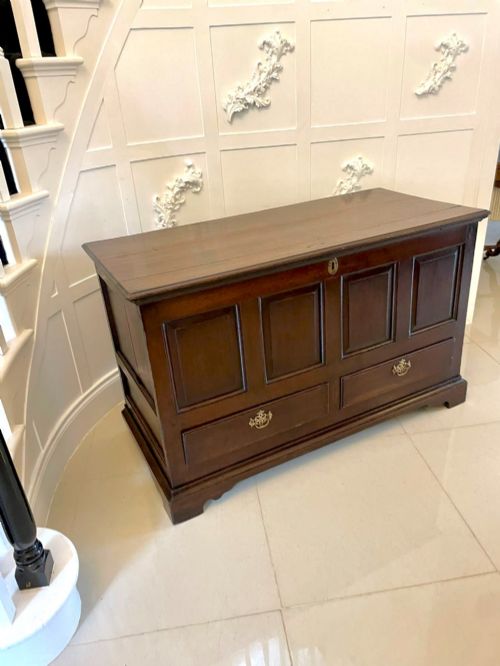
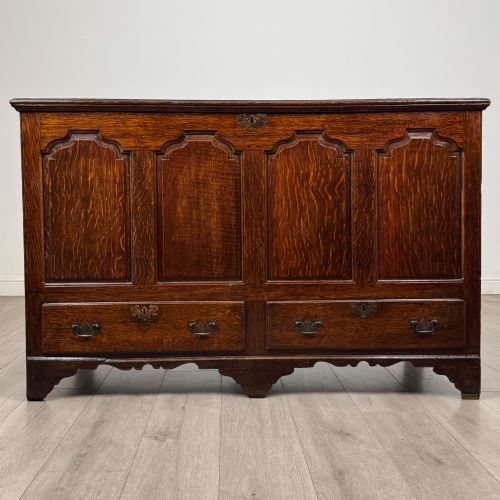
A georgian panelled mule chest combines deep storage capacity with lower drawers, offering a sturdy piece of period utility for the home.
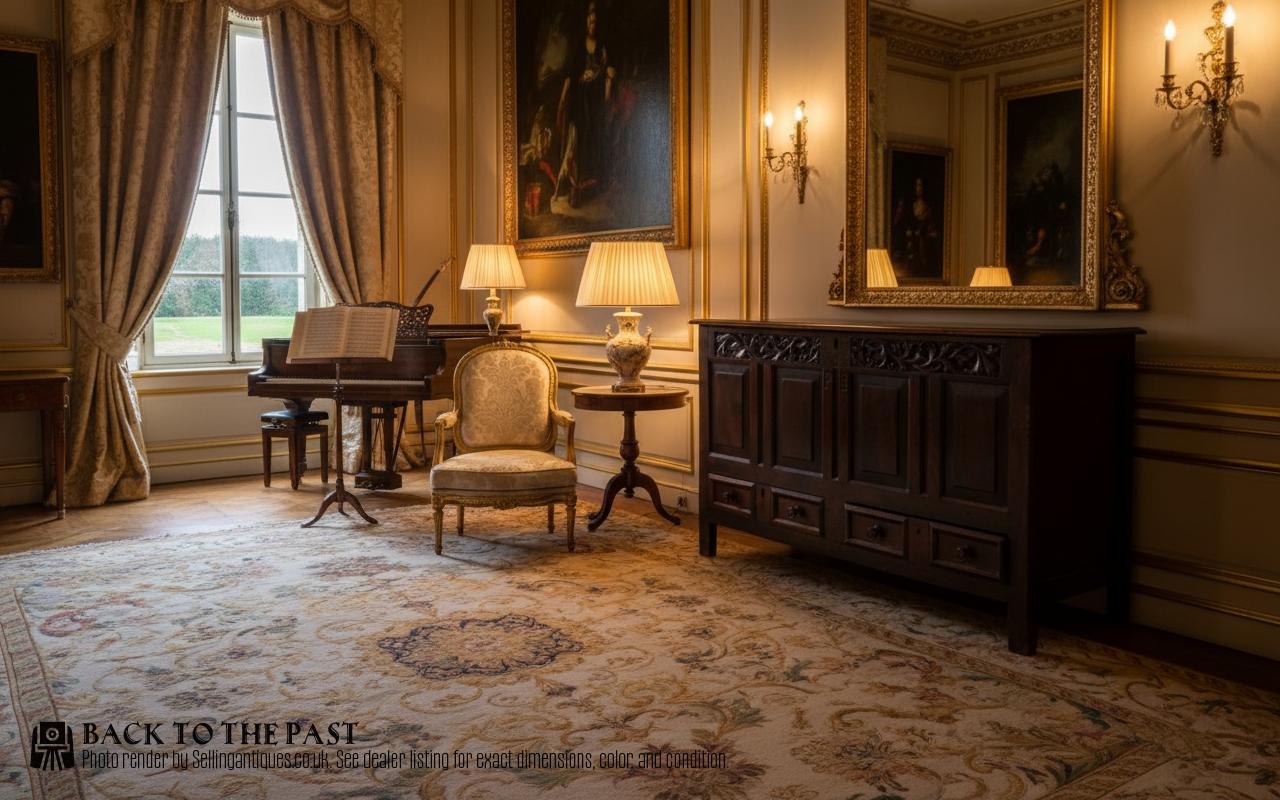
Georgian Panelled Mule Chest
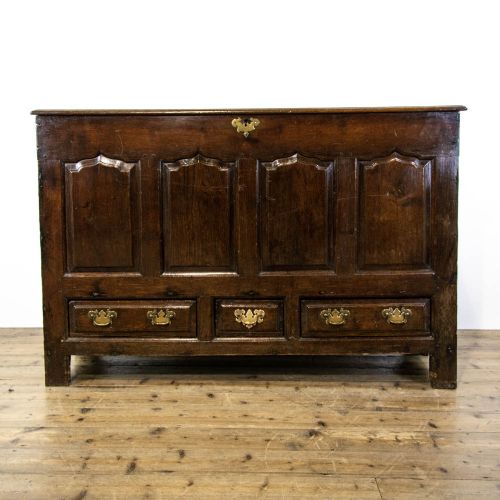
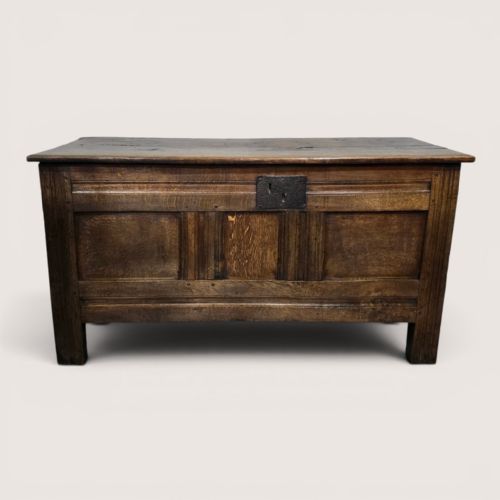
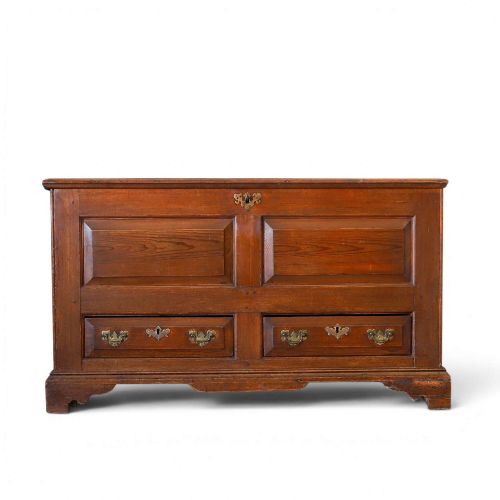
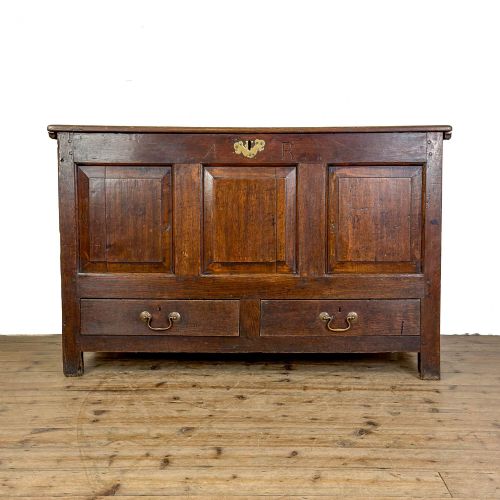
A georgian panelled mule chest is fundamentally a coffer fitted with one or more lower drawers beneath the main storage compartment. These pieces bridge the gap between simple blanket boxes and full chests of drawers, originating from domestic requirements for household linen and clothing storage.
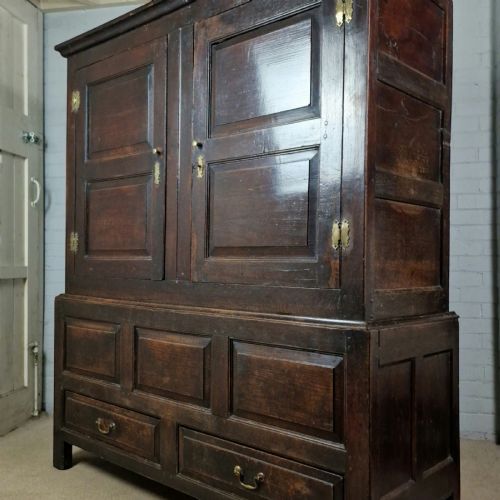
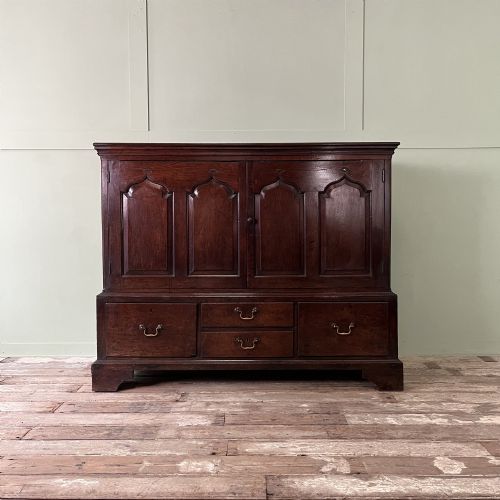
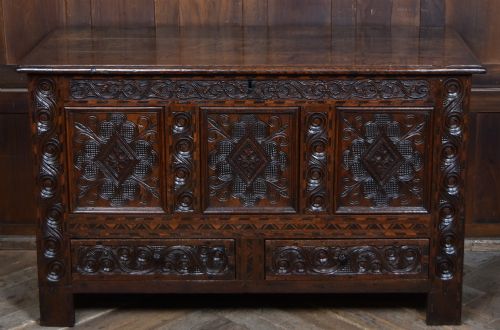
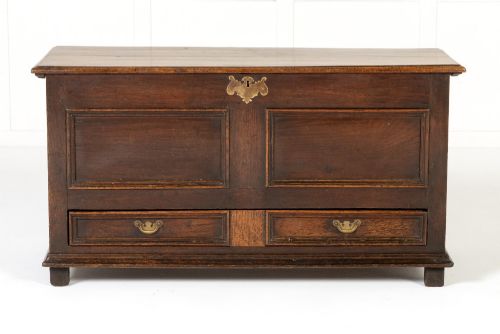
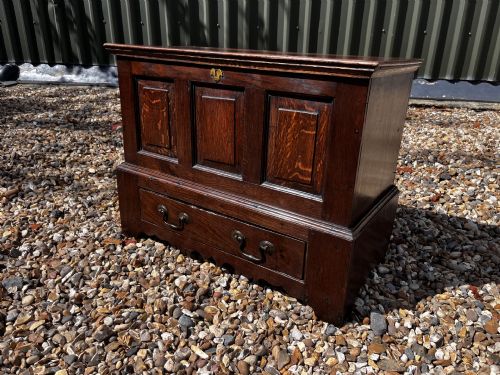
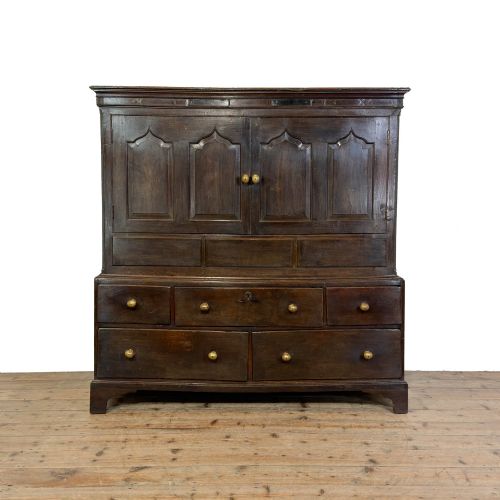
The examples seen here span the eighteenth and nineteenth centuries, taking forms defined by regional vernacular traditions such as Welsh and English provincial cabinet making. Buyers encounter multi-panelled fronts constructed to accommodate seasonal changes in timber without splitting the panels.
Most items appearing under this heading display sturdy construction intended for daily use in country houses and farmhouses. They present straightforward architectural proportions, frequently incorporating fielded panels and exposed peg joints characteristic of period craftsmanship.
Materials and construction
Oak dominates the surviving material record, supplemented by regional timbers like pine and occasional decorative accents of burr elm and wood inlay. Makers utilised traditional frame and panel joinery to construct the main body, allowing the solid timber to expand and contract naturally with humidity changes.
Iron and brass hardware, including hinges, escutcheons and drawer pulls, secure the movable elements and reinforce the structural corners. Surfaces finish with wax or traditional polish that highlights the grain patterns developed over centuries of handling.
Listings under this search combine seventeenth, eighteenth and nineteenth century periods, utilising native oak, pine, and decorative wood inlay.
Distinctions in quality and survival
Quality rests in the crispness of the panel mouldings, the tightness of the frame joints and the retention of original drawer linings and brassware. Pieces that retain their unaltered baseboards and internal candle boxes demonstrate superior original integrity.
The handling of secondary timbers in unseen areas, such as drawer bottoms and backboards, distinguishes careful provincial workshop production from utilitarian output. Surviving surfaces showing honest patination without aggressive chemical stripping represent the upper tier of preservation.
The Georgian Panelled Mule Chest Glossary
- Coffer
- A large wooden chest used for storing valuables, linen or household goods. They often feature hinged lids and represent the precursor to the mule chest.
- Mule chest
- A storage chest featuring one or more drawers built into the base beneath the main compartment. This form emerged when makers realised bottom storage improved accessibility.
- Fielded panel
- A wooden panel with bevelled edges tapering down to a thinner tongue fitted into a grooved frame. This technique adds depth and decorative shadow lines to the front elevation.
- Candle box
- A small internal compartment fixed inside a chest, traditionally used for holding tallow candles away from stored fabrics. Its presence indicates an untouched interior arrangement.
- Vernacular
- Furniture made by local regional craftsmen using traditional methods and native timbers, rather than following metropolitan stylistic dictates. These pieces reflect distinct local construction habits.
Georgian Panelled Mule Chest: Frequently Asked Questions
What is a mule chest?
A mule chest is a traditional storage chest that includes one or more drawers built beneath the main hinged compartment. This hybrid design combined the deep top loading space of a standard coffer with the accessible drawer storage of a chest of drawers.
Makers developed this form during the seventeenth and eighteenth centuries to make retrieval of everyday garments simpler without having to empty the entire top section of stored blankets.
How do I date a mule chest?
Dating relies on examining construction details such as hand cut dovetails on the internal drawers, the profile of the panel mouldings, and the type of hinges used on the lid. Earlier pieces often display pegged frame and panel joinery and rougher hewn secondary timbers.
Stylistic shifts from seventeenth century carved decoration toward cleaner eighteenth century fielded panels and bracket feet provide further chronological markers for the piece.
Where were these chests used?
These chests served primarily in domestic sleeping quarters, landings and farmhouses for storing heavy textiles, winter blankets and personal garments. Their robust construction allowed them to function simultaneously as seating surfaces when placed against walls.
They stood in everyday family spaces where durable utility mattered more than formal parlor display, anchoring the practical storage needs of the household.
What is a coffer bach?
A coffer bach translates from Welsh as a little coffer, representing a miniature version of the standard mule chest or blanket box. These small scaled pieces feature identical panelled construction and internal lidded compartments but on a diminutive table top size.
Their exact original domestic purpose remains debated, with theories suggesting they served as marriage gifts, apprentice pieces, or specialty presentation boxes for precious documents and linens.