

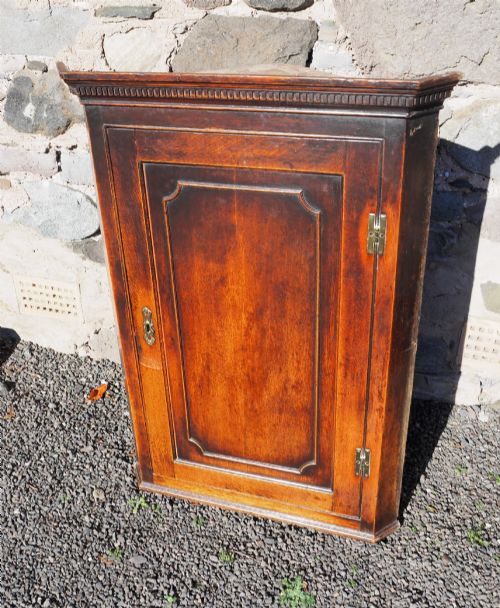
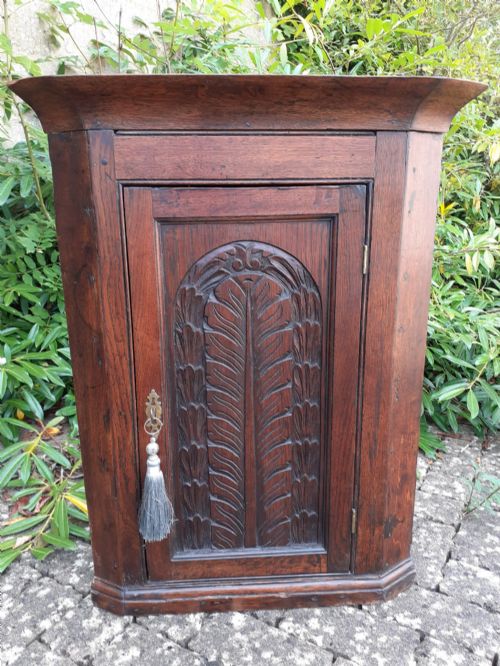
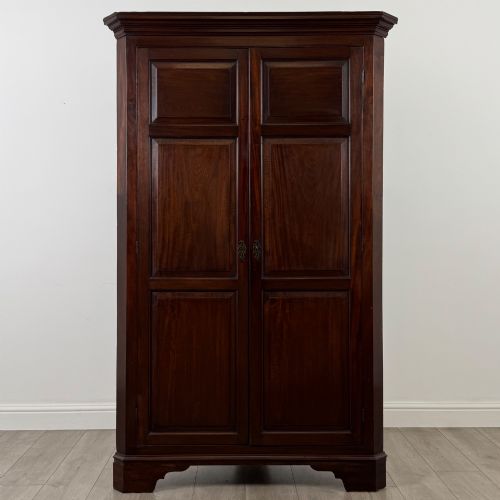
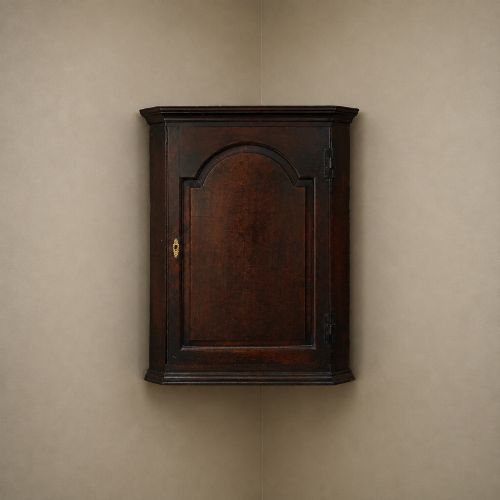
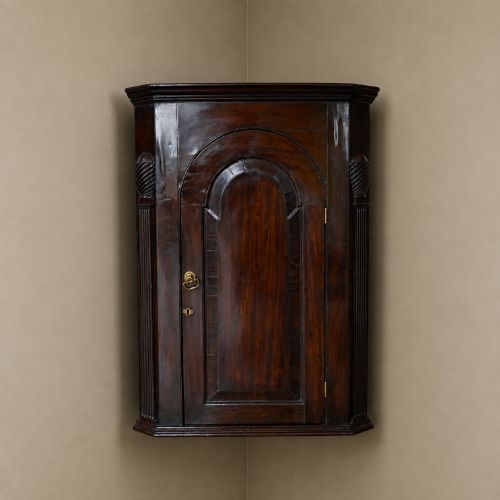
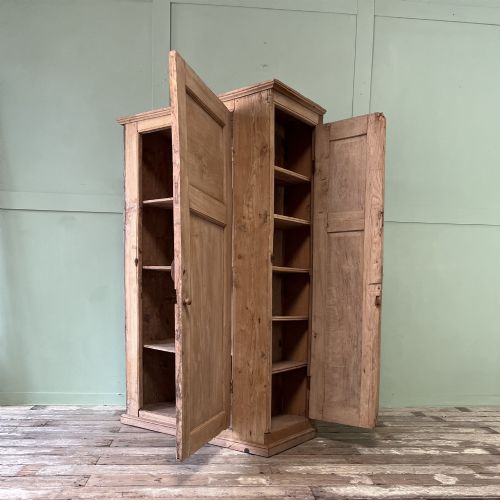
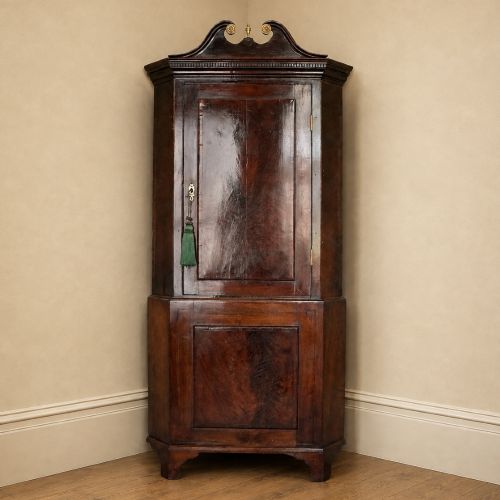
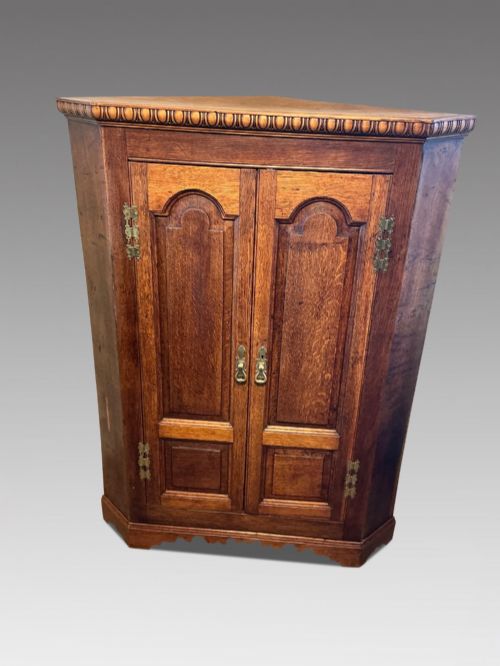
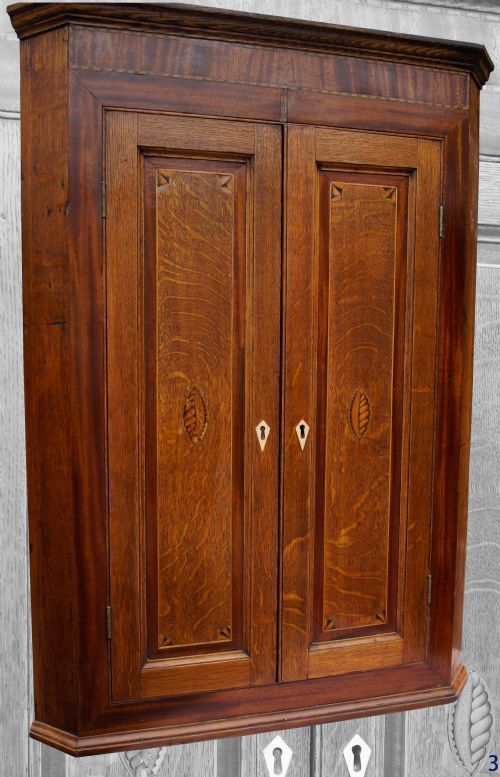
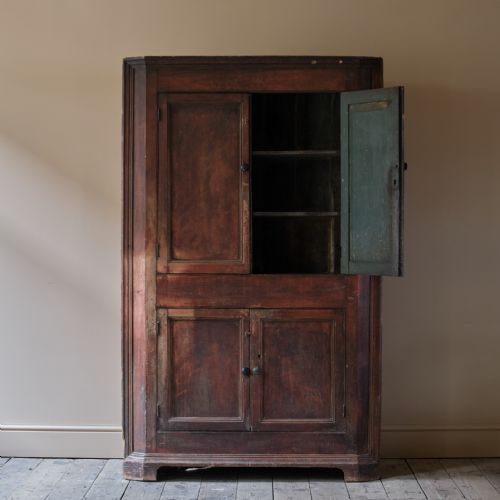

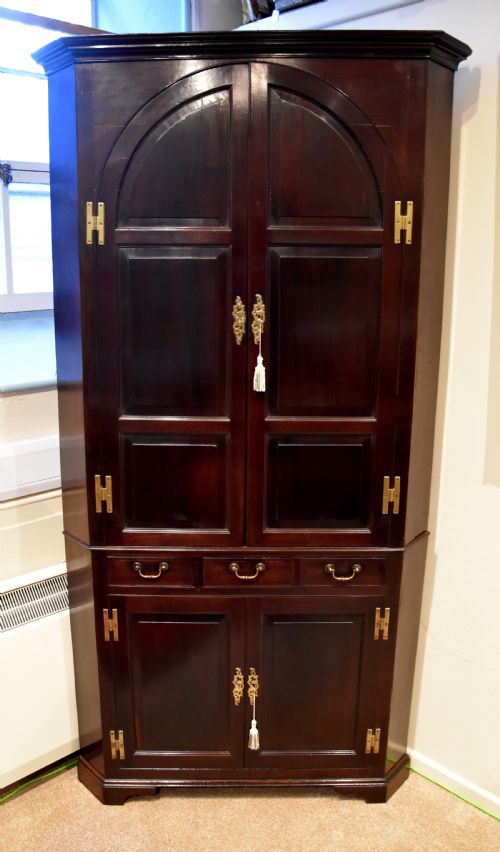


Georgian Panelled Corner Cabinet
A georgian panelled corner cabinet turns wasted room angles into architectural storage using timber built to last.
Georgian Panelled Corner Cabinet
A georgian panelled corner cabinet provides clever storage designed to fit squarely into room angles, making use of awkward spaces. You will find these pieces spanning the eighteenth century and into the nineteenth century, built for both country houses and modest homes.
Most examples appearing here are wall hanging or floor standing corner cupboards constructed from native and imported timbers. They range from single door hanging versions to substantial two part standing furniture.
Makers shaped these cupboards to sit flush against wall junctions, turning forgotten corners into focal points with panelled doors and fitted interior shelving.
Materials and construction
Carpenters relied primarily on oak and mahogany, occasionally turning to pine, elm, fruitwood, or cuban mahogany for specific commissions. Boards were joined to form sturdy panelled doors that resisted warping in damp conditions.
Brass hardware such as H hinges and escutcheons secured the doors, while iron fixings reinforced internal structures. Some pine or softwood pieces received coats of paint or simulated finishes to mimic grander hardwoods.
Joiners constructed wall hanging variants with strong top mouldings to support the weight, whilst standing models utilised two separate sections to ease transport and placement.
Georgian Panelled Corner Cabinet Retail Price Guide 2026
Typical asking prices for georgian panelled corner cabinet among the pieces listed under this phrase on Sellingantiques today, from the lower quarter to the upper quarter. They describe what is for sale here now, not the wider market.
Listings feature oak, mahogany, pine, elm, and brass across georgian, nineteenth century, and twentieth century periods.
Determinants of quality
Quality rests upon the choice of timber and the precision of the panel assembly. Dense cuban mahogany or burr oak examples demonstrate superior selection compared to utilitarian painted pine.
Cabinetmakers demonstrated skill through the tightness of the mitre joints and the hand shaping of interior shelving. Superior pieces feature well proportioned cornices and original brass furniture that fits the door design precisely.
The Georgian Panelled Corner Cabinet Glossary
- Panelled
- Construction method where a recessed centre board fits within a grooved wooden frame to accommodate wood shrinkage. This technique prevents the timber from splitting as humidity changes.
- Hanging
- A descriptor for cabinets designed to be mounted directly onto walls rather than resting on the floor. These often include internal brackets for secure fixing.
- Standing
- A term for floor standing corner cupboards that usually feature two separate vertical sections combined. They offer expanded storage capacity compared to wall mounted alternatives.
- Cornice
- The decorative moulded projection running along the top edge of the cabinet. It crowns the structure and balances the proportions of the corner placement.
- Escutcheon
- A protective brass or iron plate surrounding the keyhole. It prevents the wood around the lock from splitting with repeated use.
Georgian Panelled Corner Cabinet: Frequently Asked Questions
How do I hang a wall cabinet?
Wall hanging versions require secure fixing to solid wall studs or masonry using appropriate brackets.
Weight distribution is crucial because solid oak and mahogany cabinets carry considerable mass when loaded with contents.
Are these cabinets one piece or two?
Smaller hanging models and some standing cupboards arrive as single unified units.
Larger floor standing examples typically separate into two distinct stacked sections for easier transport and positioning.
What woods were commonly used?
Oak and mahogany form the vast majority of surviving examples from the georgian period.
Alternative timbers include pine, elm, fruitwood, and cuban mahogany, occasionally finished with paint or simulated grain effects.
How do I date a corner cupboard?
Dating relies on timber choice, hinge types, and construction methods characteristic of the eighteenth and nineteenth centuries.
Panel styles and moulding profiles also provide clear indicators of whether a piece dates to the georgian era or later.