
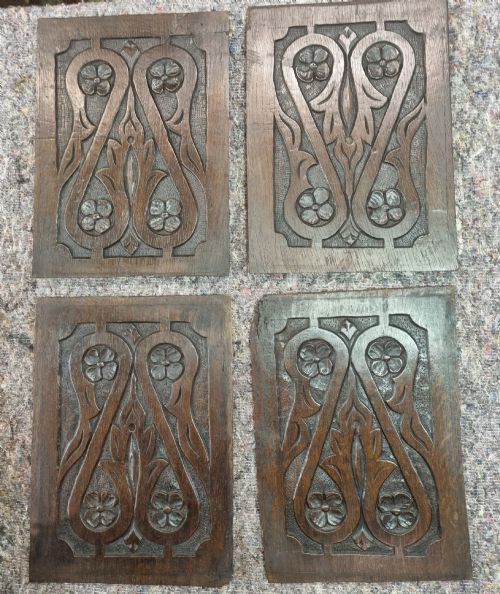
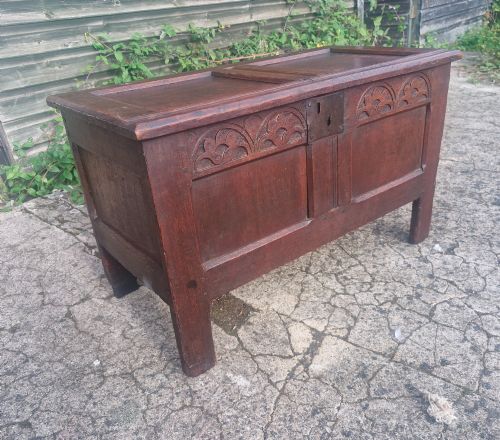
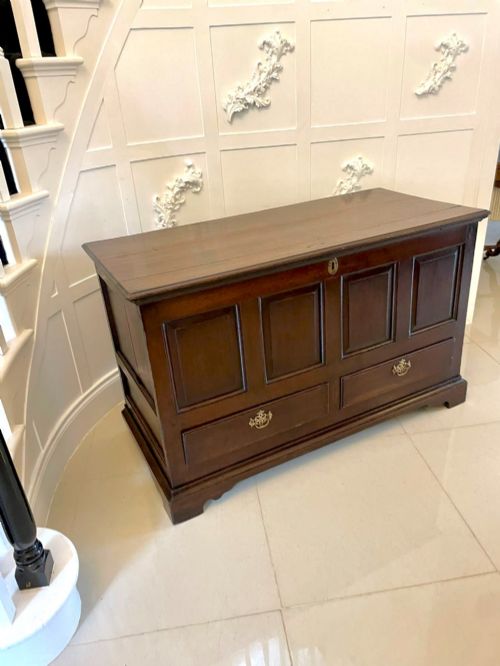
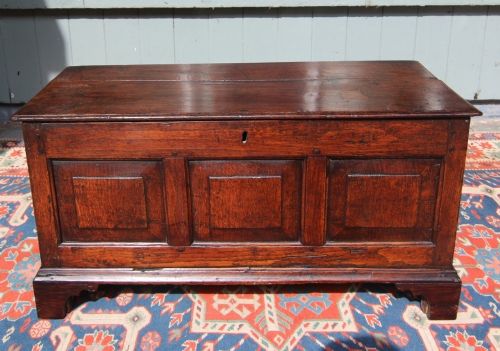
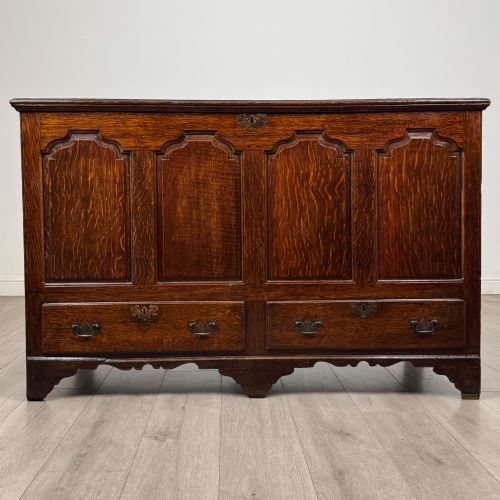


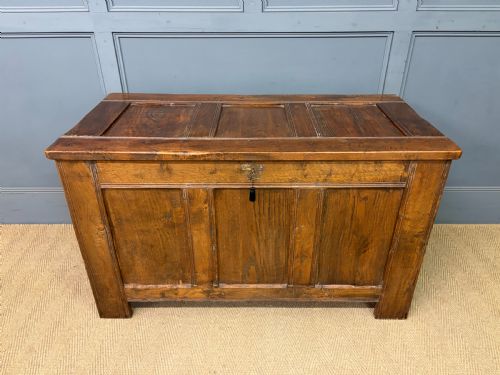
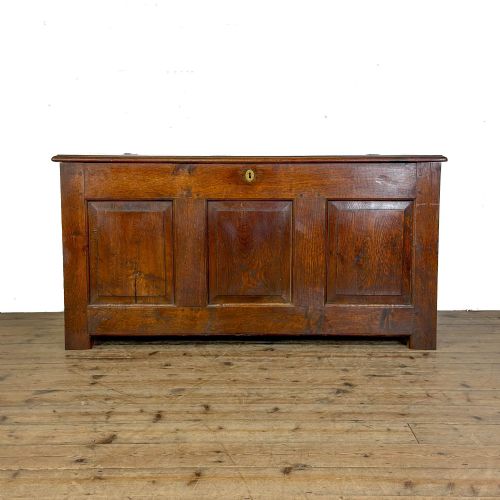
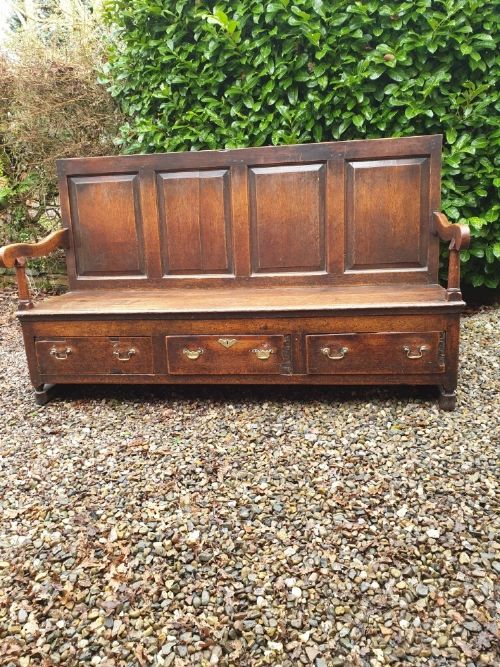
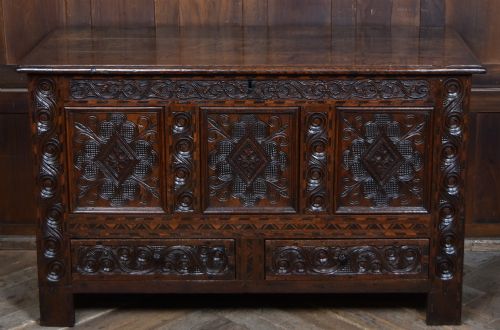
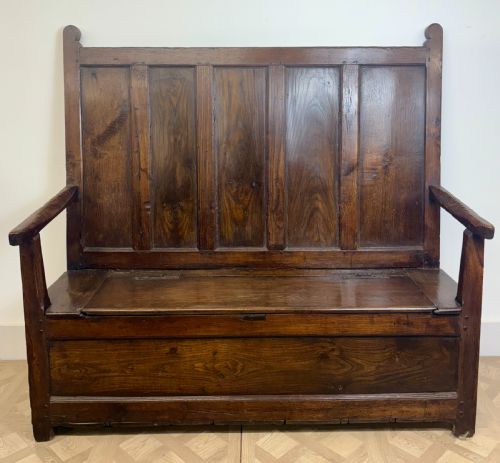
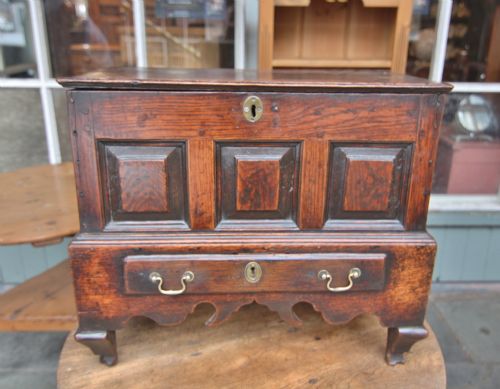
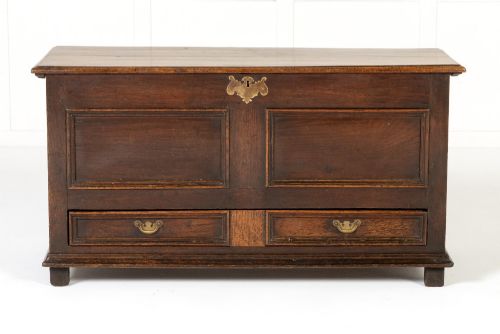
Georgian Paneled Coffer
A georgian paneled coffer brings durable storage and heavy timber construction into a room, offering practical utility built to last.
Georgian Paneled Coffer
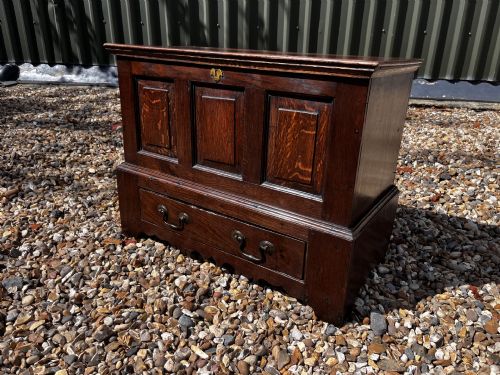
When you search for a georgian paneled coffer, you encounter sturdy timber storage furniture built primarily during the eighteenth and nineteenth centuries. These pieces serve as blanket chests, linen chests, and sometimes double as window seats or box settles.
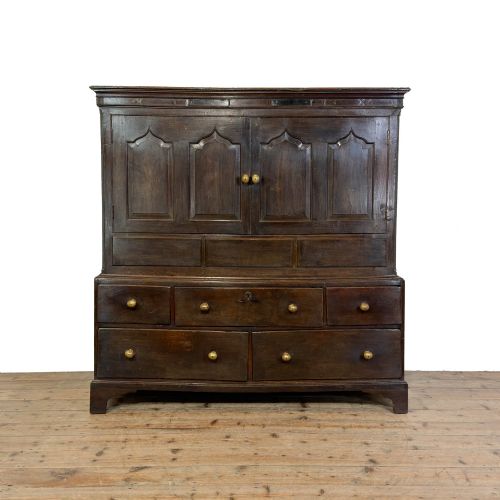
The versions most commonly met on this page are constructed from oak, often featuring framed paneling on the front and sides. Regional variants such as the Welsh coffer bach or mule chests with lower drawers appear frequently alongside standard straight-sided storage chests.
Materials and construction methods
Makers relied heavily on solid oak, supplemented by ash, pine, and occasional burr elm for decorative panels. Joinery techniques focused on mortise and tenon frames holding flat or raised wooden panels, allowing the timber to expand and contract naturally without splitting.
Hardware consists of wrought iron hinges and brasses where locks and escutcheons were fitted. Surfaces were often finished with wax to protect the wood while retaining a tactile, matte texture.
Materials documented across the inventory include solid oak, pine, ash, and burr elm, paired with iron and brass hardware.
Assessing quality in construction
Quality rests on the thickness of the timbers, the tightness of the joinery, and whether original boards remain intact on the lid and base. Superior pieces display crisp hand-carving and careful timber selection rather than purely utilitarian assembly.
The presence of internal fittings, such as original candle boxes, and secondary woods that match the primary structure elevate a piece above simpler vernacular examples.
The Georgian Paneled Coffer Glossary
- Mule chest
- A storage chest with one or more drawers built into the base beneath the main compartment. This form bridges the gap between a traditional coffer and a chest of drawers.
- Cofer bach
- A miniature Welsh chest, translating literally as small coffer. These portable boxes often sat upon tables and served personal storage needs.
- Box settle
- A high-backed wooden bench with a hinged seat that lifts to reveal storage space underneath. They combine seating with the utility of a coffer.
- Paneling
- Construction method where thin wooden panels are fitted into grooved frames. This technique prevents warping as the wood reacts to changes in humidity.
Georgian Paneled Coffer: Frequently Asked Questions
How do mule chests differ from standard coffers?
Mule chests include one or more drawers built into the base beneath the main storage compartment. This addition allowed easier access to contents without lifting the heavy lid.
The inclusion of drawers marks an evolution in domestic storage furniture during the eighteenth century.
Were these chests used as seating?
Many coffers and box settles double as seating when placed in hallways or beneath windows. Flat lids and sturdy frame construction supported weight comfortably.
Box settles specifically combined a high wooden back with a lidded seat to keep rooms warm and draft-free.
What wood was mostly used?
Oak is the predominant timber found in these listings, reflecting the availability of native hardwoods in English and Welsh workshops. Secondary woods like ash and pine appear in internal framing or drawer linings.
Burr elm was occasionally utilised for decorative panel highlights to add visual grain variation.