

Traditional Oak Box
A traditional oak box stands as the quintessential utilitarian container, offering honest storage shaped by centuries of regional joinery.
Traditional Oak Box
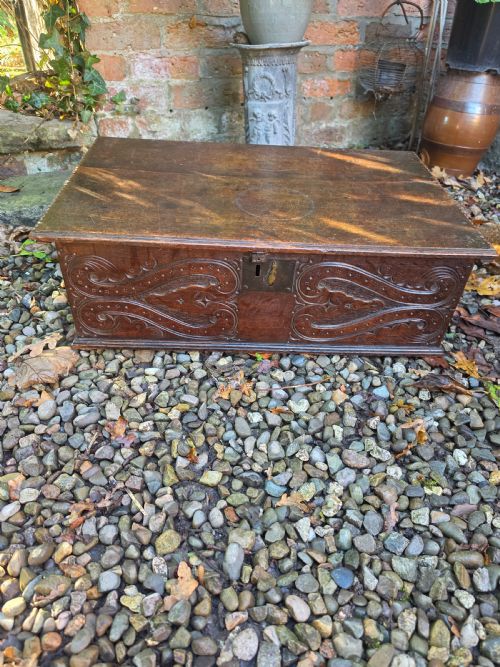
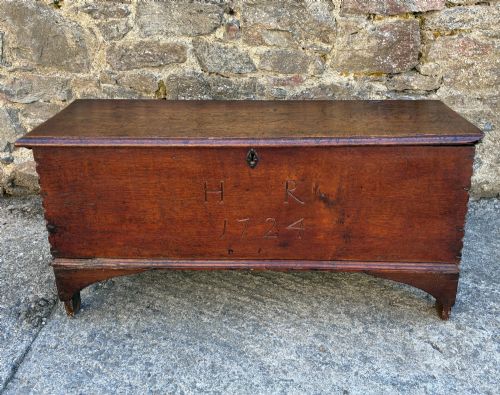
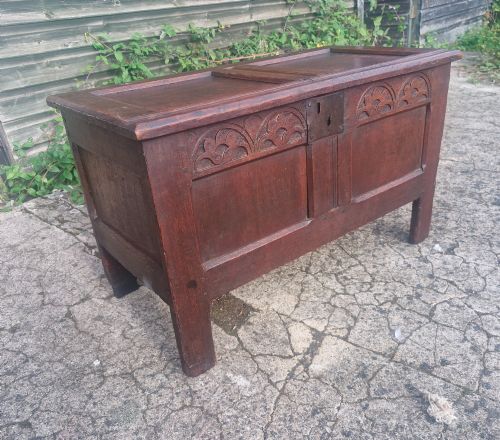
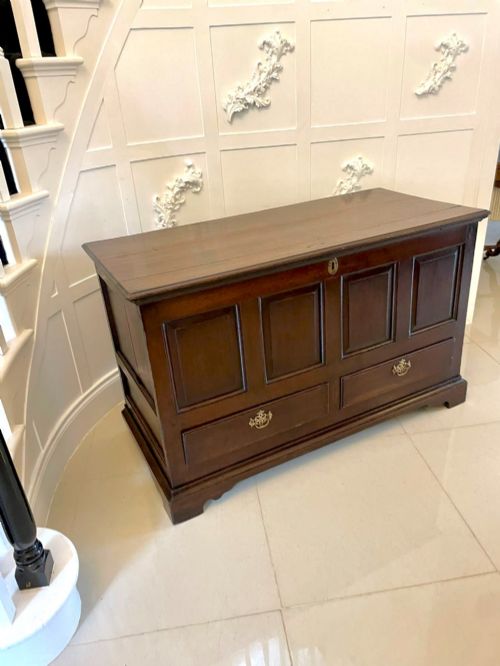
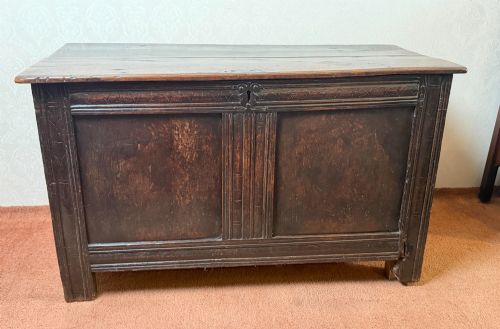
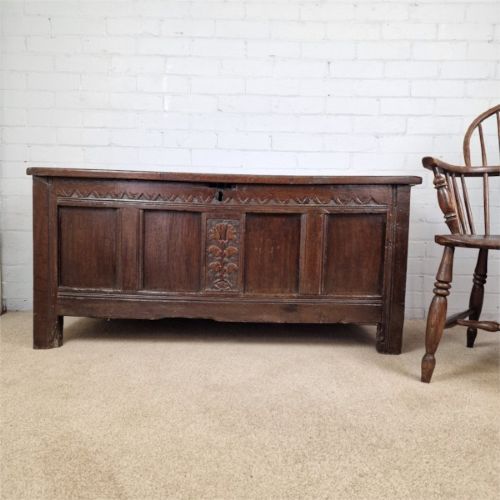
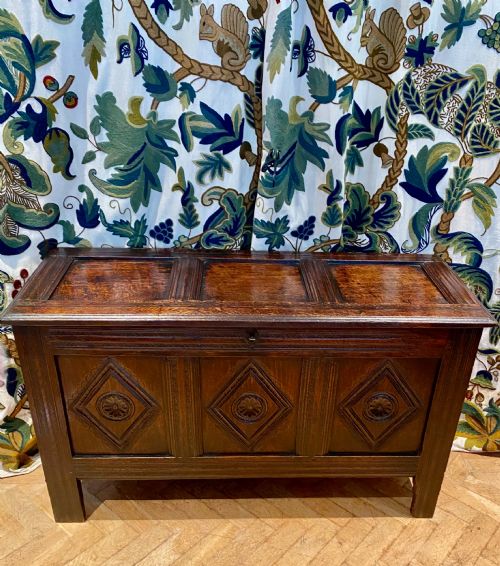
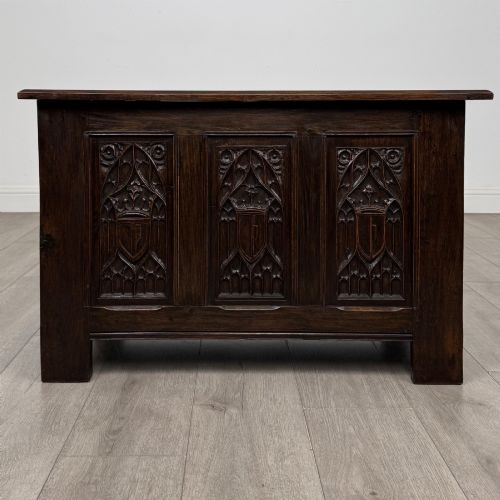
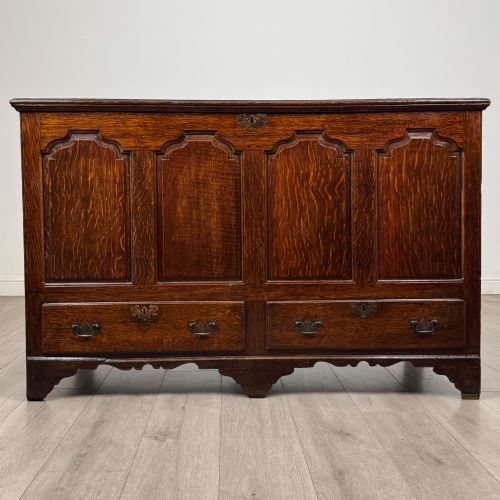
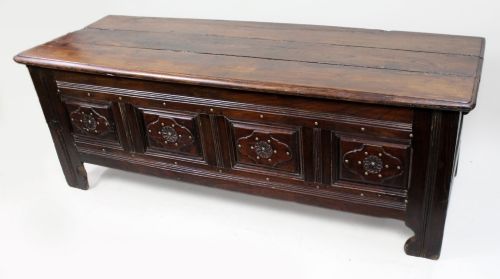
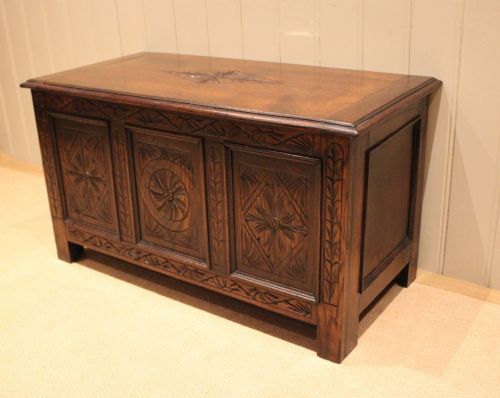
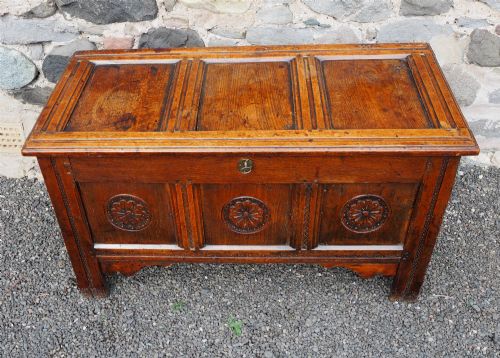
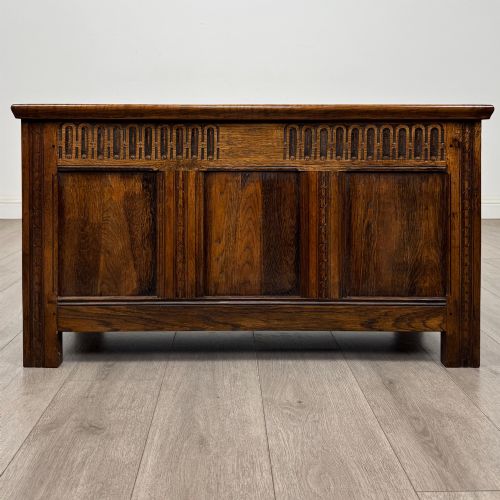
A traditional oak box most frequently appears as a coffer, blanket chest, or mule chest spanning the seventeenth, eighteenth, and nineteenth centuries. These pieces originate from domestic workshops across English, Welsh, French, and provincial European regions, serving everyday storage needs.
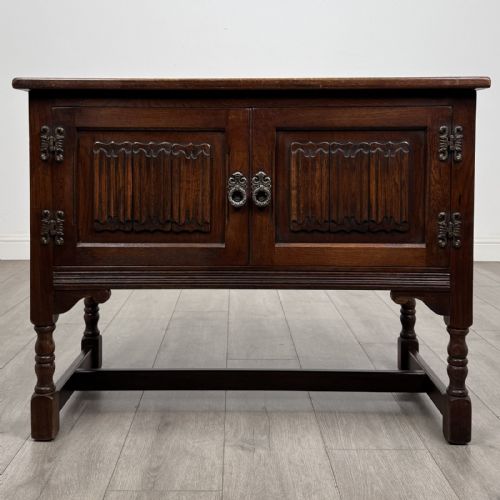
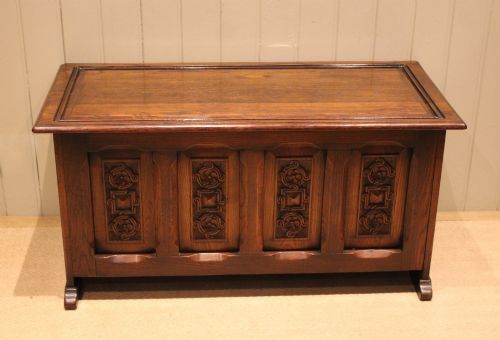
The selection ranges from early joined panels and carved coffers dated to the seventeen hundreds up to later box settles and desk boxes. Vernacular examples show local regional traits, while revival pieces from the twentieth century emulate earlier seventeenth-century styles.
Materials and construction
Makers utilised solid oak supplemented by secondary timbers such as elm, pine, and mahogany for internal elements or crossbanding. Iron and brass provide structural hinges, locks, and carrying handles.
Joinery techniques rely on pegged frame-and-panel construction or six-plank methods, often enhanced with hand carving, chip carving, or ebonised wood details. Surfaces display natural waxed finishes developed over centuries of use.
Listings feature solid oak, elm, and pine, spanning the sixteenth to the twentieth centuries across regional forms.
Evaluating craftsmanship
Quality rests in the integrity of the timber selection and the precision of the original joints rather than ornamental surface elaboration. Pieces constructed with thick solid oak planks and sturdy pegged tenons demonstrate superior endurance.
Proportion and restraint separate vernacular masterworks from heavier, later revivals. Original hardware, untouched patination, and uncompromised internal floorboards elevate an example far above heavily restored or altered pieces.
The Traditional Oak Box Glossary
- Coffer
- A heavy wooden chest with a hinged lid, traditionally used for storing valuables, linen, or documents. Early versions utilise joined frame-and-panel construction.
- Mule chest
- A storage chest featuring one or more drawers in the base beneath the primary compartment. These transitional pieces combine chest and drawer storage.
- Box settle
- A high-backed wooden bench incorporating a concealed storage compartment beneath a lift-up seat. They often feature panelled backs and armrests.
- Six-plank chest
- An elemental chest construction method utilising six individual boards joined simply at the edges. Pegs or nails secure the vertical ends to the front, back, lid, and base.
- Chip carving
- A decorative technique where small chips are removed from the surface of the wood with a gouge or knife to create geometric patterns.
Traditional Oak Box: Frequently Asked Questions
What was a coffer used for?
A coffer served as the primary secure storage unit in early households for holding precious textiles, silver, and legal documents. Because houses lacked fitted closets, these heavy chests kept items safe from damp floors and theft.
Over generations, their roles shifted as domestic architecture evolved, transitioning from general storage into blanket boxes or hallway furniture.
How do I date an oak coffer?
Dating relies on observing construction methods, tool marks, and hardware rather than relying solely on surface decoration. Early seventeenth-century examples typically show hand-split oak, pegged frame-and-panel joints, and blacksmith-made iron hinges.
Later nineteenth-century and revival pieces often exhibit mechanical saw marks, standardised screws, and lighter scantlings of timber.
What is a mule chest?
A mule chest is a regional storage piece that bridges the gap between a traditional coffer and a chest of drawers. It adds one or more pull-out drawers beneath the main lift-lid compartment for easier access.
This form became particularly popular during the eighteenth century in districts like Lancashire and Wales.
Where should I place a box settle?
Box settles function well in hallways, boot rooms, or large kitchens where their dual purpose as seating and storage is most practical. The lift-up seat offers a concealed spot for shoes, blankets, or everyday clutter.
Keep them away from direct heat sources and strong sunlight to protect the aged oak surface from drying out.