

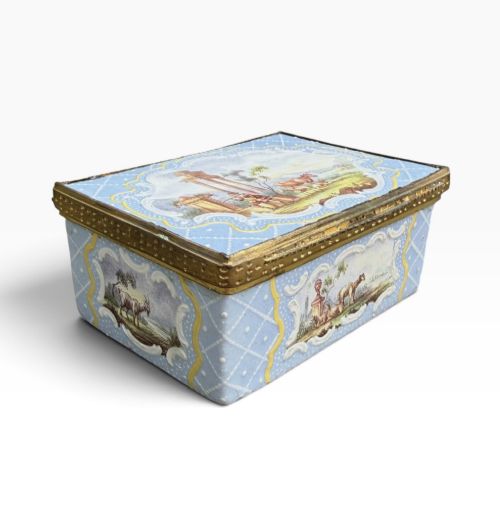
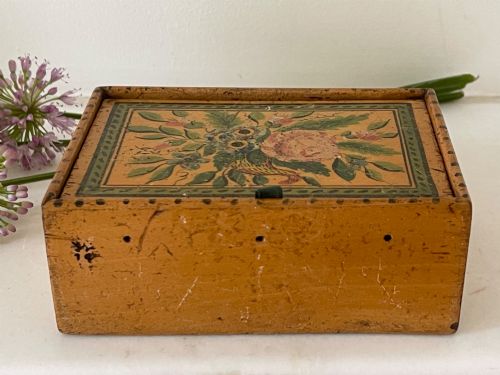
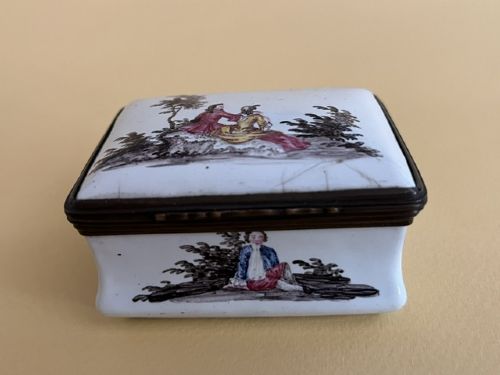
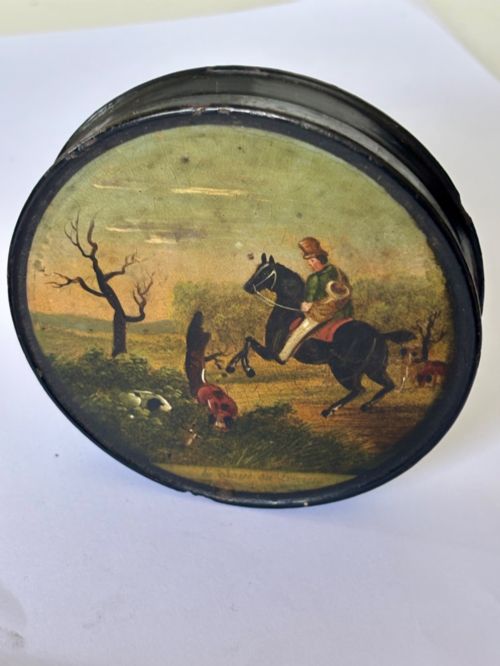


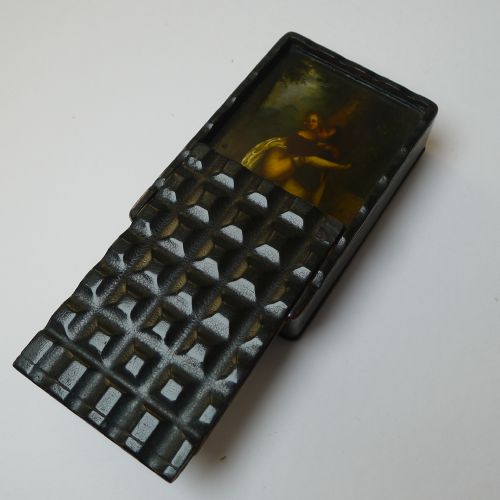


Georgian Painted Trinket Box
A georgian painted trinket box brings miniature artistry to a dressing table, offering a pocket-sized canvas of enamel or lacquer that collectors prize.
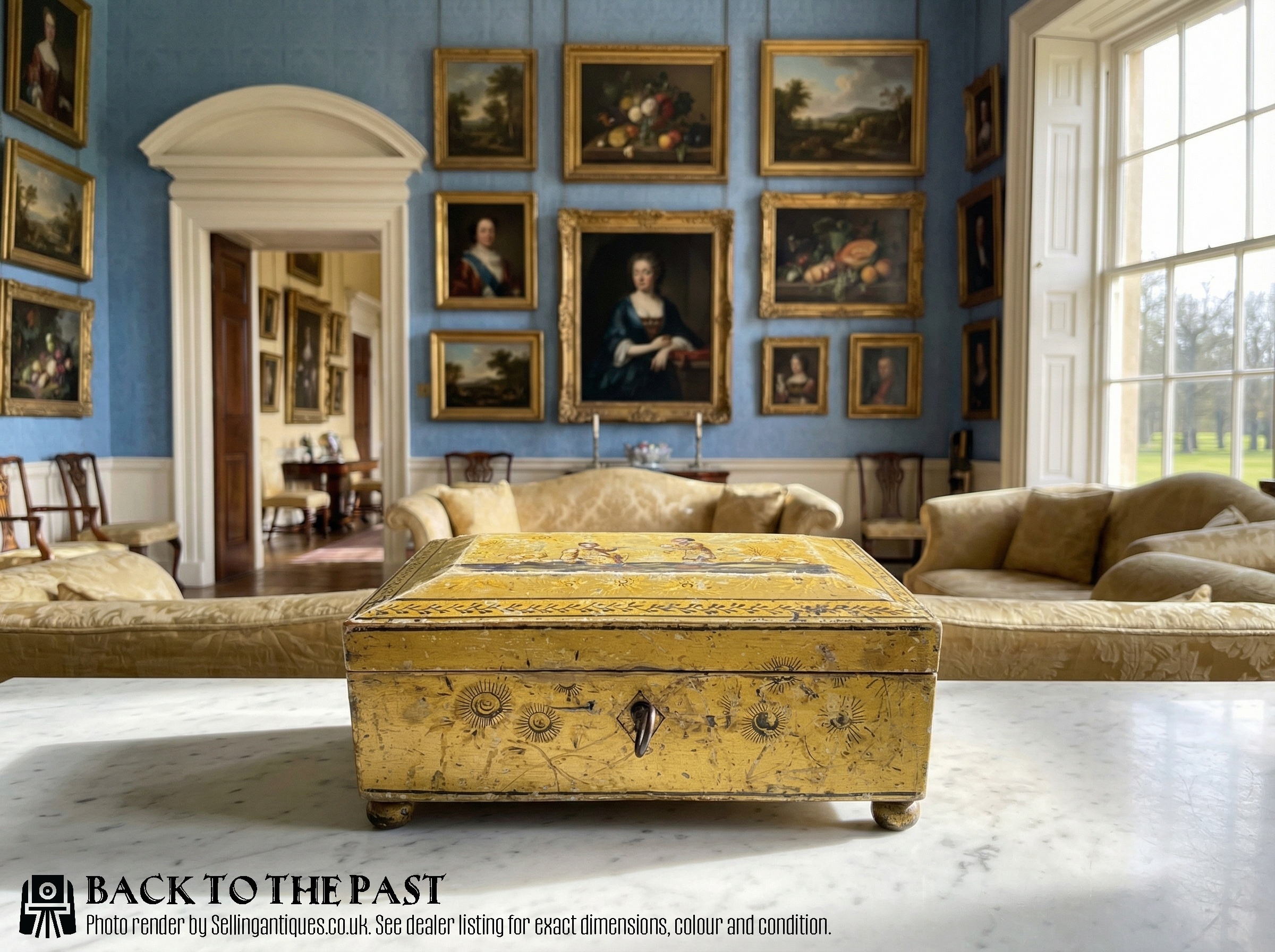
Georgian Painted Trinket Box
The selection includes specific regional items such as French papier-mâché snuff boxes and German containers in the manner of Stobwasser. These objects originate from periods including the Georgian era, the Regency, and the early nineteenth century.
Materials and Techniques
Maker construction relies heavily on enamel fused to copper, wood shaped into Tunbridge ware and games boxes, and papier-mâché finished with hand painting. Lacquer and varnish provide protective coatings over delicate surface decoration.
Details involve gilt metal mounts, brass hinges, and tortoiseshell foundations painted with fine miniature scenes. Artisans applied pigments directly onto the prepared grounds, depicting subjects from parkland musicians to hunting scenes.
Georgian Painted Trinket Box Retail Price Guide 2026
Typical asking prices for georgian painted trinket box among the pieces listed under this phrase on Sellingantiques today, from the lower quarter to the upper quarter. They describe what is for sale here now, not the wider market.
Listings feature enamel, copper, paint, brass, lacquer, gilt metal, wood, and varnish across the eighteenth and nineteenth centuries.
Evaluating the Pieces
Quality rests in the crispness of the hand-painted miniature work and the preservation of the enamel or lacquer ground. Finer examples display meticulous detail in figurative scenes and botanical motifs without blurring.
The integration of the metal mount to the body and the condition of the underlying copper, wood, or papier-mâché dictate the standing of an individual box. Intact hinges and secure closures distinguish superior survivals from heavily restored counterparts.
The Georgian Painted Trinket Box Glossary
- Bilston enamel
- A type of vitreous enamel painted on copper, produced in the Staffordshire town known for small luxury containers. These items often feature hinged lids and pastel colour palettes.
- Patch box
- A small container originally used to hold cosmetic fabric patches worn on the face. They typically contain an interior mirror fitted inside the lid.
- Penwork
- A Regency decoration technique using India ink applied to wood, often creating intricate geometric or pictorial designs resembling inlay. This surface is subsequently varnished.
- Tunbridge ware
- Woodwork decorated with mosaic patterns created from thousands of tiny coloured wood blocks. It originated in Kent during the Georgian and Victorian periods.
- Papier-mâché
- A composite material made from paper pulp or layers of paper bound with glue, then moulded and painted. It served as a lightweight base for snuff and trinket boxes.
Georgian Painted Trinket Box: Frequently Asked Questions
What were small painted boxes used for originally?
These containers held scented snuff, small cosmetic fabric patches, pins, or trinkets used daily by Georgian and Regency society. Their miniature scale allowed owners to carry them easily in pockets or reticules.
Over time, many transitioned from functional accessories to decorative display pieces kept on dressing tables and writing desks. Their intricate painted lids provided a frequent source of private amusement or polite conversation.
How do I tell an enamel box from papier-mache?
Enamel boxes feature a rigid metal body, usually copper, covered in a glossy vitreous glass coating that feels cool and heavy to the touch. They often display fine craquelure under close magnification.
Papiermâché containers feel lighter and warmer, constructed from compressed paper layers that yield a dense, fibrous texture rather than hard glass. The surface finish relies on varnish and paint rather than fused minerals.
Where were English enamel boxes made?
The primary production centres were Bilston and South Staffordshire during the eighteenth century. Skilled artisans in these areas specialised in shaping copper and firing opaque white and coloured enamels.
These workshops produced portable luxury goods ranging from simple patch boxes to elaborate bonbonnières. Their output forms a distinct category within Georgian decorative arts.
How should I clean a painted wooden box?
Painted wooden and penwork boxes require minimal intervention, needing only a soft, dry cloth to remove surface dust. Moisture can damage old varnish and lift delicate pigments from the wood grain.
Keep these pieces away from direct sunlight and fluctuating humidity to protect the lacquered or painted surfaces. Excessive cleaning strips the aged patina built up over centuries.