



Georgian Painted Glass
These georgian painted glass pieces bring vibrant pigment and delicate reverse prints straight to your wall, catching the light just as they did centuries ago.
Georgian Painted Glass
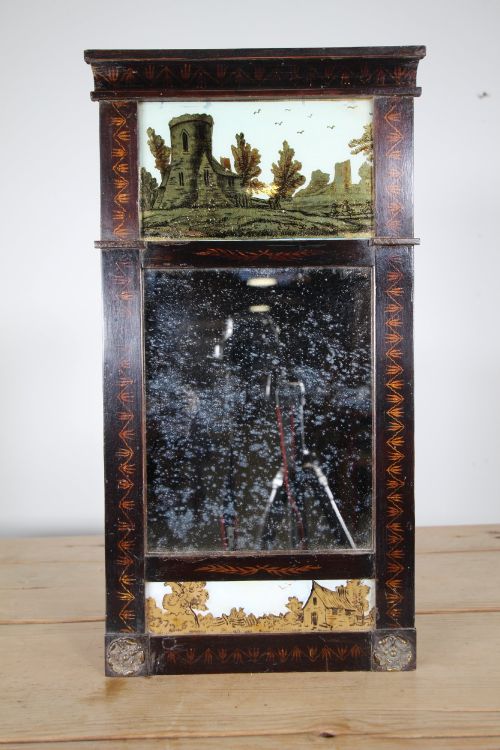
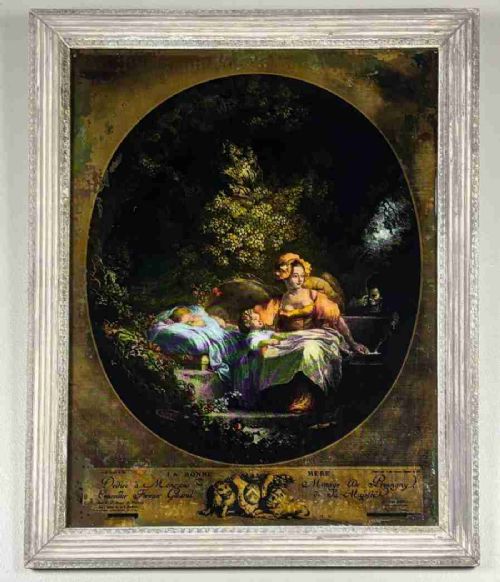
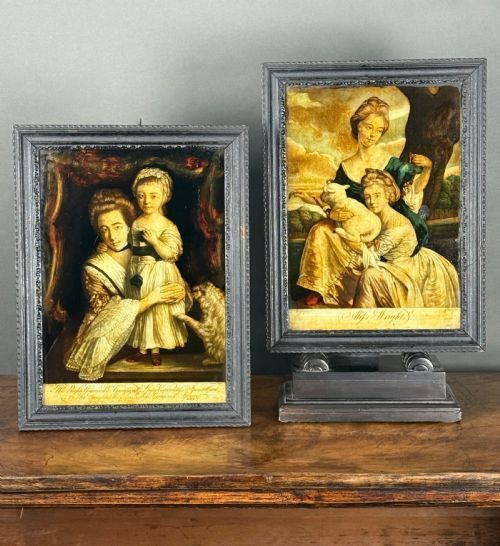
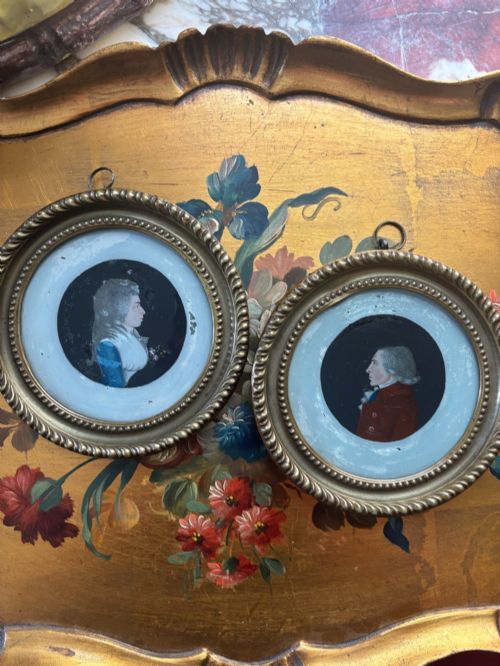
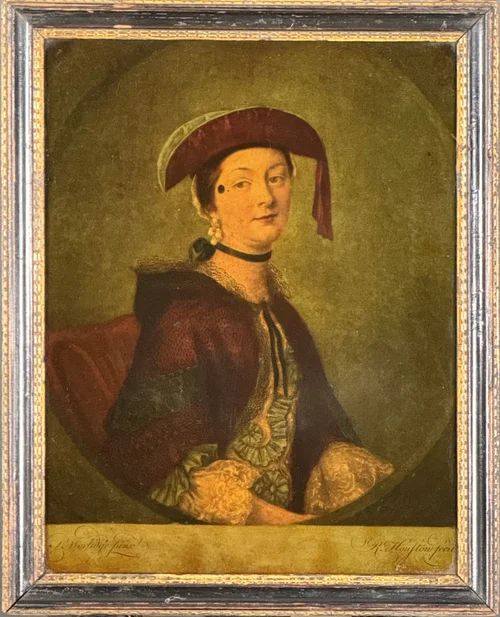
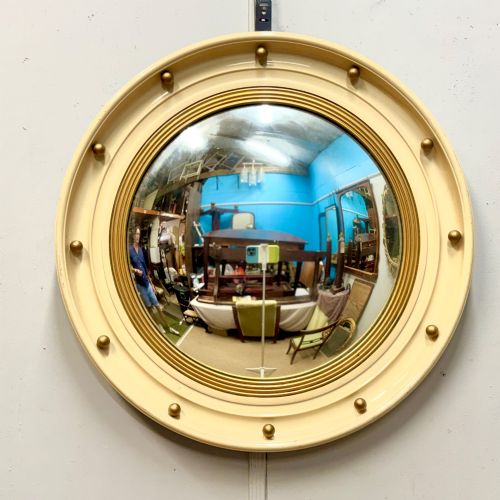
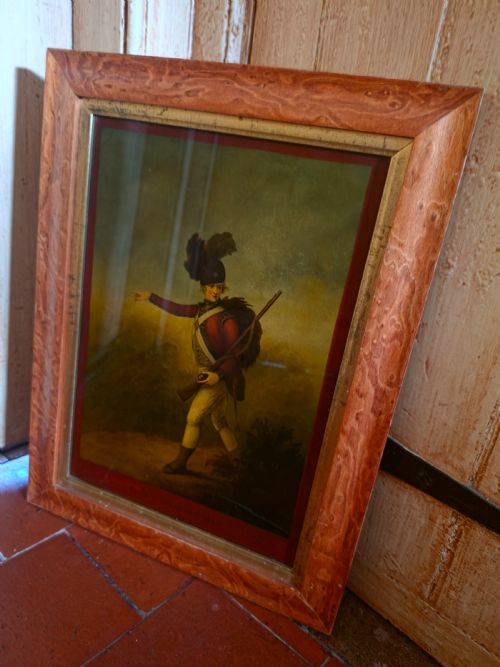
When you search for georgian painted glass, you encounter a specialised range of wall art, mirrors, and small decorative items created primarily during the eighteenth and nineteenth centuries. The selection spans delicate portrait miniatures and marriage portraits alongside grander wall mirrors featuring verre églomisé panels and reverse glass mezzotints.
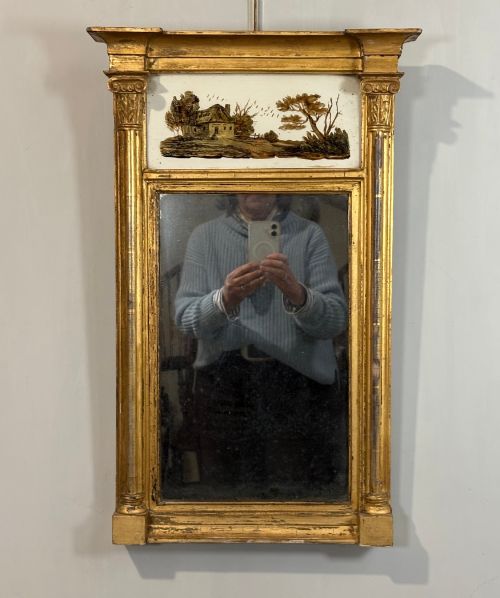
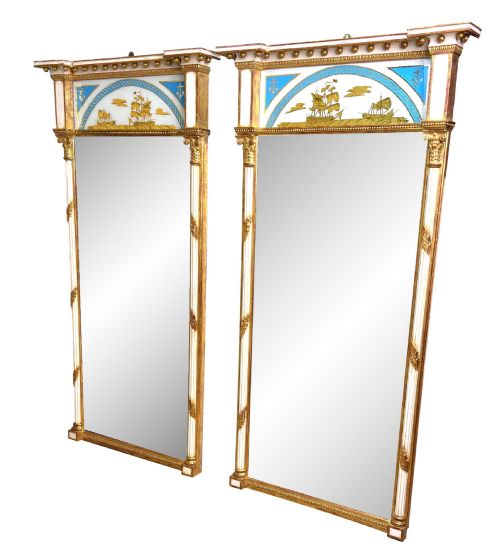
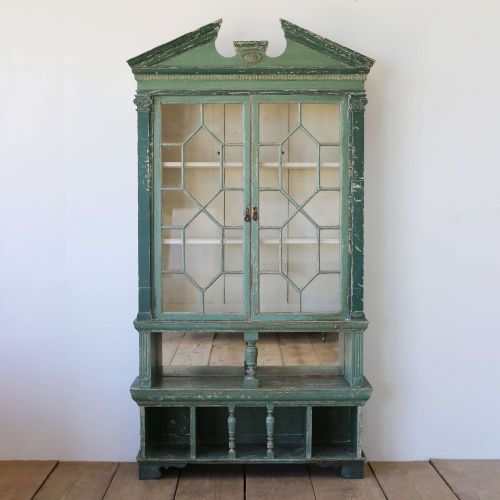
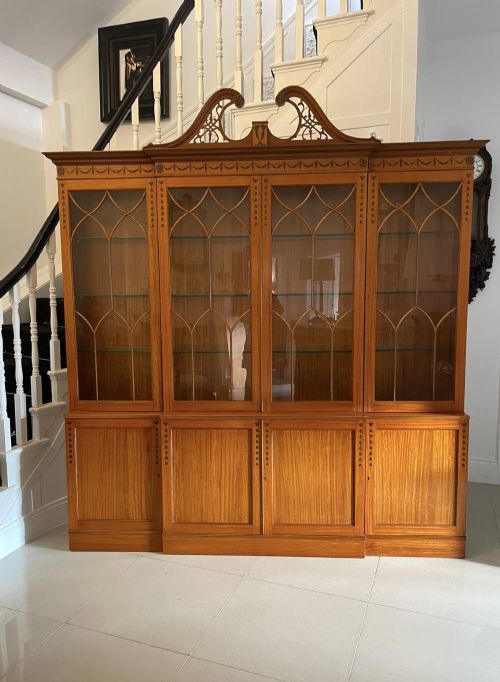
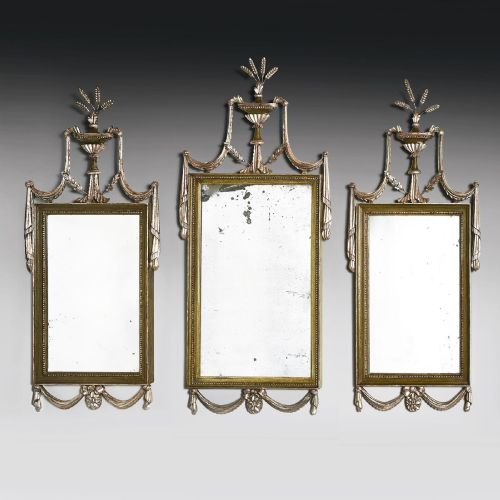
The versions you meet most frequently on this page include eighteenth-century reverse glass prints depicting historical figures or domestic scenes, alongside Regency pier mirrors with painted glass sections. Makers also applied pigment to decanters and incorporated painted glass panels into display cabinets and breakfront bookcases.
The objects cross several stylistic categories, touching upon neoclassical design, chinoiserie, and nineteenth-century British portraiture. Whether framed in giltwood or maple, these pieces display a distinct crossover between printmaking, mirror production, and miniature painting.
How They Were Made
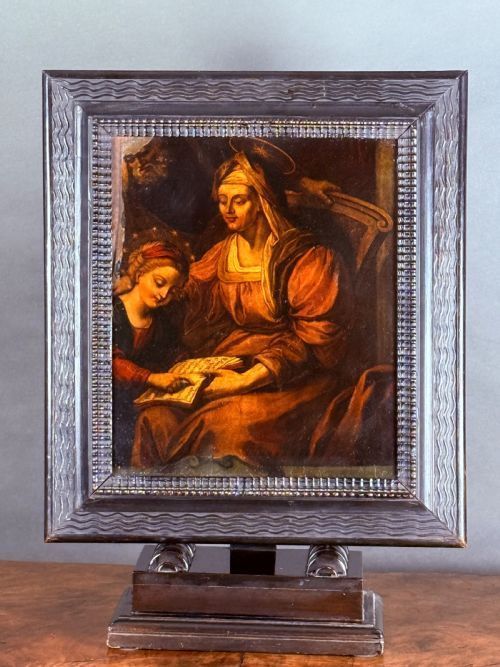
Craftsmen produced reverse glass prints and mezzotints by applying oil paint, ink, and pigment directly to the rear surface of a glass sheet, viewing the finished image through the front. This technique protected the delicate colours from dust and oxidation while imparting a glossy depth to portraits and historical scenes.
Verre églomisé panels utilised gold leaf and silver leaf applied to glass, often etched with designs and backed with pigment to create reflective borders for mirrors and trumeaux. Artisans then housed these decorated plates within frames of carved giltwood, satinwood, or maple.
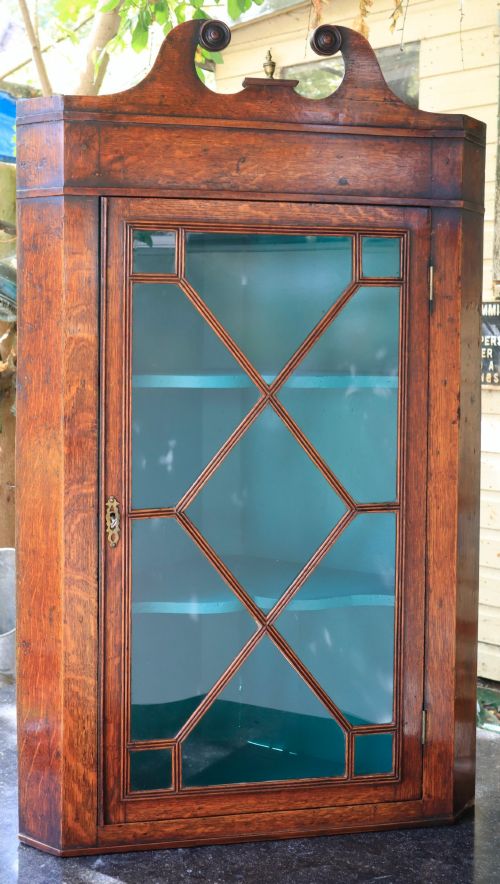
Decanters and drinking vessels featured hand-painted enamel details fired directly onto glass bodies such as white opaline or Bristol blue glass. Cabinetmakers subsequently integrated painted glass panels and mirrors into larger furniture forms like breakfront bookcases and corner cabinets.
Georgian Painted Glass Retail Price Guide 2026
Typical asking prices for georgian painted glass among the pieces listed under this phrase on Sellingantiques today, from the lower quarter to the upper quarter. They describe what is for sale here now, not the wider market.
Listings feature eighteenth-century and nineteenth-century periods, utilising materials such as verre églomisé, gold leaf, pigment, oil paint, and giltwood.
What Varies in Quality
The refinement of the painted brushwork and the clarity of the underlying print distinguish finer examples from standard production. Superior portraits capture subtle facial expressions and tonal gradients in the pigment, whereas lesser pieces rely on mechanical transfer lines with flat, heavy colouring.
The preservation of the original glass plate and its metallic leaf dictates the integrity of verre églomisé panels. Intact silvering, minimal flaking of the pigment, and original framing elements indicate a higher grade of survival compared to heavily restored or re-backed surfaces.
Gillows Of Lancaster·Fletcher·Charles Spooner·Richard Purcell·W. Bishop
The Georgian Painted Glass Glossary
- Verre églomisé
- A cold decoration technique involving the application of gold or silver leaf onto glass, combined with painting and engraving. Artisans used this method to adorn mirror panels and furniture in the Georgian and Regency periods.
- Mezzotint
- A printmaking process where the artist works from dark to light on a roughened copper plate to achieve rich tonal variations. These prints were often transferred to glass and hand-coloured.
- Pier glass
- A tall, narrow mirror designed to hang on the wall space between two windows. They frequently incorporated painted glass or verre églomisé panels in the upper section.
- Trumeau
- A decorative wall mirror featuring an upper panel containing a painting or reverse glass print. The composition sits within a unified architectural frame.
- Opaline glass
- An opaque glass type produced in white or pastel shades during the eighteenth and nineteenth centuries. Makers frequently decorated these vessels with hand-painted enamel.
Georgian Painted Glass: Frequently Asked Questions
Where should I hang these mirrors?
Hang these pieces away from direct, strong sunlight to prevent the pigments from fading and the metallic leaf from lifting.
Position them on interior walls where ambient room light can catch the glossy surface of the reverse painting.
Are these prints painted by hand?
The underlying image was typically printed from an engraved copper plate onto paper before being transferred to the glass surface.
Artisans then applied oil paint and water-based pigments by hand to colour the reverse side of the glass.
How do I spot a later reproduction?
Examine the glass itself for the irregular thickness, bubbles, and wave patterns characteristic of early manufacturing methods.
Inspect the backing materials and framing pins to confirm whether the panel retains its original eighteenth or nineteenth-century mountings.