
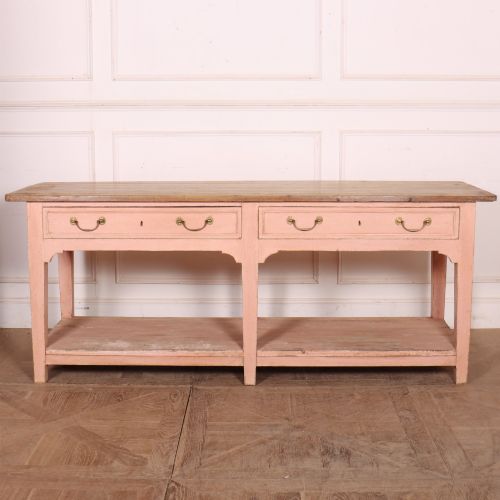
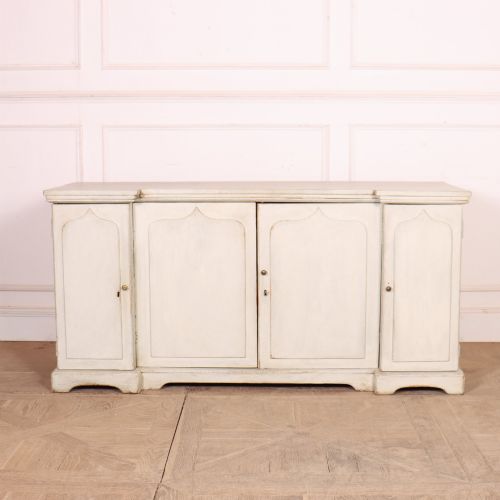
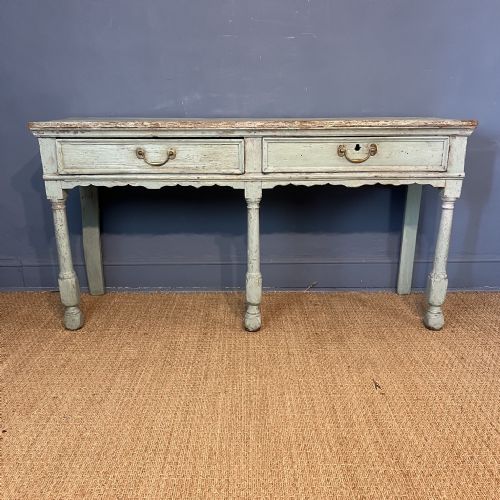
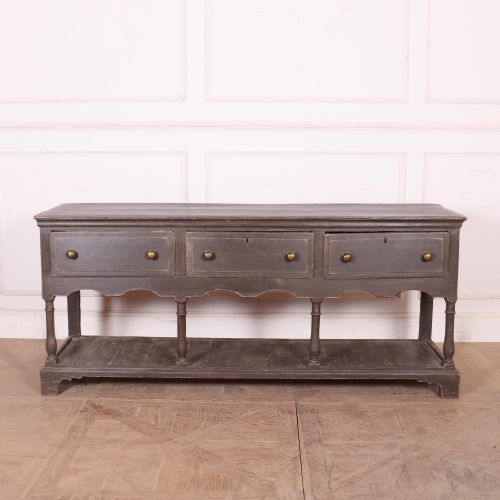





Georgian Painted Dresser Base
A georgian painted dresser base brings robust utility and honest country character to a room through centuries of practical use.
Georgian Painted Dresser Base
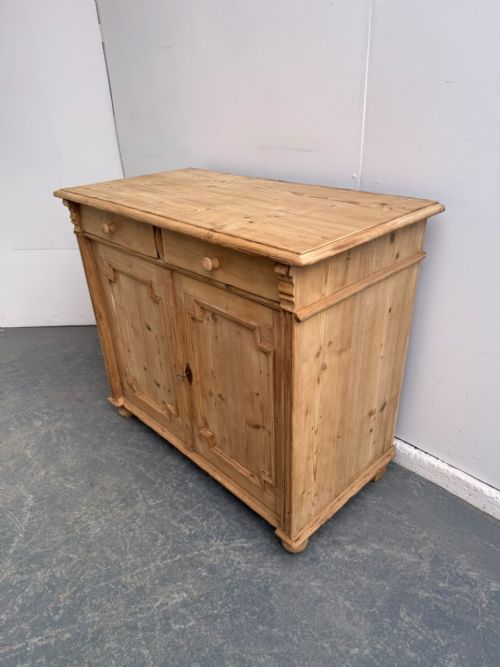
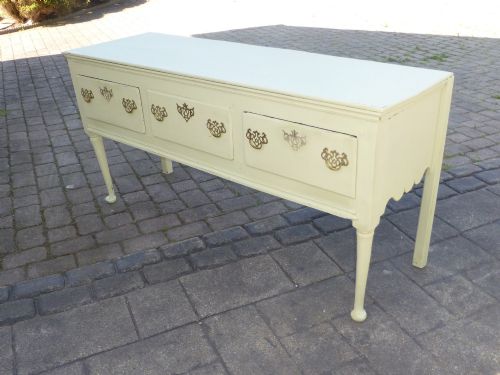
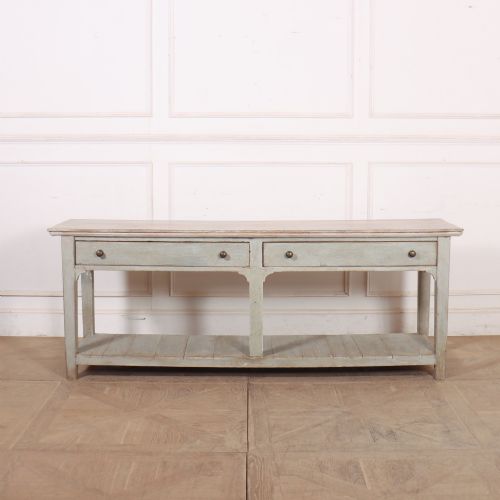
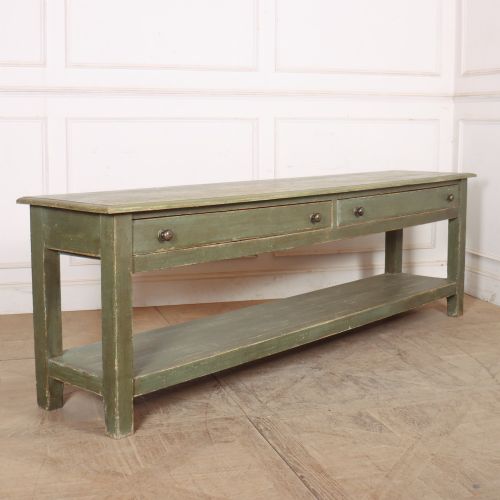
A georgian painted dresser base provides low storage through cupboards and drawers, topped by a wide timber surface suited to daily work. These pieces emerge from English country houses, farmhouses, and provincial kitchens where durable furniture handled heavy domestic service.
The versions most common here span the eighteenth and nineteenth centuries, often showing regional English characteristics. They appear alongside related serving tables, sideboards, and potboard designs that share the same utilitarian footprint.
Makers built these pieces to function primarily as working furniture rather than formal parlour showpieces. Their presence ranges from simple pine constructions to more structured oak and breakfront examples.
Materials and construction
Carpenters built these bases using native timbers such as oak and pine, frequently combining woods within a single piece for structural strength. Brass handles and metal fittings were added to drawers and doors, enduring decades of handling.
Surfaces received layers of paint, sometimes applied over older finishes during subsequent generations of use in country kitchens. The construction relies on traditional joinery techniques, visible in the heavy planking of tops and the framing of doors.
Generations of kitchen maids rubbed these wooden tops until the grain rose like corduroy.
Distinctions in quality
The standard of a base depends upon the integrity of its timber and the depth of its original surface history. Pieces retain more character when their painted finishes have aged naturally through sustained domestic life rather than modern intervention.
Structural heft and regional joinery distinguish finer examples from standard utility items. Proportions, the handling of panelled doors, and the arrangement of drawers dictate how well a base sits in a room.
The Georgian Painted Dresser Base Glossary
- Potboard
- An open lower shelf built into the base of a dresser, historically used for storing heavy pots and pans.
- Breakfront
- A cabinet or base formation where the central section projects forward from the flanking cupboards or drawers.
- Pine
- A softwood commonly utilised for country furniture, frequently painted or waxed over generations of domestic service.
- Oak
- A durable hardwood favored for early frames and structural timbers in eighteenth-century provincial workshops.
- Serving table
- A large utilitarian table configuration closely related to the dresser base, designed for food preparation and presentation.
Georgian Painted Dresser Base: Frequently Asked Questions
How do I date an oak base?
Dating relies upon examining the timber preparation, tool marks, joinery methods, and the natural wear of the structure.
Earlier eighteenth-century pieces often display hand-sawn boards and pegged joints distinct from later nineteenth-century manufacturing methods.
Where were these pieces used?
These bases served primarily in English country houses, farmhouses, and large kitchens as practical work surfaces.
They stored provisions, linen, and utensils while providing a sturdy counter for food preparation.
How do I care for painted wood?
Maintain the surface by keeping the timber away from direct heat sources and excessive moisture.
Dust gently with a dry cloth and avoid harsh chemical cleaners that can damage aged paint layers.