


Georgian Oval Pembroke Table
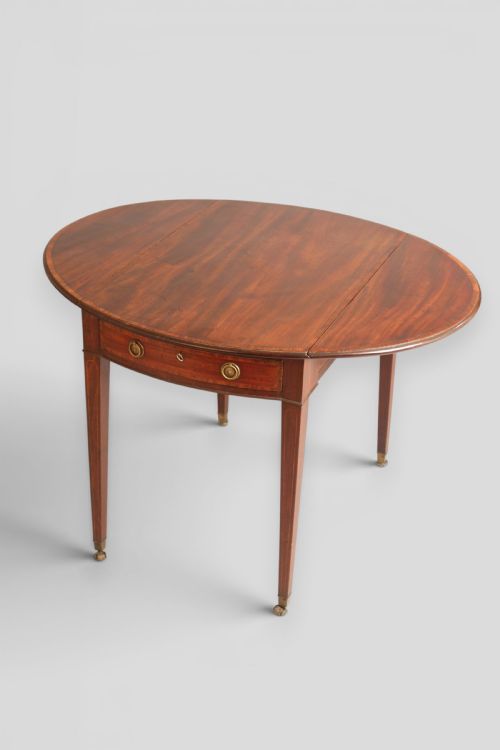
A georgian oval pembroke table offers drop-leaf versatility and refined proportions, making it a compact table for smaller spaces.
Georgian Oval Pembroke Table
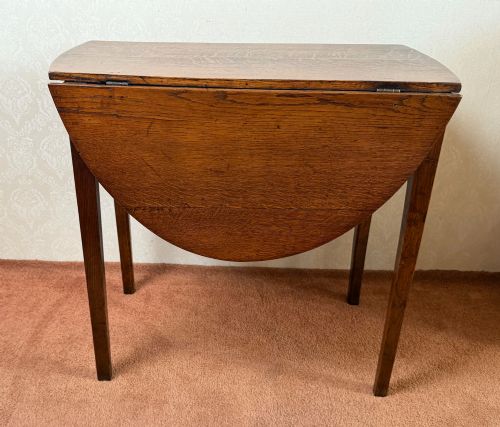
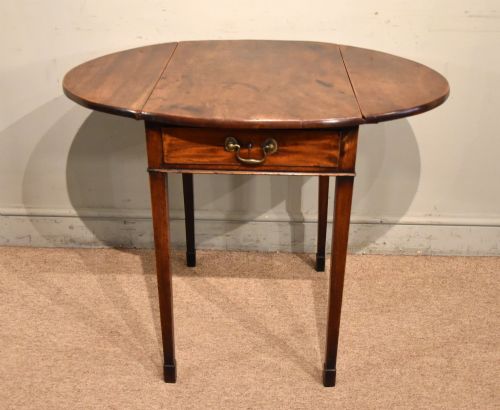
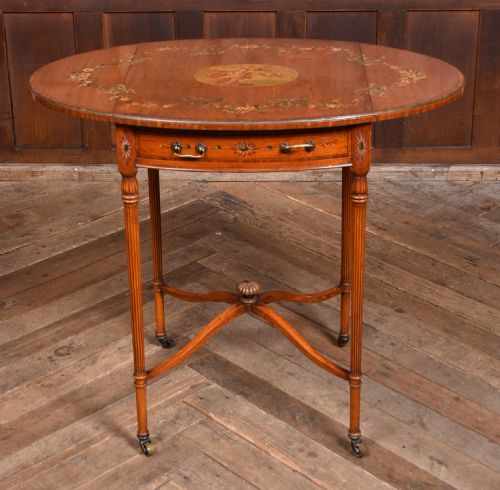
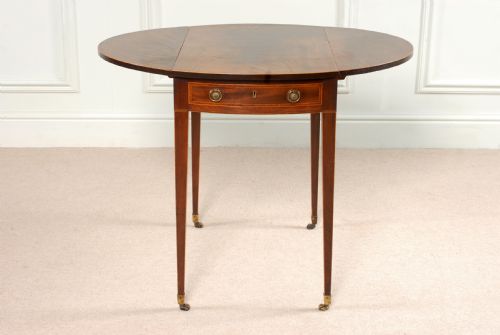
A georgian oval pembroke table is a drop-leaf occasional table characterised by its drop leaves and an oval top when open. The selection on this page spans pieces from the eighteenth century, the Regency era, and later nineteenth-century interpretations.
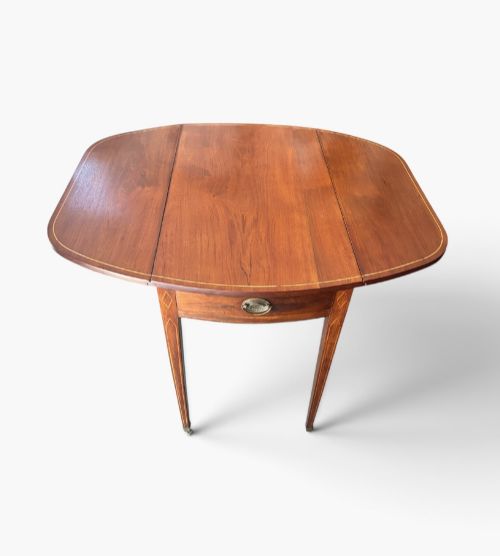
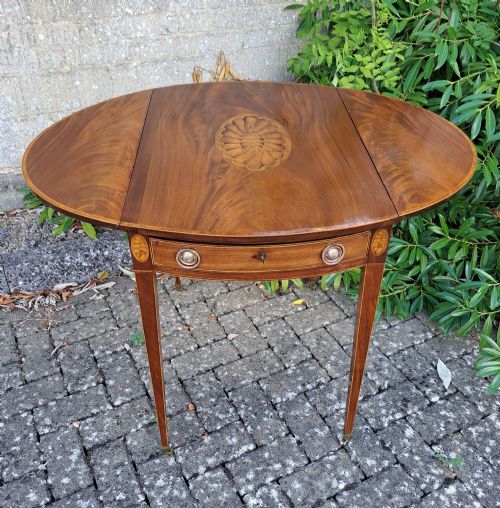
Most examples found here are constructed from mahogany, often enhanced by satinwood, kingwood, or boxwood inlay. These tables served historically as versatile pieces for breakfast, writing, or side placement in period drawing rooms.
Makers working in the Georgian, George III, and Sheraton styles designed these tables with slender legs and drop flaps, functioning equally as side tables or supper tables.
How they were made
Cabinetmakers constructed these tables primarily using solid mahogany and mahogany veneers, occasionally incorporating satinwood and rosewood for contrasting borders. Boxwood inlay and fine marquetry provided decorative detail around the tops and drawers.
The characteristic drop leaves hinged from the fixed central top, supported by pivoting rule joints and swinging brackets or fly legs. Brass castors frequently fitted the base of the legs to allow easy movement across the floor.
Some drop-leaf tables include dummy drawers designed to balance the visual symmetry of the piece while keeping tea supplies hidden.
What varies in quality
Quality in a georgian oval pembroke table rests on the crispness of the cabinetwork and the choice of timbers. Superior pieces display figured mahogany veneers, precise boxwood inlay, and finely turned or tapered legs.
The refinement of the drop-leaf hinges and the structural integrity of the pivoting support brackets distinguish standard examples from finer Sheraton or George III pieces.
The Georgian Oval Pembroke Table Glossary
- Pembroke table
- A small occasional table with hinged drop flaps on either side, often featuring one or more small drawers. It originated in the eighteenth century and gained widespread popularity for domestic versatility.
- Drop leaf
- A hinged flap attached to the fixed centre of a table top that lifts to extend the surface area. It rests on pivoting wooden brackets when raised.
- Inlay
- A decorative technique where contrasting woods such as satinwood, kingwood, or boxwood are set into the primary timber surface. This creates geometric borders or pictorial motifs.
- Marquetry
- Elaborate veneer work arranged to form decorative patterns or pictures across furniture surfaces. It utilises various coloured timbers to achieve pictorial depth.
- Rule joint
- A moulded joint connecting a table top to its drop leaf, designed to hide the hinge mechanism while supporting the leaf in both lowered and raised positions.
Georgian Oval Pembroke Table: Frequently Asked Questions
What is a pembroke table used for?
These tables served multiple domestic purposes in period homes, functioning as breakfast tables, writing desks, or side tables against a wall. The drop leaves allowed the footprint to contract when space was limited.
Today, they suit similar roles in modern interiors as compact lamp tables, occasional desks, or bedside furniture.
How do I identify a Georgian table?
Georgian furniture is identified through timber selection, construction methods, and stylistic cues associated with the reigns of the Georges. Mahogany and satinwood predominate, alongside characteristic tapered legs or spade feet.
Cabinetmakers of this period relied on hand-cut dovetails and traditional joinery rather than modern fasteners.
Are all these tables from the 18th century?
The pieces listed span multiple periods, ranging from original eighteenth-century and George III examples to Regency and Edwardian revivals. Later nineteenth-century interpretations replicate the earlier Georgian style.
Each listing notes the specific period of origin to help differentiate original antiques from later reproductions.
How do I care for mahogany furniture?
Maintain mahogany surfaces by keeping them away from direct sunlight and radiators, which can dry out the timber and veneer. Regular dusting with a soft, dry cloth preserves the finish.
Apply traditional beeswax periodically to nourish the wood and maintain its natural lustre without building up heavy wax layers.