

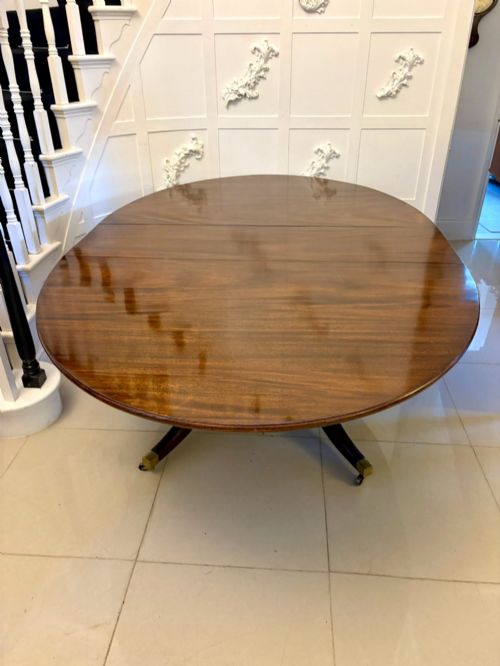
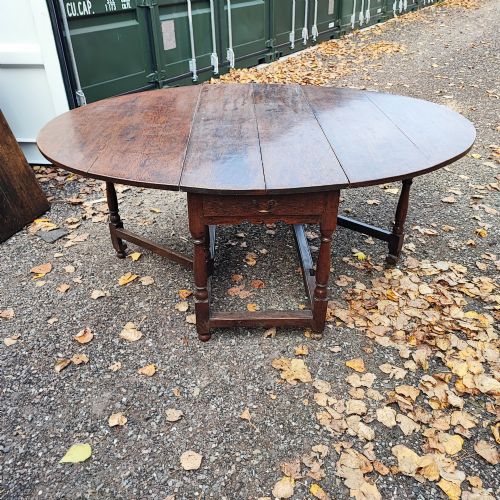
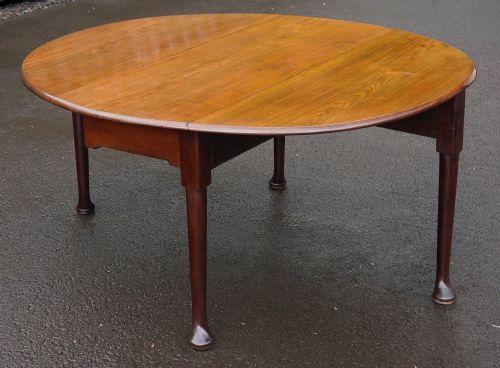
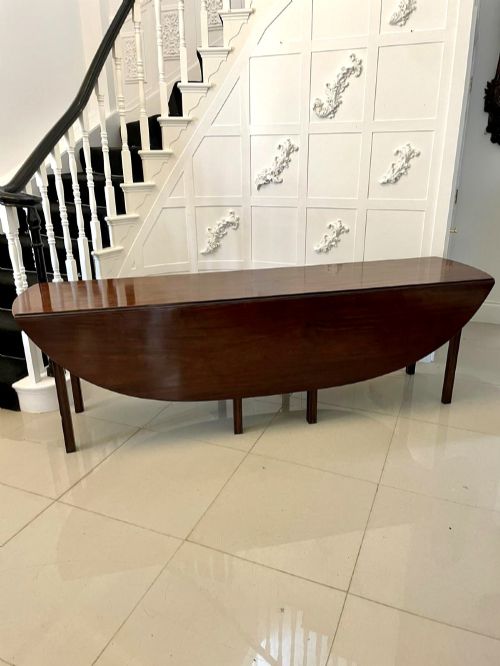

Georgian Oval Drop Table
A georgian oval drop table combines practical folding leaves with curved ends suited to period interiors.
Georgian Oval Drop Table
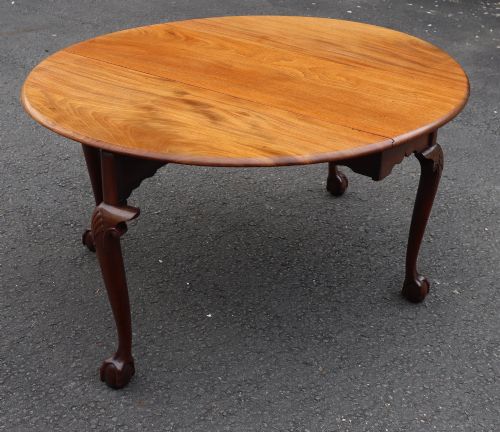
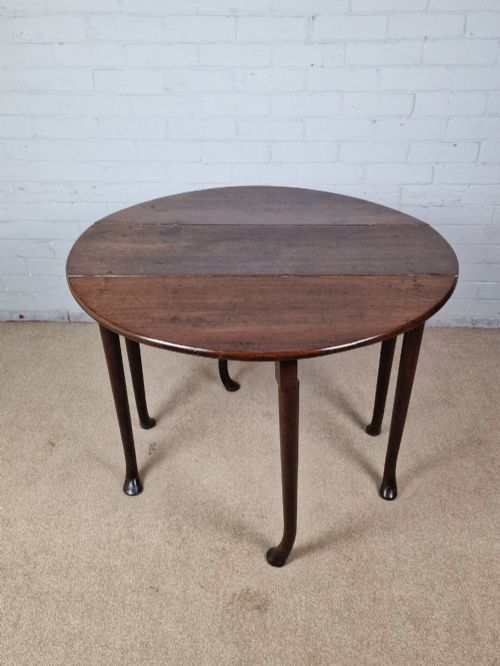
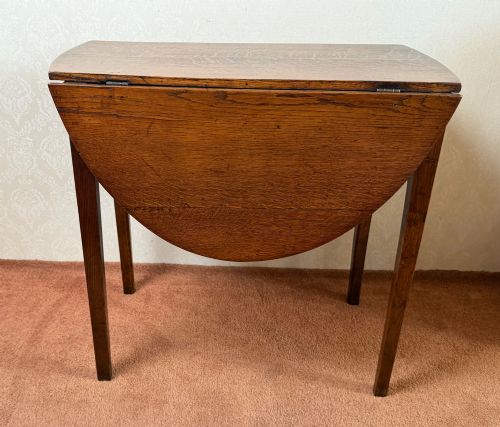
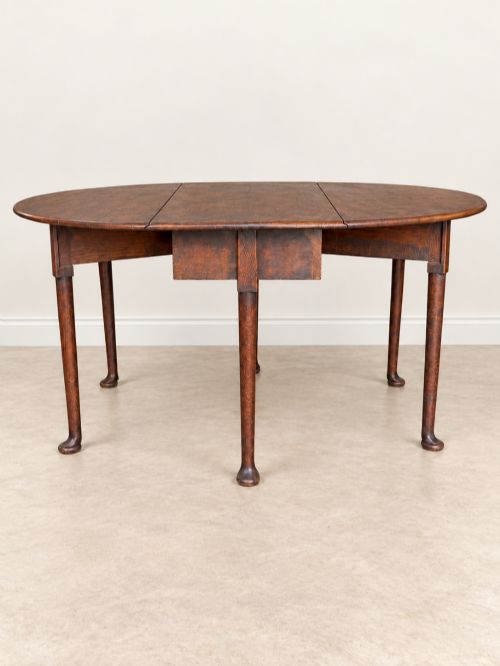
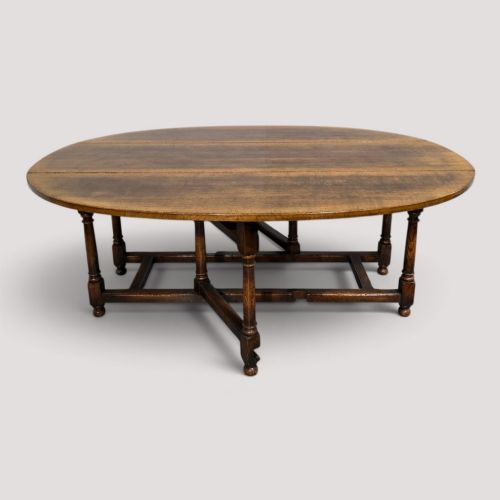
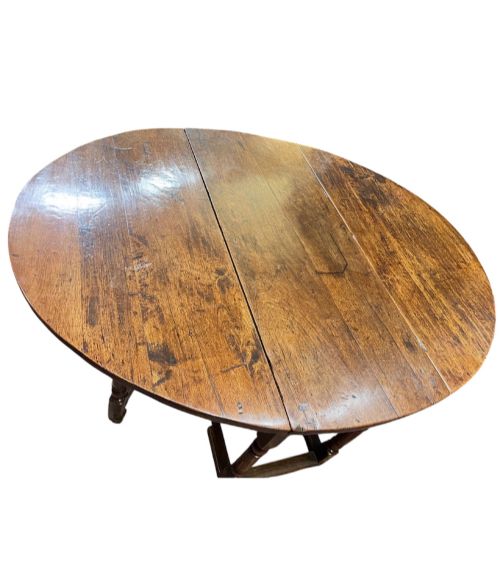
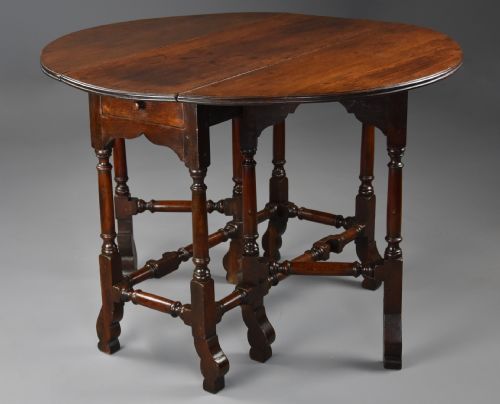
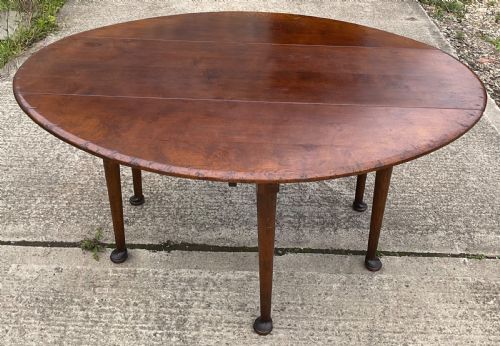
A georgian oval drop table is a versatile folding piece designed to extend for meals or fold down to save space against a wall. The examples on this page primarily span the eighteenth century and the Regency period, encompassing both dining and occasional scales.
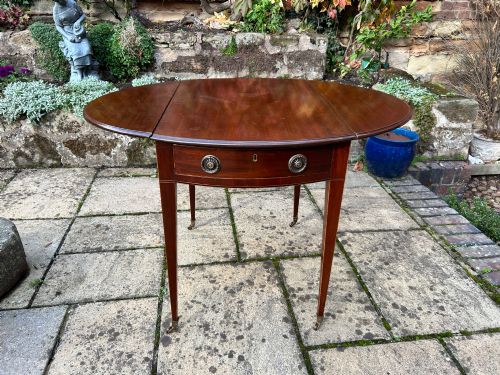
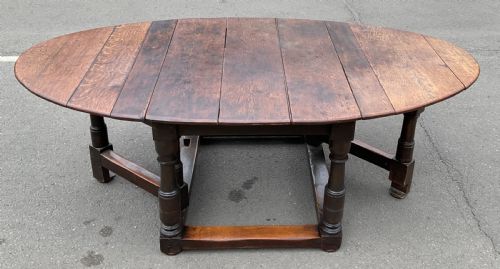
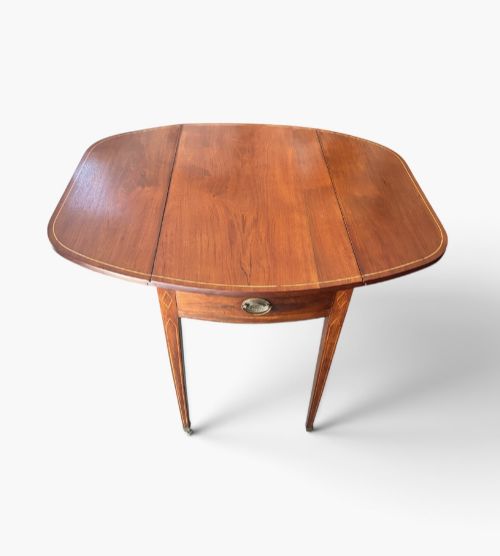
Most pieces follow standard Georgian or George II and George III proportions, utilising mahogany, oak, or walnut. Buyers typically encounter either large gateleg dining versions supported by multiple swing legs or smaller Pembroke formats featuring side drawers.
The form adapts easily from country oak constructions to formal mahogany designs featuring cabriole legs and pad feet. Regional variations, such as Irish pieces, display distinct carving details and larger scales.
How They Were Made
Cabinetmakers constructed these tables using dense timbers like mahogany, walnut, and oak, often incorporating secondary woods for framing. Finer examples utilise decorative veneers such as satinwood, kingwood, and boxwood for contrasting stringing and borders.
Mechanical joints rely on traditional gateleg swing actions or hinged Pembroke flaps supported by pivoting wooden brackets. Legs frequently terminate in pad feet, hoof feet, or plain turned profiles depending on the exact period.
Georgian Oval Drop Table Retail Price Guide 2026
Typical asking prices for georgian oval drop table among the pieces listed under this phrase on Sellingantiques today, from the lower quarter to the upper quarter. They describe what is for sale here now, not the wider market.
Some drop leaves hide secret drawers designed for storing sewing kits and midnight snacks.
What Varies in Quality
Quality rests primarily on the choice of timber and the depth of the natural patina accumulated over centuries of use. Solid, highly figured walnut or dense Cuban mahogany command greater appreciation than plain secondary woods.
Structural integrity in the pivoting mechanisms and the crispness of carved details, such as cabriole knees and pad feet, separate standard examples from exceptional pieces. Original brass hardware and minimal timber replacement preserve the integrity of the construction.
The Georgian Oval Drop Table Glossary
- Drop-leaf
- A table featuring a fixed central section with hinged flaps on either side that rise to expand the surface area. These flaps are supported by swing legs or brackets.
- Gateleg
- A table construction where hinged legs swing outward like a gate to support the raised drop leaves. This design provides sturdy support for large dining surfaces.
- Pembroke
- A small rectangular or oval table featuring two drop leaves on opposing sides and usually a single drawer. They served traditionally as breakfast or occasional writing tables.
- Cabriole
- A furniture leg that curves outward at the knee and tapers inward toward the ankle, imitating animal limbs. This style was popular during the Queen Anne and George II periods.
- Pad foot
- A simple rounded foot resting directly on the floor at the base of a straight or cabriole leg. It appears frequently on early eighteenth-century tables.
Georgian Oval Drop Table: Frequently Asked Questions
What is a georgian oval drop table used for?
These tables served primarily as flexible dining furniture in period homes where space required frequent reconfiguration. Dropping the leaves allowed the furniture to sit compactly against a wall when not in use.
Larger gateleg versions accommodated families and guests for meals, while smaller Pembroke variations functioned as occasional or breakfast tables in private parlours.
How do I identify a georgian oval drop table?
Identification relies on examining the timber species, construction joints, and foot styles characteristic of the eighteenth century. Mahogany, walnut, and oak dominate the material record across these periods.
Details such as swing gatelegs, rule joints on the drop leaves, and traditional hand-cut joinery confirm the age and stylistic attribution of the piece.
How do I care for antique timber surfaces?
Maintaining historical timber surfaces involves applying appropriate natural waxes rather than modern silicone polishes. Regular dusting with a soft cloth prevents accumulation of abrasive particles.
Keep the furniture away from direct heat sources and dramatic humidity shifts to prevent timber splitting and shrinkage around the hinged joints.
Can I use a drop leaf table daily?
These tables were built for daily domestic service and remain robust enough for regular modern use. Care must be taken when operating the drop leaves and swing legs to avoid straining historical hinges.
Using protective pads beneath hot dishes or liquids preserves the polished timber surface from staining and heat rings during meals.