
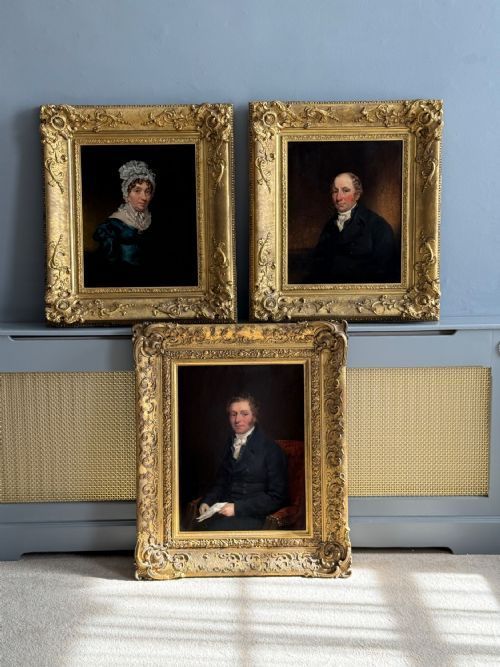

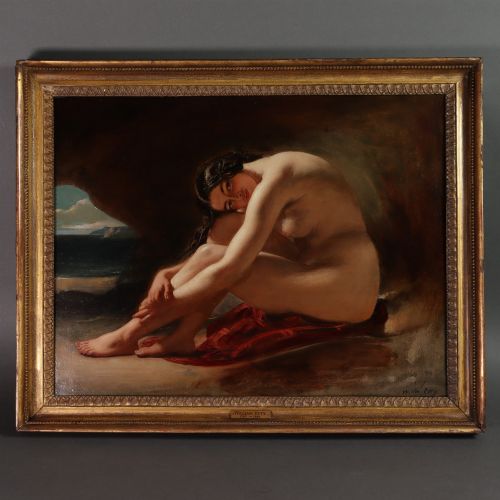


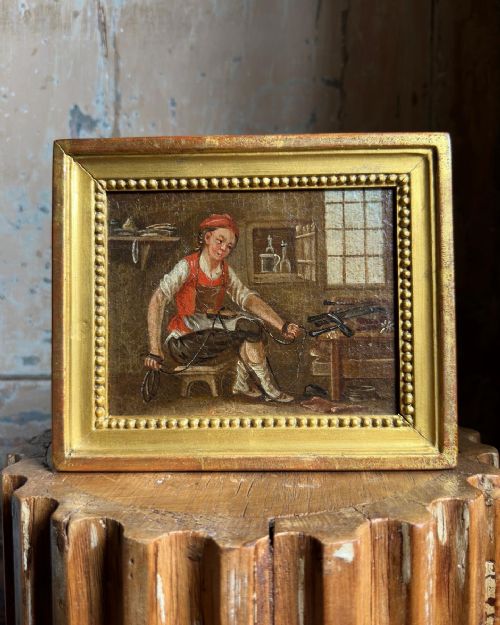


Georgian Oil Portrait Panel
A georgian oil portrait panel brings the direct gaze of the eighteenth or nineteenth century straight onto rigid wooden boards.
Georgian Oil Portrait Panel
A georgian oil portrait panel presents faces and figures painted directly onto solid wooden supports during the eighteenth and nineteenth centuries. These works capture sitters ranging from named gentlemen and children to anonymous subjects rendered in naive or academic styles.
Most pieces encountered here date from the eighteenth and nineteenth centuries, spanning periods like the Regency and Georgian eras. Alongside single portraits, the category includes narrative scenes, musical duets and equine studies executed on wooden panels.
The origins stretch across British and English schools, featuring works attributed to notable painters as well as charming folk art pieces. Buyers will find subjects set against architectural backgrounds, plain interiors or intimate dark spaces.
What varies in quality
The standard of execution in a georgian oil portrait panel depends heavily on the confidence of the brushwork and the anatomical accuracy of the sitter. Finer examples display subtle modulation of light across the face, whereas naive or folk art pieces prioritize expressive charm over proportion.
The choice and preparation of the wooden support also influence the piece, with stable, well-seasoned panels preventing warping and preserving the pigment layer. Attribution to a recorded hand or school adds historical weight to the work.
Listings feature works spanning the seventeenth, eighteenth and nineteenth centuries, executed on wood panels, pine panels and copper.
Joseph Clover RA·William Etty·William Williams·Balthasar Denner·Sir Thomas Lawrence·Francesco Renaldi·Stephen Taylor·George Clint
The Georgian Oil Portrait Panel Glossary
- Panel
- A flat piece of wood used as a support for painting instead of stretched canvas. Painters preferred rigid boards for their smooth surface and durability.
- Naive art
- Artwork created by an artist without formal academic training, often characterised by flat perspective and honest directness. These pieces possess a distinct folk art appeal.
- Giltwood
- Wood that has been coated with gold leaf or a gold-coloured metallic finish. This treatment was standard for framing fine portraits of the period.
- Gesso
- A white paint mixture consisting of a binder mixed with chalk, gypsum or pigment. It was applied to panels to prepare a smooth surface for oil painting.
Georgian Oil Portrait Panel: Frequently Asked Questions
How do I care for a wood panel painting?
Keep the panel away from direct sunlight and sudden shifts in temperature or humidity to prevent the wood from warping. Gentle dusting with a dry, soft cloth is sufficient for routine maintenance.
Avoid using any water or cleaning solutions on the painted surface. Professional conservation is recommended if the paint layer shows signs of cracking.
Are all these portraits painted on wood?
The majority of pieces utilise wooden panels or boards as the primary support for the oil paint. You may occasionally encounter variations such as copper sheets or canvas laid onto wood.
Check the individual listing details to confirm the exact material used for the support. Each medium reacts differently to age and environmental conditions.
What is the difference between naive and academic portraits?
Academic portraits follow strict rules of proportion, perspective and lighting taught by official art academies. These works aim for a naturalistic representation of the sitter.
Naive portraits disregard these formal rules in favour of a simpler, more direct style. They often feature charming distortions and a strong emphasis on pattern and colour.
How can I tell the period of a panel?
Dating relies on the costume, hairstyle and framing style of the sitter, alongside the type of wood and preparation used for the panel. Written inscriptions or signatures on the reverse often provide additional clues.
Comparing the technique with known works from schools of the eighteenth and nineteenth centuries helps narrow down the decade of creation.