
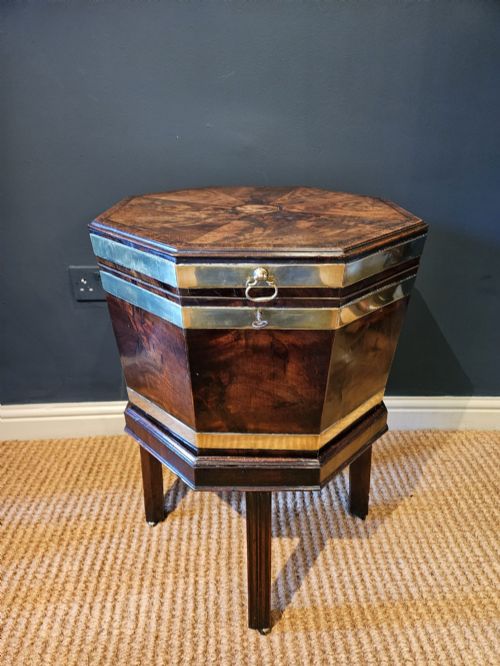
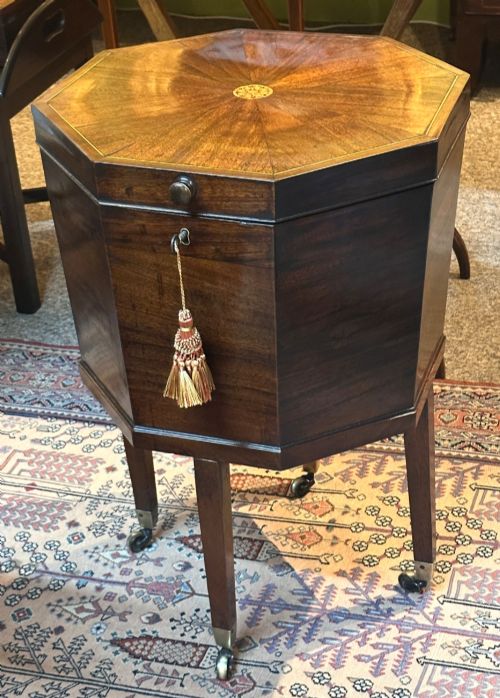
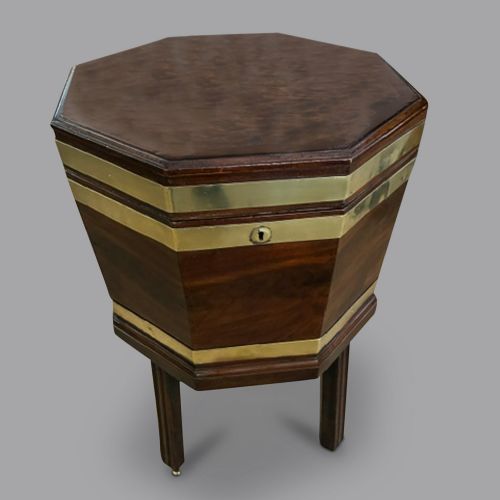
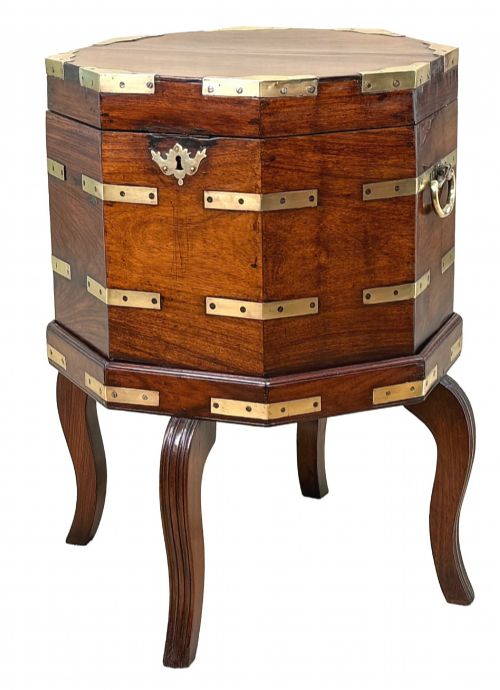




Georgian Octagonal Cellarette
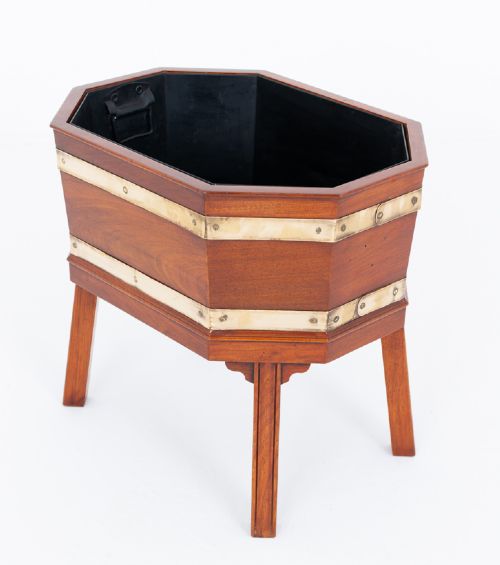
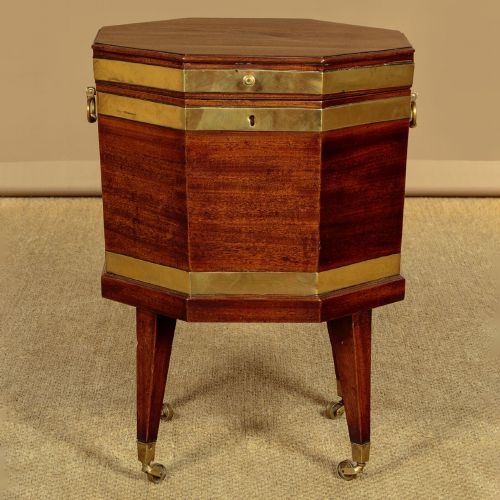
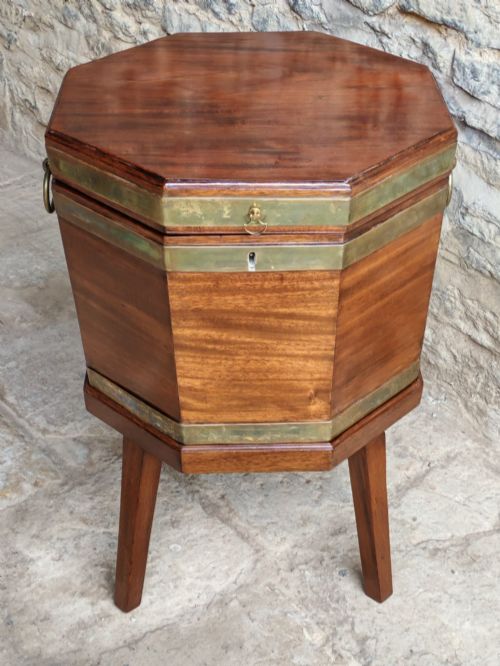
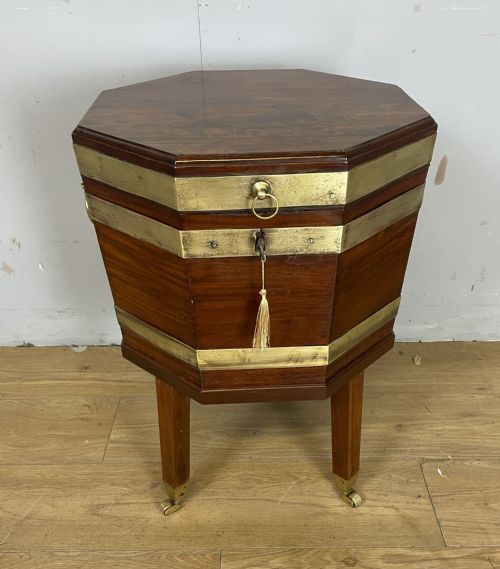
A georgian octagonal cellarette is a grand dining room vessel built to hold and cool wine bottles.
Georgian Octagonal Cellarette
When searching for a georgian octagonal cellarette, buyers encounter robust mahogany forms designed to sit beneath the sideboard or beside the dining table. These serving pieces date primarily from the eighteenth century and the Georgian period, though revival pieces from the early twentieth century also appear.
The dominant material format is mahogany, frequently accented with contrasting wood inlay or heavy brass banding. Many examples utilise the distinctive eight-sided shape to maximise internal storage while fitting neatly into the panelled rooms of the period.
How they were made
Joiners constructed these vessels from dense hardwoods such as mahogany and padouk, employing tight stave or panel assembly to contain heavy loads of ice and liquid. Wood veneer and fine satinwood inlay frequently decorate the exterior surfaces.
Metal components played a structural and decorative role, with brass bands circling the body to secure the timber staves. Handles and feet cast in metal provided the necessary strength for moving the heavy vessels.
Some vessels enjoyed a career change, moving from chilling claret to housing indoor ferns.
What varies in quality
Proportion and interior preservation define the upper range of surviving pieces. Original metalwork and sound internal construction command greater attention from discerning collectors.
The Georgian Octagonal Cellarette Glossary
- Cellarette
- A lockable container used in the dining room to store bottles of wine before they were served at the table. These vessels often sat on the floor beneath a sideboard.
- Jardiniere
- An ornamental receptacle designed to hold growing plants or flowers. In later periods, wine coolers occasionally found a second life in this capacity.
- Padouk
- A heavy tropical hardwood known for its deep reddish hue and durability. Makers utilised this timber in Anglo-Indian colonial pieces.
- Satinwood
- A luminous timber native to India and Ceylon, valued for its pale yellow tone and smooth grain. Craftsmen employed it for decorative inlay and banding.
Georgian Octagonal Cellarette: Frequently Asked Questions
What is a georgian octagonal cellarette?
A georgian octagonal cellarette is a large, eight-sided wooden container built during the eighteenth or early nineteenth century to hold wine bottles and ice.
These pieces sat in the dining room to keep wine cool before it was poured at the table.
How were these cellarettes used?
Servants filled the interior with ice and water to chill wine bottles during long formal dinners. The lockable lids kept the expensive wine secure.
Later on, some of these vessels were repurposed to hold potted plants.
How do I spot a revival piece?
Revival pieces often date to the early twentieth century, such as nineteen twenty, adopting the Regency style using older manufacturing methods.
Inspect the interior construction and timber ageing to distinguish a Georgian original from a later copy.
What woods were used?
Mahogany is the primary timber found in these listings, complemented by satinwood inlay and padouk in colonial examples.
Brass banding frequently reinforces the wooden staves of the body.