

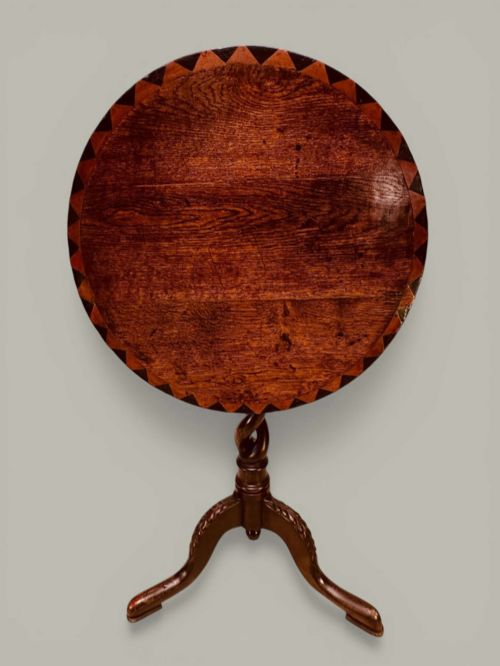
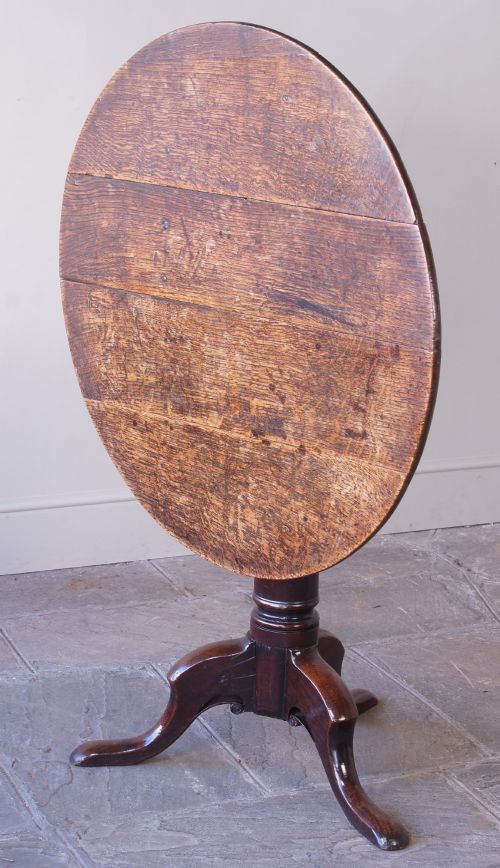
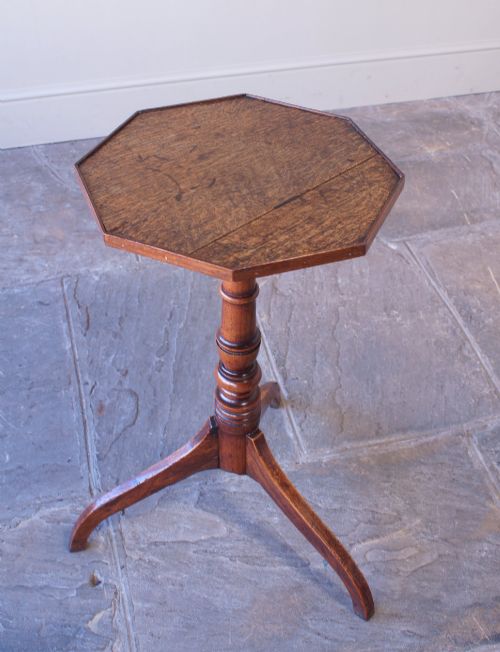
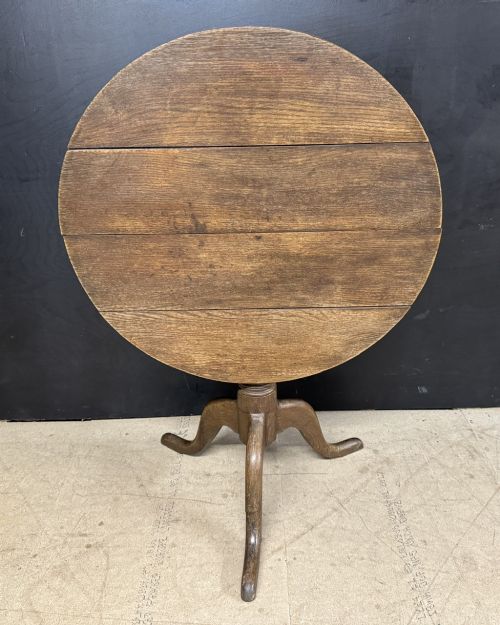
Georgian Oak Tilt Top Wine Table
A georgian oak tilt top wine table offers practical surface space with the clever convenience of a pivoting mechanism.
Georgian Oak Tilt Top Wine Table
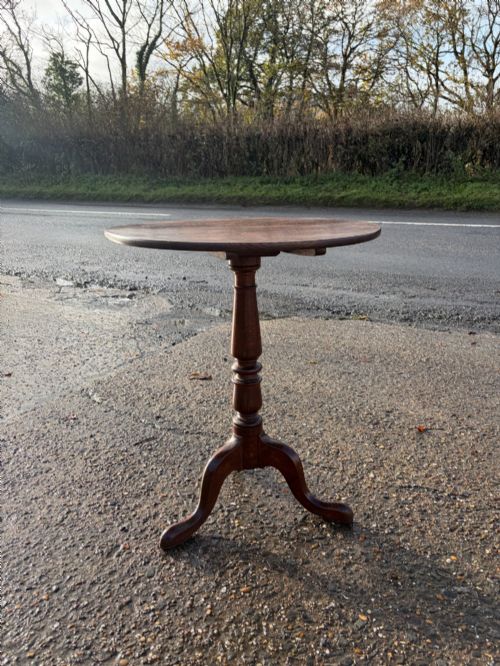
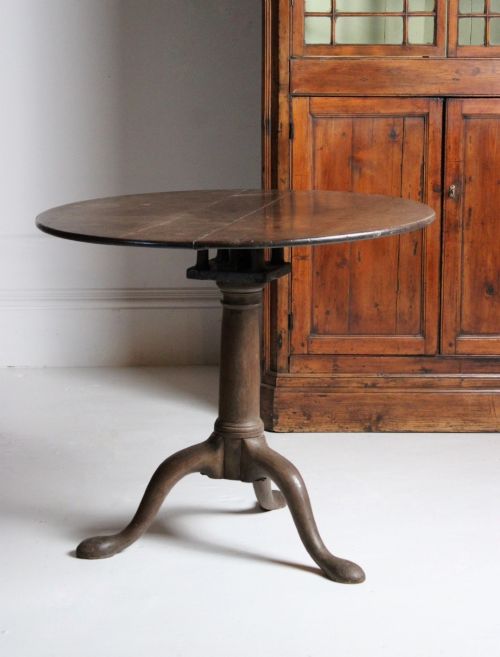
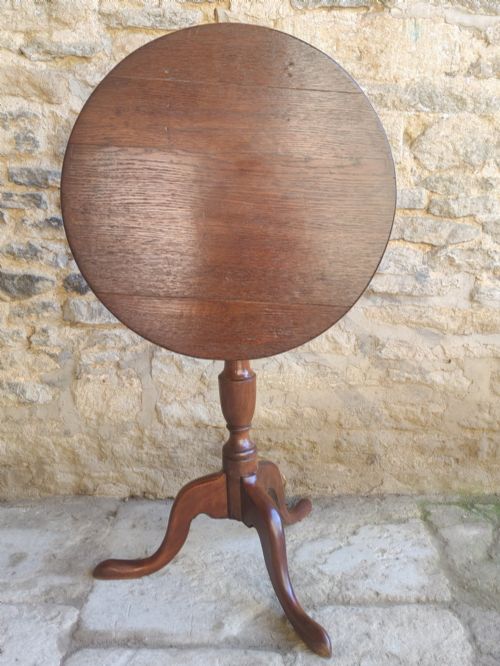
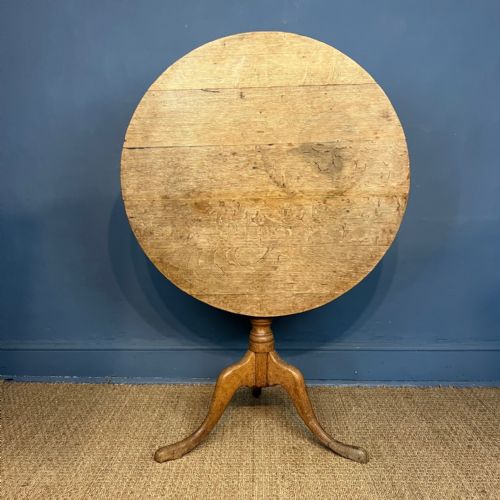
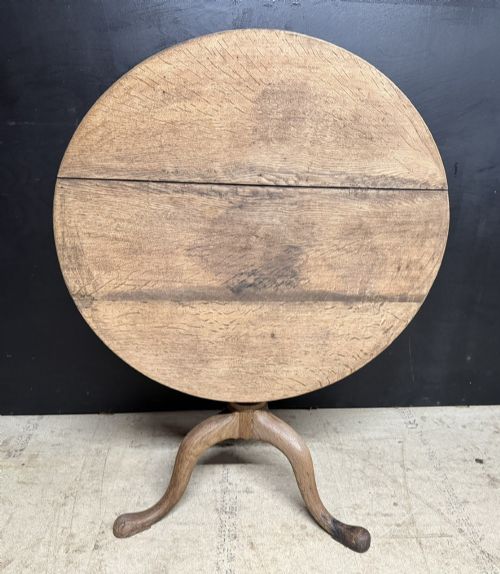
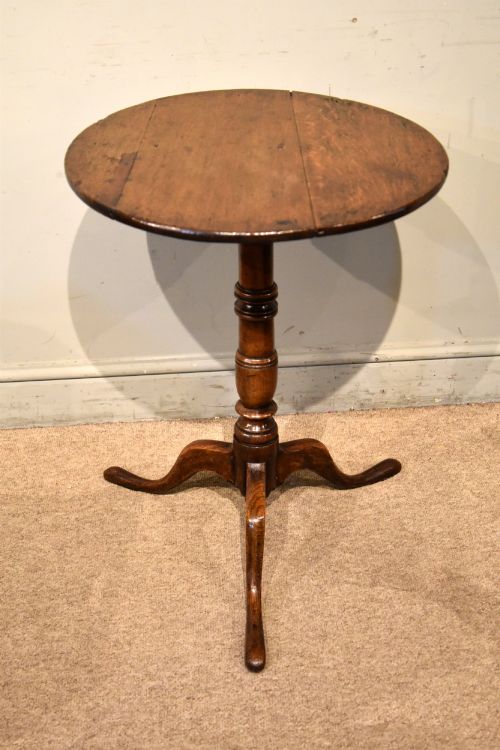
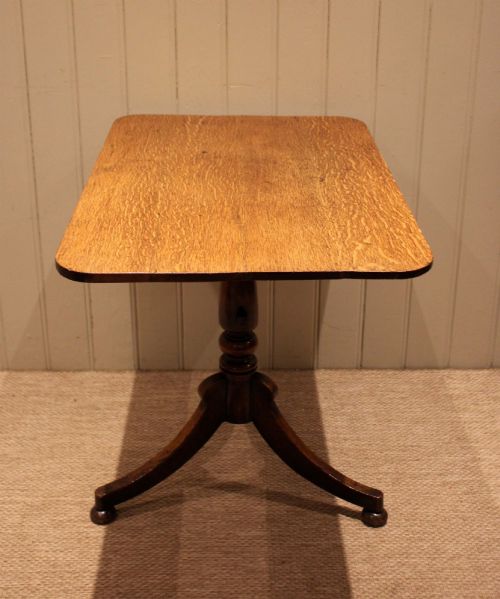
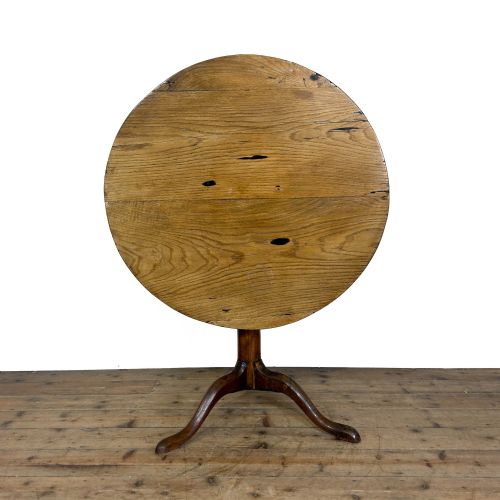
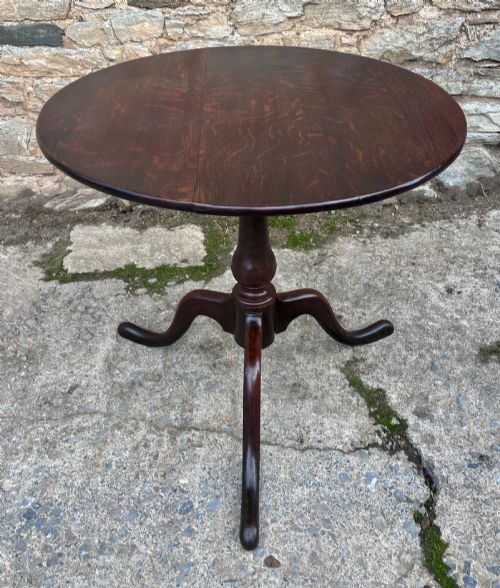
A georgian oak tilt top wine table takes the form of a tripod base supporting a circular or rectangular top that folds flat when not in use. These pieces function primarily as occasional, side, or lamp tables within domestic settings.
Most examples appearing here belong to the Georgian and 18th century periods, often constructed in regional vernacular workshops. Makers frequently paired an oak top with elm, beech, or yew wood components.
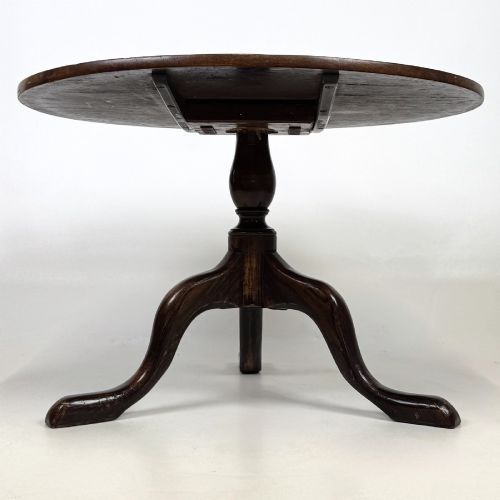
The mechanism relies on a birdcage or catch assembly beneath the surface, allowing the top to tilt vertically for storage against a wall. This space-saving design defined small dining and drinking furniture of the era.
Assessing quality
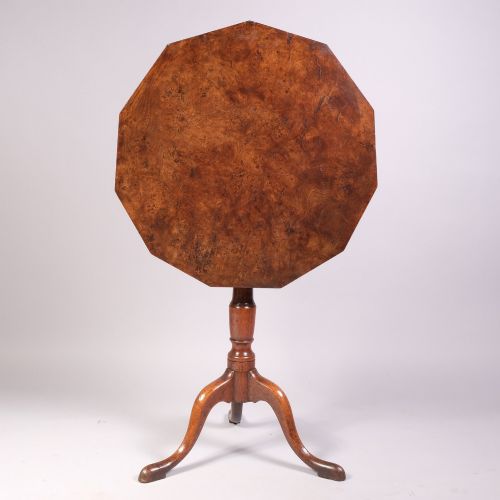
Quality rests in the balance of the tripod base and the turning of the central column. Superior examples display crisp joinery and well-figured timber such as burr oak or pollard oak rather than plain boards.
The tightness of the tilt mechanism and the retention of original brass or iron hardware influence the standing of a piece. Vernacular examples show varying degrees of naive handcraft, where simpler execution contrasts with finer cabinetwork.
Georgian Oak Tilt Top Wine Table Retail Price Guide 2026
Typical asking prices for georgian oak tilt top wine table among the pieces listed under this phrase on Sellingantiques today, from the lower quarter to the upper quarter. They describe what is for sale here now, not the wider market.
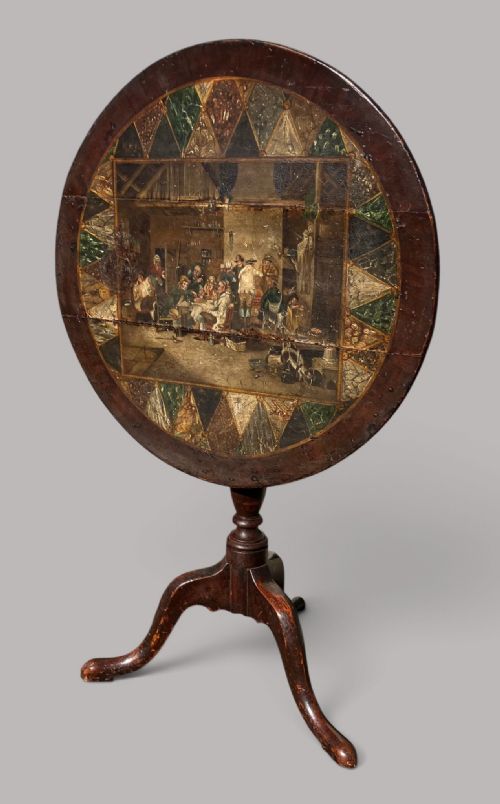
Country makers occasionally left whimsical tool marks and naive paintwork on these tables, proving that provincial joiners enjoyed surprising their clients.
The Georgian Oak Tilt Top Wine Table Glossary
- Tilt top
- A table design featuring a hinged top that pivots to a vertical position when not in use. This mechanism saved floor space in smaller period rooms.
- Tripod base
- A support structure consisting of three splayed legs radiating from a central turned column. It provided stability on uneven rush-strewn or timber floors.
- Birdcage
- A timber framework beneath the table top that allows the surface to both tilt and rotate. This revolving action added convenience for serving wine or meals.
- Vernacular
- Furniture made by local country craftsmen using regional timbers rather than following strict metropolitan London fashions. These pieces often exhibit robust utility and charming individuality.
- Snaptop table
- An alternative period term for a tilt top table, referencing the catch that snaps the top into a horizontal position.
Georgian Oak Tilt Top Wine Table: Frequently Asked Questions
How do I use a tilt top table?
Release the wooden or brass catch beneath the surface to pivot the top into a vertical position for storage against a wall. When needed flat, lower the top until the catch locks securely into the horizontal resting place.
Keep the table away from direct heat sources to prevent the solid oak boards from warping. Use coasters to protect the antique timber finish from moisture marks.
Were these tables only for wine?
While historic records mention wine and supper use, these versatile three-legged pieces served multiple domestic roles as lamp tables, occasional stands, or gaming surfaces.
Their light weight made them easy to move around a parlour or drawing room depending on daily requirements.
How do I tell an 18th century table from a later copy?
Examine the underside of the top and the peg construction within the tripod joints for tool marks and timber shrinkage consistent with age. Eighteenth century examples often show hand-sawn board marks and traditional pegging rather than modern screws.
Regional vernacular pieces will also display the natural wear patterns accumulated over centuries of domestic use.
Why do some tops have inlaid details?
Inlaid surfaces appear on later variations, such as Edwardian or Regency pieces, where makers sought to decorative the timber grain. Decorative banding added visual contrast to the central oak or burr oak panels.
Earlier country examples generally relied on the natural figuring of the wood rather than added stringing or marquetry.