

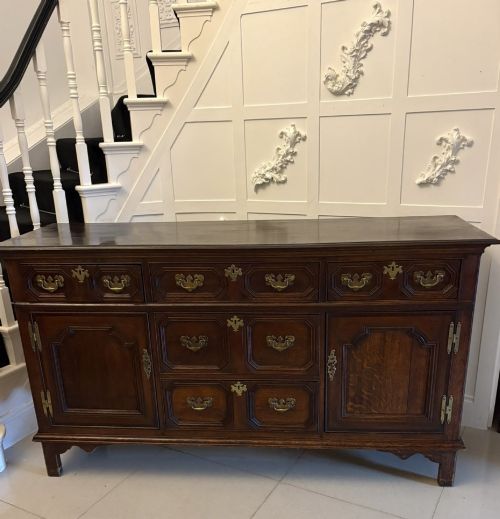
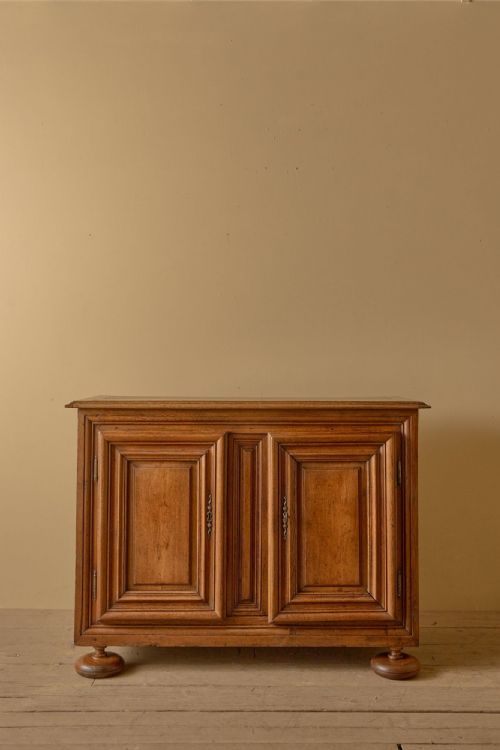
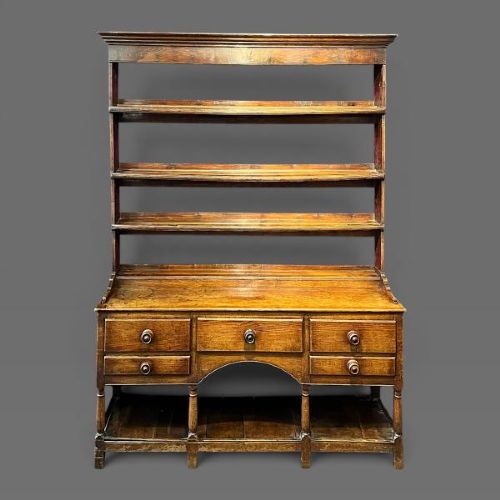
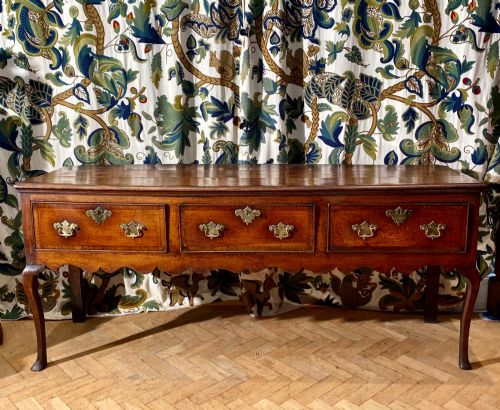
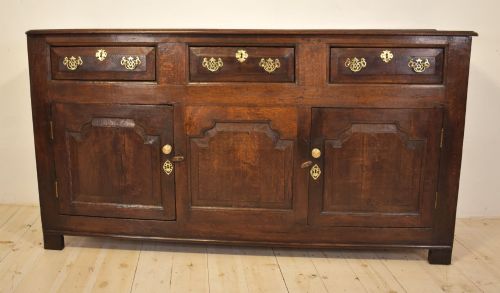
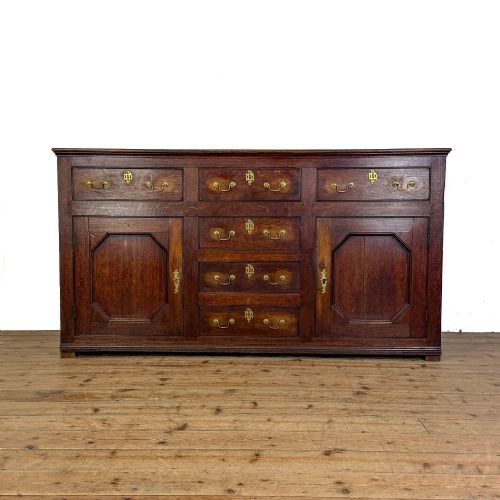


Georgian Oak Storage Sideboard
A georgian oak storage sideboard provides heavy timber utility and surface space, forged for rural farmhouses and country estates.
Georgian Oak Storage Sideboard
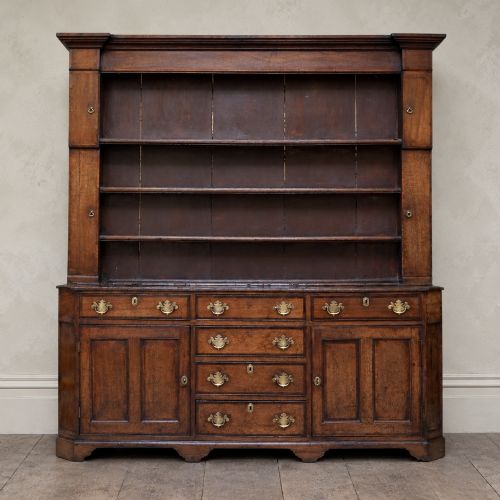
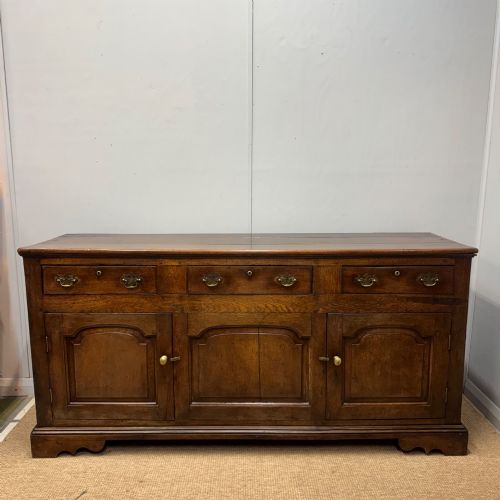
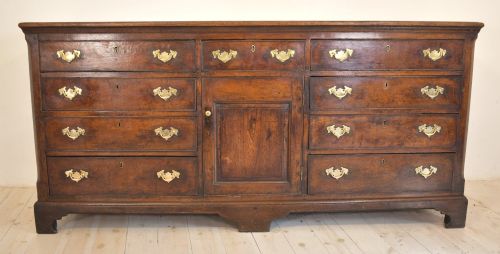
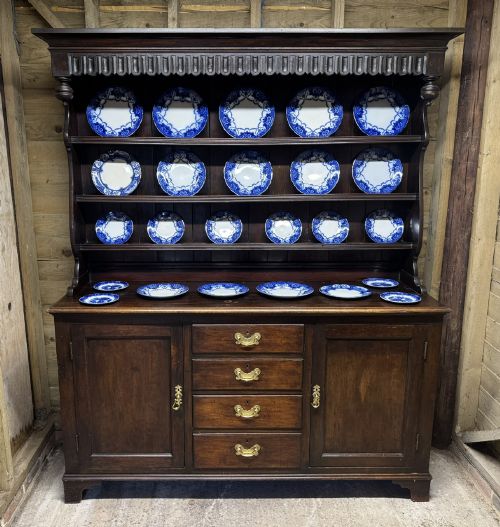
A georgian oak storage sideboard encompasses sturdy country furniture built to house provisions, linens, and tableware in domestic kitchens and dining rooms. The pieces appearing on this page span vernacular forms such as dresser bases, low linen press cupboards, court cupboards, and breakfront sideboards.
Makers shaped these utilitarian items predominantly during the eighteenth and nineteenth centuries, often drawing on regional English and Welsh traditions. Surviving examples range from simple farmhouse pot board benches to grander inlaid and carved designs suited to substantial houses.
Buyers selecting a georgian oak storage sideboard acquire practical furniture designed for heavy daily use rather than delicate parlor display. The form bridges open plate racks and closed cabinetry, offering deep drawers and shelved cupboards behind solid timber doors.
How they were made
Cabinet makers constructed these items primarily from solid oak, supplementing the heavy frames with secondary timbers such as pine, iron for hinges, and brass for handles. Workshops occasionally introduced burr elm and inlay timber for decorative contrast on drawer fronts and panels.
Craftsmen utilised traditional joinery methods, including frame and panel construction and pegged joints, to ensure the heavy timber withstood daily wear. Surfaces received hand planing and occasional painted finishes, carving, or marquetry work depending on the regional workshop and period.
Georgian Oak Storage Sideboard Retail Price Guide 2026
Typical asking prices for georgian oak storage sideboard among the pieces listed under this phrase on Sellingantiques today, from the lower quarter to the upper quarter. They describe what is for sale here now, not the wider market.
Several eighteenth-century pieces feature carved wooden kings peering out from the cabinetry to supervise the dining room.
What varies in quality
The standard of a georgian oak storage sideboard rests upon the depth of the timber's grain, the crispness of any hand carving, and the integrity of the original joints. Superior pieces retain their uncompromised structural form and aged surface patination rather than suffering from heavy modern restoration.
Regional construction details also define the tier of the piece, with vernacular variations showing distinct local joinery skills and proportions. Finer examples integrate thoughtful secondary woods, subtle inlay work, and balanced proportions across the breakfront or drawer arrangements.
The Georgian Oak Storage Sideboard Glossary
- Dresser base
- A low wooden sideboard fitted with drawers and cupboards underneath, designed for food preparation and storage.
- Court cupboard
- An antique enclosed cupboard featuring multiple tiers of shallow and deep storage compartments, often carved.
- Pot board
- An open lower shelf built between the legs of a Welsh or farmhouse dresser, originally intended for storing heavy pots.
- Marquetry
- Decorative inlay work using various tinted woods to create pictorial or geometric patterns across drawer fronts and panels.
- Deuddarn
- A traditional Welsh two-section cupboard used for storing household linen and provisions in rural dwellings.
Georgian Oak Storage Sideboard: Frequently Asked Questions
What is a georgian oak storage sideboard used for?
These robust items served historic households as central hubs for storing heavy tableware, dry goods, and household linens.
In modern rooms, they function well as dining room servers, media consoles, or hallway storage cabinets.
How do I care for antique oak furniture?
Maintain the timber by keeping it away from direct heat sources and sudden humidity changes to prevent wood splitting.
Apply natural beeswax occasionally to nourish the grain and preserve the historic surface patination.
Are these pieces English or Welsh?
The inventory includes both English regional pieces and distinct Welsh vernacular forms like the talwrn and deuddarn.
Regional differences appear in the configuration of the drawers, the presence of pot boards, and local carving styles.
How can I date a wooden dresser base?
Examine the construction methods, tool marks on the timber, and the style of the brass or iron hardware.
Eighteenth-century examples often display hand-cut joinery and pegged frames, while later nineteenth-century pieces show subtle shifts in proportion.