





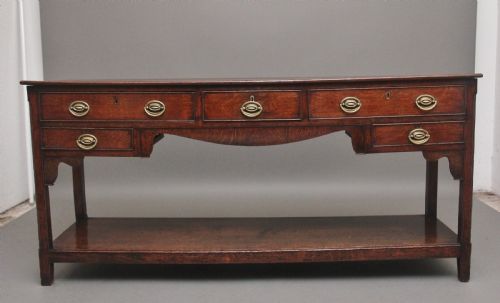


Low Potboard Dresser
A low potboard dresser is a sturdy provincial base built for working kitchens, offering a wide lower shelf for everyday storage.
Low Potboard Dresser
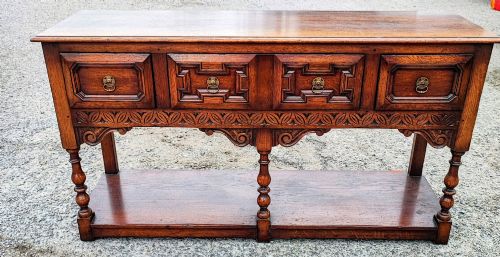
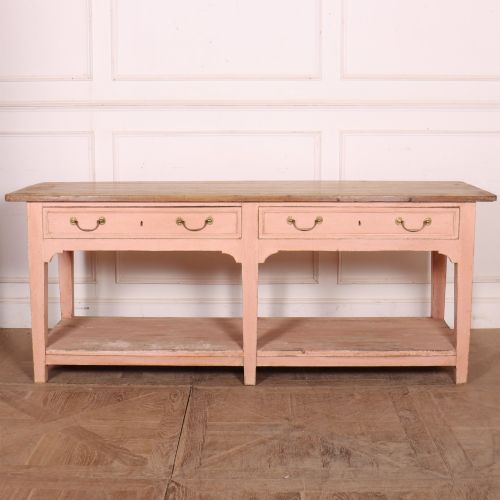
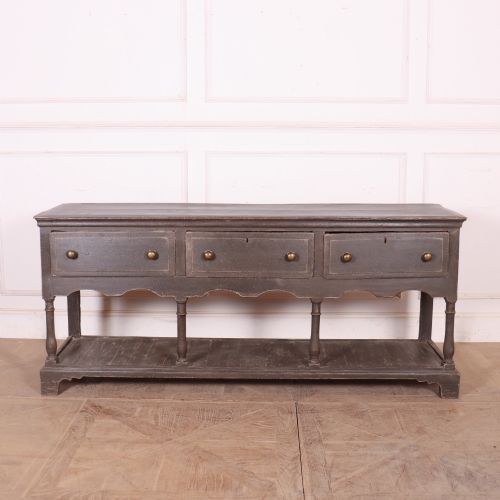
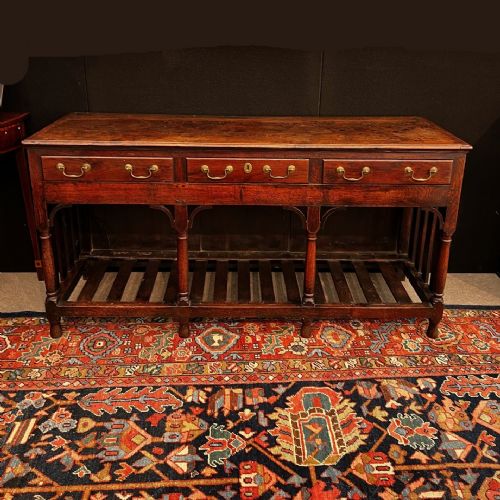
When you search for a low potboard dresser, you encounter heavy kitchen and dining furniture originating from 18th century and 19th century workshops. These pieces combine a solid timber top with a series of working drawers above an open lower shelf.
The versions most frequently seen on this page belong to the Georgian, George III, and Regency periods, hailing from English and Welsh country houses. They serve equally well as sideboards in modern dining rooms or as practical kitchen prep surfaces.
How they were made
Cabinetmakers built these heavy bases primarily using native oak, frequently combining elm or pine for secondary framing and drawer linings. The boards were joined using traditional pegged mortise and tenon construction designed to withstand daily domestic labour.
Surfaces received simple hand planing rather than heavy industrial sanding, leaving the tool marks visible across the timber. Drawer construction relies on hand-cut dovetails, while brass handles or wooden knobs finish the facade.
Low Potboard Dresser Retail Price Guide 2026
Typical asking prices for low potboard dresser among the pieces listed under this phrase on Sellingantiques today, from the lower quarter to the upper quarter. They describe what is for sale here now, not the wider market.
Early potboards collected generations of kitchen dust from heavy pots sliding across the floorboards.
What varies in quality
The distinction between standard provincial work and finer pieces rests upon timber selection and proportions. Desirable examples exhibit rich surface patination and dense oak figuring developed through centuries of domestic use.
Construction depth and drawer arrangement also determine quality, with symmetrical multi-drawer configurations or smaller proportions commanding greater attention. The integrity of the lower potboard shelf and its supporting legs remains central to the piece.
The Low Potboard Dresser Glossary
- Potboard
- The lower open shelf built close to the floor, originally designed for storing heavy pots and pans. This defining feature sits upon the lower stretchers of the base.
- Dresser base
- The lower portion of a kitchen dresser, functioning as a standalone sideboard with drawers and cupboards. These pieces lack the upper plate rack.
- George III period
- The era spanning from 1760 to 1820, characterised by refined proportions within provincial furniture. Pieces from this time show classic architectural details.
- Patina
- The lustrous surface sheen developed on timber over decades through handling, waxing, and cleaning. It indicates age and honest use.
- Dovetail
- A joint formed by interlocking wedge-shaped fingers, utilised extensively in drawer construction for maximum tensile strength. Hand-cut variations display slight irregularities.
Low Potboard Dresser: Frequently Asked Questions
What is a potboard dresser?
A potboard dresser is a traditional kitchen base featuring an open lower shelf beneath a row of drawers. This bottom tier provided dry storage for heavy earthenware vessels away from damp stone floors.
Today, these substantial bases function as sideboards in dining spaces or kitchen islands, offering generous surface areas and display capacity.
Where were these dressers made?
Regional cabinetmakers across England and Wales constructed these pieces for farmhouse and provincial kitchens. Workshops utilised local timbers available in their immediate geographic areas.
Welsh and English country examples often display distinct regional moulding profiles and drawer arrangements while sharing the fundamental potboard design.
How do I style a low dresser?
The low profile makes these pieces ideal for placing beneath wall art, mirrors, or open shelving in a dining room. The flat top accommodates lamps, ceramics, or serving pieces.
The lower potboard shelf offers an ideal space for stacking large mixing bowls, heavy books, or wicker baskets.
How do I identify Georgian pieces?
Georgian and George III pieces are identified through timber characteristics, construction methods, and period proportions. Hand-cut dovetails and pegged joints indicate age prior to industrial manufacturing.
Oak and elm surfaces show deep patination and distinct grain patterns that modern reproductions cannot replicate.