

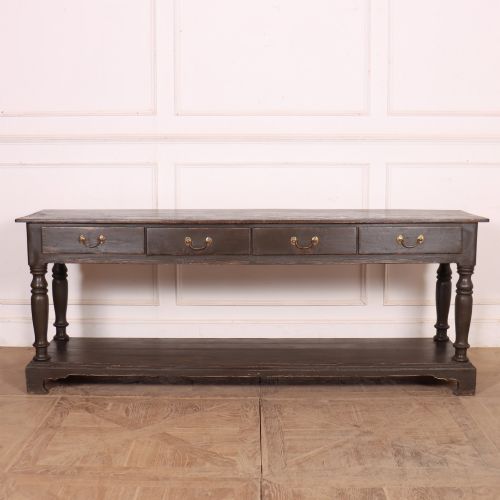

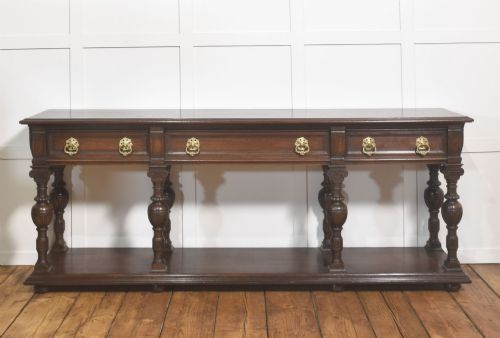
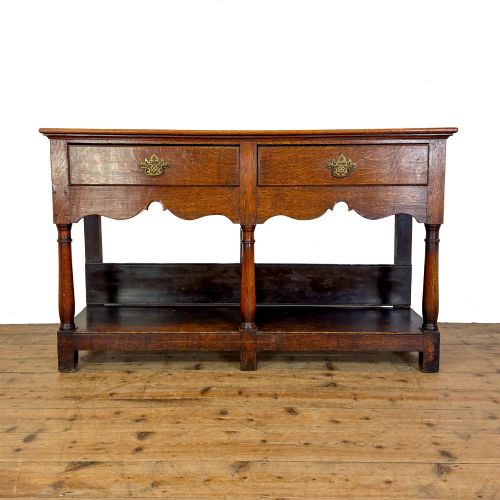
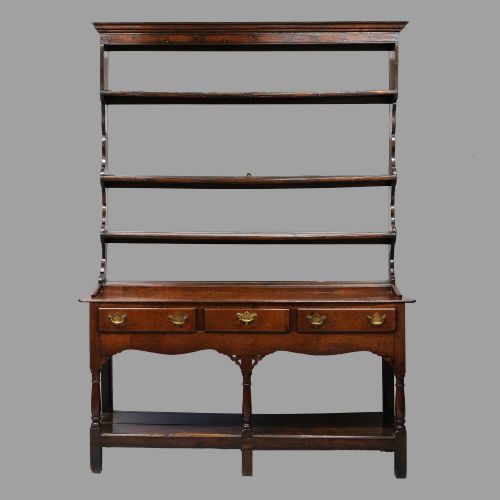


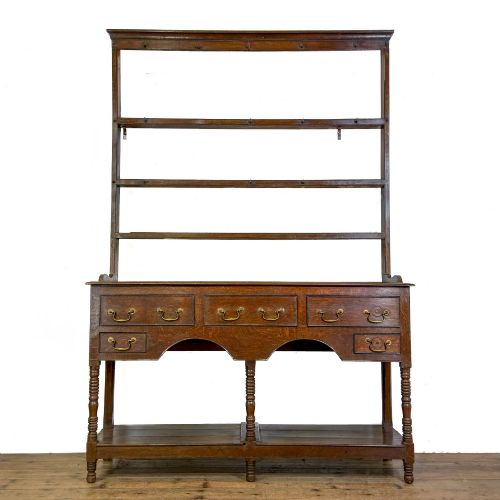
Dark Oak Potboard Sideboard
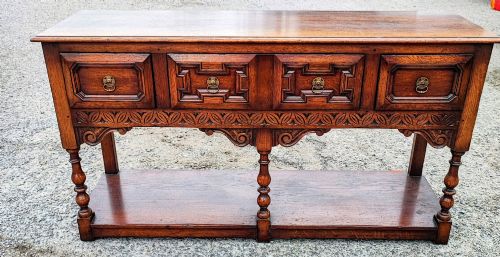
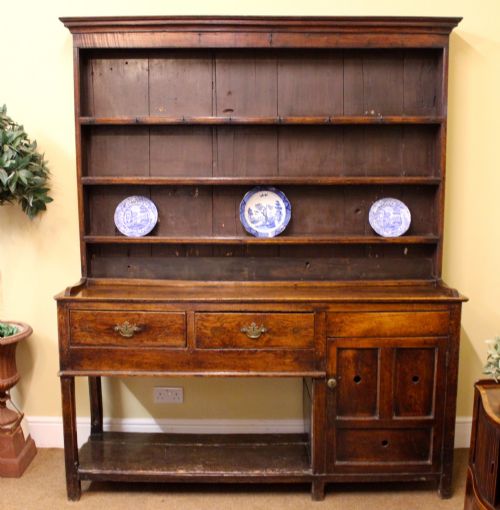
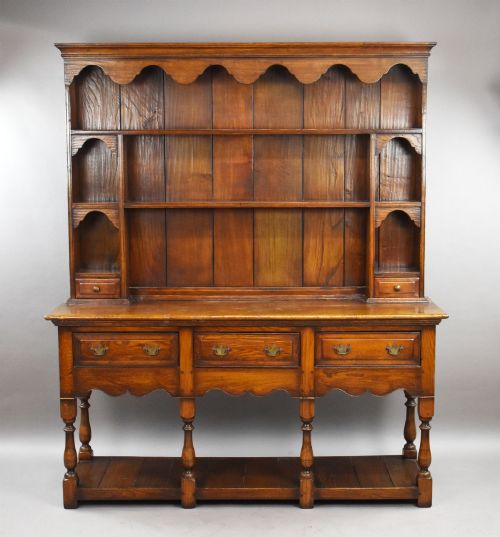
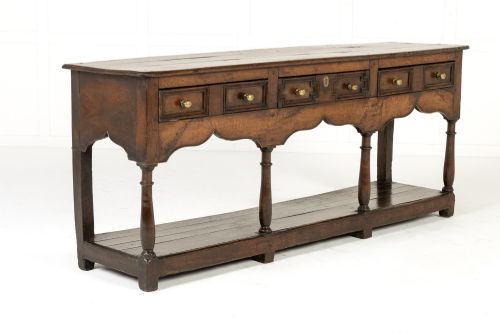
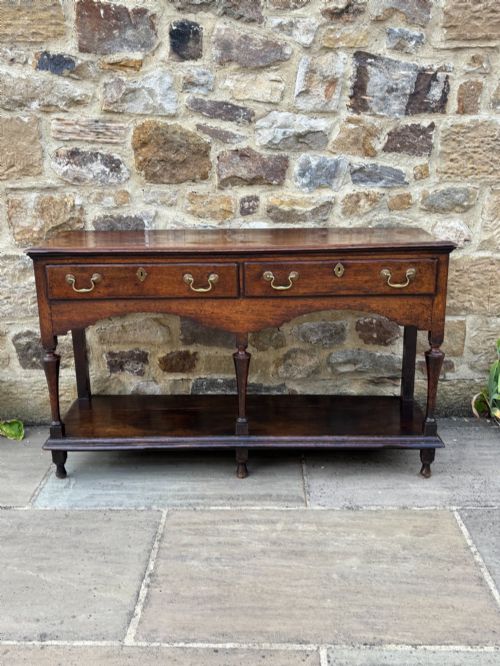
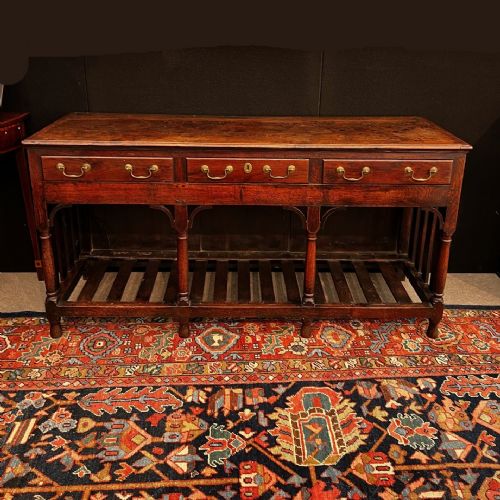
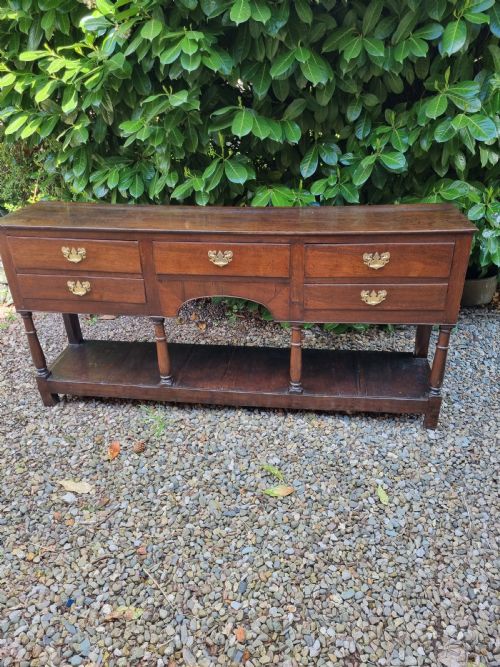
A dark oak potboard sideboard brings substantial country utility to a room, offering low storage and a display tier beneath.
Dark Oak Potboard Sideboard
A dark oak potboard sideboard combines the low storage of a dresser base with an open bottom shelf known as a potboard. These sturdy items originate primarily from country workshops and domestic kitchens across England and Wales.
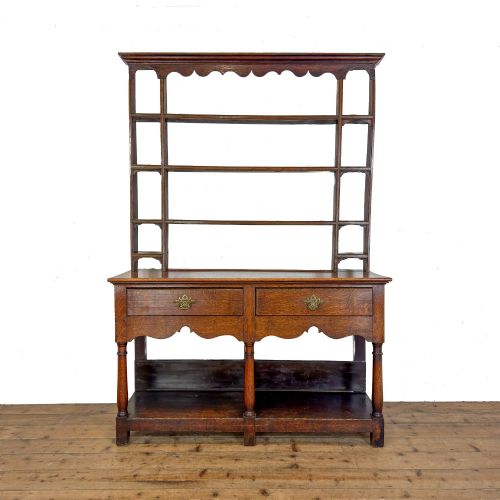
The versions met most often on this page date from the eighteenth and nineteenth centuries, alongside revival pieces from the early twentieth century. Forms range from small proportions and cottage cupboards to larger Welsh dressers complete with plate racks.
Materials and construction
Makers built these pieces predominantly using solid oak, sometimes incorporating elm, pine, fruitwood marquetry inlay, and painted finishes for secondary surfaces or details. Brass and iron hardware provided hinges, handles, and structural reinforcement.
Joinery relied on traditional methods suited to domestic timber, shaping sturdy boards for tops, drawer fronts, and lower potboards. Carved ornamentation, geometric patterns, and panelled construction appear on specific regional examples from English and Welsh districts.
Dark Oak Potboard Sideboard Retail Price Guide 2026
Typical asking prices for dark oak potboard sideboard among the pieces listed under this phrase on Sellingantiques today, from the lower quarter to the upper quarter. They describe what is for sale here now, not the wider market.
Early potboards provided a convenient escape route for damp kitchen pans and occasionally curious household cats.
What varies in quality
The division between standard vernacular items and finer examples rests on proportion, timber selection, and the survival of original elements like racks and hardware. Pieces of smaller proportions or specific regional origins command particular attention.
Surface patination and the integrity of the timber structure indicate how well a piece has survived centuries of domestic use. Untouched boards and deep colour distinguish superior survivals from heavily restored or later revival items.
The Dark Oak Potboard Sideboard Glossary
- Potboard
- The low open shelf positioned near the floor beneath a dresser base. Originally designed to hold pots and pans, it defines this specific group of furniture.
- Dresser base
- The lower section of a kitchen or dining room storage unit, featuring drawers and cupboards. It stands independently or supports a plate rack above.
- Welsh dresser
- A traditional form incorporating both base storage and an upper plate rack for displaying ceramic tableware. Regional examples display distinct drawer arrangements and proportions.
- Vernacular
- Furniture made by local craftsmen using native timber for everyday domestic use, following traditional regional styles rather than metropolitan fashions.
- Plate rack
- The wooden shelving unit attached to the top of a dresser to display plates upright. Surviving original racks add significant context to the base.
Dark Oak Potboard Sideboard: Frequently Asked Questions
What is a potboard used for?
The lower shelf provided a dry place to store heavy earthenware pots, bowls, and domestic utensils away from damp flagstone floors.
Today, the same open lower tier functions well for stacking large books, baskets, or decorative ceramics in a modern living space.
How do I tell an 18th century piece from a 20th century revival?
Eighteenth century examples display genuine timber shrinkage, hand-cut joinery marks, and deep patination accumulated through generations of use. Revival pieces made around nineteen-twenty often show more uniform machine sawing and cleaner internal framing.
Examining the backboards and drawer linings reveals the construction methods characteristic of earlier vernacular woodworking traditions.
Where were these dressers made?
Makers constructed these utility items across English and Welsh rural workshops, with distinct regional traits found in pieces originating from South Wales or Lancashire.
Local craftsmen utilised native timber stocks available to them, resulting in variations of oak, elm, and fruitwood across different districts.
How do I care for antique oak furniture?
Keep the timber away from direct heat sources and sudden temperature shifts to prevent the solid oak boards from splitting or warping.
Apply a traditional beeswax polish sparingly to maintain the finish and nourish the dry grain over time.