



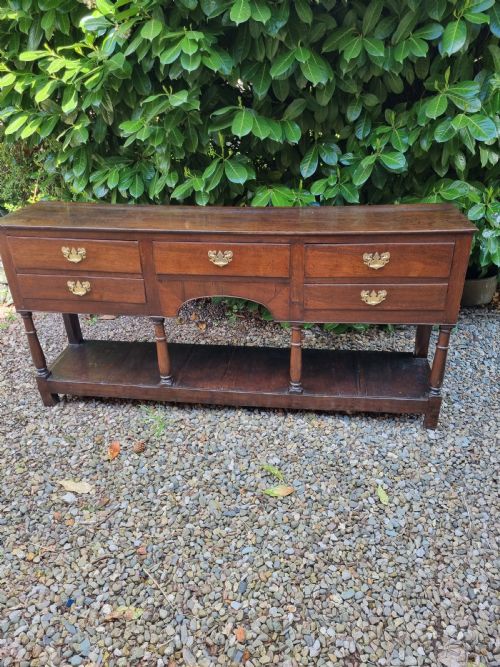
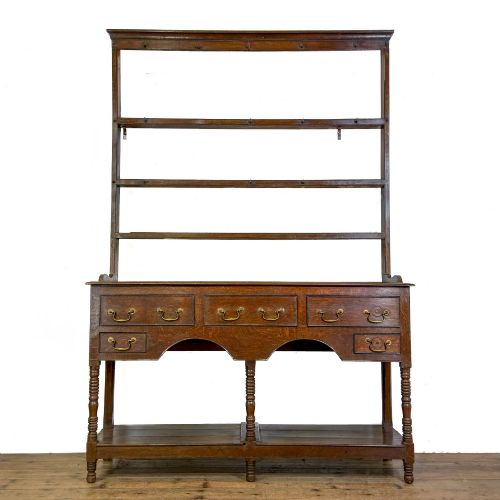
Georgian Oak Potboard Dresser
When you search for a georgian oak potboard dresser, you seek a foundational piece of country furniture defined by its lower shelf.
Georgian Oak Potboard Dresser
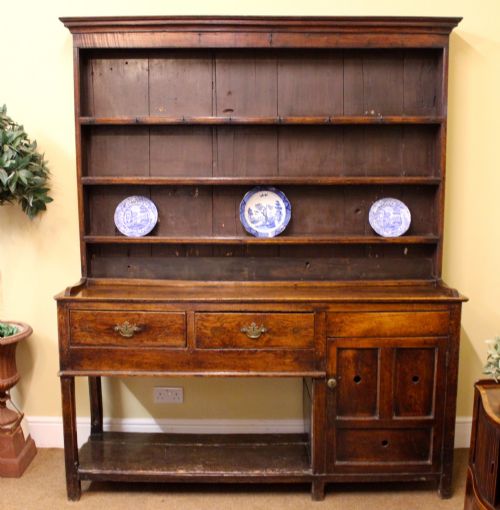
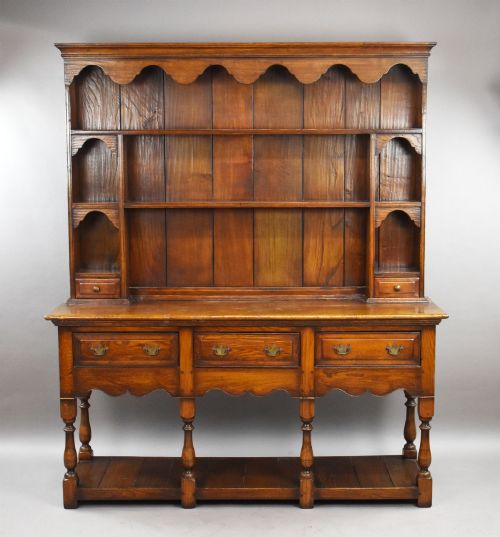
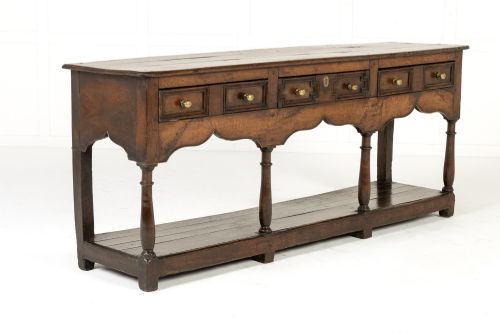
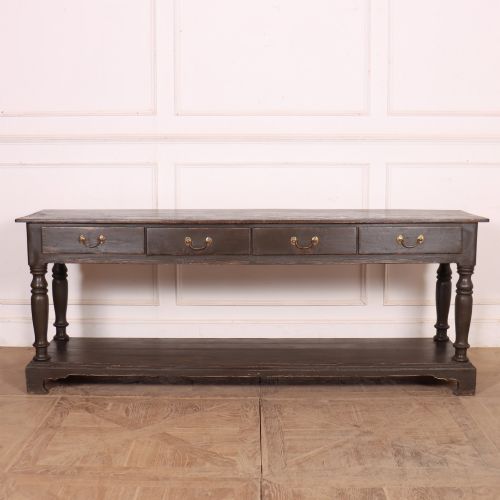
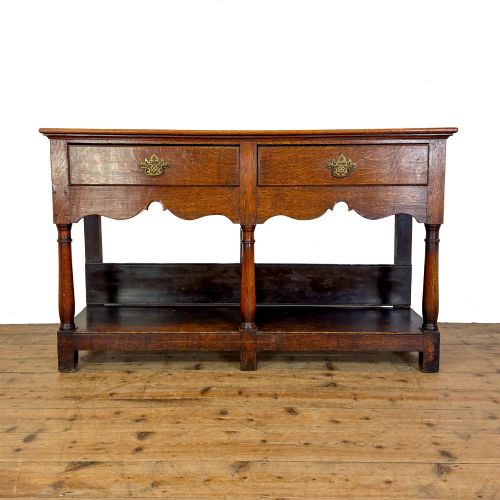
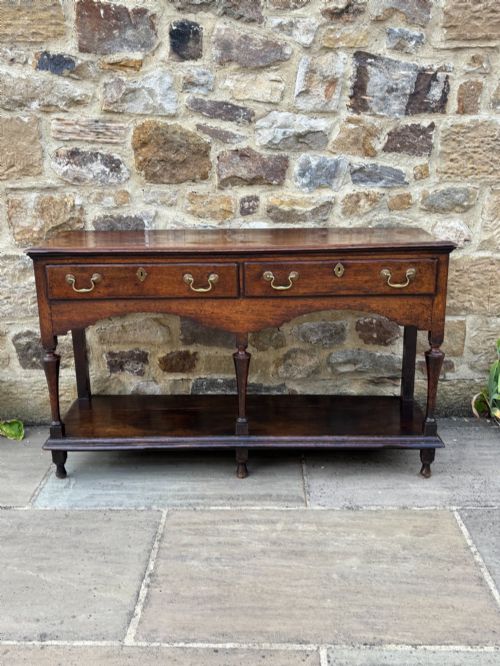
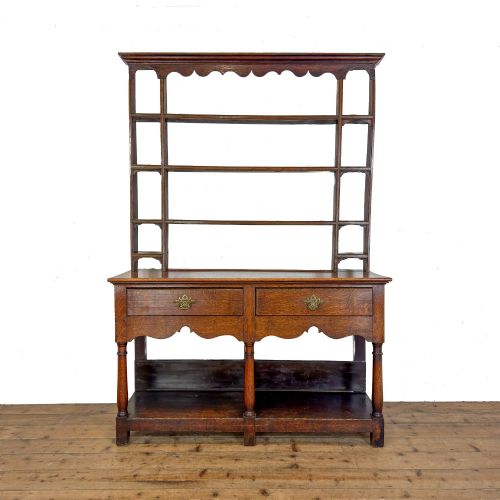
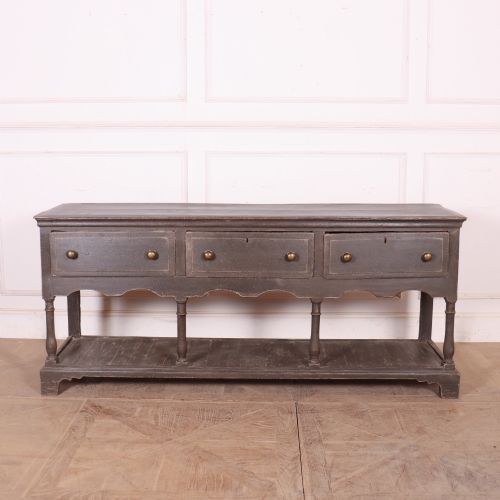
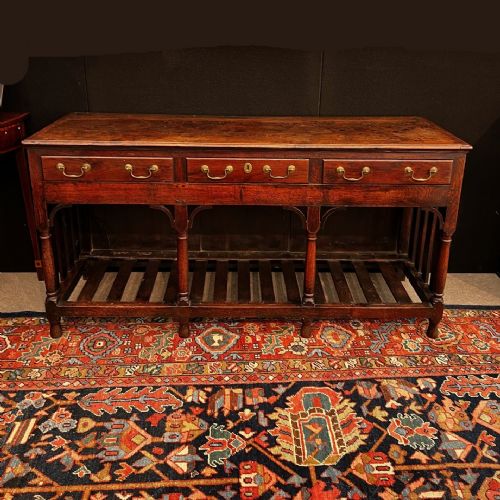
A georgian oak potboard dresser stands as a primary item of vernacular furniture, typically combining a drawer base with an open lower shelf known as a potboard. These items originate predominantly from eighteenth-century English and Welsh provincial workshops, reflecting local traditions of domestic storage.
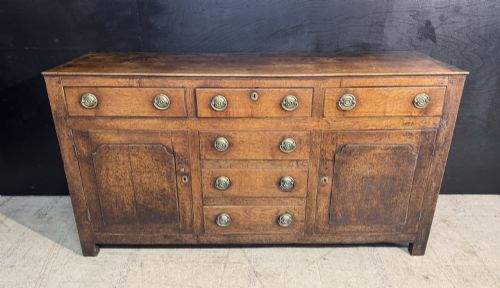
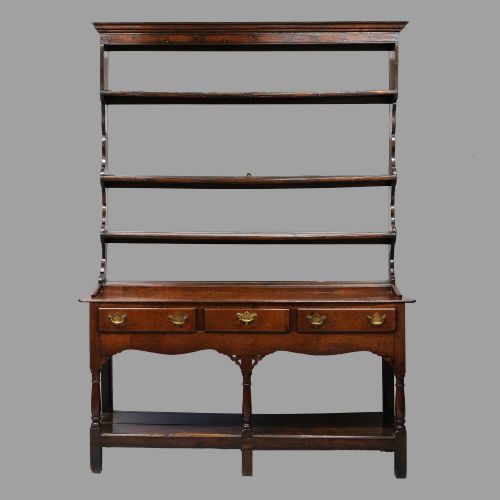
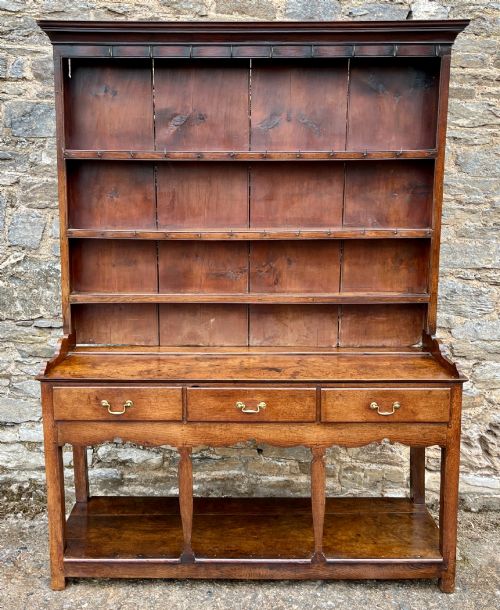
The format frequently appears as a low dresser base without a superstructure, though complete examples retain their original plate racks for display. Regional variations span from English country workshops to distinctive Welsh vernacular interpretations.
Surviving examples span eighteenth-century periods through to nineteenth-century adaptations, maintaining robust timber construction suited to daily utility. Buyers encounter both open base configurations and integrated high dresser variants.
Materials and Construction
Cabinet makers utilised native timbers predominantly, selecting quarter-sawn oak for structural framework and drawer fronts, frequently complemented by secondary woods such as elm or pine for internal elements. Boards were joined using traditional pegged mortise and tenon techniques, ensuring enduring stability.
Hardware details typically incorporate cast brass drop handles and escutcheons, alongside iron fixings for structural reinforcement. Surfaces display natural wax finishes or historical painted applications over solid timber.
Georgian Oak Potboard Dresser Retail Price Guide 2026
Typical asking prices for georgian oak potboard dresser among the pieces listed under this phrase on Sellingantiques today, from the lower quarter to the upper quarter. They describe what is for sale here now, not the wider market.
The inventory records regional variations originating from Welsh and English country workshops alongside standard Georgian forms.
Assessing Quality and Proportion
Quality rests significantly upon timber selection and surface patination, where deep natural colour and minimal timber replacement distinguish superior examples. Superior items maintain original drawer linings, undisturbed potboards, and uncompromised structural integrity.
Proportion and regional character dictate desirability, with smaller proportions and untouched vernacular details commanding particular attention from collectors. The integration of original plate racks further elevates the stature of surviving compositions.
The Georgian Oak Potboard Dresser Glossary
- Potboard
- The lower open shelf positioned near the floor of a dresser base, traditionally used for storing pots and pans. This defining feature elevates the main body off the ground.
- Dresser Base
- The lower section of a dresser comprising a solid top and multiple drawers above the potboard. Many survive independently without their original plate racks.
- Plate Rack
- The shelved timber superstructure fixed to the top of certain dressers for displaying ceramic plates. Original racks matching the base period remain considerably scarce.
- Vernacular Furniture
- Domestic items built by regional craftsmen following local traditions rather than metropolitan academic designs. These pieces utilise readily available native timbers.
- Patina
- The surface sheen and colour developed through decades of handling, polishing, and natural ageing. Unspoilt surfaces reveal clear evidence of historical wear.
Georgian Oak Potboard Dresser: Frequently Asked Questions
How do I tell an 18th-century dresser apart?
Eighteenth-century examples display hand-cut joinery, pegged tenons, and timber boards showing natural grain variation without modern machinery marks. Drawer construction utilises hand-cut dovetails and native secondary woods.
Subsequent nineteenth-century versions often incorporate different interior framing methods and standardised hardware fittings while retaining the traditional regional aesthetic.
Did these dressers always have racks?
Many dressers were constructed simply as low bases, whilst others included matching upper plate racks. Over the centuries, bases and racks frequently became separated during house moves.
Finding a dresser retaining its original integrated rack remains an uncommon occurrence that significantly adds to the historical integrity of the piece.
How do I care for oak furniture?
Solid oak requires stable room environments away from direct heat sources and sudden humidity fluctuations to prevent timber movement. Regular application of traditional beeswax preserves the surface patination.
Avoid modern liquid polishes containing silicone, which can penetrate porous historical finishes and damage the natural colour over time.