
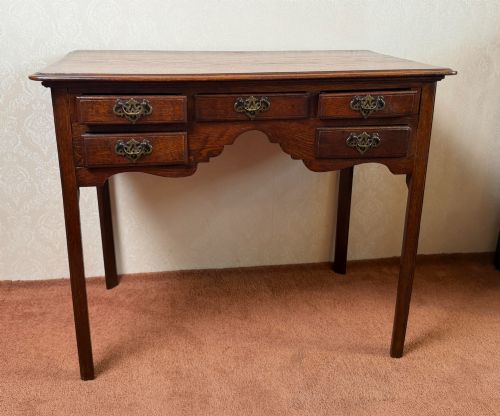
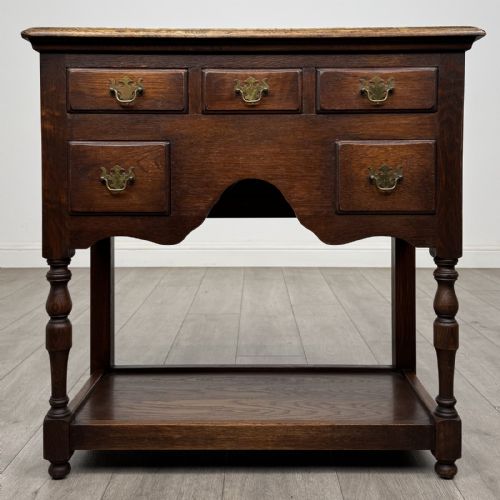
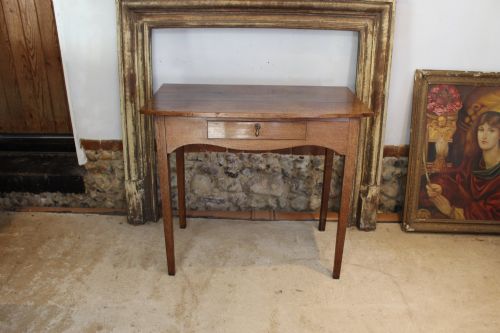
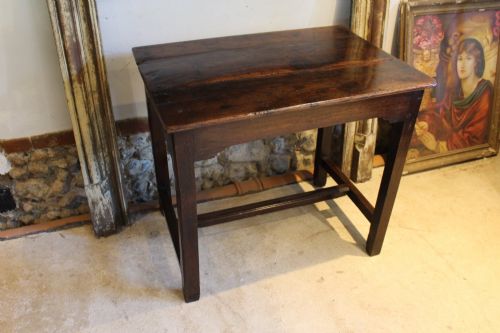
Georgian Oak Hall Desk
When you search for a georgian oak hall desk, you are looking at sturdy, timber-rich writing and side tables built to stand by a doorway.
Georgian Oak Hall Desk
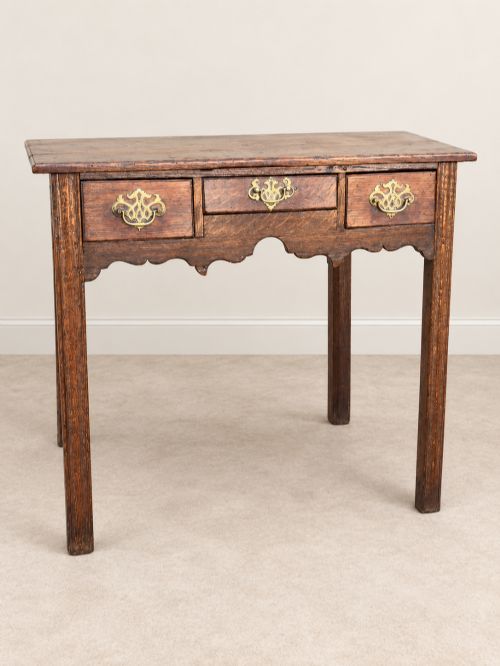
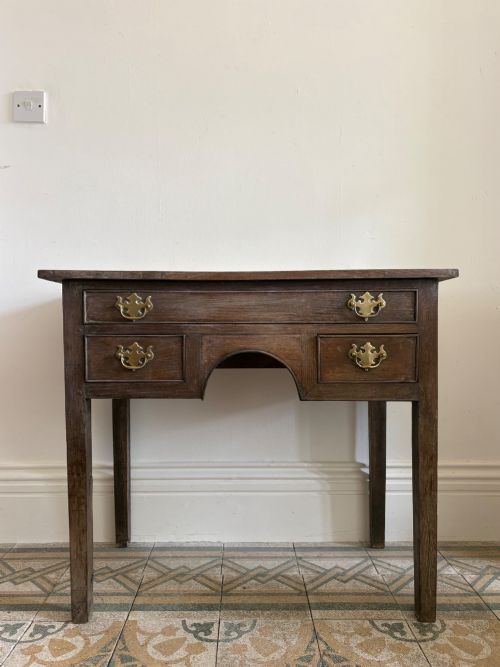
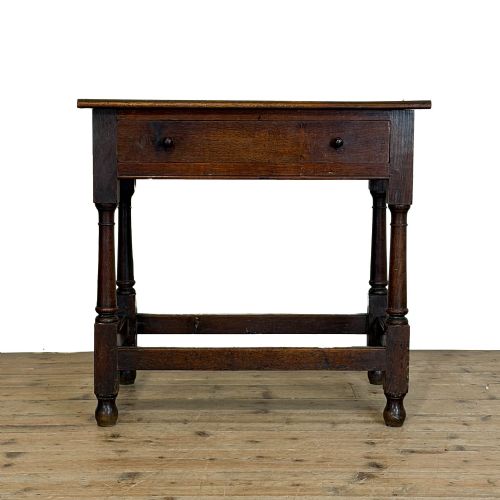
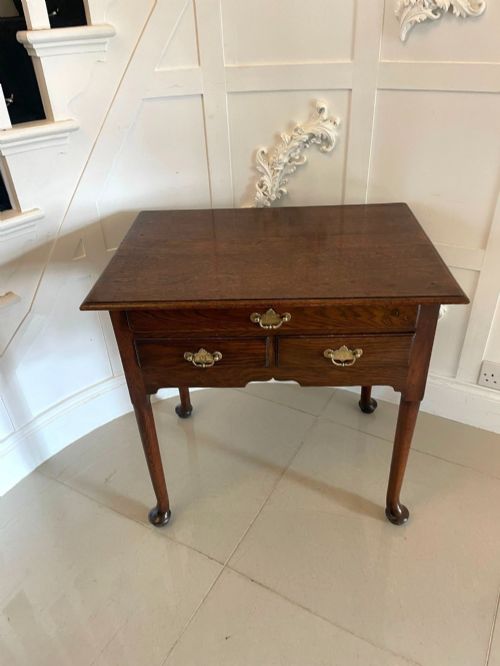
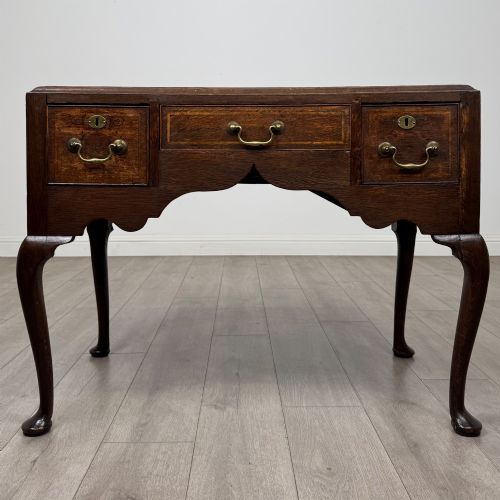
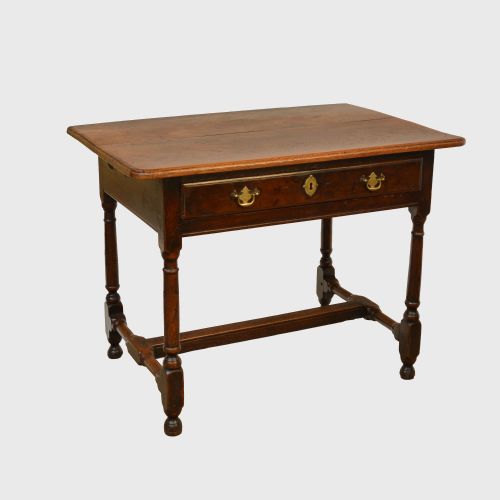
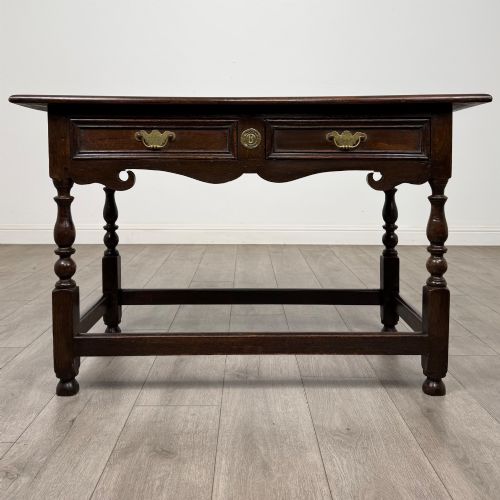
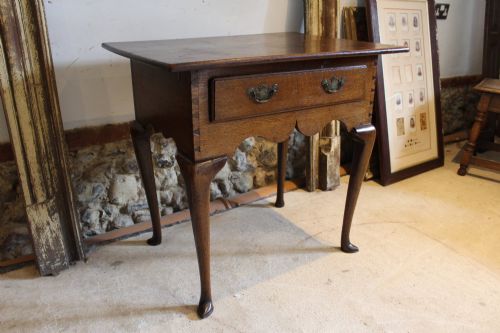
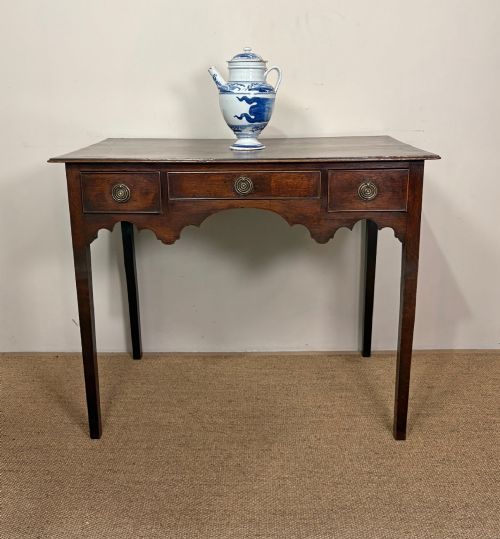
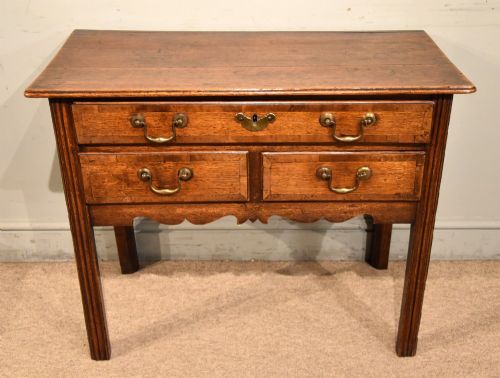
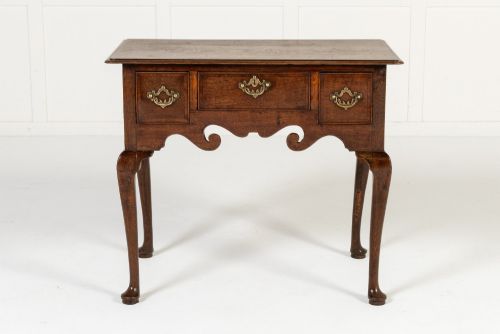
A georgian oak hall desk typically presents as a compact side table or lowboy with at least one fitted drawer beneath the top boards. These pieces emerge predominantly from the eighteenth century, aligned with George II, George III, and Queen Anne periods, reflecting vernacular English country house and rustic farmhouse aesthetics.
While specific items occasionally span the seventeenth, nineteenth, and early twentieth centuries, the core of the selection relies on solid oak construction. Alongside tables and lowboys, the listings incorporate related side chairs and writing tables in matching timbers.
Materials and Construction Methods
Makers relied principally on solid oak for the primary surfaces and frames, frequently pairing it with secondary woods such as elm, yew, and walnut. Plank tops demonstrate the heavy timber availability of the period, joined using traditional pegged and tenoned framing.
Metalwork remains functional and restrained, with brass handles fitted to drawers and occasional iron fixings providing structural support. Upholstered seating elements integrate velvet and specific maker fabrics like Zoffany where chairs accompany the tables.
Listings feature periods spanning from the seventeenth century through to the early twentieth century, with a strong concentration of eighteenth-century George II and George III examples.
Distinctions in Grade and Execution
The degree of refinement in the timber figure and the complexity of the joinery separate standard vernacular pieces from finer examples. Grain selection in the oak plank tops and the presence of hand-carved detailing dictate the upper tier of the range.
Proportion and structural integrity define the remaining differences, particularly where drawer linings retain original construction and brass hardware remains period-correct rather than replaced.
The Georgian Oak Hall Desk Glossary
- Lowboy
- A small table with one or more drawers, typically standing on four legs and originating in the eighteenth century.
- Plank Top
- A table surface constructed from wide boards of solid timber joined edge to edge.
- Side Table
- A small table designed to stand against a wall in a hallway or reception room.
- George III
- The period of British history spanning from 1760 to 1820, characterised by specific classical and country furniture styles.
Georgian Oak Hall Desk: Frequently Asked Questions
How were these tables used originally?
These tables served as surface areas in entrance halls and living spaces for holding correspondence, keys, and daily items. The single drawer provided convenient storage for writing materials and small household records.
Their compact footprint allowed them to sit flush against hallway walls without obstructing narrow thoroughfares or doorways in period country houses.
How do I identify a genuine eighteenth-century piece?
Look for traditional hand-cut joinery, pegged framing, and timber shrinkage consistent with age. Oak from this era shows distinct grain patterns and colour depth developed through centuries of exposure.
Construction methods inside the drawer cavity and beneath the top boards provide reliable indicators of period manufacture rather than later replication.
Can I use an antique lowboy as a desk?
Many examples function well for modern writing tasks provided the knee clearance beneath the drawer matches your chair height. Eighteenth-century dimensions tended to be lower than modern standard desks, so checking the internal clearance is essential.
Adding a matching side chair creates a compact writing station suitable for occasional correspondence in smaller rooms.
What woods besides oak appear in these listings?
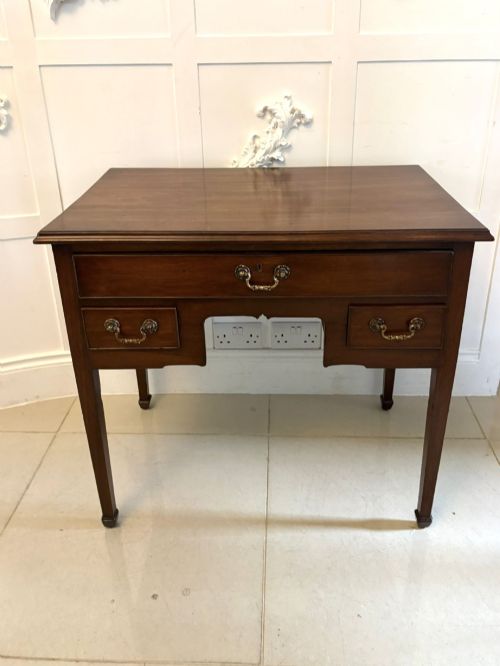
Makers frequently incorporated elm, yew, and walnut into table tops and structural frames alongside the primary oak. Mahogany also appears in some Georgian side tables from the latter half of the eighteenth century.
Secondary timbers often reveal themselves inside drawer linings and internal framing where visual grain mattered less than structural stability.