

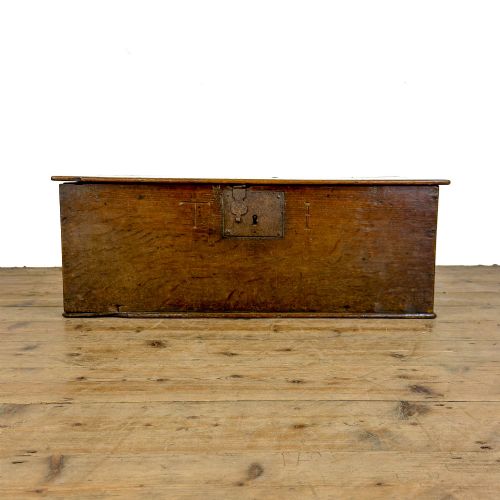
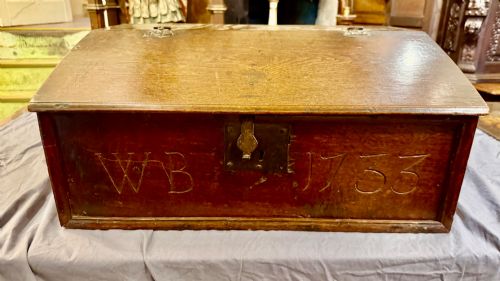
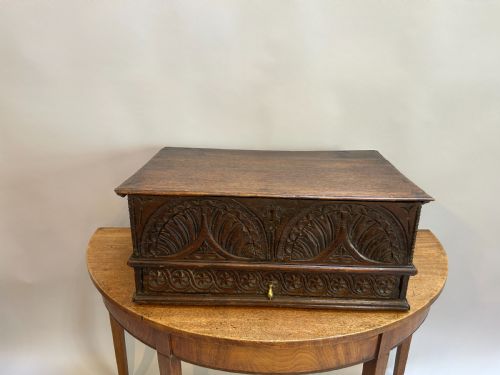


Georgian Oak Document Box
A georgian oak document box is a sturdy vernacular chest designed to hold letters and important papers, prized for its honest timber and enduring utility.
Georgian Oak Document Box
A georgian oak document box represents the utilitarian cabinetry of seventeenth and eighteenth century households, taking forms such as Bible boxes, desk boxes, and deed boxes. These pieces were built to safeguard precious papers, family records, and religious texts in domestic or rural settings.
The versions met most often on this page belong to the eighteenth century and the late seventeenth century, manifesting in English country oak or Welsh vernacular styles. They appear as compact desk tidies, miniature chests, and sloping writing boxes, occasionally featuring internal drawers or secret compartments.
Materials and construction
Makers relied on solid oak as the primary structural timber, shaping boards with hand tools to form the robust walls and lids of each box. Iron hinges and brass escutcheons provided necessary hardware reinforcement for daily handling and security.
Decorative detailing on these boxes often involved carved friezes alongside mixed wood inlay utilising holly, bog oak, and fruitwood. These contrasting inlays added geometric or floral motifs to the plain oak surfaces without compromising the rigid construction.
Georgian Oak Document Box Retail Price Guide 2026
Typical asking prices for georgian oak document box among the pieces listed under this phrase on Sellingantiques today, from the lower quarter to the upper quarter. They describe what is for sale here now, not the wider market.
Listings feature pieces spanning the seventeenth and eighteenth centuries, constructed primarily from oak with iron, brass, holly, bog oak, and fruitwood inlay.
Assessing quality
The distinction between ordinary and superior pieces rests on the crispness of the carving and the ambition of the decorative inlay. Boxes featuring intricate holly and bog oak work or carved friezes demonstrate a higher level of cabinetmaker skill than plain utilitarian examples.
Structural integrity and the retention of original brass or iron hardware determine the overall standing of a box. Examples that preserve their internal drawers, secret compartments, and original timber surfaces command greater appreciation among collectors.
The Georgian Oak Document Box Glossary
- Bible box
- A small wooden chest originally constructed to hold a family Bible and devotional books. These pieces often feature a sloping lid that also served as a writing surface.
- Desk box
- A portable container fitted with compartments or internal drawers designed for storing writing equipment and documents. They represent the precursor to the larger freestanding desk.
- Bog oak
- Subfossil oak timber retrieved from peat bogs, valued for its deep dark colour. Craftsmen utilised this material for contrasting inlay work on oak furniture.
- Frieze
- The middle section of an entablature or a decorative horizontal band on furniture. On these boxes, it frequently displays carved geometric or floral patterns.
- Welsh vernacular
- Regional styles of furniture making originating from Wales that utilise local timbers and traditional construction methods. These pieces often exhibit distinct decorative motifs.
Georgian Oak Document Box: Frequently Asked Questions
What is a georgian oak document box used for?
These boxes served as secure storage for deeds, letters, and important household documents in homes before the widespread use of filing cabinets. Their sturdy construction protected valuable papers from moisture, fire, and theft.
Today, owners utilise them on desks or side tables to store modern correspondence, stationery, or cherished personal items while displaying historical character in a room.
How do I tell an 17th century box from an 18th century one?
Earlier seventeenth century pieces often display heavier construction with simpler, bolder mouldings and peg joinery. Surface decoration tends to rely on chip carving and distinct geometric panels rather than delicate inlay.
Eighteenth century examples frequently introduce sophisticated decorative elements such as fruitwood, holly, and bog oak inlay. They may also incorporate internal drawers or refined desk tidy configurations.
Where were these wooden boxes made?
The pieces originate primarily from regional British workshops, encompassing English country cabinetmakers and Welsh vernacular makers. Rural woodworkers produced them using locally available timber to serve farming and merchant households.
Cabinetmakers working in towns also turned out desk boxes, though the vernacular examples dominate surviving pieces from this era due to their robust construction.
How do I care for antique oak?
Antique oak benefits from stable indoor humidity levels and protection from direct sunlight, which can dry out and fade the historic timber. Applying a traditional beeswax polish occasionally helps nourish the wood and maintain its surface sheen.
Avoid using modern liquid cleaners or silicone sprays, as these substances can penetrate the porous grain and damage the historic patina accumulated over centuries.