


Georgian Oak Bed
A georgian oak bed or related bedroom piece brings the honest grain and warmth of eighteenth-century country houses directly into a modern home.
Georgian Oak Bed
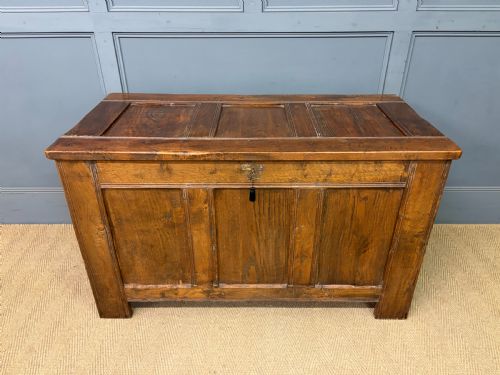
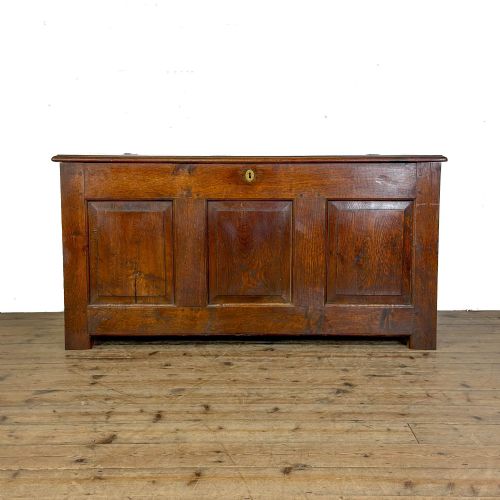
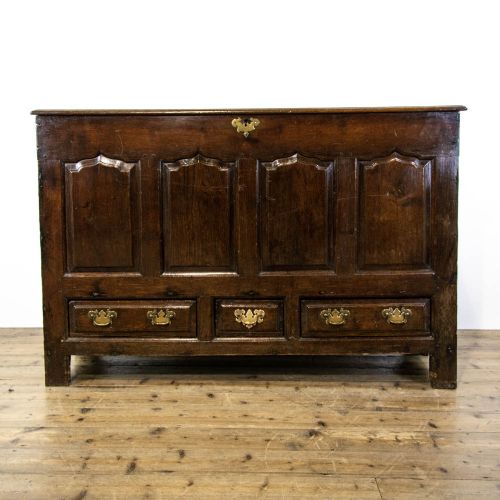
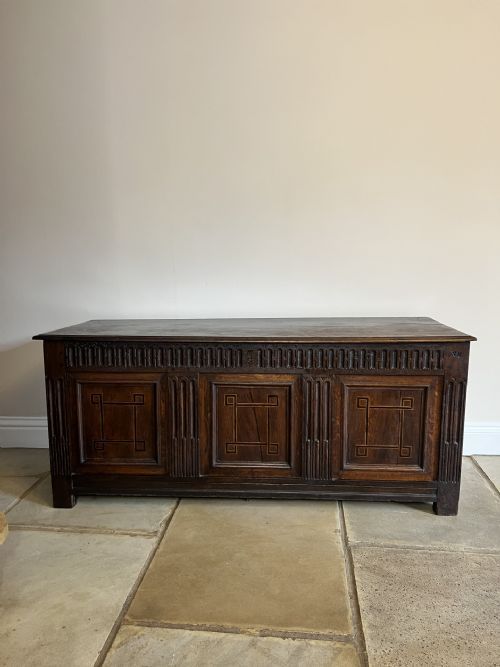
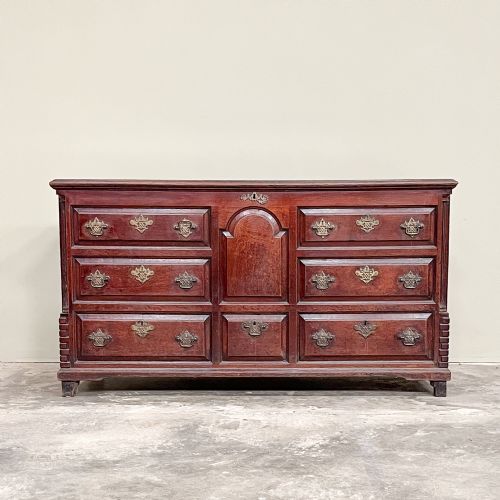
A search for a georgian oak bed reveals how cabinetmakers of the eighteenth and nineteenth centuries utilised sturdy local timber for domestic furniture, spanning large storage pieces and smaller bedside forms. The selection frequently includes robust coffers, mule chests with lower drawers, and blanket boxes alongside rarer surviving sleeping and bedside variants.
Regional vernacular pieces appear regularly, particularly Welsh country and Lancashire designs which show distinctive local construction methods. Alongside primary sleeping furniture and chests, the record includes bedside tables, night stands, cradles, and daybeds spanning the 1700s to the 1800s.
Buyers often encounter heavy panelled coffers and mule chests outfitted with brass or iron hardware, reflecting the practical domestic requirements of the period. These utilitarian forms dominate the inventory, accompanied by occasional warming pans, washstands, and compact bedroom cabinets.
Materials and construction
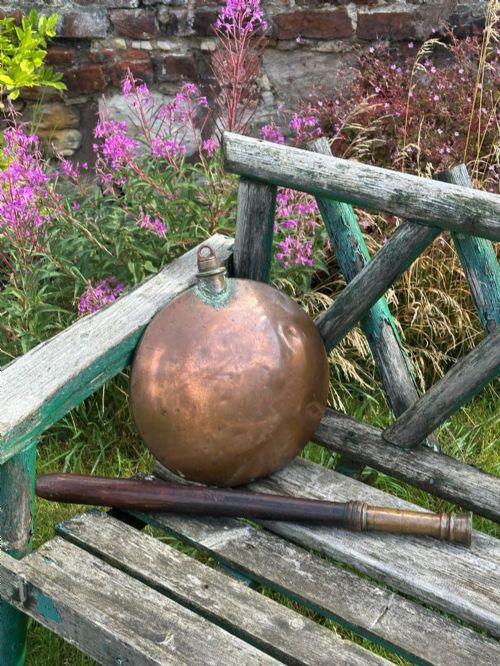
Makers built these pieces primarily from solid English and Welsh oak, selected for its dense grain and durability, then joined panels using traditional pegged mortise and tenon frames. Iron, brass, and copper fittings such as hinges, handles, and warming flasks provided necessary functional contrast to the heavy timber.
Surviving examples demonstrate vernacular joinery techniques, where secondary woods sometimes reinforce drawer linings and interior compartments while the main carcass remains entirely of oak.
The inventory records oak combined with brass, iron, and copper across forms ranging from massive mule chests to warming flasks.
Variations in quality
Quality rests in the crispness of hand-carved detailing on panel fronts and the integrity of the original timber boards rather than mere age. Superior examples retain their original brass or iron hardware and unblemished joined framework without excessive timber replacement.
Proportion and utility divide standard storage trunks from finer regional mule chests, where the addition of smooth-running lower drawers and well-fitted internal tills elevates the piece. The depth of the natural patina built up over centuries also marks out a superior surface.
The Georgian Oak Bed Glossary
- Mule chest
- A storage chest fitted with one or more drawers at the base beneath the main lift-top compartment. This form bridges the traditional coffer and the chest of drawers.
- Kist
- A regional term, often of northern or Scottish origin, used to describe a heavy wooden storage chest or trunk. It represents the most basic and robust form of domestic box furniture.
- Joined coffer
- A chest constructed using frame-and-panel joinery rather than simple boarded planks, allowing the timber to expand and contract naturally. This technique indicates superior cabinetmaking.
- Welsh vernacular
- Furniture built by local country craftsmen using traditional regional styles and available materials rather than following metropolitan London fashions. These pieces often display charming idiosyncratic proportions.
- Night stand
- A small bedside cabinet or table designed during the Georgian period to hold a chamber pot or candle. They frequently feature enclosed cupboards or small drawers.
Georgian Oak Bed: Frequently Asked Questions
What is a mule chest?
A mule chest is a storage box that combines a traditional lift-top coffer compartment with one or more functional drawers built into the base.
Cabinetmakers developed this hybrid form to allow access to stored linens or blankets without needing to empty items stacked on top of the chest.
How do I identify oak from this period?
Eighteenth-century oak displays distinctive silver-grain flecks, known as medullary rays, created by quarter-sawing the dense timber by hand. Surfaces will show the subtle undulations and tool marks left by pit saws and hand planes.
Genuine pieces also exhibit dark patination built up through generations of waxing and handling, unlike the uniform chemical stains found on later reproductions.
Where were these pieces made?
Many items originate from regional workshops across rural England and Wales, where local craftsmen built sturdy furniture for farmhouses and country homes. Welsh and Lancashire vernacular pieces often feature distinct regional decorative motifs and construction quirks.
Makers utilised whatever seasoned timber grew locally, which accounts for the slight variations in grain and colour between pieces.
How should I care for an oak coffer?
Protect the wood by keeping it away from direct heat sources and sudden humidity changes, which can cause old timber panels to split or warp. Feed the dry grain occasionally with a traditional beeswax polish to maintain the historic surface sheen.
Avoid silicon-based modern sprays that penetrate the porous grain and permanently alter the natural finish.