



Georgian Metalwork Lighting
Georgian metalwork lighting brings candlelight into any room with sturdy brass and iron forms designed for domestic use.
Georgian Metalwork Lighting
When you search for georgian metalwork lighting, you encounter utilitarian and domestic objects created to illuminate rooms before electricity. These pieces include candlesticks, candleholders, and rushlight holders spanning the seventeenth, eighteenth, and nineteenth centuries.
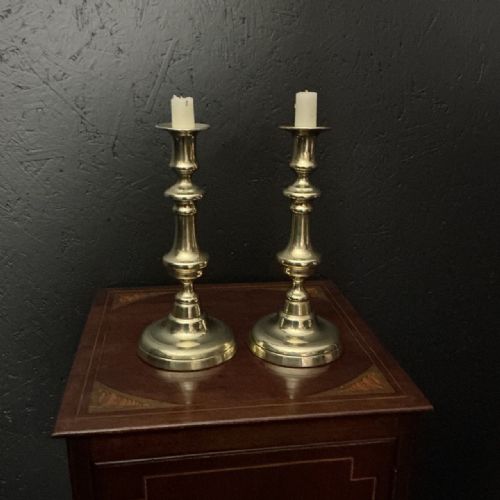
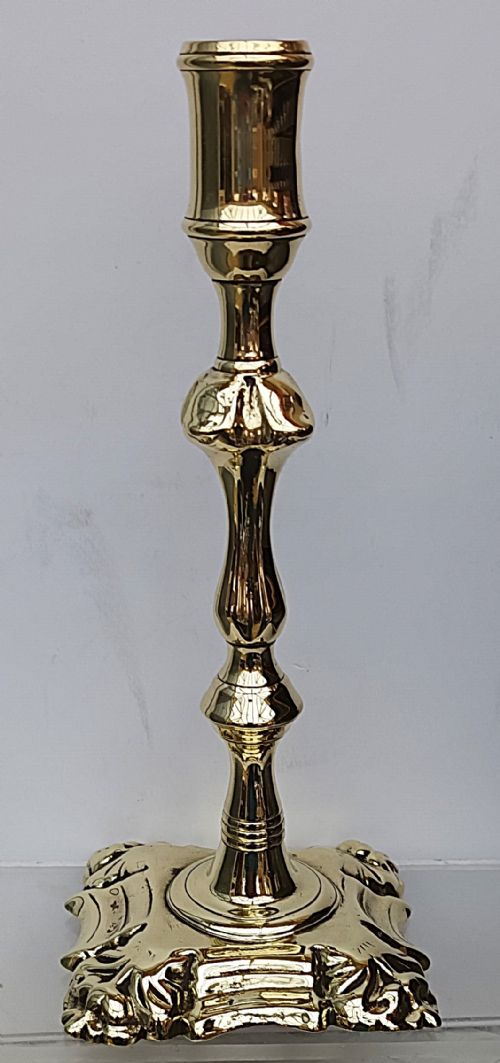
The versions most frequently met on this page are brass candlesticks from the mid-eighteenth century, alongside iron rushlight holders and chamber candlesticks. They reflect the interior lighting needs of domestic spaces during the Georgian period.
Objects range from simple iron rush nips to refined brass pairs with octagonal bases or ejector mechanisms. Their forms demonstrate the practical mechanics of holding rushes or wax candles securely.
Materials and construction
Makers utilised brass, wrought iron, wood, and paktong to construct these lighting devices. Brass components were often cast, while iron pieces relied on the blacksmithing techniques of shaping and hammering hot metal.
Paktong, a copper-nickel-zinc alloy, appears in specific chamber candlesticks, demonstrating the variety of metals used during the mid-eighteenth century. Combinations of these materials provided both durability and functional stability for holding burning tallow or wax.
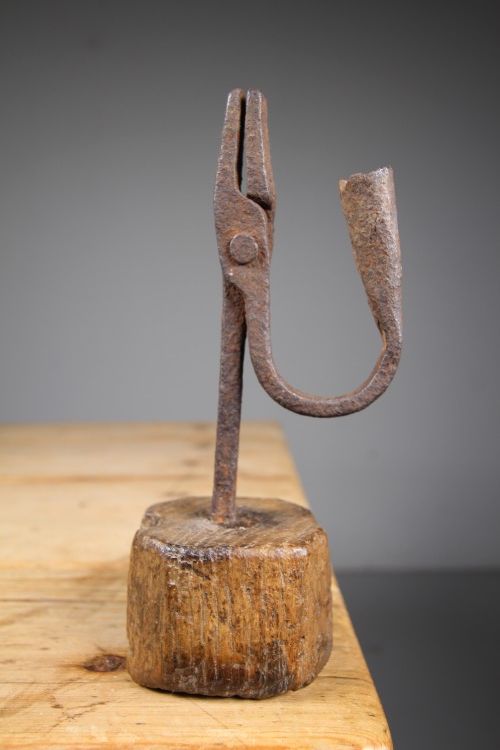
An eighteenth-century rush nip allows you to appreciate the exact moment a household switched from burning greasy pond weeds to proper wax.
Judging quality in metalwork
Quality rests in the crispness of casting for brass pieces and the clean execution of forged joints in ironwork. Heavier weight and balanced proportions distinguish finer examples from standard domestic utensils.
The presence of functional elements like working ejector mechanisms or unusual alloys such as paktong elevates a piece above ordinary production. Finer items retain their original surface patination without excessive modern intervention.
The Georgian Metalwork Lighting Glossary
- Rushlight holder
- A spring-loaded iron clip designed to grip a dried rush dipped in animal fat for burning. These simple devices provided cheap illumination in modest homes.
- Ejector candlestick
- A candlestick fitted with an internal push-rod to lift out the remaining candle stub. This mechanical addition made removing spent wax considerably easier.
- Paktong
- A Chinese alloy of copper, nickel, and zinc imported to Britain and used for high-status metalwork. It resembles silver and takes a bright polish.
- Chamber candlestick
- A low-profile candleholder featuring a wide drip pan and a loop handle for carrying from room to room. They lit hallways and bedchambers during the night.
Georgian Metalwork Lighting: Frequently Asked Questions
What is a rushlight holder?
A rushlight holder is an iron stand that grips dried rushes coated in fat to create a basic indoor flame.
These devices represent domestic utility from earlier centuries before wax candles became widely accessible.
How do I date brass candlesticks?
Dating relies on base shapes, stem profiles, and manufacturing methods visible in the metal casting.
Earlier examples often feature octagonal bases and solid construction, while later pieces introduce ejector mechanisms.
What is paktong?
Paktong is a strong copper-nickel alloy imported from Asia that mimics the appearance of silver.
Metalworkers used this material for fine chamber candlesticks during the middle of the eighteenth century.
How were chamber candlesticks used?
Chamber candlesticks were carried by hand to illuminate dark corridors and bedrooms at night.
The wide saucer base caught dripping wax to protect hands and furniture while moving.