

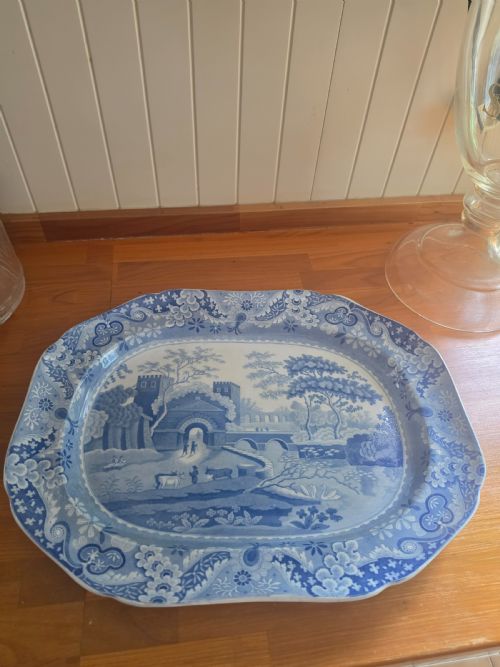
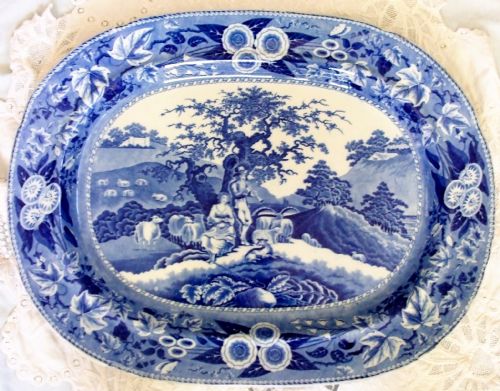
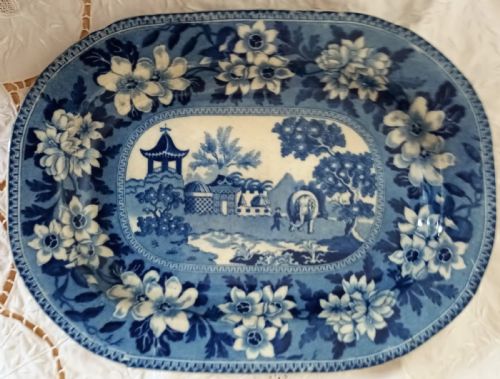


Georgian Meat Dish
A georgian meat dish serves as the centrepiece of a grand dining table, offering generous proportions for joint carving and formal presentation.
Georgian Meat Dish
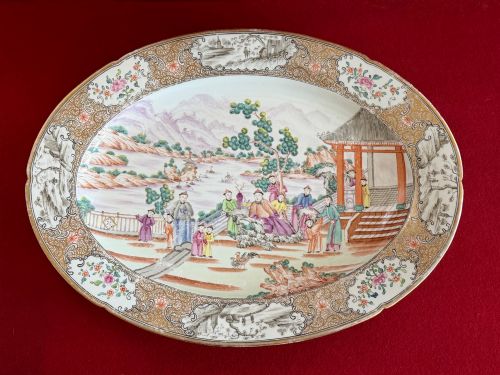
A georgian meat dish encompasses large ceramic platters and metal domes designed for formal dining tables. These items accommodate substantial joints of meat during large meals.
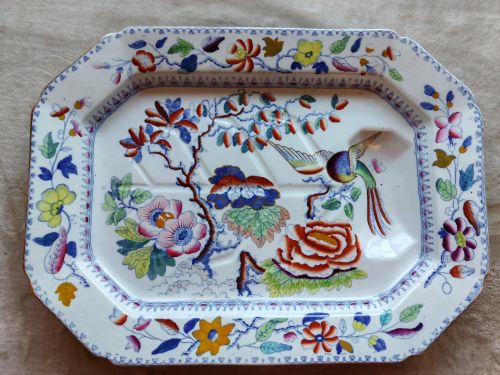
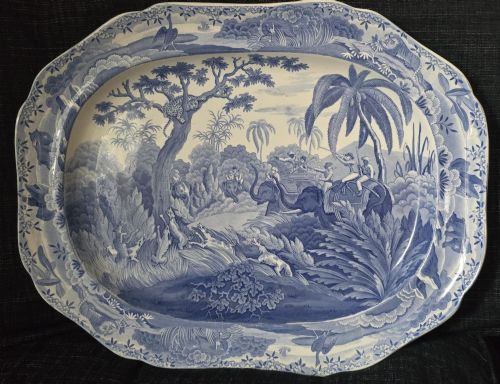
The ceramic examples often display blue and white transfer printing with landscape, armorial or figural motifs. Common forms include large platters with integrated gravy wells and mazarine draining inserts.
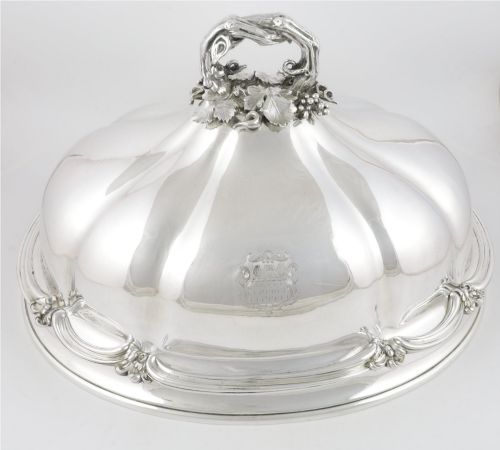
Metal versions frequently take the form of Old Sheffield Plate meat domes and warming dishes. These metal pieces work to keep carved joints hot throughout long courses.
How They Were Made
Ceramic examples utilise earthenware, creamware, ironstone and porcelain decorated with blue and white transfer printing under a ceramic glaze. Potters shape these bodies into large serving platters, often incorporating draining wells.
Metal pieces employ Old Sheffield Plate, silver, copper and silver plate to construct heavy meat domes and warming dishes. Silversmiths shape these metal sheets into domed covers, often pairing them with handles and engraved coats of arms.
Georgian Meat Dish Retail Price Guide 2026
Typical asking prices for georgian meat dish among the pieces listed under this phrase on Sellingantiques today, from the lower quarter to the upper quarter. They describe what is for sale here now, not the wider market.
Listings feature earthenware, Old Sheffield Plate, porcelain and ironstone across the Georgian, Regency and Victorian periods.
What Varies In Quality
Quality appears in the crispness of the blue and white transfer printing and the complexity of the printed pattern across large ceramic surfaces. Rich armorial details, crested coats of arms and armorial platters indicate higher status commission.
In metalwork, the weight of the Old Sheffield Plate and the depth of hand-engraved armorial crests distinguish finer meat domes. Maker marks and the retention of original warming bases or mazarine inserts elevate the standing of a piece.
Roberts Cadman·John Rogers Son·Henry Wilkinson·Robert Breading·Boulton·Spode·Thomas Lakin·Don Pottery·Mason·Elkin Knight Bridgwood
The Georgian Meat Dish Glossary
- Meat dome
- A domed metal cover placed over a platter to retain heat for carved meat joints. These covers often feature cast handles.
- Transferware
- Pottery decorated by applying a printed design from an engraved copper plate onto the ceramic body. This technique allowed intricate pictorial scenes in blue and white.
- Old Sheffield Plate
- A composite material formed by fusing a thin sheet of silver to a thicker copper base. This method creates durable metal serving pieces with silver surfaces.
- Mazarine
- A pierced ceramic or metal insert placed inside a platter to drain juices away from the meat. It sits at the base of the serving dish.
- Creamware
- A refined light-coloured earthenware developed in the eighteenth century. It forms the body for many armorial platters.
Georgian Meat Dish: Frequently Asked Questions
What was a meat dome used for?
A meat dome covers a large serving platter to keep carved joints warm between the kitchen and the dining table.
These metal covers trap heat and protect the food during formal dining.
How do you use a mazarine plate?
The mazarine insert sits inside the well of a serving platter to separate the meat from its juices.
Juices drain through the pierced holes to the bottom of the dish.
What is Old Sheffield Plate?
Old Sheffield Plate combines a thin layer of silver fused to a copper core through a heat-rolling process.
This technique produced durable tableware before modern electroplating was invented.
How do transferware patterns differ?
Transferware designs use engraved copper plates to transfer blue patterns onto earthenware bodies before glazing.
Motifs range from pastoral scenes and classical ruins to detailed armorial crests.