


Georgian Maritime Oil Painting
A georgian maritime oil painting captures the turbulence of sea battles, naval portraits, and coastal shipping on canvas.
Georgian Maritime Oil Painting
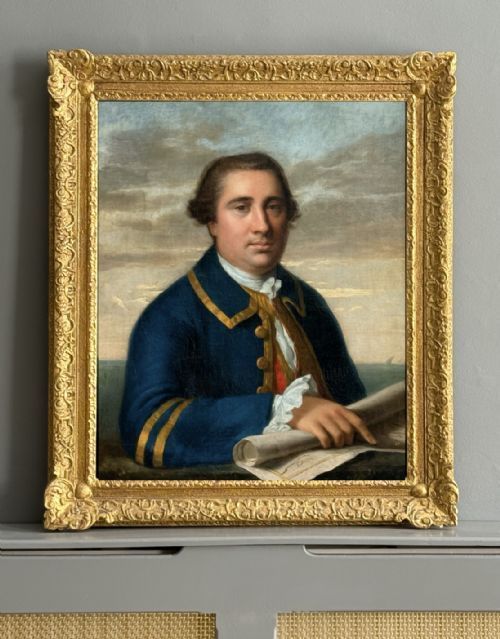
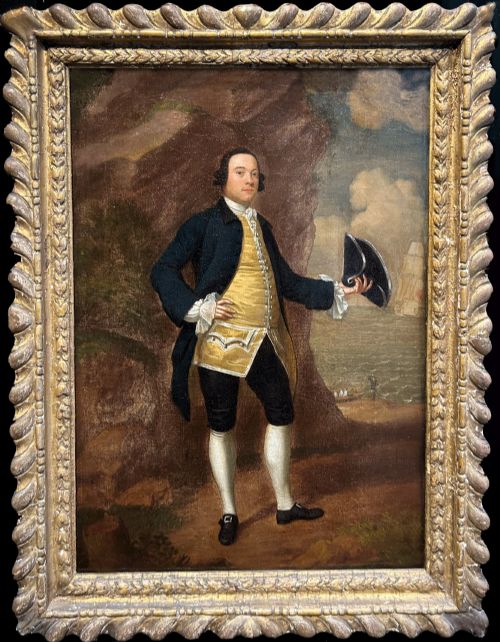
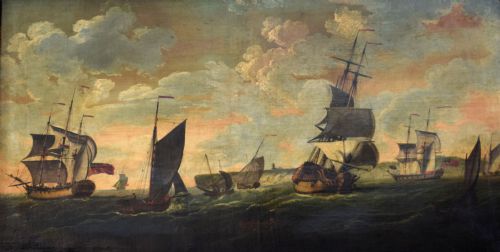
A georgian maritime oil painting depicts the era's warships, merchant vessels, and coastal shipping scenes on canvas. These works record naval engagements, harbour views, and individual captains with direct observation.
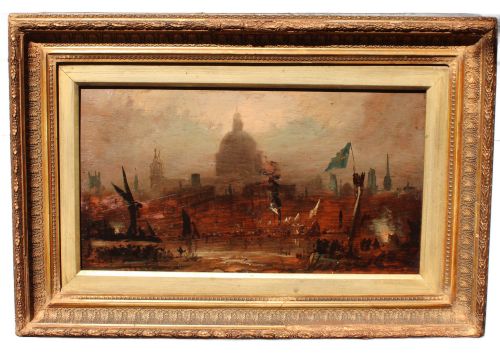
The selections range from mid-18th century seascapes and studies of the Lord Mayor's procession on the Thames to depictions of specific vessels like HMS Swift. Portraiture of naval officers and privateers also forms part of the material.
Most examples date from the eighteenth century through the Regency period and early nineteenth century. They appear in formats that include oil on canvas and oil studies within giltwood frames.
Materials and construction
Artists applied oil paint directly to canvas supports, building up maritime scenes with layered pigments to render water, sky, and rigging. Gesso and gold leaf frequently finish the heavy giltwood frames that house these works.
Surviving pieces utilise traditional canvas preparation and stretchers typical of the eighteenth and nineteenth centuries. The application combines fine brushwork for ship details with looser handling for coastal atmospheres.
The listings span the eighteenth century, Regency period, and nineteenth century, utilising oil paint on canvas within giltwood and gesso frames.
Evaluating execution and attribution
Quality rests on the precision of the rigging, hull construction, and handling of water. Stronger examples demonstrate accurate nautical knowledge and competent perspective in crowded harbour scenes.
Attribution to documented painters or circles, such as Francis Holman or the manner of J. M. W. Turner, elevates certain canvases. The integration of the original gesso and giltwood frame also influences the overall standing of a piece.
LEMUEL FRANCIS ABBOTT·Francis Hayman·George Morland·Francis Holman
The Georgian Maritime Oil Painting Glossary
- Giltwood
- Wood carved and coated with gold leaf or a gold-coloured finish. This material defines the ornate frames common to eighteenth-century paintings.
- Gesso
- A plaster-like mixture applied to wooden frames as a base for gilding. It provides a smooth surface for intricate moulding.
- Seascape
- A painting depicting the sea, ships, or coastal views. These works focus primarily on marine subjects and naval actions.
- Privateer
- A privately owned warship authorised by government commission to attack foreign shipping. Portraits of privateer captains appear among these maritime records.
Georgian Maritime Oil Painting: Frequently Asked Questions
What periods do these paintings cover?
The works span the eighteenth century, the Regency era, and the early nineteenth century. This timeframe encompasses mid-18th century productions up to Victorian interpretations of earlier naval events.
Specific dates within titles point towards the mid-1700s and the opening decades of the 1800s. Stylistic shifts follow the transition from Georgian formality into Romantic maritime views.
How were these canvases framed originally?
Many works retain heavy giltwood frames finished with gesso and gold leaf. These substantial surrounds reflect the domestic settings of country houses and naval offices.
Original frames provide context for the period, though various pieces have encountered later framing or restoration over the centuries.
What subjects appear most frequently?
Common subjects include warships in sea battles, merchant shipping, coastal landscapes with figures, and portraits of naval captains. Scenes record specific locations such as the Thames and Beachey Head.
Artists also documented historic vessels like HMS Swift and HMS Queen Charlotte alongside generic harbour scenes and fishing boats.
How do you distinguish an oil study from a finished painting?
Oil studies usually display faster, more direct brushwork focused on capturing light, weather, or compositional elements. Finished works generally show greater attention to fine details in rigging and hull construction.
Both formats utilise oil paint on canvas, but studies often serve as preparatory works for larger, more formal maritime commissions.