




Georgian Marble Pedestal
A georgian marble pedestal brings architectural weight and stone surface to a room, drawing the eye instantly.
Georgian Marble Pedestal
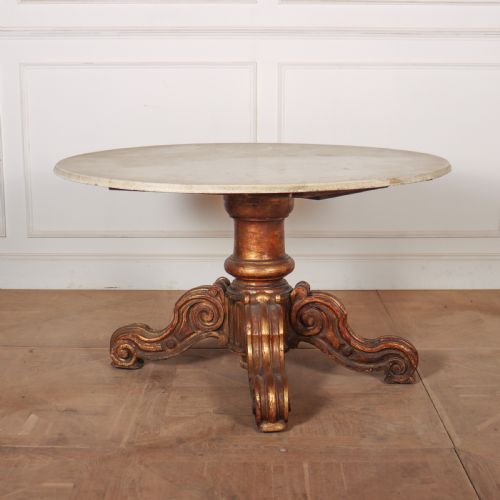
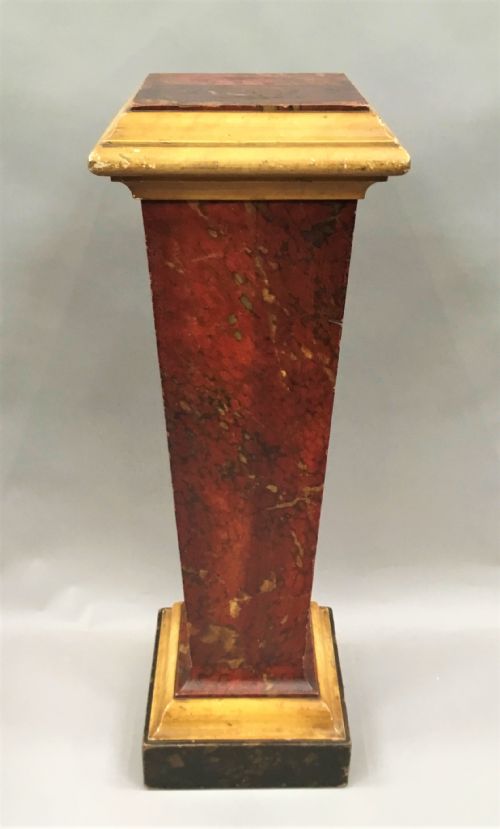
A georgian marble pedestal encompasses solid stone columns, triform stands, and simulated marble columns designed to support sculpture, lighting, or decorative objects. These structural supports appear across periods spanning the eighteenth century, Regency era, and Victorian times.
The inventory demonstrates that buyers encounter both stone and wood structures finished with faux marble paint alongside timber tables featuring inset stone tops. These pieces originate from distinct design movements including Regency, Baroque, and Georgian Revival.
Support pieces range from modest occasional lamp tables to large console formats and carved triform stands. The most prevalent survivors combine robust mahogany or giltwood framing with substantial stone surfaces.
Materials and construction
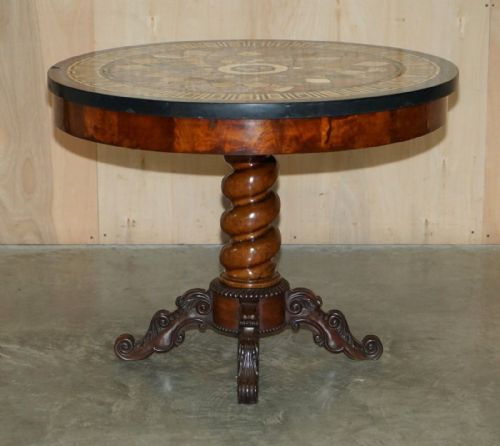
Construction relies upon dense hardwoods such as mahogany and walnut paired with natural marbles and specialised specimen stone mosaics. Cabinetmakers utilised solid timbers for structural stability, shaping bases through turning, carving, and joinery.
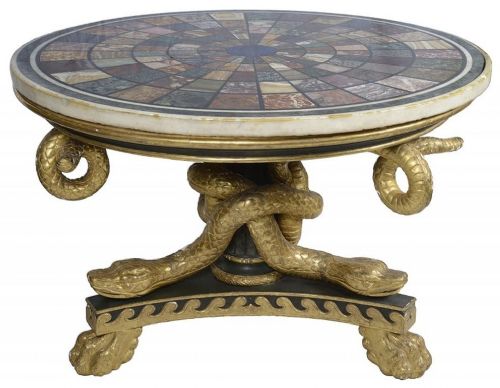
Surface finishes involve detailed gilding, ebonising, gesso application, and skilled paintwork to replicate costly marbles. Pietra dura techniques introduce precision-cut mosaic stones into tabletops, requiring expert geometry and polishing.
Listings feature marble, mahogany, brass, giltwood, ebonised wood, gesso, and walnut across periods from the eighteenth century to the Victorian era.
Assessing quality
Quality rests upon the crispness of hand-carved wood details and the complexity of stone work, from simple local marble slabs to intricate multi-mineral specimen tops. Superior examples display intact original paint finishes rather than later overpainting.
Proportion and scale dictate visual success, where well-balanced triform bases and substantial console pedestals hold architectural presence without heaviness. The integration between wooden framing and stone inserts reveals the joiner's precision.
The Georgian Marble Pedestal Glossary
- Triform
- A three-sided base or stand providing stable floor support. This triangular geometry appears frequently in eighteenth-century pedestals.
- Pietra dura
- An inlay technique using cut and fitted polished coloured stones to create pictorial or geometric designs. This method decorates high-status specimen tops.
- Console table
- A table designed to stand against a wall, frequently supported by wall brackets or decorative legs. These items often feature marble tops.
- Faux marble
- A painted finish simulating the appearance of natural stone veining on wood or gesso surfaces. Artisans applied this technique during the Regency period.
- Specimen marble
- A tabletop composed of various mineral specimens assembled in geometric patterns. These showcase multiple stone types.
Georgian Marble Pedestal: Frequently Asked Questions
What is a faux marble pedestal?
A faux marble pedestal uses painted timber surfaces finished by hand to imitate natural stone veining and coloration. This technique offered decorative grandeur at a reduced weight and cost.
Such finishes often survive from the Regency period, displaying original paint layers that preserve historic texture.
How do I place a pedestal in a room?
These supports suit corners, hallways, or focal wall spaces where they elevate sculptures, lamps, or large decorative vessels. Their vertical lines balance low seating and break up long wall expanses.
Ensure the floor surface is level to maintain stability for heavy stone tops and mounted objects.
What is a specimen marble top?
A specimen top incorporates multiple distinct varieties of polished stone arranged in geometric or mosaic compositions. Craftsmen sourced these minerals to display geological variety.
These tops appear on tables and stands dating from the Regency era and require careful cleaning with dry cloths.
How do I identify Regency pieces?
Regency items exhibit classical architectural influences, featuring clean lines, simulated marble finishes, and rich mahogany or rosewood timbers. Design motifs often draw upon ancient Roman and Greek vocabulary.
Construction methods from this era rely on heavy turnings and distinct structural proportions.