


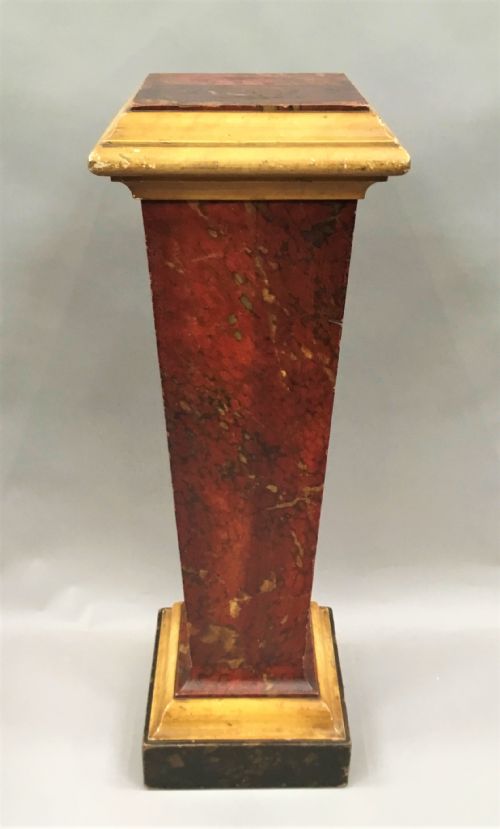


Regency Display Plinth
These regency display plinth pieces are architectural supports and cabinets designed to elevate sculpture and decorative objects, bringing classical proportion and focal height to a room.
Regency Display Plinth
When you search for a regency display plinth, you encounter heavy architectural columns, tall pedestals, and enclosed pedestal cabinets designed for interior sculpture and ornament. The selection spans forms from circular columns to hexagonal cabinets, reflecting classical taste adapted for nineteenth-century domestic interiors.
The objects appearing on this page originate from the nineteenth century, encompassing Regency, late Georgian, William IV, and Victorian neoclassical styles. Mahogany and faux marble finishes dominate the listings, offering buyers a choice between rich timber grains and classical painted stone simulations.
How they were made
Cabinet makers constructed these pieces primarily using solid mahogany, pine, and rosewood, often combining structural timbers with grain painted pine to achieve specific decorative effects. Ebonised wood and gilt accents frequently highlight the classical moulding profiles.
Surface treatments range from natural timber polishes to sophisticated faux marble finishes and painted architectural details. Bronze and brass components appear as structural columns or decorative mounts, adding metallic contrast to the timber and painted surfaces.
Some nineteenth-century makers painted humble pine to look like grand marble, giving everyday timber delusions of ancient grandeur.
What varies in quality
The distinction between standard utility pieces and finer examples rests upon the depth of neoclassical carving, the fidelity of the faux marble finish, and the selection of timber figures. Grand scale works and matched pairs command greater presence through balanced proportions and deliberate material choices.
Execution of secondary details, such as the retention of original painted surfaces and the integration of functional cupboard doors within pedestal cabinets, separates mass-produced workshop items from bespoke architectural commissions.
The Regency Display Plinth Glossary
- Neoclassical
- A style drawing inspiration from the classical art and architecture of ancient Greece and Rome. This aesthetic heavily influences the columns and plinths seen in nineteenth-century domestic interiors.
- Faux marble finish
- A painted decoration technique simulating the appearance of genuine stone. Artisans apply this treatment to timber or pine surfaces to create the illusion of costly marble.
- Pedestal cabinet
- An enclosed piece of furniture designed to elevate an object while providing internal storage space. These units often feature single doors and architectural cornices.
- Ebonised wood
- Timber treated to resemble ebony through staining or painting. This dark finish provides sharp contrast against gilt accents and classical stonework.
Regency Display Plinth: Frequently Asked Questions
What is a regency display plinth used for?
These pieces serve as elevated stands for sculptures, urns, and decorative ceramics within a reception room or hallway. Their primary function is to raise focal objects to eye level while adding architectural dignity to the interior.
Enclosed pedestal cabinets also provide hidden storage beneath the display surface, combining practical utility with classical presentation.
How do I identify a neoclassical pedestal?
Neoclassical pedestals exhibit architectural motifs such as fluted columns, stepped cornices, and proportions derived from ancient temples. Look for balanced geometric forms including hexagonal and circular profiles.
Materials like bronze, mahogany, and faux marble finishes further signal this classical revival influence.
Are these pieces made of solid timber?
The listings show a combination of solid mahogany, rosewood, and pine substrates. Grain painted pine is frequently utilised alongside solid hardwoods to achieve decorative painted surfaces.
Brass and bronze elements also appear structurally in column formats rather than purely as surface decoration.
How do I live with a tall pedestal?
Tall pedestals require stable floor placement and careful clearance within a room to showcase three-dimensional objects effectively. They perform best when paired with sculptures or heavy decorative urns that match their physical weight.
Placing them in corners or flanking doorways allows the architectural lines to complement the surrounding interior space.