

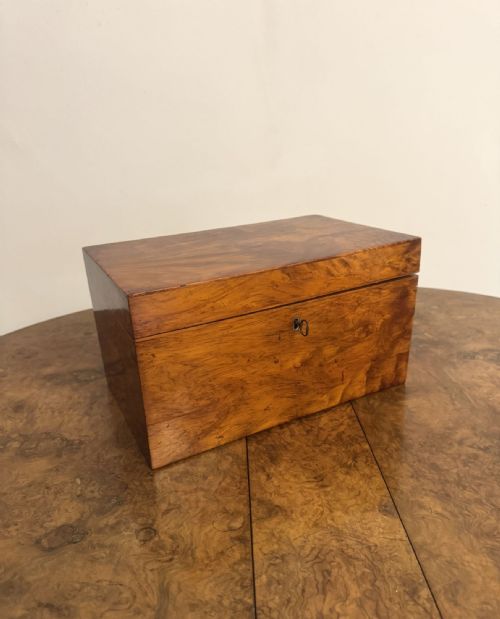

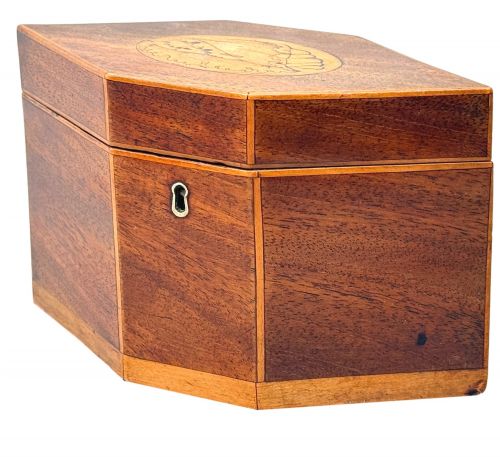
Georgian Mahogany Tea Caddy
A georgian mahogany tea caddy is a compact, timber-lidded chest originally designed to lock away valuable tea leaves.
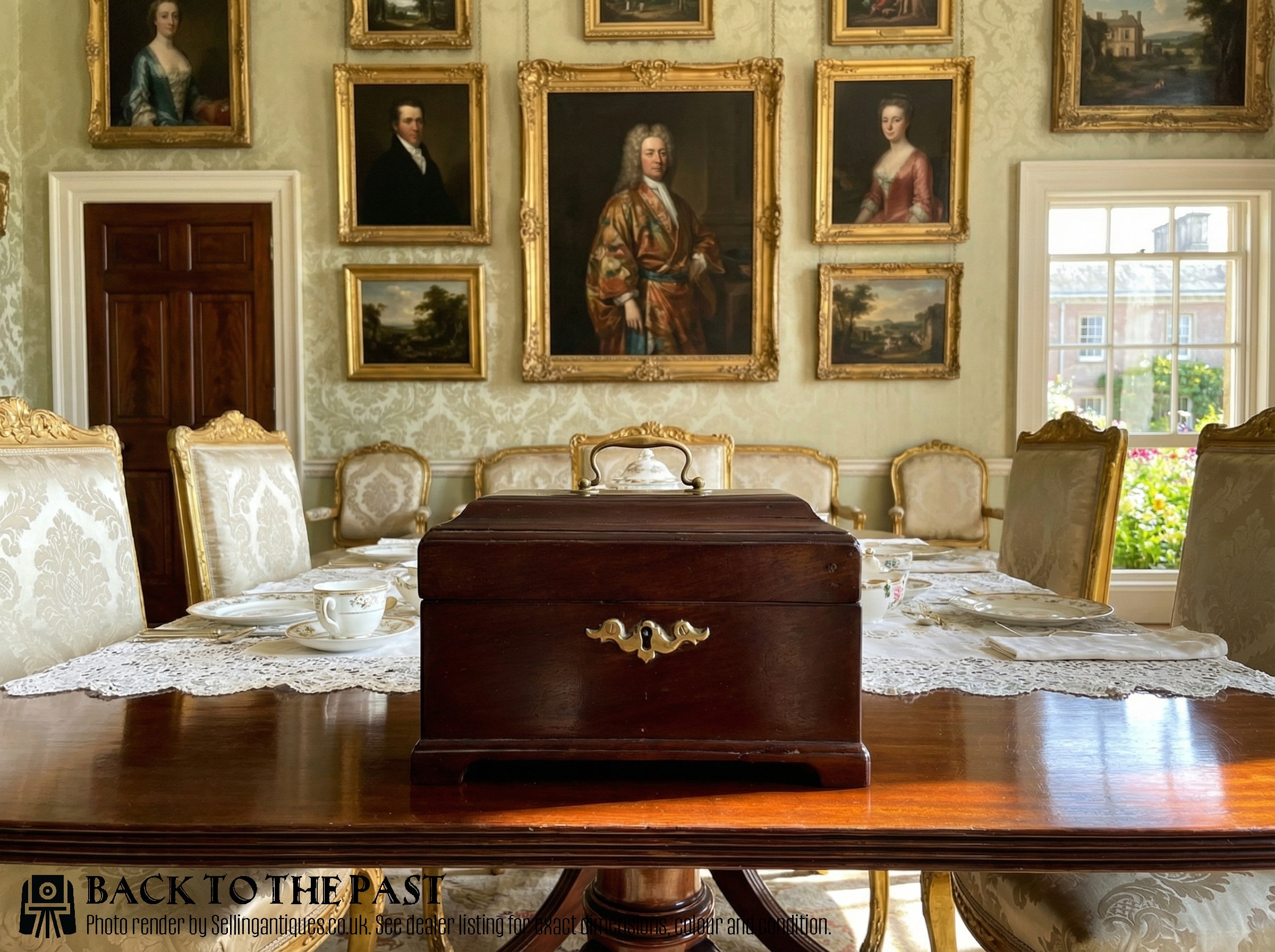
Georgian Mahogany Tea Caddy
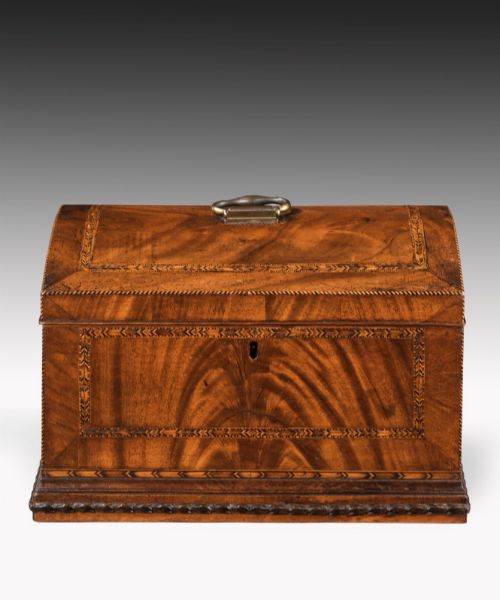
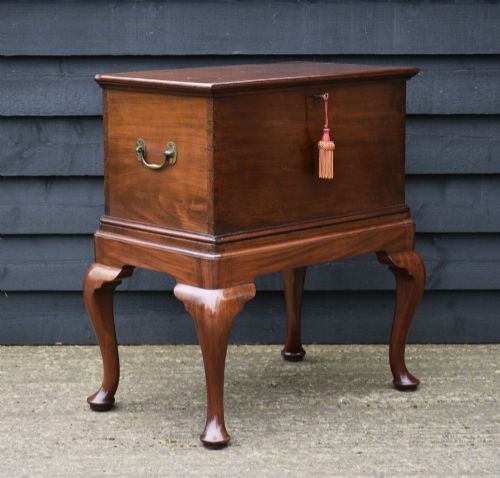
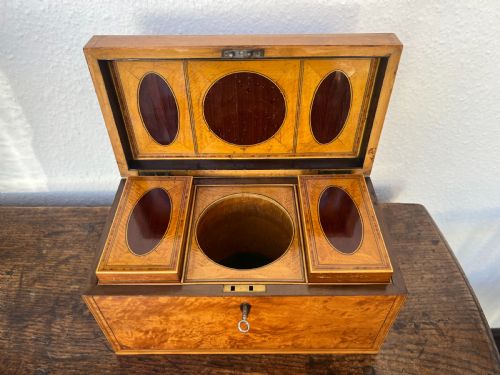
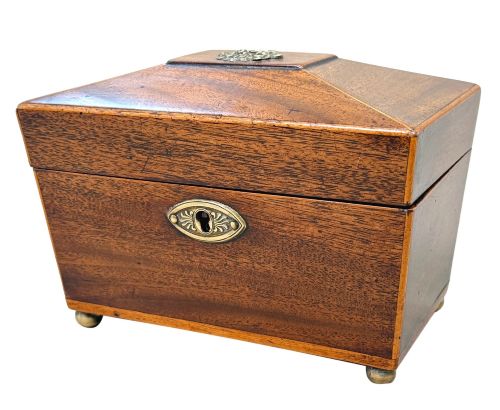
A georgian mahogany tea caddy is a wooden receptacle created during the eighteenth and nineteenth centuries to store dry leaves safely under lock and key. These containers range from simple rectangular boxes to elaborate sarcophagus forms, often featuring internal compartments for green and black varieties.
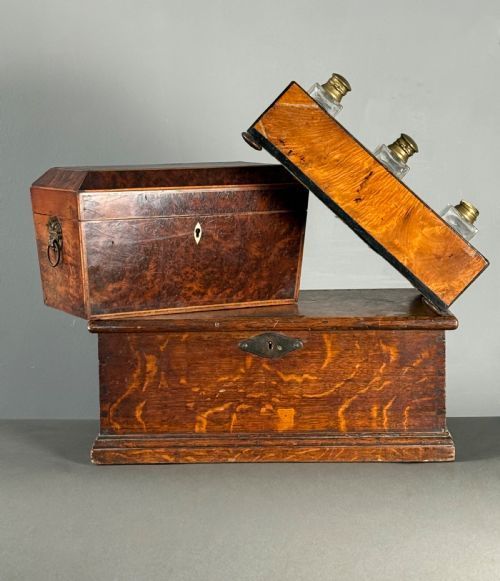
The versions most commonly found here date from the Georgian, Regency, and early nineteenth-century periods. Many examples utilise solid or veneered timber, sometimes housing fitted glass bowls or internal lids alongside secret drawers.
Materials and construction
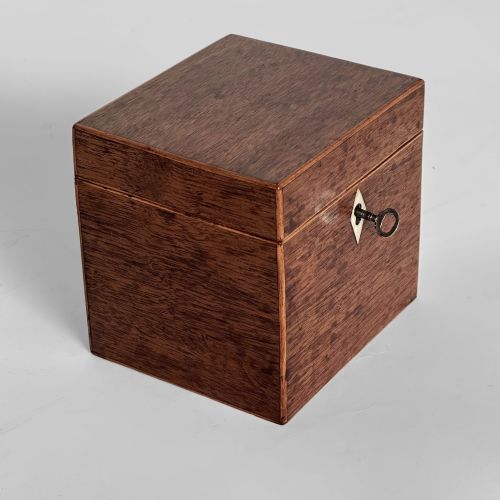
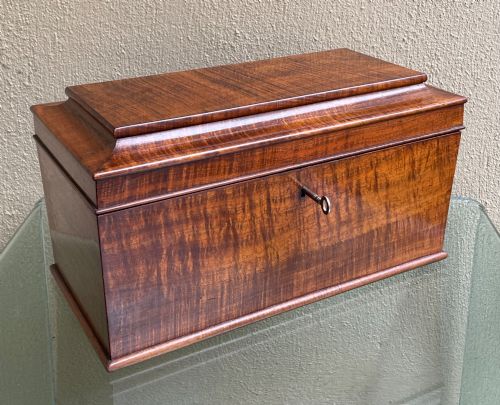
Cabinetmakers constructed these caddies primarily from mahogany, frequently selecting figured grains such as flame mahogany or fiddleback for the exterior surfaces. Secondary timbers like boxwood, ebony, and satinwood appear as stringing, banding, and contrasting geometric inlay.
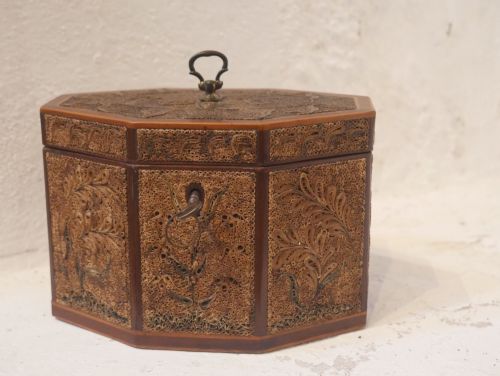
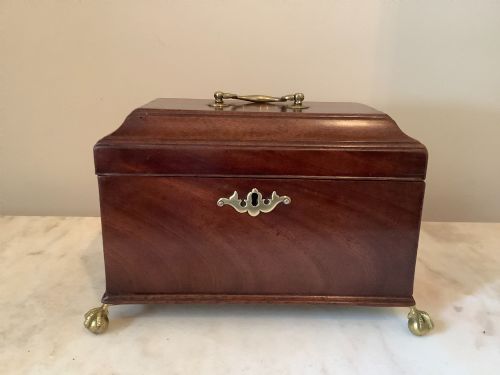
Metalwork played a functional and decorative role, with brass carrying handles, escutcheons, and working locks fitted to secure the contents. Internal elements occasionally incorporate bone details, paper filigree, or fitted glass mixing bowls.
Georgian Mahogany Tea Caddy Retail Price Guide 2026
Typical asking prices for georgian mahogany tea caddy among the pieces listed under this phrase on Sellingantiques today, from the lower quarter to the upper quarter. They describe what is for sale here now, not the wider market.
Listings feature mahogany, satinwood, and walnut timbers, alongside brass hardware and bone details.
Quality and execution
The distinction between tiers of quality rests in the choice of timber veneer and the precision of the cabinetwork. Superior examples display carefully matched grain patterns across every surface, tight corner joints, and intricate inlay rather than simple painted decoration.
Internal arrangement further separates standard boxes from finer pieces. Well-executed caddies retain original interior lids with turned knobs, intact key escutcheons, and smoothly functioning secret compartments.
The Georgian Mahogany Tea Caddy Glossary
- Sarcophagus form
- A box shape featuring a domed or stepped lid resting on a rectangular or plinth base, popular during the Regency period. This architectural profile gave larger tea chests a substantial presence on a sideboard.
- Teapoy
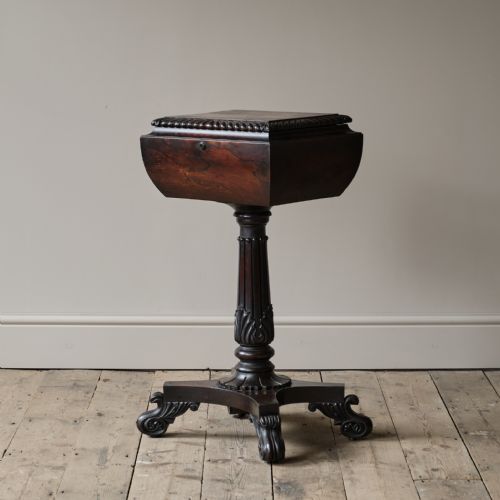
- A larger tea container mounted upon a central pillar and pedestal base rather than resting directly on a surface. These pieces often include internal canisters for multiple varieties of leaf.
- Stringing
- Thin lines of contrasting wood inlaid into the surface to create geometric borders and panels. Cabinetmakers used boxwood or ebony against mahogany to define the edges of the box.
- Escutcheon
- A small protective plate surrounding the keyhole of the lock, usually cast in brass. It prevents the timber surrounding the mechanism from wearing away through repeated use of the key.
- Flame mahogany
- A decorative veneer cut from the point where a branch joins the main trunk, producing a rippling, flame-like pattern. Makers prized this timber for high-status exterior panels.
Georgian Mahogany Tea Caddy: Frequently Asked Questions
What is inside a tea caddy?
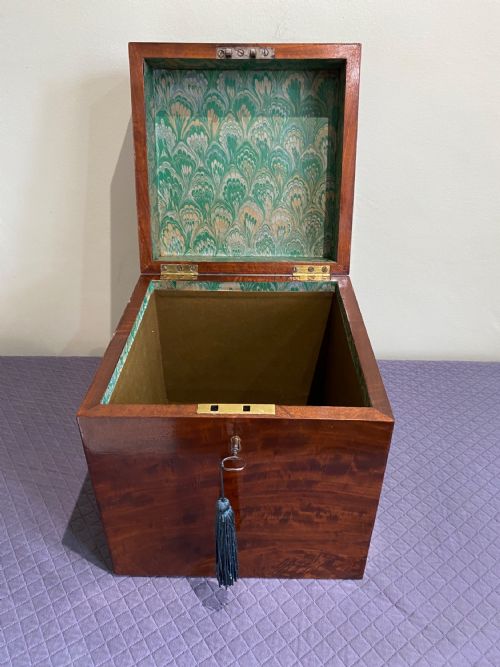
Most interiors feature divided compartments lined with wood, sometimes accompanied by internal lids to keep the leaves airtight. Some examples also contain a fitted glass bowl placed centrally for mixing varieties.
Finer specimens conceal small secret drawers operated by hidden latches beneath the main storage sections.
How do I date a tea caddy?
Dating relies on observing the overall silhouette, timber selection, and hardware style. Rectangular boxes with simple brass wire inlay typically point to the eighteenth century, while sarcophagus shapes on paw feet indicate the Regency era.
Internal construction details, such as hand-cut dovetails and original brass locks, provide further clues to the manufacturing period.
Why do some caddies have two lids?
Two-lidded boxes allowed households to store green tea in one side and black tea in the other under a single locked lid. A central aperture often held the sugar bowl or mixing glass between them.
This layout reflected the high value placed on different leaf varieties during the Georgian period.
Did they always lock?
Tea was an expensive commodity, so secure locks were a standard feature fitted by the original cabinetmaker. Working keys were essential for the head of the household to control access to the stores.
Many surviving pieces retain their original brass locks, though working keys are less common on older examples.