
Georgian Mahogany Shelving
Georgian mahogany shelving brings together rich timbers and tiered utility, offering timeless display space for books and precious objects.
Georgian Mahogany Shelving
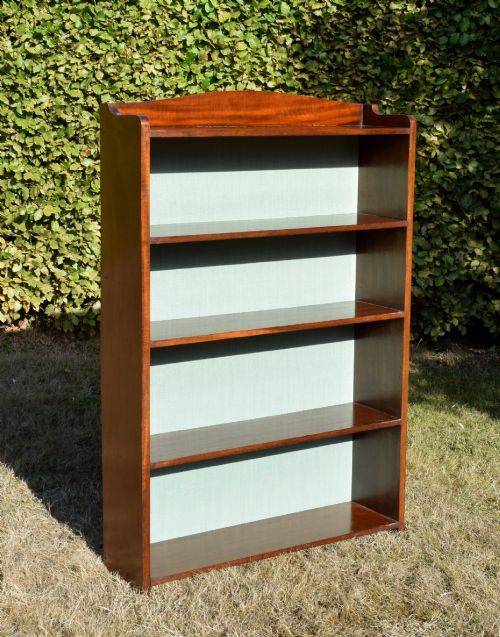
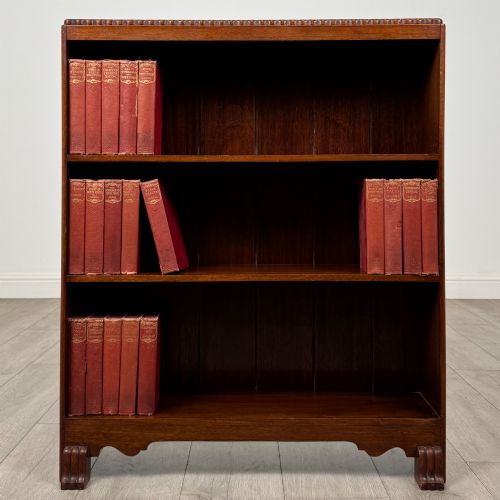
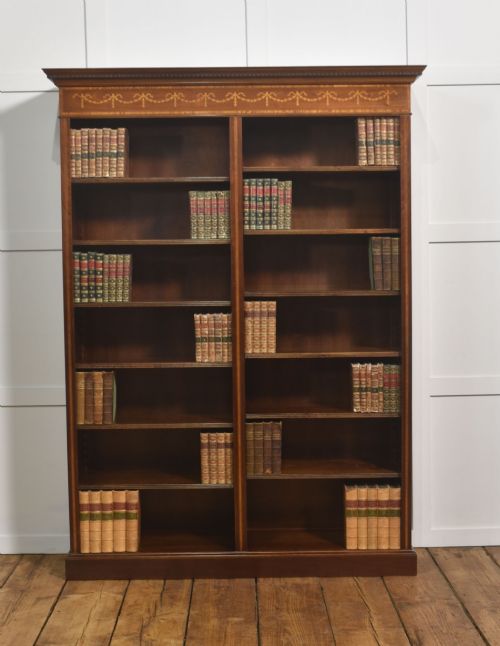
When searching for georgian mahogany shelving, buyers encounter a versatile array of tiered display pieces, hanging shelves, and open bookcases designed for domestic utility and display. The selection spans distinct periods from the eighteenth century onwards, encompassing authentic Georgian pieces alongside later Regency and Edwardian interpretations.
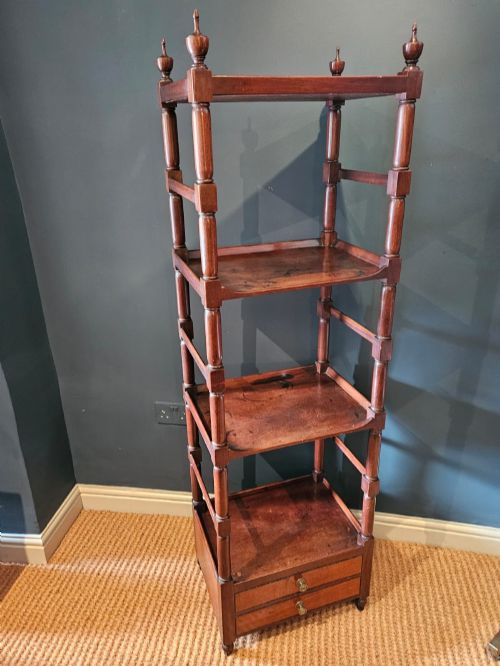
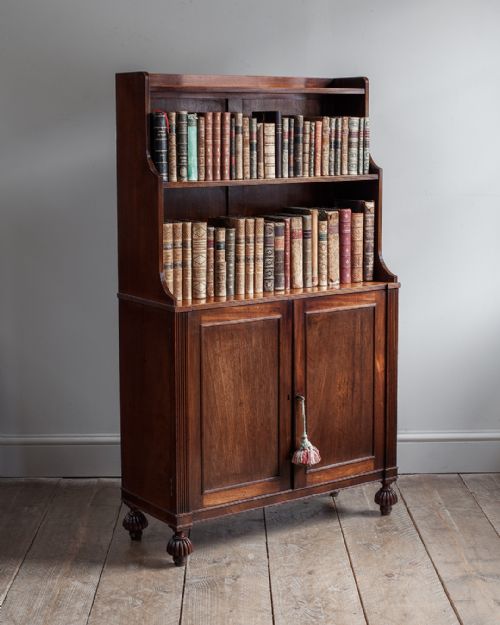
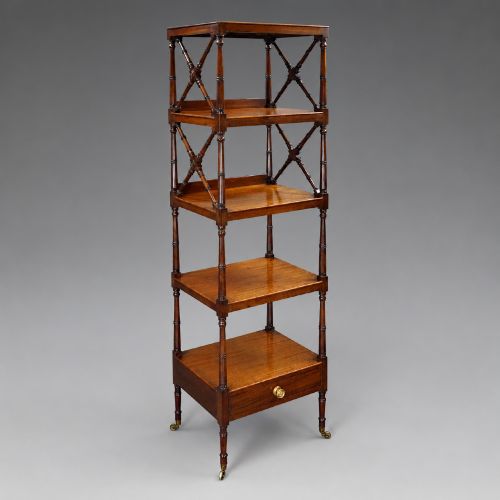
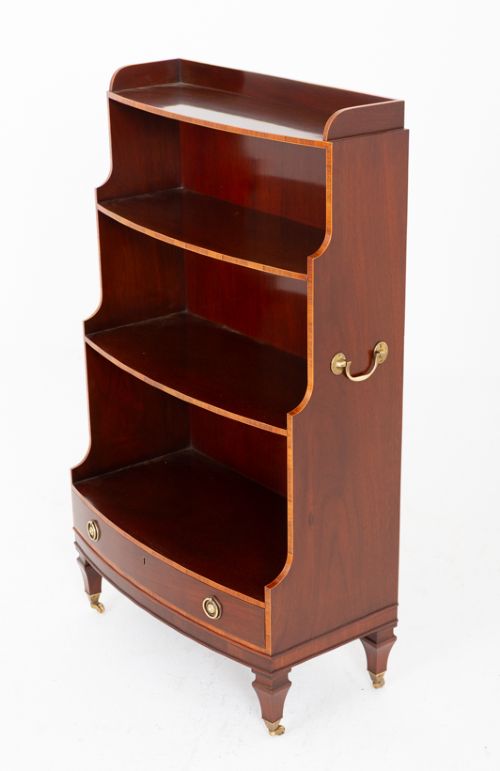
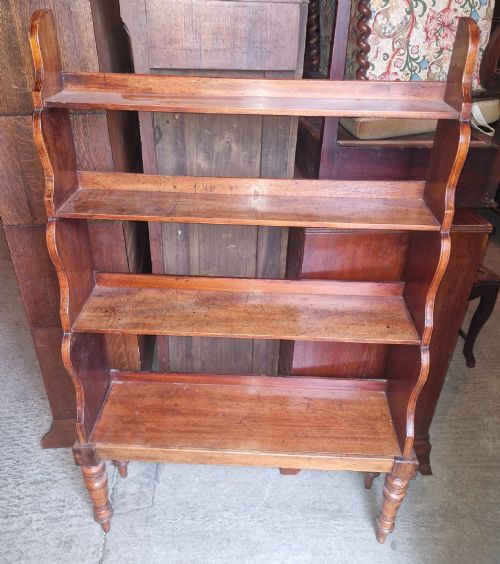
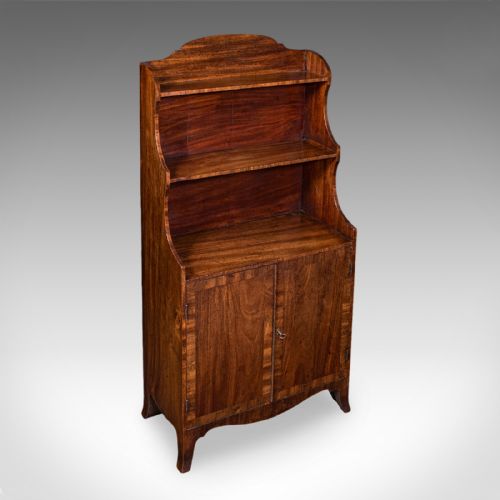
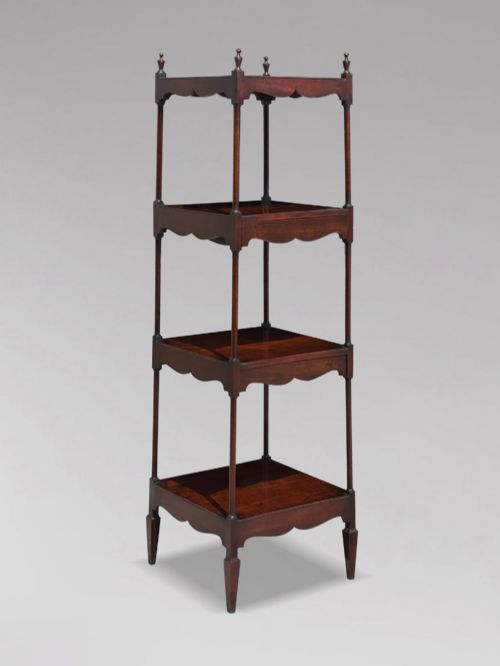
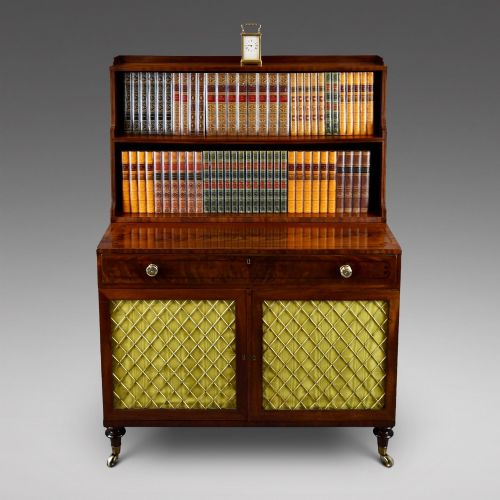
Waterfall bookcases and multi-tiered what-nots form a prominent part of the current selection, offering graduated tiers that gently recede toward the top. These pieces originated to hold books and porcelain, bringing practical elegance to domestic interiors.
Materials and construction
Makers relied heavily on solid mahogany and flame mahogany veneers, prized for their deep colour and lively grain patterns. Secondary timbers such as pine frequently feature in internal framing and drawer construction.
Brass castors, handles, and gallery rails provide functional accents on movable pieces like what-nots and dwarf bookcases. Inlaid details in satinwood occasionally supplement the dark mahogany surfaces, adding geometric contrast.
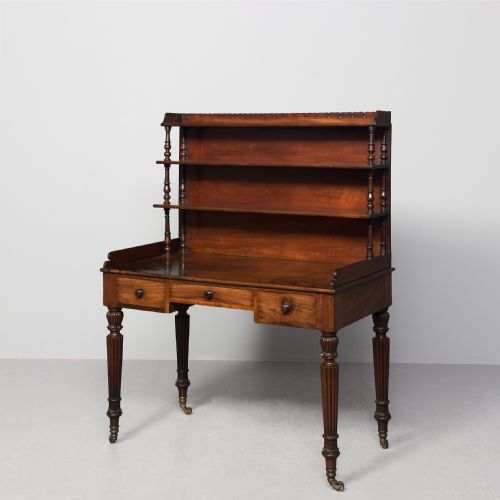
Object types recorded include book-cases, wall shelves, what-nots, corner cabinets, and writing desks.
Distinguishing quality in shelving
Superior examples demonstrate meticulous timber selection, using figured flame mahogany for prominent surfaces and maintaining consistent grain direction throughout the tiers. Finer pieces often incorporate delicate turned supports, subtle string inlay, or structural brass elements that integrate seamlessly into the overall design.
Proportion and architectural balance dictate the upper tier of craftsmanship. Pieces that maintain harmonious spacing between tiers and employ sound joinery without relying on excessive modern reinforcement represent the standard of serious cabinet work.
James Mein of Kelso·Gillows·Tudor and Burrey·Waring and Gillows
The Georgian Mahogany Shelving Glossary
- Waterfall bookcase
- A set of open shelves where each tier steps back progressively from the one below it, creating a profile reminiscent of cascading water. These often appear in compact formats suitable for tabletop or floor placement.
- Breakfront
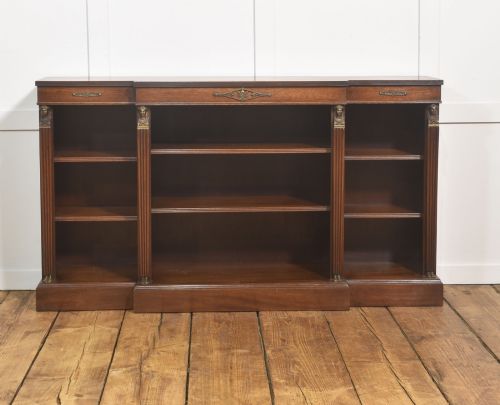
- A cabinet or bookcase whose central section projects forward from the flanking outer sections. This architectural arrangement creates depth and visual interest in larger library pieces.
- Étagère
- A French term for a piece of furniture consisting of a set of open shelves for displaying ornaments. It shares similarities with the English what-not and often incorporates slender upright supports.
- Flame mahogany
- A highly figured veneer cut from the fork of the mahogany tree where the branch meets the trunk. The resulting grain resembles flickering flames and was favoured for high-status furniture fronts.
Georgian Mahogany Shelving: Frequently Asked Questions
What is a waterfall bookcase?
A waterfall bookcase is a tiered shelving unit where each successive shelf steps back from the one beneath it. This graduated design creates a sloping, stepped profile that accommodates books and ornaments efficiently.
Such pieces appear in both freestanding formats and compact tabletop versions across the nineteenth and twentieth centuries. Their open construction allows light to circulate around displayed items.
How do I use hanging shelves?
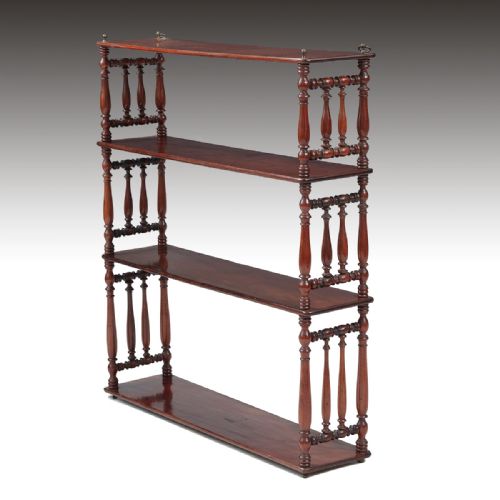
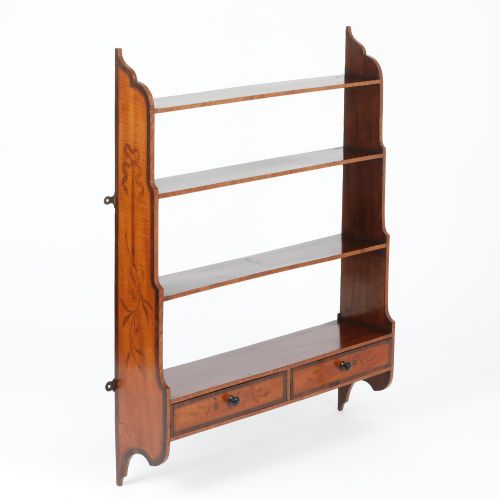
Hanging shelves mount directly to wall surfaces to provide elevated storage without consuming floor space. They serve well in smaller rooms for displaying ceramics, books, or small collections.
Historically utilised for plates or writing materials, these pieces require secure wall fixings to support the weight of dense mahogany timber and loaded shelves.
What defines a George III whatnot?
A George III whatnot is a multi-tiered display stand dating from the late eighteenth century. These pieces typically feature square corner posts supporting three or more open platforms.
They were originally conceived to hold books, tea wares, or decorative objects within principal rooms. Their lightweight open framework distinguished them from heavier closed cabinetry.
How do I distinguish Regency from Edwardian pieces?
Regency pieces date from the early nineteenth century and often feature classical restraint, robust mahogany grains, and brass mounts or gallery rails. Their lines reflect archaeological influences and architectural proportion.
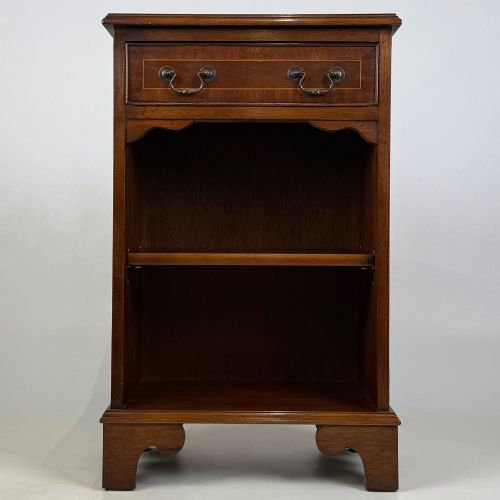
Edwardian interpretations from the early twentieth century frequently revive earlier eighteenth-century styles, such as Sheraton designs, often incorporating lighter satinwood stringing and simpler internal construction.