
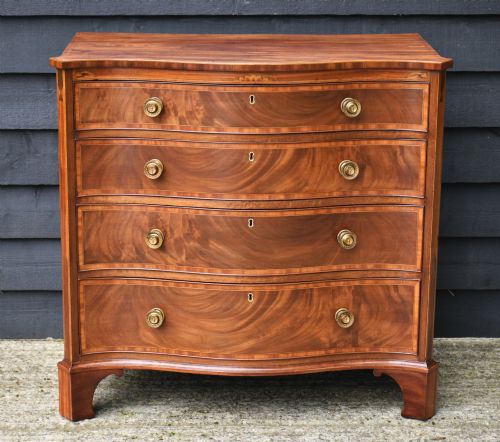
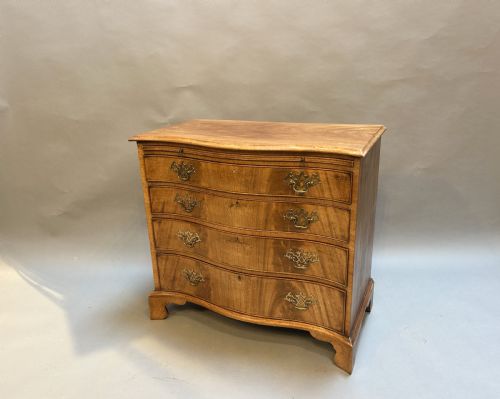
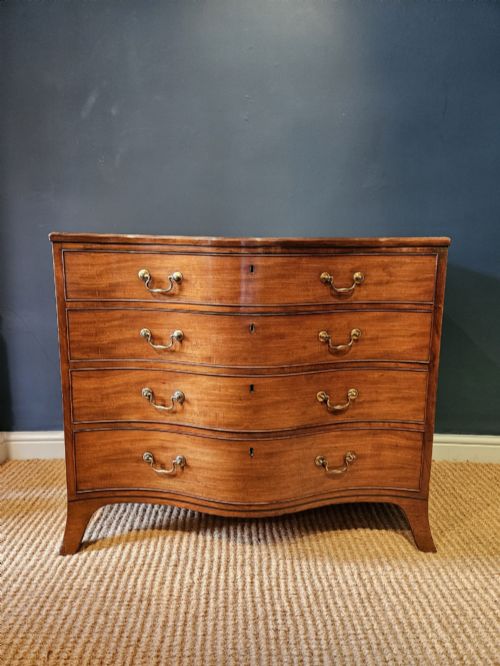
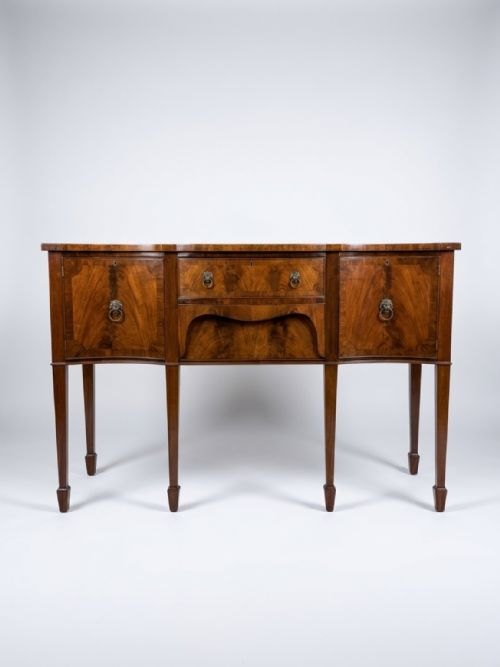
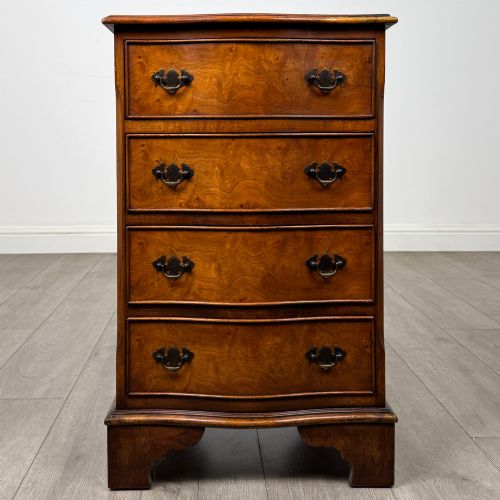
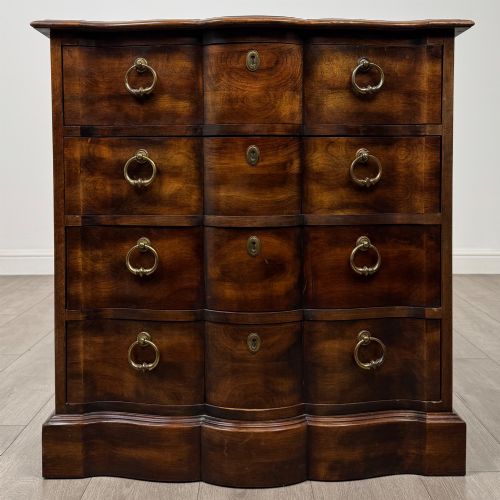
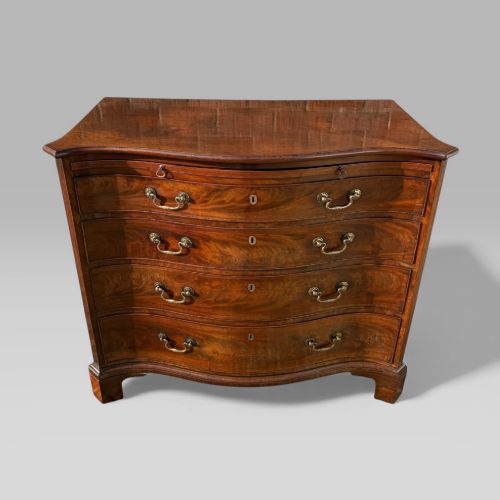
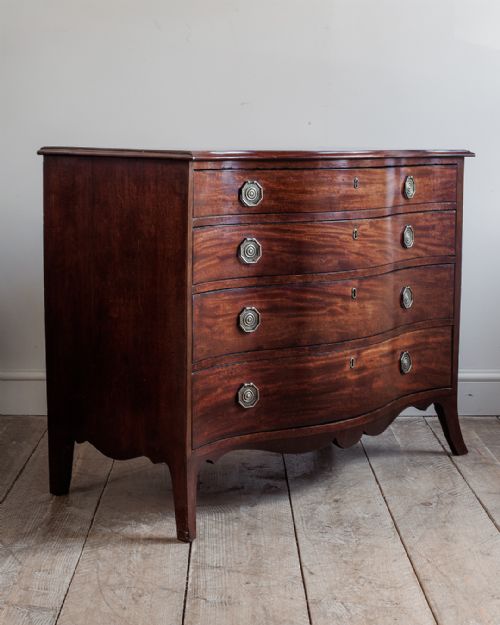



Georgian Mahogany Serpentine Dresser
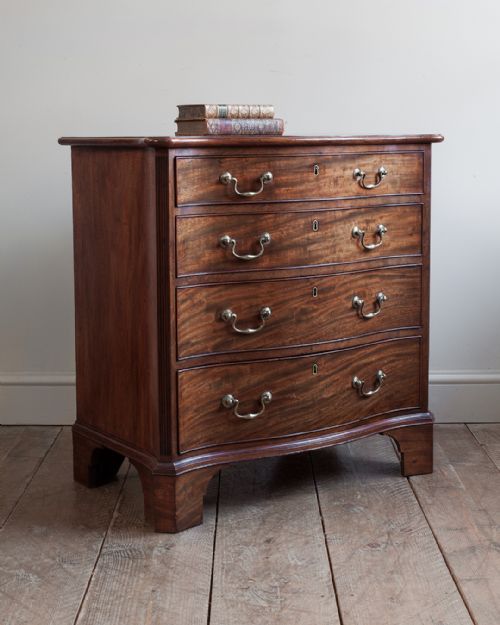
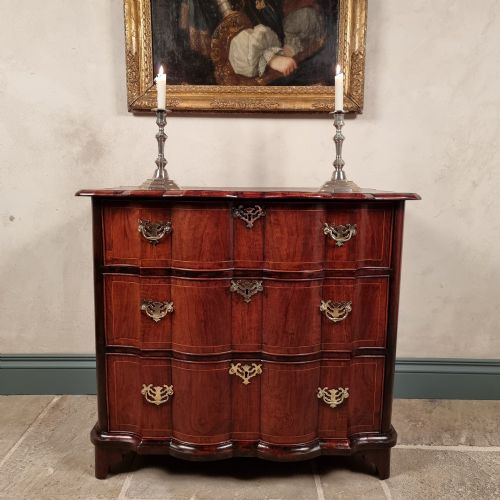
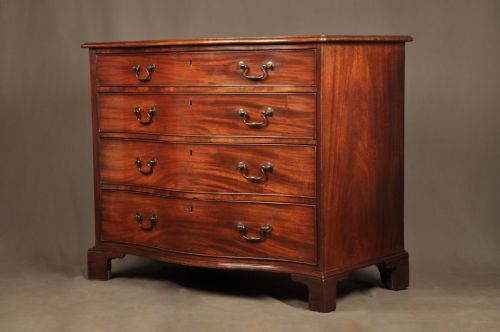
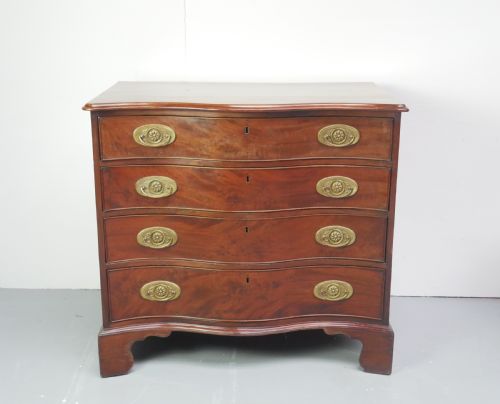
A georgian mahogany serpentine dresser brings together fluid front contours and rich timber grain, serving as a commanding focal point in a traditional room.
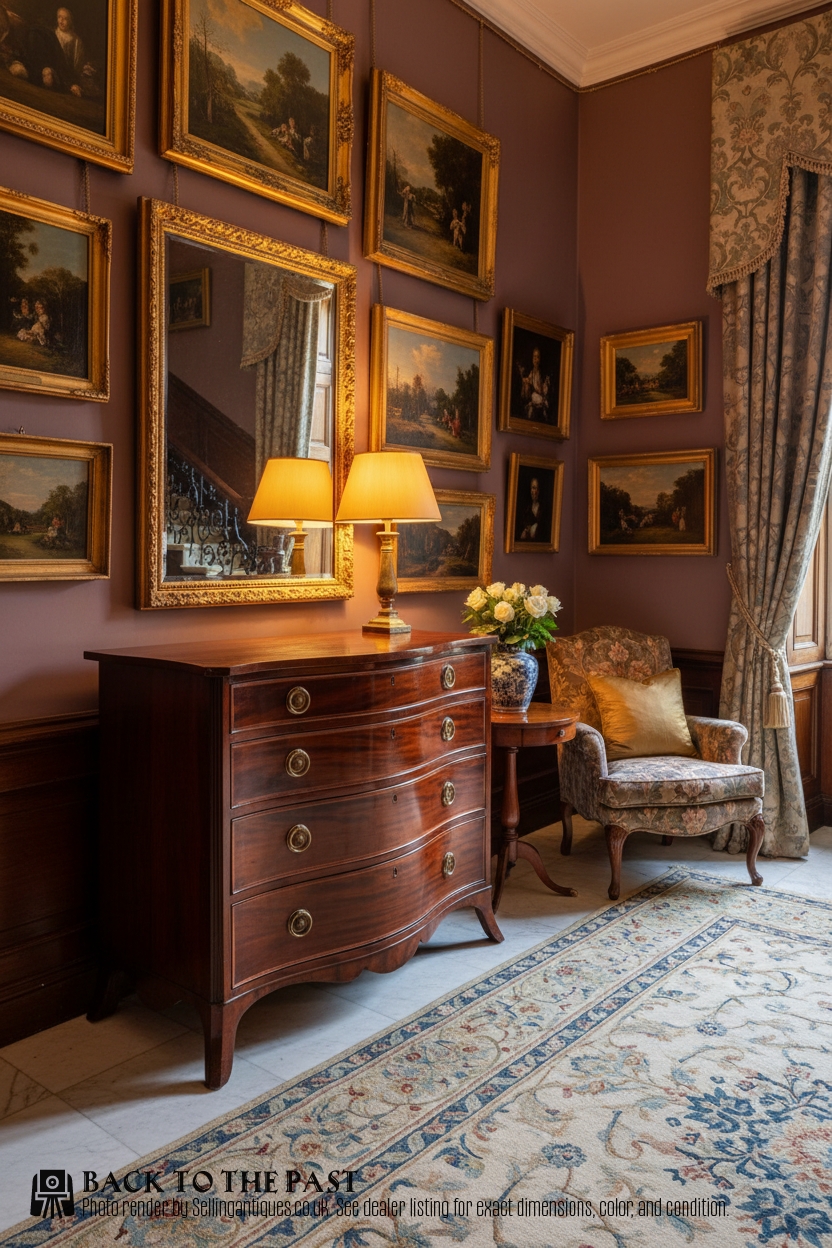
Georgian Mahogany Serpentine Dresser
When you search for a georgian mahogany serpentine dresser, you encounter pieces primarily from the eighteenth century, including the Georgian and George III periods, alongside later revivals from the Edwardian and Victorian eras. These items typically manifest as chests of drawers, sideboards, or side tables defined by a distinctive undulating front curve.
The dominant forms on this page include the classic chest of drawers featuring four graduated drawers, occasionally equipped with a writing brush and slide, as well as larger sideboards and side tables. While many examples originate from the eighteenth century, revival pieces from the nineteenth and twentieth centuries also appear frequently in the listings.
Makers and designers of these pieces worked within established stylistic frameworks such as Chippendale and Hepplewhite, employing sophisticated shaping to the timber facades. The combination of the serpentine outline with solid mahogany or veneered surfaces establishes the core identity of these pieces across the different periods represented.
Materials and Technique
Cabinet makers constructed these pieces using solid mahogany and flame mahogany veneer, often enhanced by inlay work in satinwood, boxwood, and fiddleback mahogany. The curved serpentine fronts required specialist joinery to shape the timber accurately without compromising the structural integrity of the drawer frames.
Details such as brass hardware, including handles and escutcheons, complement the dark timber tones, whilst secondary woods like oak support the internal drawer construction. Marquetry and delicate stringing appear on specific revival and George III style pieces, showcasing precise hand-cut decorative techniques.
Listings span the eighteenth century to the twentieth century, uniting Georgian originals with Edwardian and Victorian revivals in solid mahogany and hardwood.
Evaluating the Pieces
The distinction between standard examples and the finest pieces lies in the choice of timber and the precision of the serpentine curve. Figured mahogany, flame veneers, and intricate inlay demonstrate a higher tier of craftsmanship than plain hardwood alternatives.
Proportion and execution of the undulating facade dictate the visual success of the item. Pieces that maintain crisp lines along the sweeping drawer fronts and incorporate original brass fittings represent the upper range of quality within these listings.
Hepplewhite
The Georgian Mahogany Serpentine Dresser Glossary
- Serpentine
- A furniture front shape curving outward in the centre and inward at the sides, resembling the gentle undulations of a snake. This contour requires advanced woodworking skill to execute properly.
- Mahogany
- A durable tropical hardwood known for its rich reddish-brown colour and fine grain. It served as the primary material for high-end cabinet making during the Georgian period.
- Fiddleback Mahogany
- A figured variety of mahogany showing a wavy grain pattern that catches the light like the back of a violin. Cabinet makers reserved this timber for premium facade surfaces.
- Marquetry
- Decorative patterns formed by inserting thin pieces of coloured wood and other materials into a veneer surface. It frequently appears on revival pieces to add intricate floral or geometric motifs.
- Slide
- A pull-out wooden shelf integrated into the furniture frame above the top drawer. It functioned historically as a surface for writing or sorting items.
Georgian Mahogany Serpentine Dresser: Frequently Asked Questions
What is a serpentine front?
A serpentine front is a cabinet shape that curves outward in the middle and inward at the ends. This design creates a dynamic visual rhythm across the drawers.
Craftsmen adopted this profile during the eighteenth century to add elegance and movement to case furniture like chests and sideboards.
How do I date a mahogany chest?
Dating relies on examining the construction methods, timber selection, and hardware styles. Eighteenth-century pieces often feature hand-cut dovetails and secondary woods like oak.
Later Edwardian and Victorian revivals utilise machine tooling and different internal framing techniques, even when copying earlier George III designs.
Where were these dressers used?
These pieces served primarily in principal rooms such as dining rooms, parlours, and formal bedrooms. Their decorative facades suited spaces designed for entertaining guests.
Sideboards held serving dishes and linens, whilst chests provided storage for garments and personal items in private quarters.