

Georgian Mahogany Drop Flap
Georgian mahogany drop flap tables offer folding leaves and rich timber surfaces, bringing versatile proportions and period charm to any room.
Georgian Mahogany Drop Flap
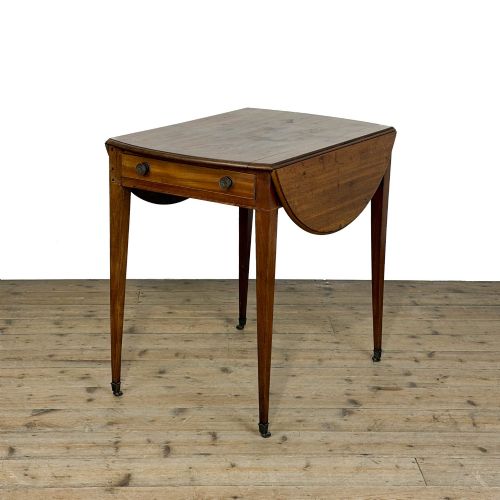
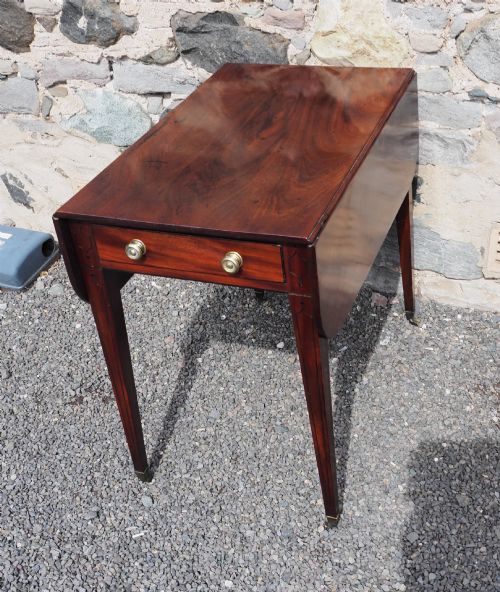
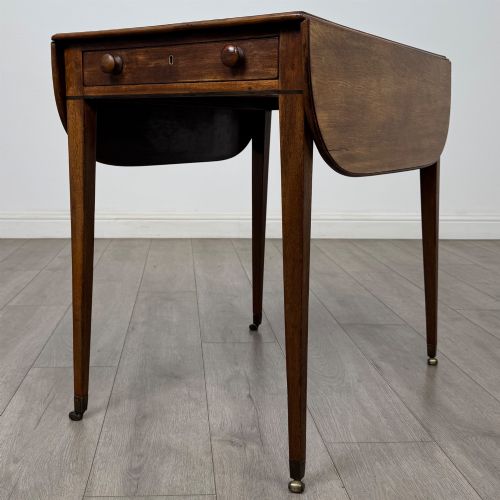
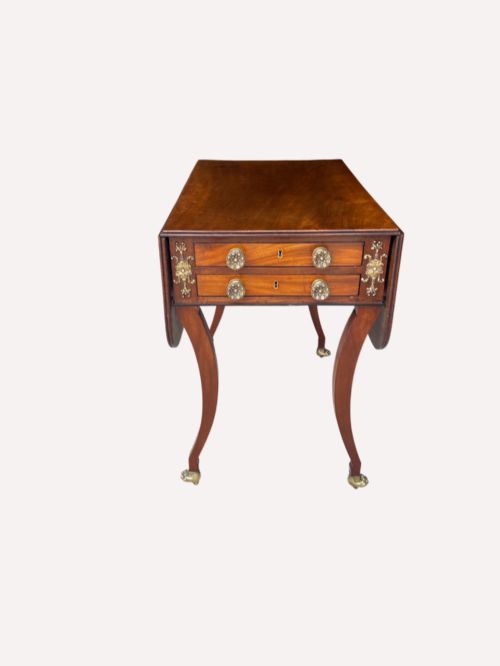
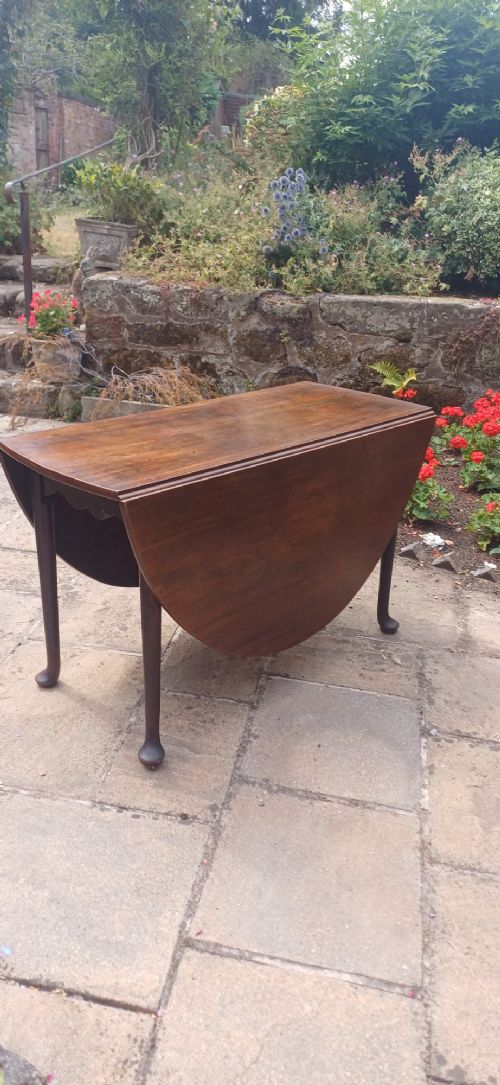
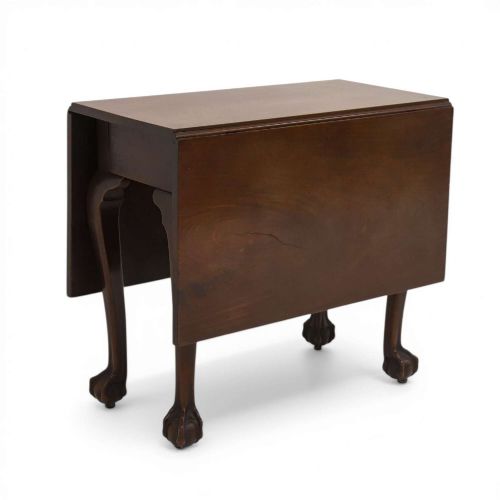
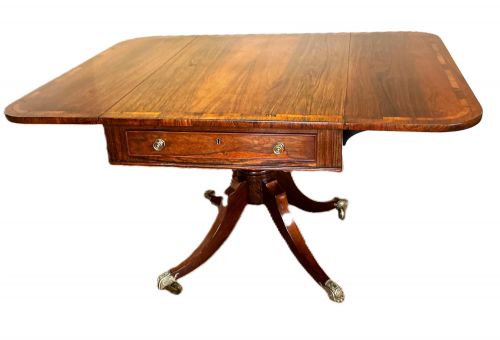
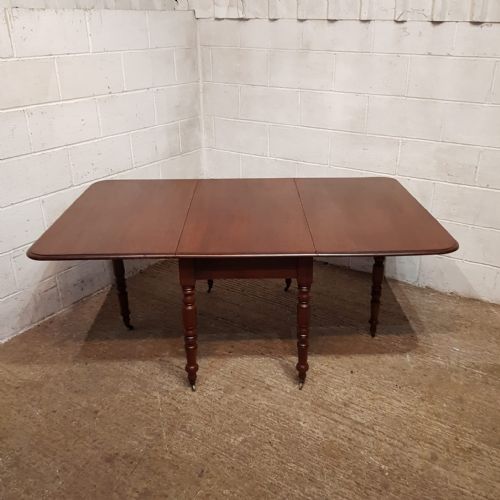
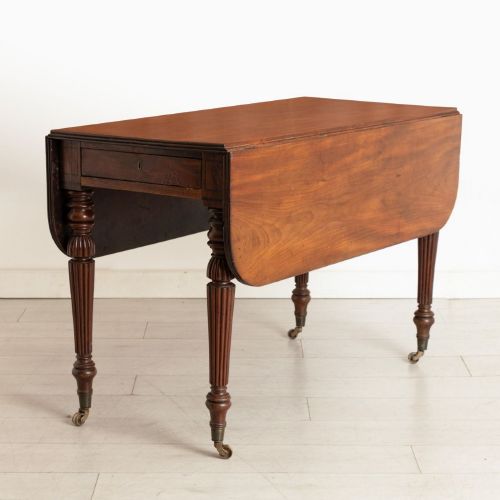
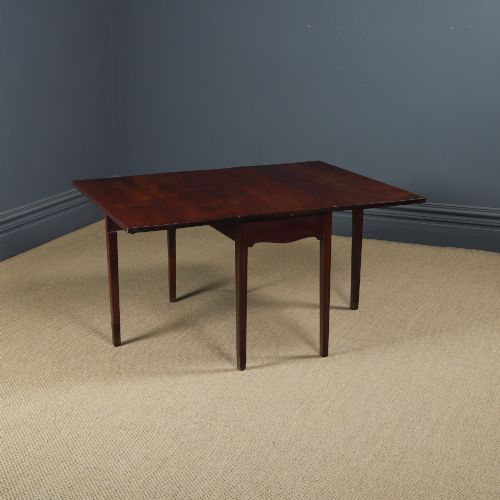
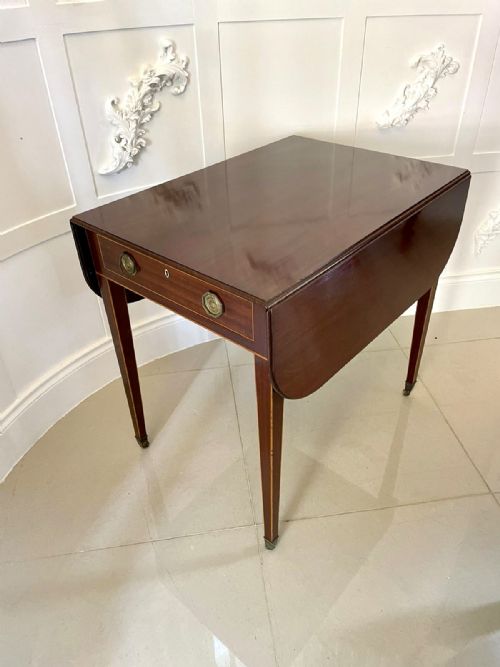
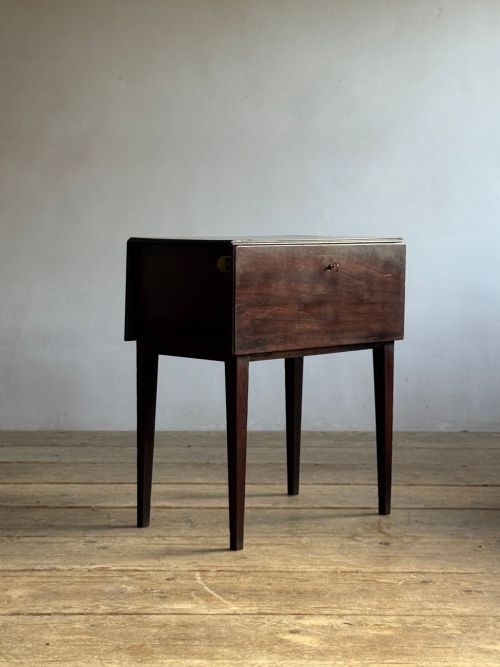
A georgian mahogany drop flap table provides a practical surface with hinged leaves that lower when space is required and rise to expand the top. These pieces appear frequently as Pembroke tables, dining tables, side tables, and occasional tables spanning the eighteenth and nineteenth centuries.
The selections on this page range from compact writing and lamp tables to substantial six-seater dining tables and gateleg forms. Most examples date from the Georgian and Regency eras, though Victorian and later revival pieces also occur regularly.
Cabinet makers built these tables to adapt to changing room layouts, utilising drop leaves supported by swing legs or brackets. Buyers find various forms suited for dining, writing, and general parlour use.
Materials and Construction
Makers constructed these tables predominantly using solid and figured mahogany, occasionally incorporating denser Cuban mahogany for superior grain patterns. Secondary timbers included boxwood and rosewood for decorative details, while brass hardware fitted castors, hinges, and drawer pulls.
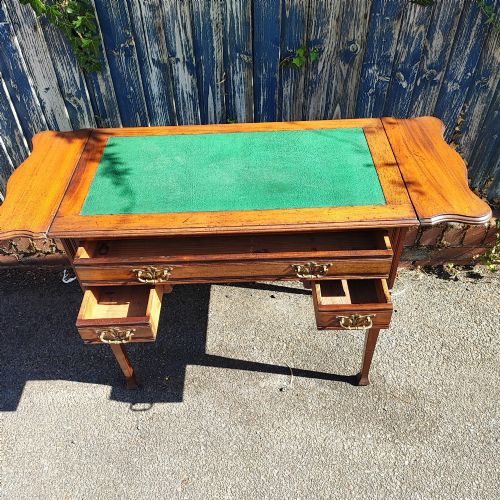
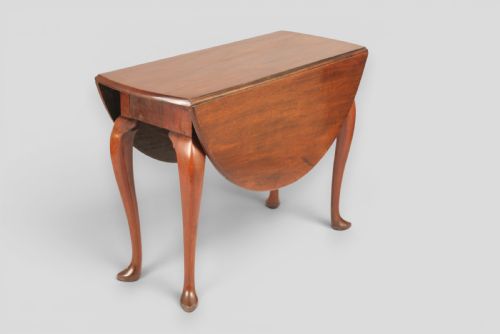
Joinery methods relied on sturdy gateleg mechanisms, cabriole legs with claw-and-ball or pad feet, and occasional wood inlay or ebony stringing. Leather inserts appeared on specific writing surfaces, and iron components reinforced internal framing.
Some tables double as deception pieces, hiding compartments beneath modest drop-leaf tops.
Craftsmanship and Timber
The distinction between standard utility items and finer examples rests on timber selection and decorative nuance. Tables featuring richly figured Cuban mahogany, intricate marquetry, or fine stringing stand apart from plain-grained workshop pieces.
Structural refinement also defines the grade, visible in the carving quality of cabriole legs, the smooth movement of drop-leaf supports, and the precise fitting of drawers. Original brassware and well-preserved patination elevate the standing of an individual piece.
The Georgian Mahogany Drop Flap Glossary
- Pembroke table
- A small rectangular table featuring two hinged drop leaves on opposing sides, often equipped with one or more small drawers.
- Drop-leaf table
- A table with a fixed centre section and movable flaps that fold down when unsupported by swing legs, gates, or brackets.
- Cuban mahogany
- A dense, heavily figured variety of mahogany sourced from the Caribbean, prized for its dark tone and rich grain during the eighteenth century.
- Cabriole leg
- A furniture leg that curves outward in a convex arc at the top and inward in a concave arc below, terminating in a foot such as a pad or claw-and-ball.
- Gateleg table
- A table with hinged legs that swing outward from the frame to support the drop leaves when raised.
- Stringing
- A narrow strip of contrasting wood inlaid into the surface of a piece to create decorative borders and linear patterns.
Georgian Mahogany Drop Flap: Frequently Asked Questions
What is a drop flap table used for?
These tables served multiple household functions, operating as compact writing desks, side tables, or expanded dining surfaces when guests arrived.
The hinged leaves allowed owners to adjust the footprint of the furniture according to daily needs and room dimensions.
How do I identify a Georgian mahogany table?
Examination of the timber density, hand-cut joinery, and period-appropriate hardware helps determine the age of the piece.
Stylistic markers like cabriole legs, bracket feet, and distinct mahogany grain patterns align these tables with eighteenth and early nineteenth-century cabinet making.
Are all these tables made of solid mahogany?
Most examples utilise solid mahogany or finely figured veneers applied to stable secondary woods for the main carcase and leaves.
Cabinet makers selected dense timbers like Cuban mahogany for superior strength and decorative impact on top surfaces.
How do the drop leaves stay up?
Hinged wooden swing legs, known as gatelegs, or pivoting wooden brackets pull out from beneath the frame to support the raised flaps.
When lowered, the leaves hang vertically at the sides to reduce the overall width of the furniture.