
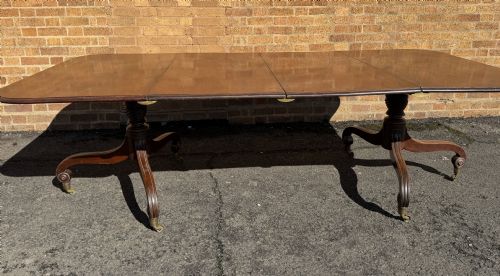
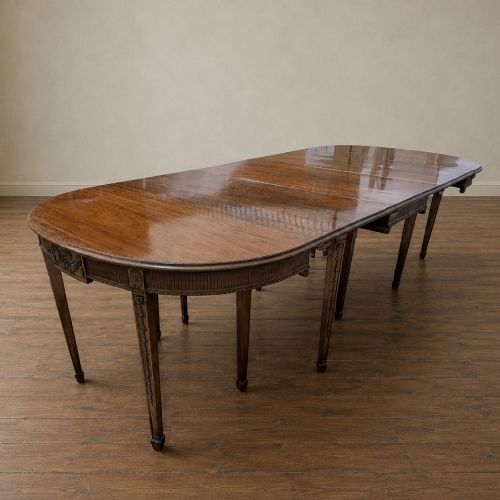
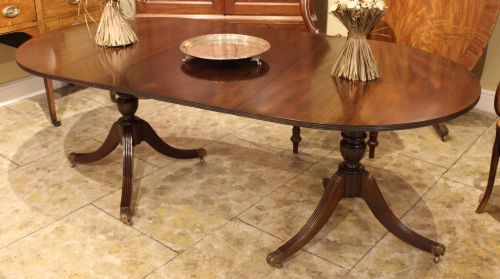


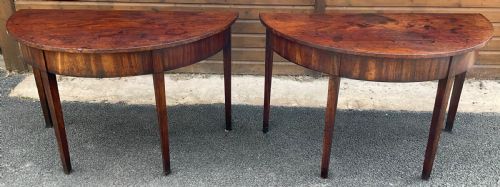


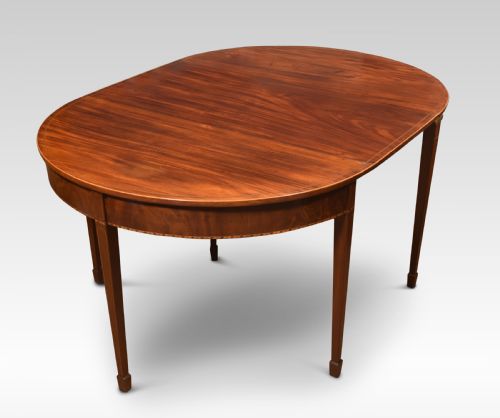


Georgian Mahogany D End
Georgian mahogany d end tables offer adaptable dining arrangements through modular sections that separate into console surfaces.
Georgian Mahogany D End
When searching for a georgian mahogany d end table, a buyer encounters sectional dining tables designed with semicircular ends that detach to function as console tables or side tables against a wall. The majority of pieces on this page span the late 18th century through the Regency period, often featuring multiple pillars or pedestals to support expanding leaves for large dining rooms.
Makers of the Georgian and Regency periods engineered these tables for versatility, allowing households to reduce dining furniture footprint when formal meals concluded. Alongside full extending dining configurations, the listings include related formats such as fold-over card tables and occasional pieces sharing the characteristic curved end profile.
The surviving examples range from compact twin-pillar versions to substantial multi-pedestal formats capable of seating large gatherings. Buyers also find later revival interpretations from the 20th century that replicate the modular proportions and warm timber tones of the original Georgian era.
Materials and Construction
Cabinet makers utilised dense, durable mahogany imported from the West Indies and Honduras, selected for its rich grain patterns and structural stability. Timbers were frequently figured or book-matched on tabletops to create symmetrical visual appeal when fully extended.
Secondary woods such as pine or oak frequently formed internal framing, drawer linings, and structural supports hidden from view. Brass fittings, including castors, hinges, and subtle alignment clips, ensured smooth movement and secure joining between the modular table sections.
Fine decorative detailing often incorporated contrasting veneers like satinwood banding, stringing inlay, and subtle edge mouldings. Joinery relied on sturdy mortise and tenon frames combined with stable pedestal pillars secured by shaped brass or iron brackets underneath.
Listings feature mahogany, satinwood, and brass alongside upholstered elements in wool, leather, and fabric across Georgian and Regency periods.
Assessing Craftsmanship
The distinction between ordinary and superior examples lies in the selection of the timber and the precision of the joinery. Premium tables display deeply figured mahogany tops with consistent colour and minimal sapwood intrusion, whereas lesser pieces utilise plainer or patched boards.
Construction fidelity dictates longevity, particularly in the stability of the pedestal bases and the flush alignment of the D-end sections when joined together. Master cabinet makers achieved seamless transitions between leaves and pedestals, ensuring the table remains level and firm across various extended lengths.
The Georgian Mahogany D End Glossary
- D-End
- A table section featuring one straight edge and one curved semicircular end resembling the capital letter D. These modules stood against walls as console tables when uncoupled from central dining leaves.
- Pedestal
- A central timber pillar supported by spreading legs, usually numbering three or four, that holds up the tabletop. This structure replaced traditional four-legged table corners to allow greater legroom for diners.
- Satinwood Banding
- A decorative border inlay utilising a pale, lustrous exotic timber set into the darker mahogany surface. This technique created a sharp visual contrast around table edges and drawer fronts.
- Concertina Action
- An expanding timber framework that stretches outward like an accordion to support additional middle leaves. It allowed rigid tables to increase their surface area smoothly.
- Drop Leaf
- A hinged tabletop flap that hangs down when not in use and lifts up on swing brackets to extend the surface. It offered flexible proportions in smaller chambers.
Georgian Mahogany D End: Frequently Asked Questions
How do these tables separate?
The structure typically divides into two semicircular console ends and one or more rectangular centre leaves. Metal clips or wooden pegs underneath lock the modular sections securely together.
When dinner concludes, the middle leaves lift out and store away, allowing the two curved end pieces to return to their positions against the dining room walls.
Where were they placed originally?
In Georgian homes, these tables resided in formal dining rooms and morning rooms where space management mattered. The D-shaped ends functioned as sideboards or serving consoles between meals.
By uniting the sections with removable leaves, households transformed everyday rooms into banquet spaces capable of accommodating numerous guests.
How do I care for the surface?
Maintenance requires regular dusting with a soft, dry cloth and occasional application of appropriate beeswax to nourish the antique timber. Direct sunlight and excessive heat sources should be avoided to prevent the mahogany from warping or fading.
Using protective mats for hot dishes and liquids preserves the polished finish and prevents permanent marks on the historic wood.
Are these tables suitable for daily use?
Solid mahogany construction provides robust durability that easily withstands everyday dining activities. The modular design actually simplifies moving and repositioning the furniture within modern living spaces.
Careful handling of the extending mechanisms and leaf storage ensures these centuries-old tables remain functional centrepieces for contemporary households.