


Georgian Mahogany Chiffonier Bookcase
These georgian mahogany chiffonier bookcase pieces bring refined Regency utility and polished timber warmth to a room.
Georgian Mahogany Chiffonier Bookcase
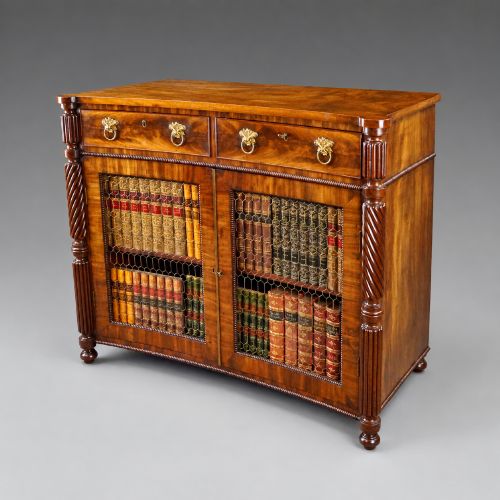
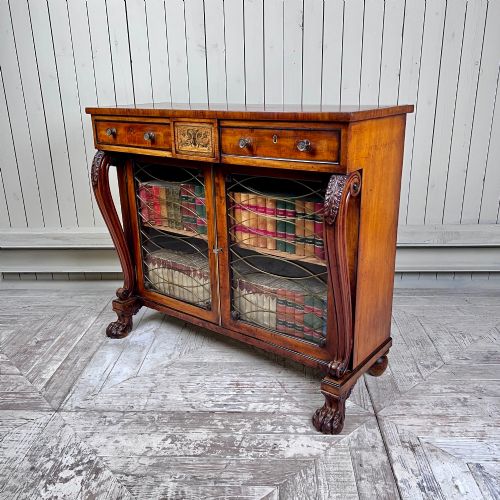
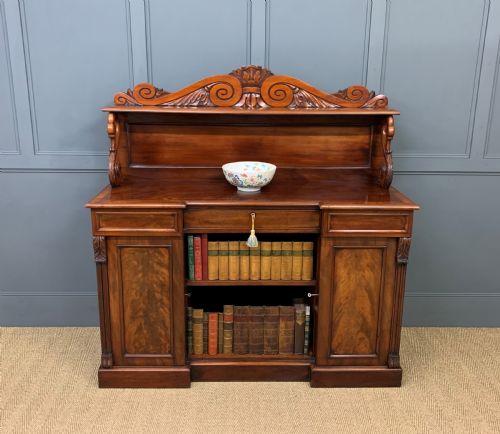
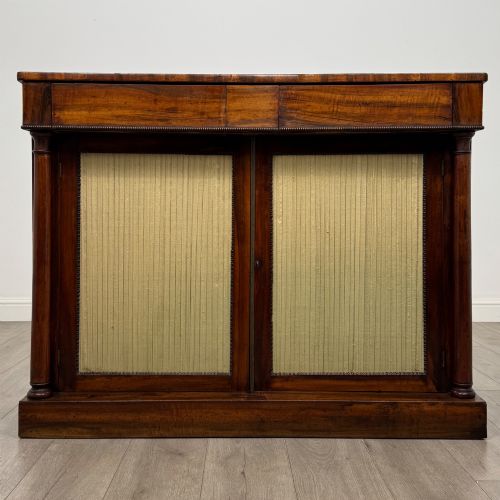
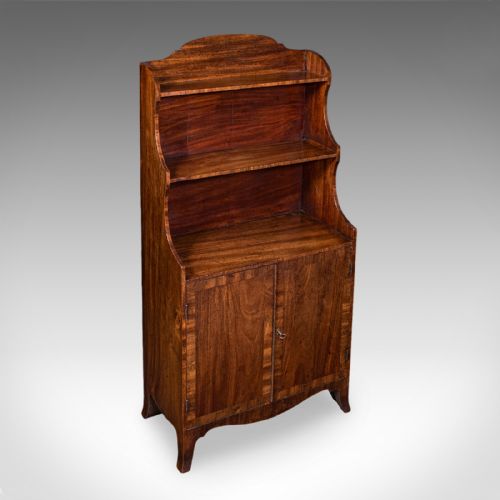
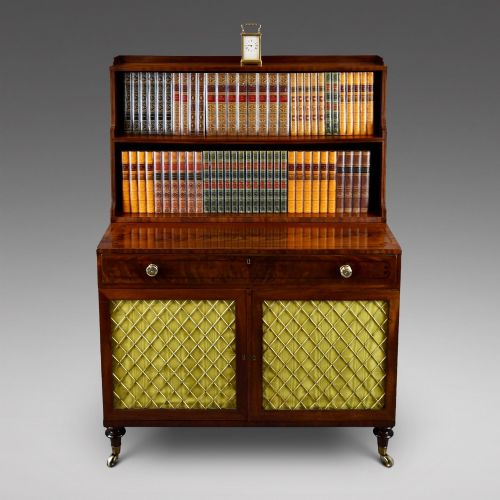
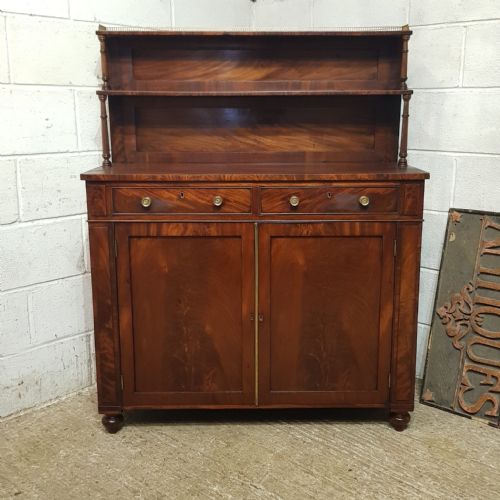
A georgian mahogany chiffonier bookcase combines lower closed cupboards with upper open shelves or glazed compartments, originating primarily from the Regency and Georgian periods. These hybrid forms served domestic storage and display needs in principal rooms.
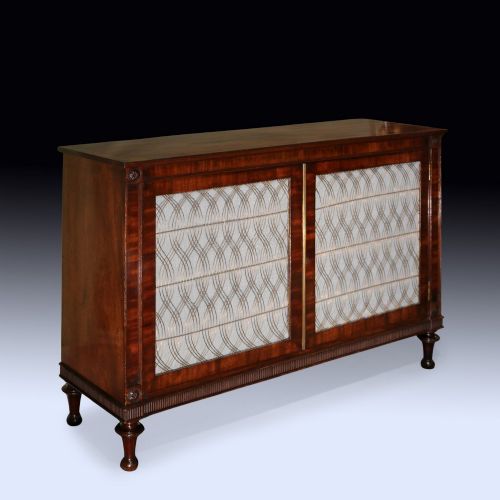
The versions most commonly met here span the early nineteenth century, featuring side cabinets, waterfall bookcases, and breakfront designs. They balance compact proportions with practical shelving and enclosed lower storage.
Makers and cabinetmakers of the era produced these pieces in mahogany and flame mahogany veneer, often incorporating brass details. Surviving examples reflect the shifting utility of sideboards and credenzas across the nineteenth century.
How They Were Made
Cabinetmakers built these pieces using solid timber carcasses finished with flame mahogany veneer to achieve striking grain patterns across door panels and drawer fronts. Secondary woods provided structural stability inside the cabinets and backing frames.
Decorative elements relied on contrasting materials such as ebony stringing and brass inlay, alongside cast brass grilles fitted to cabinet doors. Glazed sections utilised thin wooden glazing bars to support panes of glass securely.
Some nineteenth-century cabinetmakers incorporated brass grilles behind glass doors to let air circulate around damp volumes.
What Varies in Quality
The standard of timber selection marks the primary division in quality, with figured flame mahogany veneer distinguishing superior workshops from plain stock. Finer pieces demonstrate meticulous book-matching of grain across wide surfaces and doors.
Detailing and hardware execution further separate the tiers, seen in crisp brass inlay, finely cast grilles, and well-fitted drawers. The integration of structural elements like ebony stringing reveals the precision of the original cabinetmaker.
The Georgian Mahogany Chiffonier Bookcase Glossary
- Chiffonier
- A low cabinet featuring enclosed cupboards below, often surmounted by shelves or a superstructure. It developed during the Regency period as a versatile piece for dining and living spaces.
- Waterfall bookcase
- A standing set of open shelves diminishing in depth from bottom to top. This form emerged around the early nineteenth century for displaying smaller volumes.
- Flame mahogany
- A veneer cut from the fork of the mahogany tree where the branch meets the trunk. It creates a distinctive rippled, flame-like pattern prized by period cabinetmakers.
- Breakfront
- A piece of furniture where the central section projects forward from the flanking wings. This architectural arrangement creates depth and shadow on side cabinets and bookcases.
- Ebony stringing
- A narrow, contrasting inlay of dark wood set flush into the mahogany surface. It provides delicate linear borders around panels and drawer fronts.
Georgian Mahogany Chiffonier Bookcase: Frequently Asked Questions
What is a chiffonier bookcase?
A chiffonier bookcase is a hybrid storage piece combining a lower enclosed cupboard with upper open or glazed shelving. It evolved during the Georgian and Regency eras to house books and display decorative objects.
These pieces suit sitting rooms and studies where vertical space is limited. Their compact footprint provides both concealed storage and accessible display surfaces.
How do I date a Regency bookcase?
Dating relies on timber characteristics, construction methods, and decorative motifs like brass inlay or ebony stringing. Regency pieces typically date from the early nineteenth century around eighteen ten to eighteen thirty.
Examining the secondary timbers inside drawers and backboards helps confirm the period. Variations in veneer thickness and hardware styles also offer reliable chronological clues.
Where should I place a side cabinet?
These cabinets work well against primary walls in reception rooms, hallways, or dining spaces where surface area is useful. Their shallow depth allows them to sit comfortably without dominating smaller rooms.
Keep them away from direct sunlight and extreme temperature changes to protect the mahogany veneer. Positioning them away from heat sources preserves the polish and timber stability.
What is flame mahogany?
Flame mahogany is a highly figured veneer harvested from the junction where branches meet the main tree trunk. The grain creates a dramatic, flickering pattern that catches the light.
Cabinetmakers reserved this prized timber for prominent surfaces like doors and drawer fronts. It defines the visual appeal of finer Regency and Georgian case furniture.