
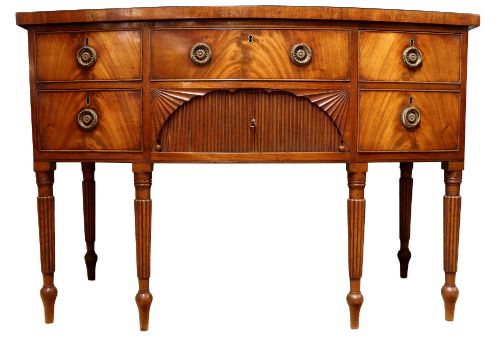
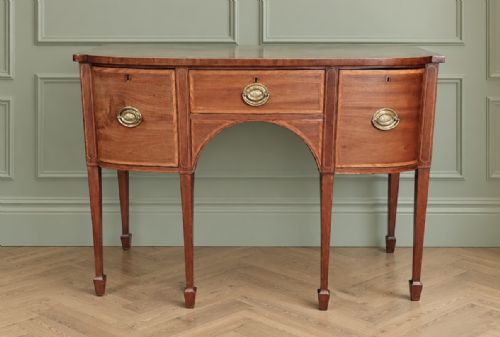
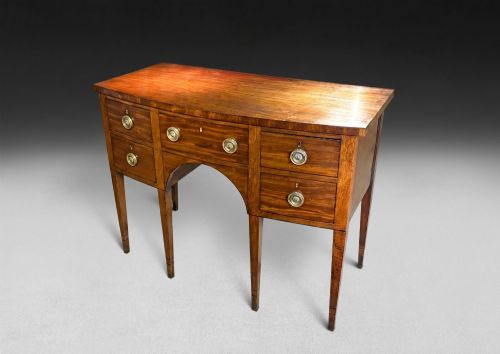
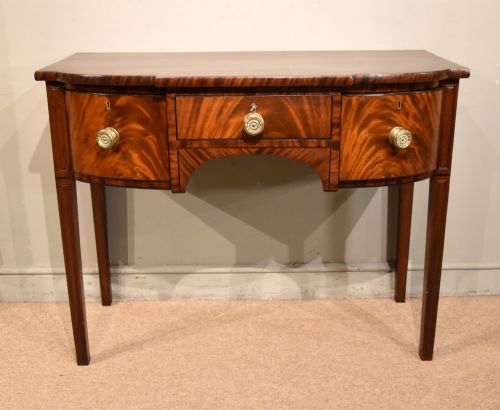
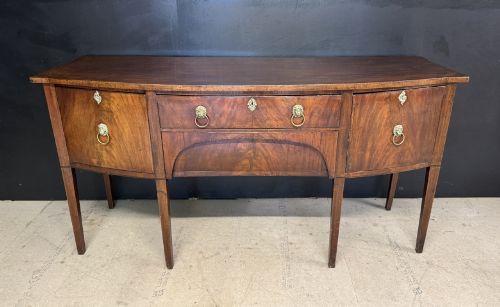

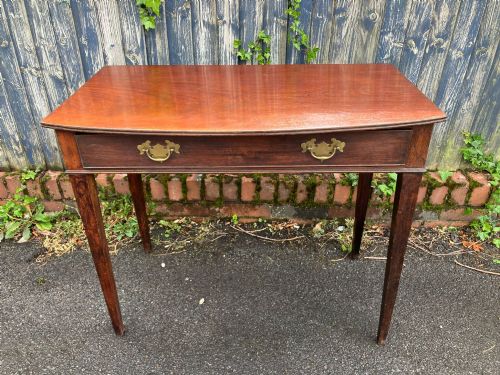
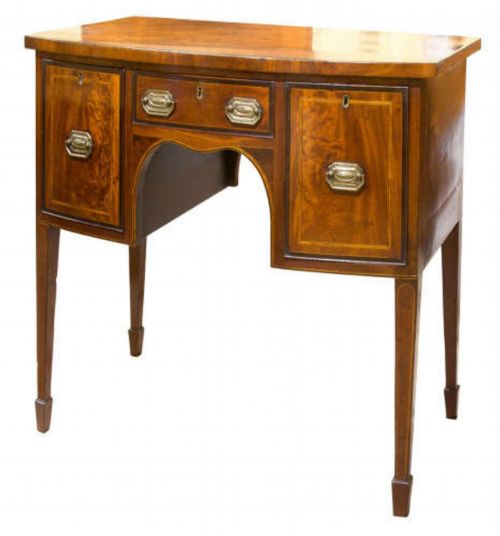
Georgian Mahogany Bowfront Table
A georgian mahogany bowfront table brings curved elegance and rich timber tones into a room, offering practical surface space with distinct period character.
Georgian Mahogany Bowfront Table
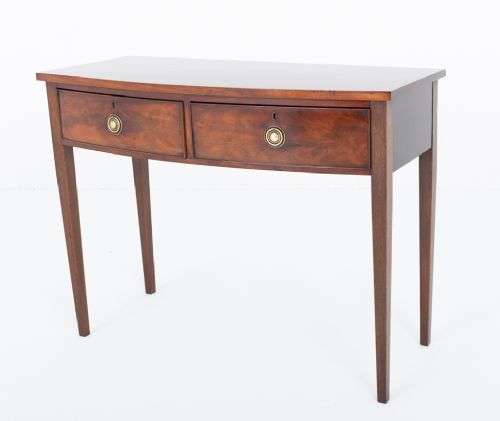
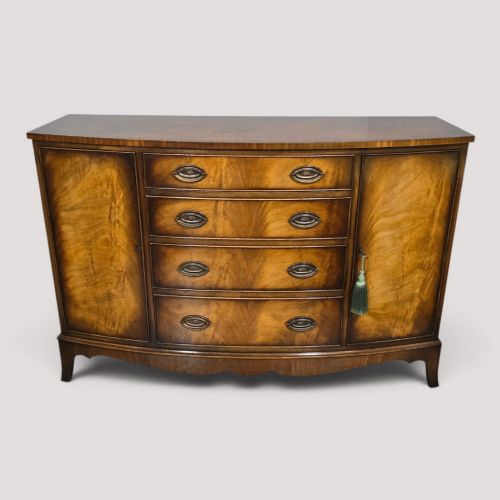
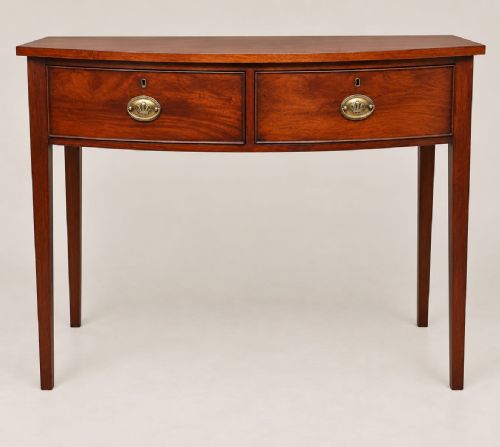
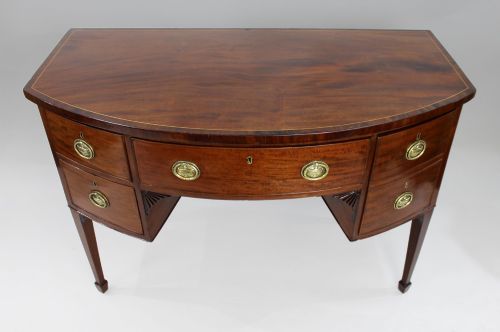
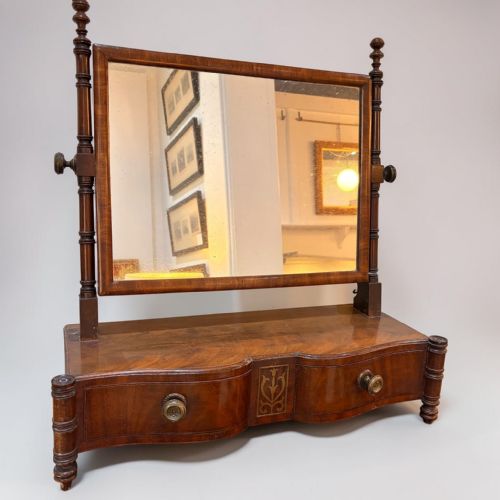
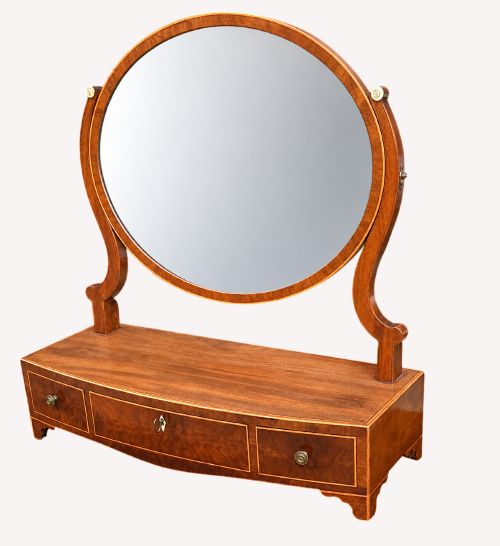
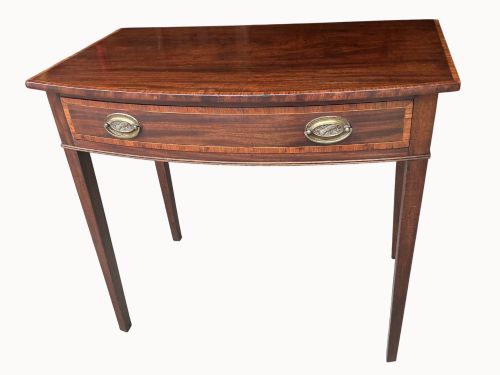
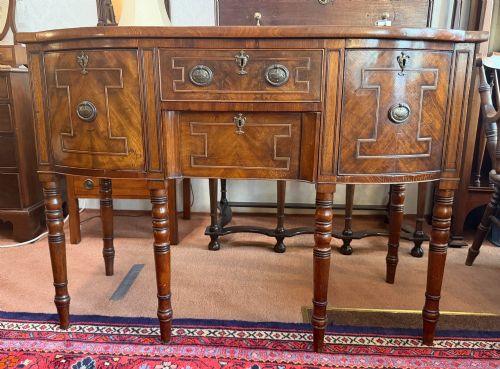
When searching for a georgian mahogany bowfront table, a buyer encounters a diverse group of domestic furnishings designed with a curved, protruding front profile. The selection on this page spans side tables, serving tables, hall tables, dressing tables, writing desks, and tea tables originating primarily from the Georgian, George III, and Regency periods, alongside later revival pieces.
Side and serving tables dominate the offerings, built to stand against dining room and hallway walls with substantial presence. Smaller forms such as dressing tables, bedside tables, and washstands appear frequently, showcasing how cabinetmakers applied the curved front line to varied domestic scales across the eighteenth and nineteenth centuries.
How they were made
Cabinetmakers constructed these tables using solid mahogany frameworks enhanced by flame mahogany veneers to create striking figure patterns across the curved drawer fronts and tops. Artisans shaped the characteristic bowfront by carefully bending timber or building up solid cores before applying decorative veneers.
Decoration relied on contrasting timbers and linear precision, incorporating boxwood inlay, satinwood details, and purpleheart banding to frame the drawer edges and tops. Brass hardware, including handles and escutcheons, completed the construction, while glass elements featured predominantly in the adjustable dressing table and toilet mirrors.
Object forms range from large six-legged sideboards to small corner washstands and tabletop dressing mirrors.
What varies in quality
The distinction between standard examples and top-tier pieces rests on the choice of timber and the sophistication of its decoration. Superior specimens employ highly figured flame mahogany and crisp, intricate boxwood or satinwood inlay that remains sharp and precisely fitted.
Proportion and scale dictate the desirability of a piece, with smaller proportions and six-legged formats commanding attention for their refined execution. The integrity of the original construction, including the smoothness of the curved drawers and the retention of period brass fittings, elevates an example above ordinary production.
The Georgian Mahogany Bowfront Table Glossary
- Bowfront
- A furniture front that curves outward in a convex arc. This shape softens room angles and maximises central storage depth.
- Crossbanding
- A strip of veneer laid perpendicular to the grain of the main surface, creating a contrasting border. It frames drawer fronts and tabletops on finer pieces.
- Satinwood
- A pale, lustrous timber native to India and the West Indies, utilised for contrasting inlay and stringing lines. It provides a bright visual counterpoint to dark mahogany.
- Frieze
- The horizontal band situated directly beneath the tabletop, frequently housing one or more drawers. Side tables often feature a single frieze drawer.
- Washstand
- A specialist table designed for personal ablutions, occasionally featuring a corner configuration or integrated basin cut-outs. These pieces adapt the bowfront form for bedroom use.
Georgian Mahogany Bowfront Table: Frequently Asked Questions
Where should I place a bowfront table?
These tables suit hallways, living rooms, and dining spaces where the curved front softens linear architecture. Their shallow profile allows them to sit comfortably against walls without obstructing thoroughfares.
Larger versions function effectively as serving surfaces in dining rooms, while smaller writing and dressing variants suit intimate rooms or bedroom settings.
How do I distinguish Georgian from revival pieces?
Examination of timber ageing, construction methods, and secondary woods reveals the age of a piece. Eighteenth-century examples display hand-cut joinery and period timber characteristics that differ from twentieth-century manufacturing techniques.
Listings spanning the Georgian, Regency, 19th Century, and 1920 to 1930 periods indicate whether a table is of the era or built in a later style.
What is the difference between a side table and a serving table?
Serving tables generally possess larger proportions and heavier construction intended for dining room hospitality and the display of heavy objects. Side tables offer lighter proportions suitable for general display and hallway use.
Both formats utilise the bowfront shape, but their scale reflects their original domestic function.
How do I care for mahogany surfaces?
Maintenance requires simple dusting with a soft, dry cloth and the occasional application of traditional beeswax to nourish the timber. Avoid placing tables in direct sunlight or near heat sources to prevent veneer lifting.
Preserving the original polish protects the grain depth and maintains the character of the wood.