

Georgian Mahogany Bow Front Cabinet
A georgian mahogany bow front cabinet brings curved elegance and rich timber tones into a room.
Georgian Mahogany Bow Front Cabinet
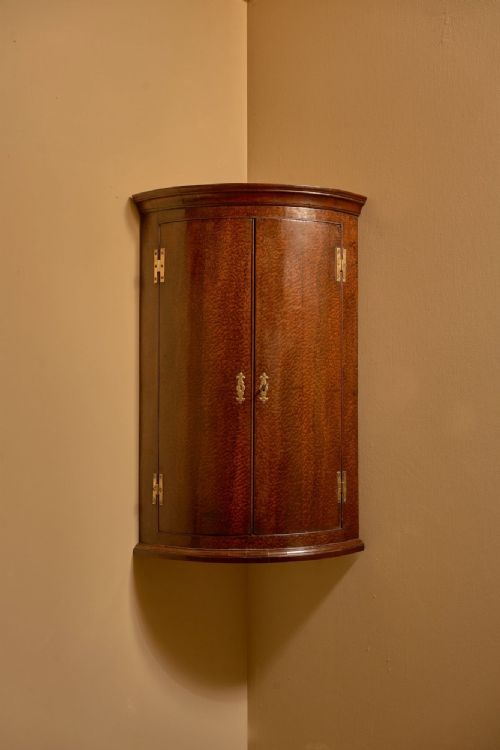
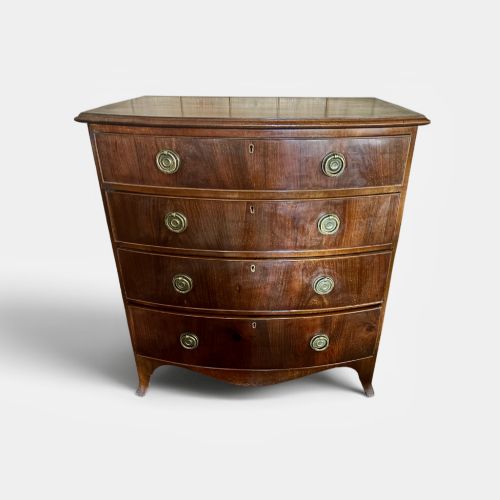
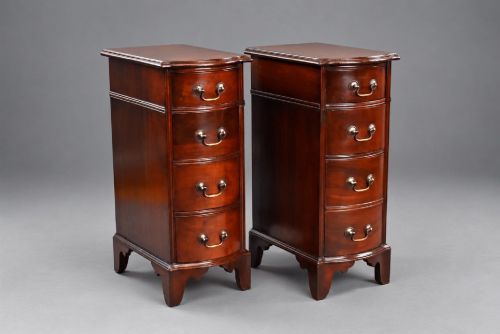
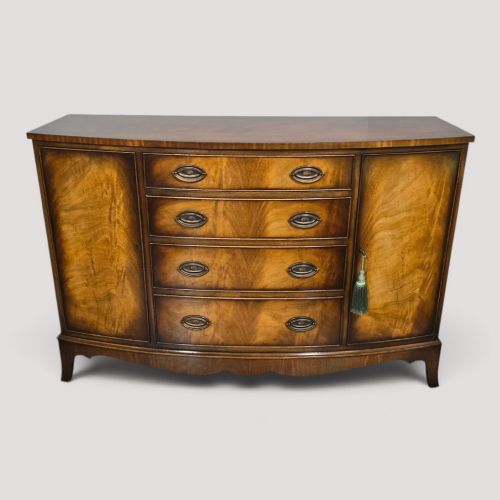
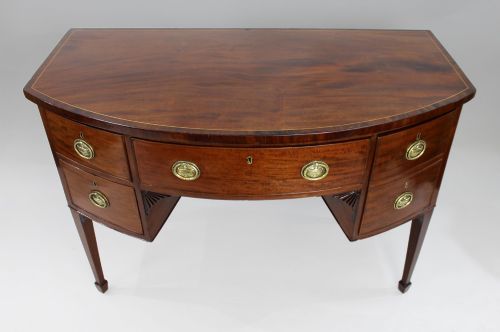
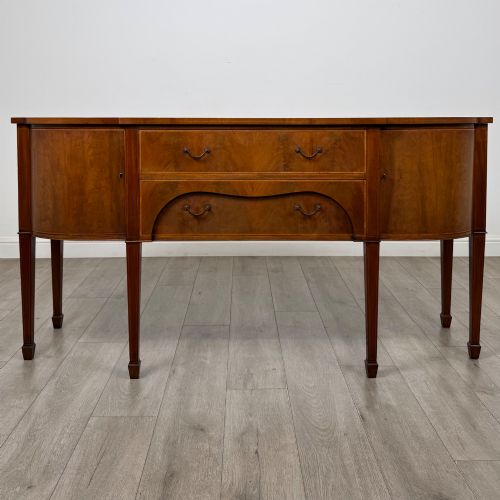
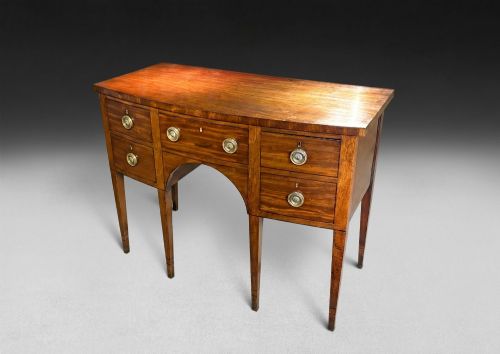
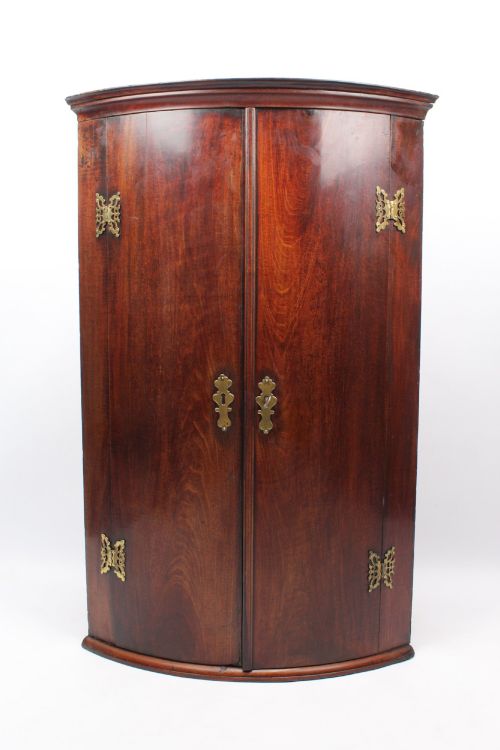
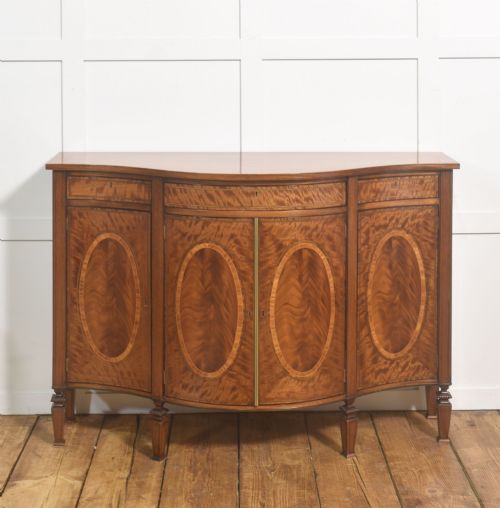
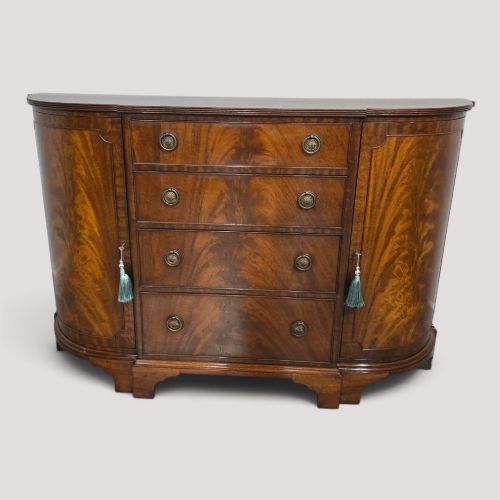
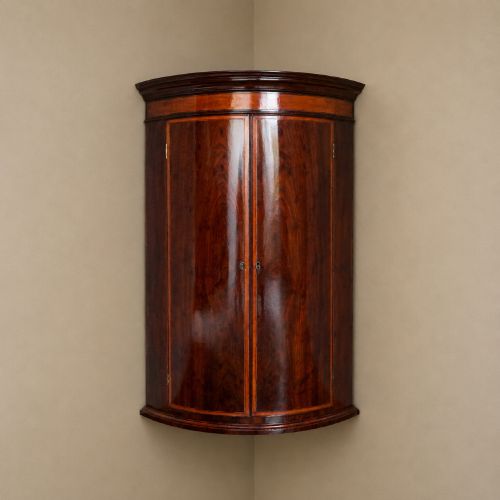
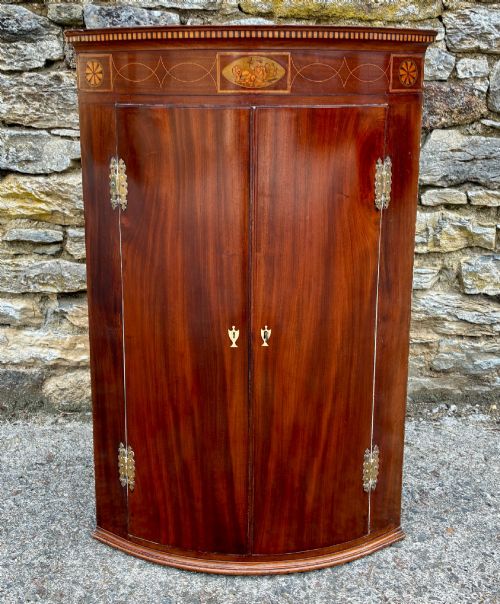
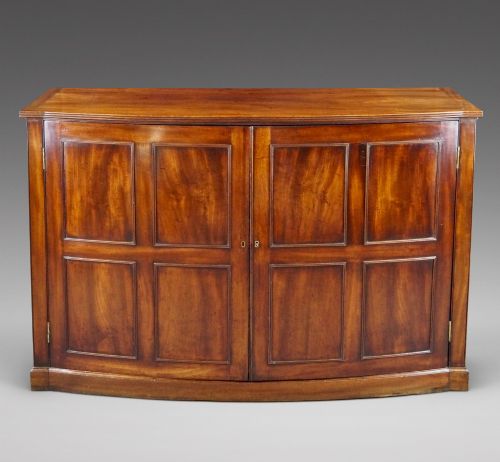
When searching for a georgian mahogany bow front cabinet, buyers encounter a variety of forms designed to maximise storage while softening room angles. The selection spans corner cupboards, sideboards, chests of drawers, and tallboys originating from periods such as the Georgian, Regency, and Edwardian eras.
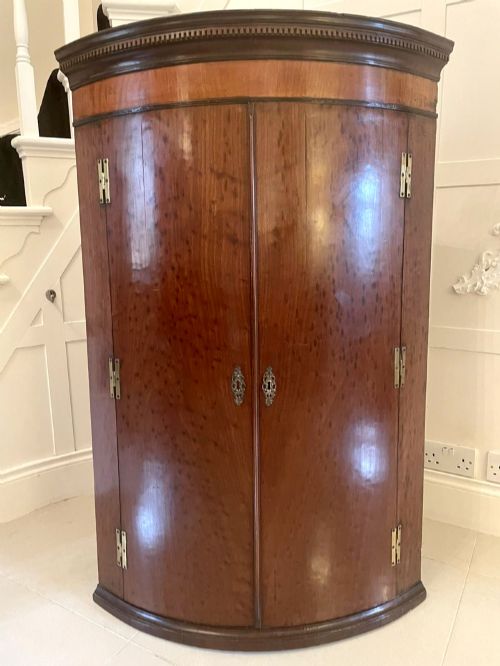
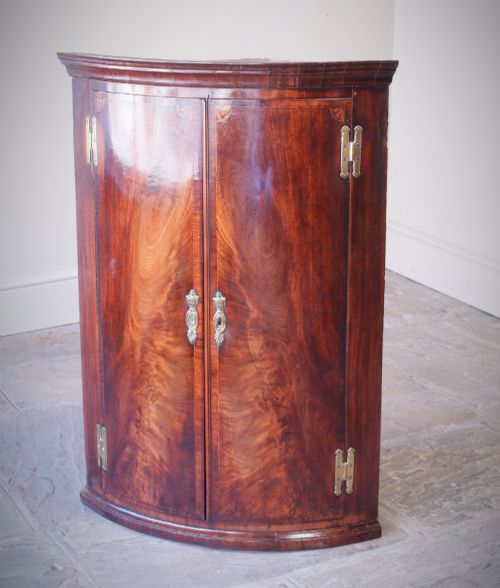
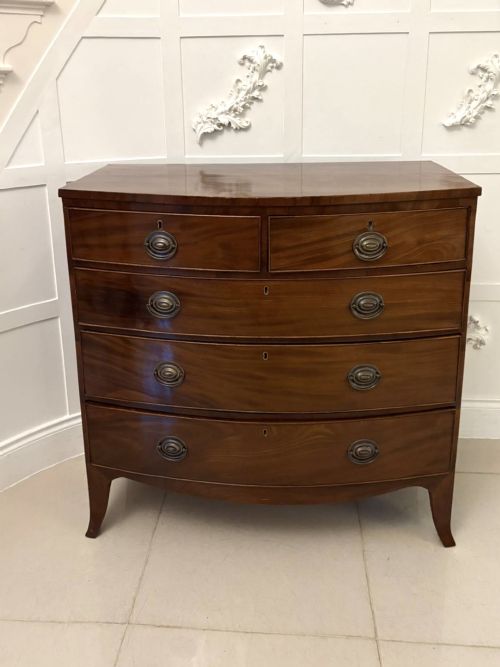
Corner cupboards and hanging corner cabinets dominate the earlier Georgian entries, often utilising plum pudding mahogany to create striking visual depth in room angles. Sideboards and chests of drawers provide broader proportions, frequently featuring inlaid details from later revival periods.
How they were made
Cabinet makers built these pieces using solid mahogany and flame mahogany veneers over secondary timbers like oak, applying curved fronts that required precise woodworking techniques. Decorative surface interest relied on contrasting woods, incorporating satinwood, boxwood, and intricate wood inlay or marquetry.
Hardware played an essential structural and decorative role, with brass fittings securing doors, drawers, and hanging fixtures. Joinery traditions focused on durability, accommodating the outward curve of the timber through careful framing and carcass construction.
Georgian Mahogany Bow Front Cabinet Retail Price Guide 2026
Typical asking prices for georgian mahogany bow front cabinet among the pieces listed under this phrase on Sellingantiques today, from the lower quarter to the upper quarter. They describe what is for sale here now, not the wider market.
Listings feature structural forms spanning corner cabinets, sideboards, chests of drawers, and linen presses constructed in mahogany, oak, and satinwood.
What varies in quality
The distinction between standard examples and the finest pieces rests upon timber selection and the precision of the curved frontage. Grain configuration, particularly in plum pudding and flame mahogany veneers, dictates the visual impact across doors and drawer fronts.
Refinement in secondary details such as stringing, inlay work, and original brass hardware elevates an item. Coherence of proportion between the bowed facade and the supporting carcass marks the distinction in higher-tier craftsmanship.
The Georgian Mahogany Bow Front Cabinet Glossary
- Bow front
- A convex curved front facade characteristic of cabinets, chests, and sideboards designed to soften room lines. This shape required advanced carpentry to bend or shape timber accurately.
- Plum pudding mahogany
- A highly figured variety of mahogany timber exhibiting dense, circular markings resembling traditional Christmas pudding. It was favoured by eighteenth-century cabinet makers for luxury pieces.
- Flame mahogany
- A veneer cut from the fork of the mahogany tree, producing a distinctive ripple pattern resembling flickering flames. It was frequently utilised on drawer fronts of Georgian chests.
- Marquetry
- The art of applying pieces of veneer to a structure to form decorative patterns and pictures. Craftsmen used various contrasting timbers like satinwood and boxwood for this intricate work.
- Stringing
- Thin lines of contrasting wood inlay used to outline drawers, doors, and tabletops. This technique added subtle geometric definition to cabinet surfaces.
Georgian Mahogany Bow Front Cabinet: Frequently Asked Questions
Where should I place a corner cabinet?
A corner cabinet fits neatly into unused room angles, turning dead space into a practical display or storage area. They work particularly well in dining rooms or living spaces to house ceramics and glassware.
Hanging versions mount directly to the wall at eye level, while floor-standing variants anchor the corner and provide a solid surface on top for lamps or decorative objects.
How do I care for mahogany furniture?
Keep mahogany pieces away from direct sunlight and heat sources to prevent the timber and veneers from drying out or fading. Regular dusting with a soft, dry cloth preserves the polished surface.
Apply a traditional beeswax polish sparingly to nourish the wood and maintain its natural lustre without building up heavy residues over time.
What is the difference between George III and Regency styles?
George III pieces typically exhibit classic proportions and detailed stringing or inlay work rooted in eighteenth-century design traditions. The timber choice often leans towards rich figured mahogany and plum pudding varieties.
Regency design shifts towards bolder architectural lines and classical influences, sometimes incorporating simpler expanses of timber alongside distinctive brass mounts and heavier turned feet.
Can I use a bedside cabinet in a modern bedroom?
Compact bow front chests and pot cupboards function effectively as bedside tables, offering enclosed storage for night-time essentials. Their curved profiles introduce warmth and historical character to contemporary interior schemes.
The surface area easily accommodates a reading lamp and a book while maintaining a compact footprint beside the bed.