




Georgian Mahogany Bergere
A georgian mahogany bergere offers deep-seated comfort through traditional caning, bringing architectural dignity and rich timber tones to any library or study.
Georgian Mahogany Bergere
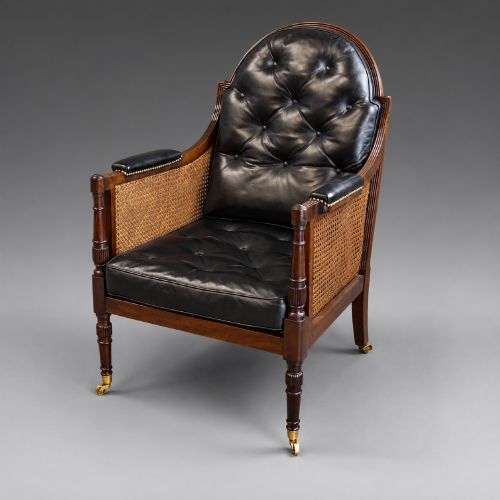
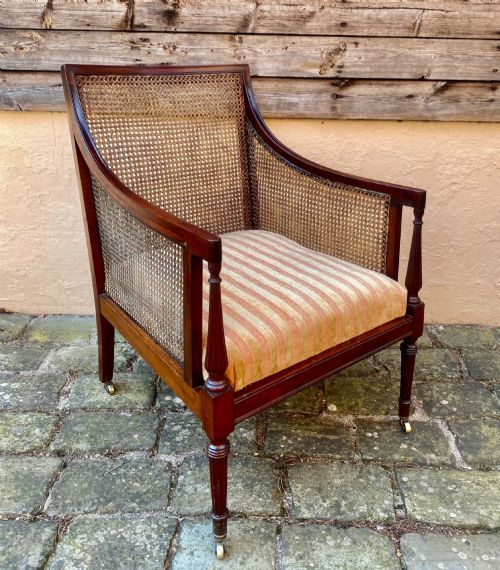
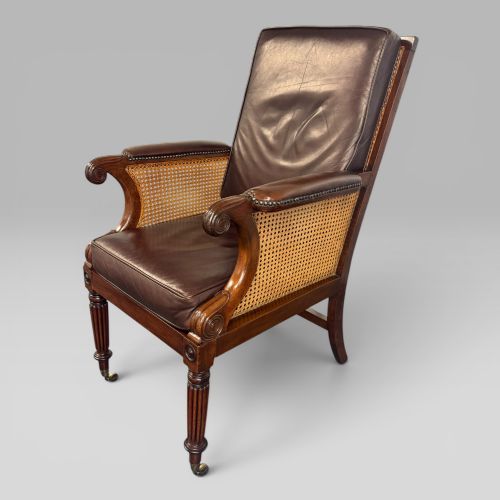
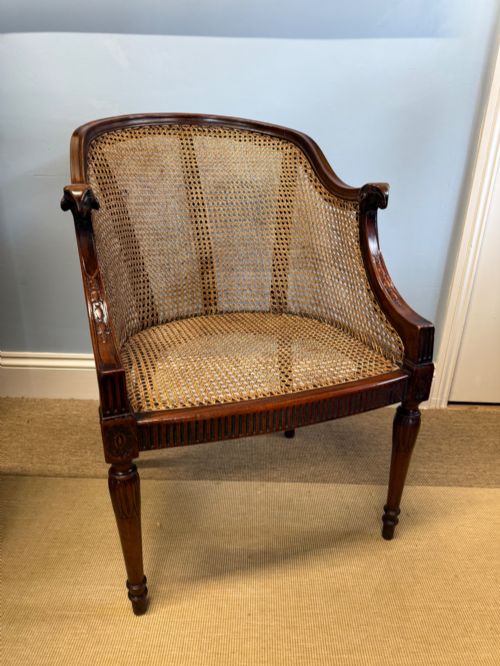
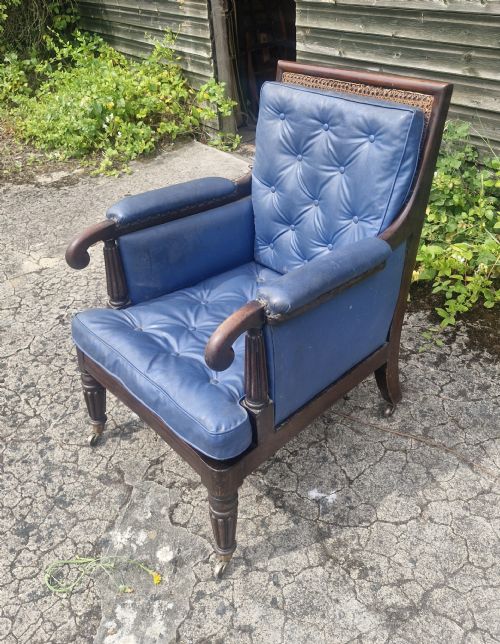
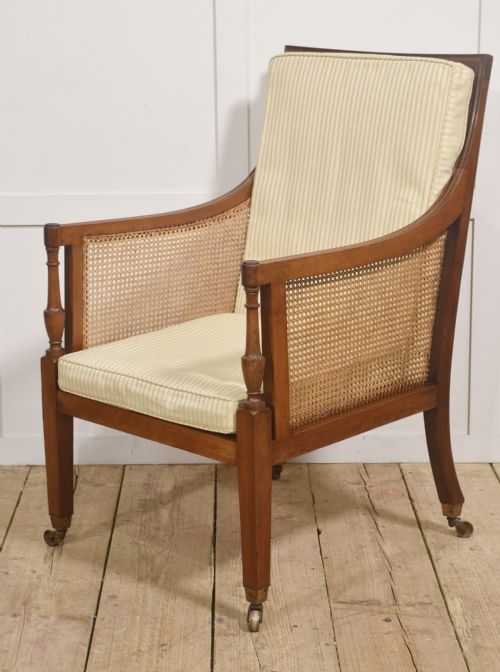
A georgian mahogany bergere is a low, upholstered armchair featuring enclosed cane panels on the back and sides, designed for relaxation and reading in the library or parlour. The pieces seen here span the Regency and Georgian eras alongside later revivals, bringing classical seating forms into domestic spaces.
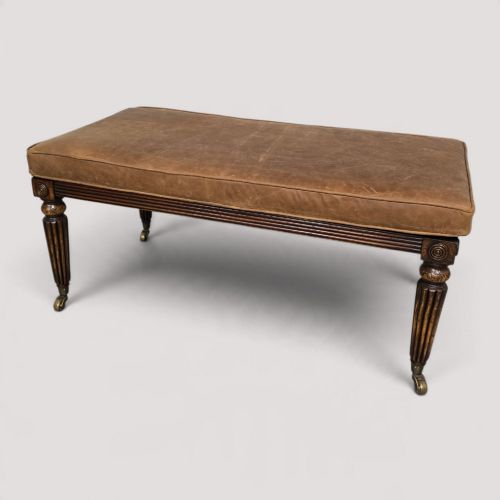
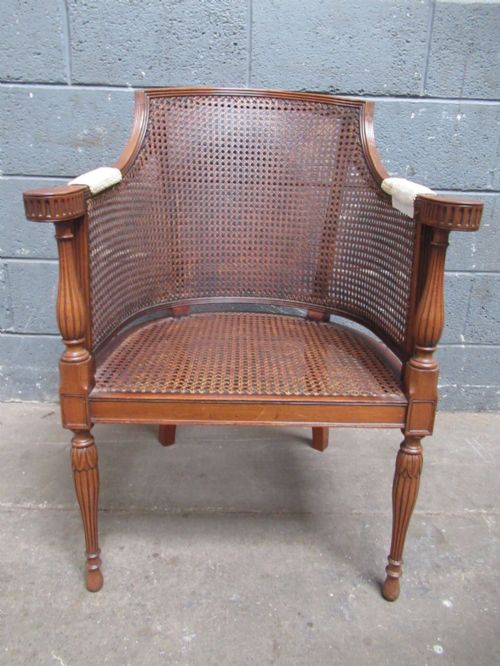
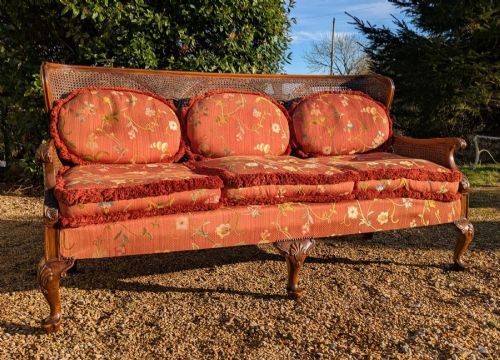
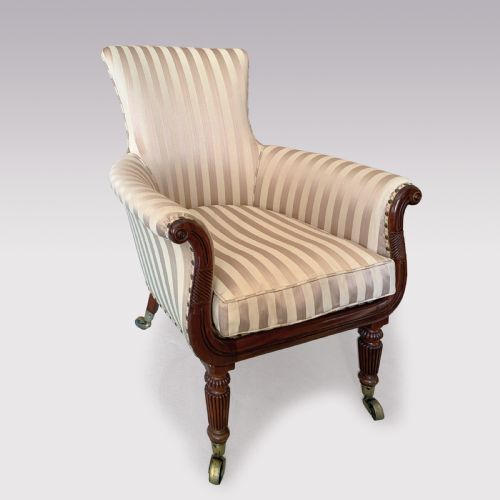
Most examples appear as library armchairs with generous proportions and solid mahogany frames, though variations include tub shapes, sofas, side chairs, and smaller child armchairs. These seating pieces combine timber frames with woven cane and drop-in cushions covered in leather, velvet, fabric, or textile.
Materials and Construction
Cabinet makers utilised dense mahogany for the structural frames, carving arm supports, legs, and crest rails with clean lines or subtle inlay. Brass castors and decorative mounts frequently appear on the feet to assist movement across heavy carpets.
The characteristic side and back panels employ woven rattan cane, stretched tight to support loose feather cushions or squabs upholstered in leather and velvet. This combination of resilient timber and flexible cane creates a supportive structure designed for daily use.
Georgian Mahogany Bergere Retail Price Guide 2026
Typical asking prices for georgian mahogany bergere among the pieces listed under this phrase on Sellingantiques today, from the lower quarter to the upper quarter. They describe what is for sale here now, not the wider market.
Even the smallest family members required proper seating, as shown by surviving child armchairs complete with miniature cane work.
Craftsmanship and Proportion
Quality rests in the drawing of the frame and the precision of the joinery, where generous proportions meet balanced curves in the armrests and back. Better examples display crisp carving on the mahogany frame and tighter, more even weaving within the cane panels.
The integrity of the original timber structure and the condition of the woven cane distinguish standard production from superior pieces. Well-balanced library chairs maintain their structural stability through decades of use while preserving the warm patina of the polished mahogany.
Gillows
The Georgian Mahogany Bergere Glossary
- Bergere
- An enclosed armchair with cane or upholstered sides and a loose seat cushion, originating in France before becoming popular in British libraries.
- Caning
- A woven lattice made from split rattan cane, used to form flexible and breathable back and side panels on seating furniture.
- Library Chair
- A sturdy, comfortable armchair designed for reading rooms, often featuring wide armrests and generous padding.
- Regency
- A British design period spanning the early nineteenth century, characterised by classical revival motifs, elegant proportions, and dark woods.
Georgian Mahogany Bergere: Frequently Asked Questions
How do I care for antique caning?
Keep the woven cane panels lightly hydrated with a damp cloth occasionally to prevent the natural fibres from becoming brittle.
Avoid placing these chairs directly next to intense heat sources or radiators, which dry out the rattan over time.
Were these chairs used at desks?
These seating pieces were primarily designed as comfortable library chairs for reading rather than upright desk work.
Their deep seats and low profiles encourage a relaxed posture suited to long hours with a book.
Can I replace the loose cushions?
Feather cushions and squabs are often updated with new fabric, leather, or velvet to match modern interiors.
Retaining traditional filling materials helps maintain the correct seating height and historical proportion of the chair.
How do I identify a Regency piece?
Regency examples display classical restraint through clean mahogany lines, subtle reeding, and occasionally brass inlay.
These pieces often feature generous library proportions and robust frames built for sustained comfort.