




Georgian Low Chest
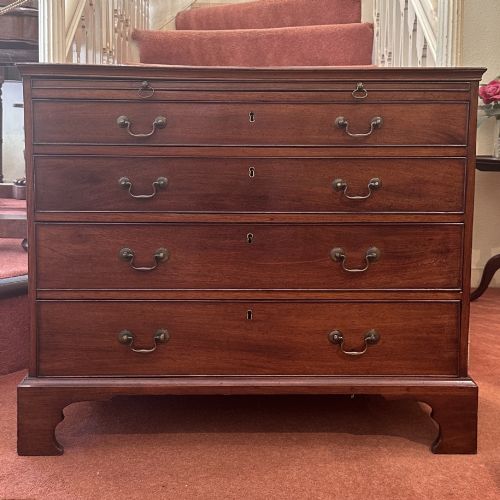
A georgian low chest brings practical proportion and figured timber to a bedroom, combining functional drawer storage with a reduced height.
Georgian Low Chest
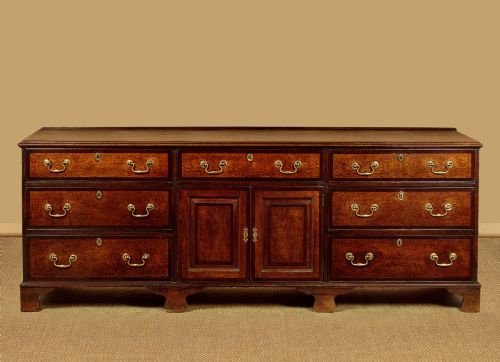
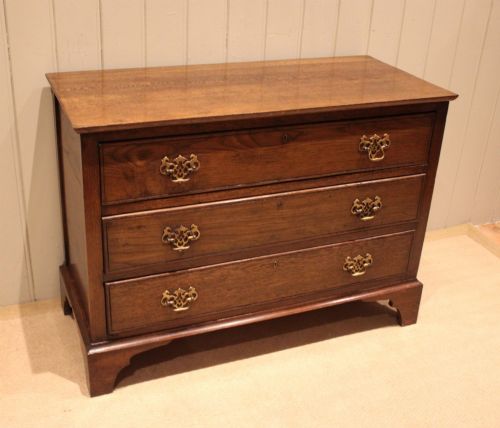
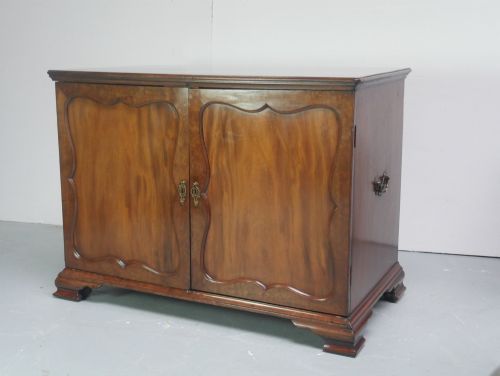
The georgian low chest category encompasses smaller chests of drawers, lowboys, and low press cupboards spanning the eighteenth century and subsequent revival periods. These pieces provide lower profiles than standard tallboys, frequently incorporating dressing slides or fitted top drawers alongside standard timber drawer configurations.
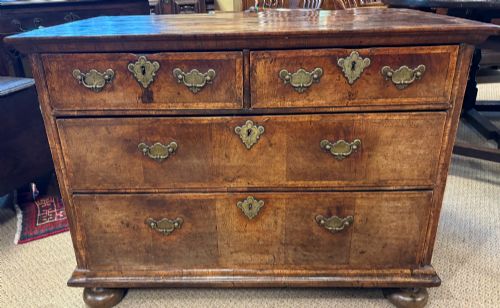
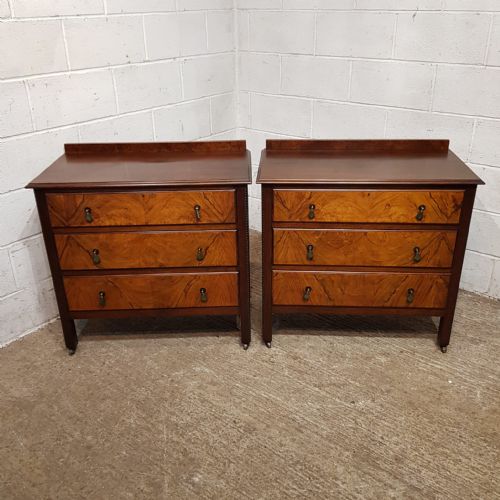
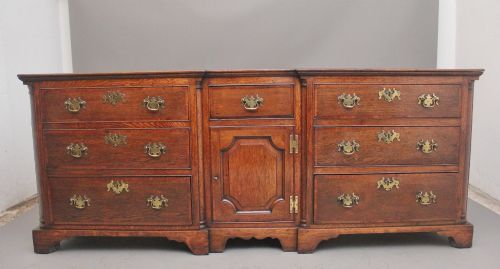
Buyers encounter walnut, oak, and mahogany variants reflecting both period construction and early twentieth-century revival interpretations. Forms range from straightforward drawer banks to complex side tables and linen cupboards retaining original brass hardware.
Materials and construction
Cabinetmakers utilised solid and veneered hardwoods including mahogany, oak, walnut, and burr walnut, often pairing figured drawer fronts with secondary pine or oak carcases. Brass drop handles, escutcheons, and bracket feet provide structural and decorative punctuation across the timber surfaces.
Joinery techniques relied on dovetail construction for drawer boxes and mortise and tenon frames for larger carcases, ensuring stability in lower proportions. Grain matching, particularly with burr walnut and plum pudding mahogany, defined the visual surface treatment.
Georgian Low Chest Retail Price Guide 2026
Typical asking prices for georgian low chest among the pieces listed under this phrase on Sellingantiques today, from the lower quarter to the upper quarter. They describe what is for sale here now, not the wider market.
Some chests hide sliding trays behind cabinet doors, proving that eighteenth-century linen storage was surprisingly secretive.
Judging quality in low proportions
Quality rests upon timber selection and the retention of original surfaces, where rich patination and untouched brass hardware elevate a piece above standard utility furniture. Proportion and restraint in carving or inlay separate skilled regional workshops from later revival output.
Internal construction integrity, such as smooth drawer running action and unreplaced secondary timbers, distinguishes superior examples from heavily restored or later altered chests.
Gillows Of Lancaster
The Georgian Low Chest Glossary
- Lowboy
- A small dressing table or side table featuring one or more rows of drawers raised on relatively tall legs. This form frequently appears in walnut or oak from the eighteenth century.
- Linen Press
- A tall or low storage cupboard enclosing sliding trays or shelves behind upper doors, positioned above a base section fitted with drawers. They are frequently constructed from oak or mahogany.
- Brushing Slide
- A pull-out veneered or solid timber shelf integrated above the top drawer of a chest for grooming or folding clothes. This feature is common on George III mahogany examples.
- Mule Chest
- A blanket box or storage trunk featuring one or more functional drawers built into the base beneath the main compartment. Oak and painted pine versions appear in eighteenth-century listings.
- Plum Pudding Mahogany
- A richly figured tropical hardwood displaying dense, circular grain patterns resembling Christmas pudding. Cabinetmakers utilised this timber for high-status Regency period pieces.
Georgian Low Chest: Frequently Asked Questions
What distinguishes a lowboy from a chest?
A lowboy functions primarily as a small table with integrated drawers, often featuring slender legs designed for dressing or writing tasks. In contrast, a low chest maintains a solid box construction extending closer to the floor primarily for garment storage.
Buyers often find lowboys in walnut and fruitwood, whereas low chests utilise mahogany, oak, or burr walnut across wider drawer configurations.
How were brushing slides utilised?
Brushing slides served as pull-out work surfaces for inspecting garments, folding linens, or placing personal items without opening the main drawers. They sit discreetly immediately beneath the top surface moulding.
Craftsmen veneered or polished the upper face of the slide to match the primary timber of the chest front.
Are revival pieces considered authentic antiques?
Revival pieces date from later periods such as the early twentieth century, reproducing eighteenth-century Georgian forms using period styles and traditional timber. While not originating in the Georgian era, they represent distinct craftsmanship periods.
Listings differentiate these through specific nineteenth and twentieth-century dates alongside period originals.
Why choose walnut over mahogany?
Walnut was predominant during the earlier eighteenth century, prized for its warm brown tones and decorative burr figures. Mahogany gained preference later in the Georgian period for its strength and deep reddish hue.
Selection depends entirely on the desired grain pattern and the established aesthetic of the room.