
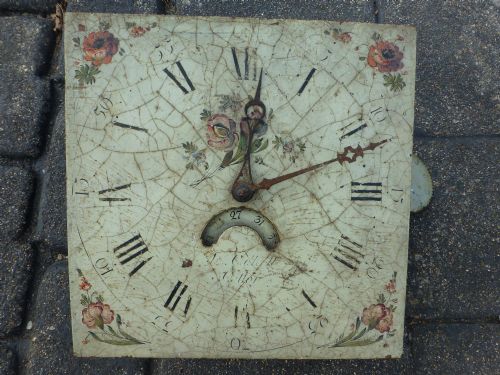
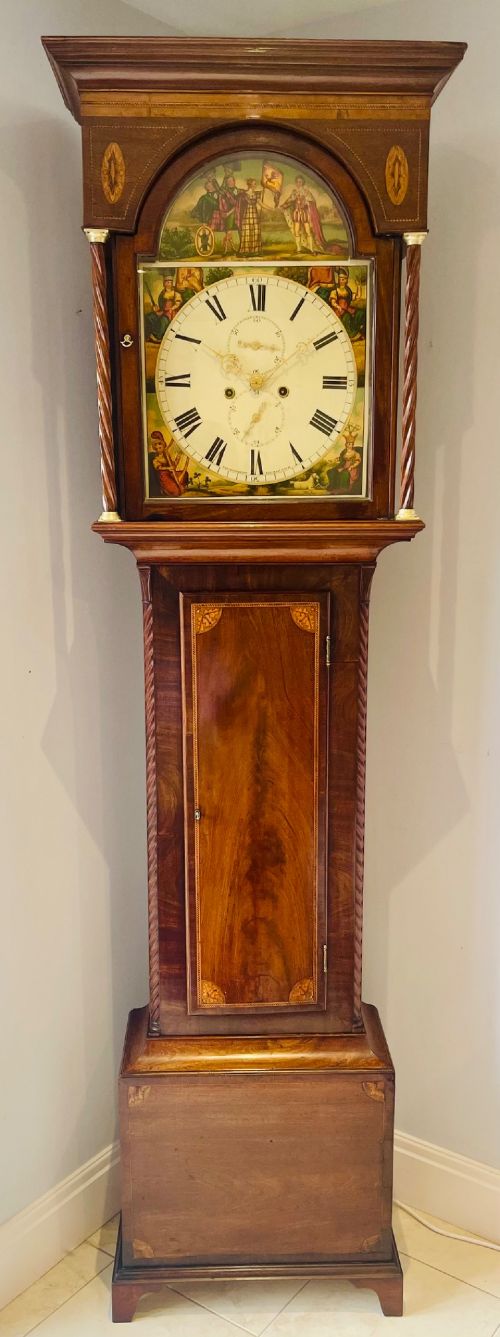
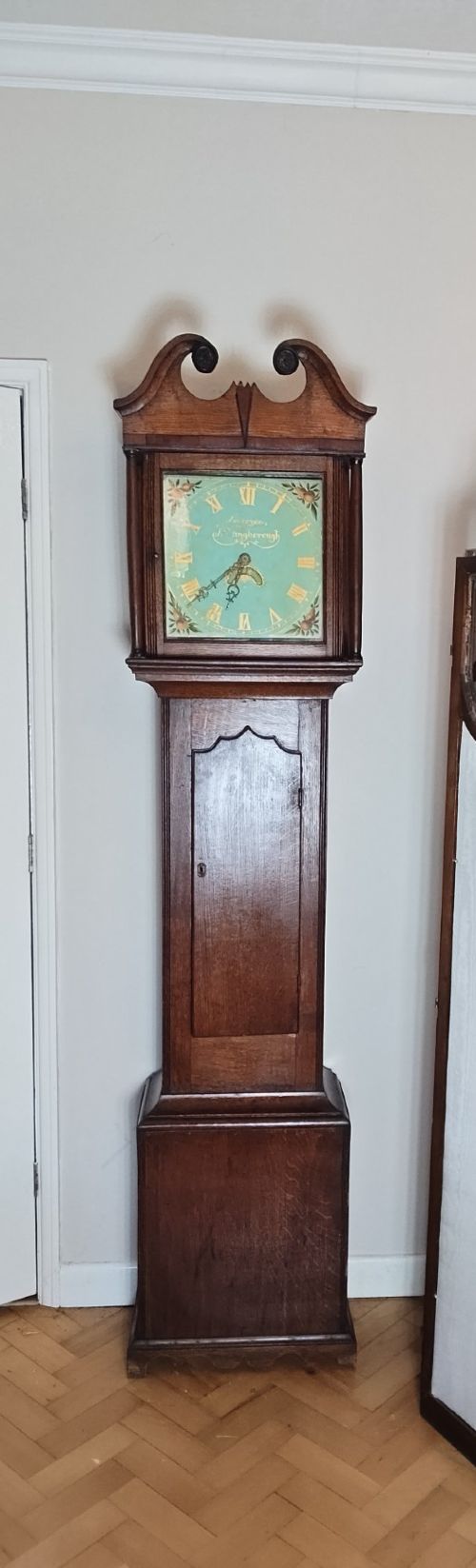
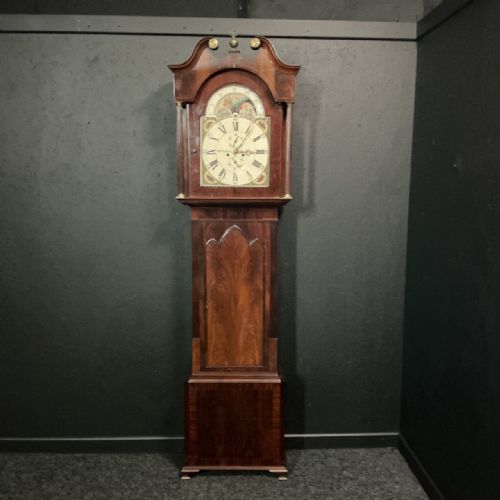
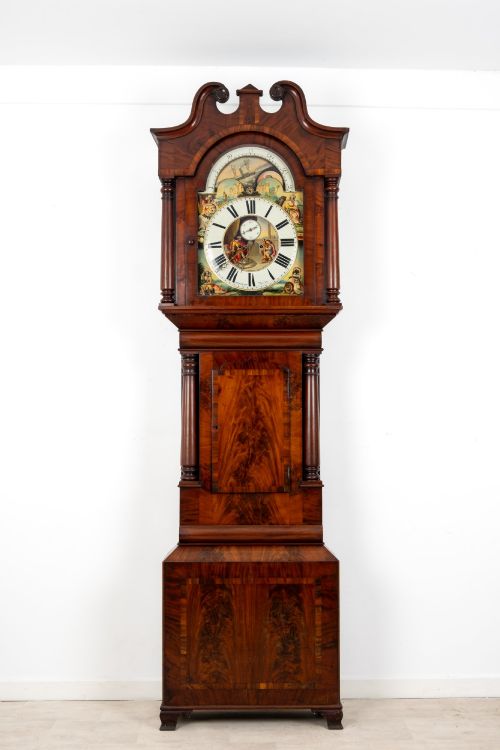
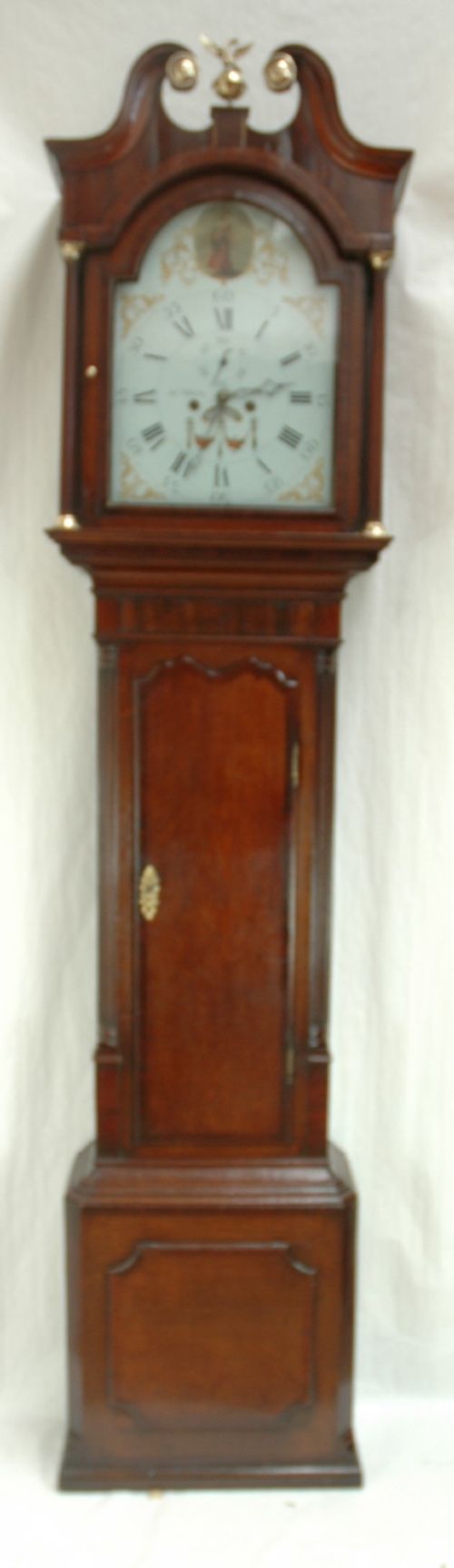
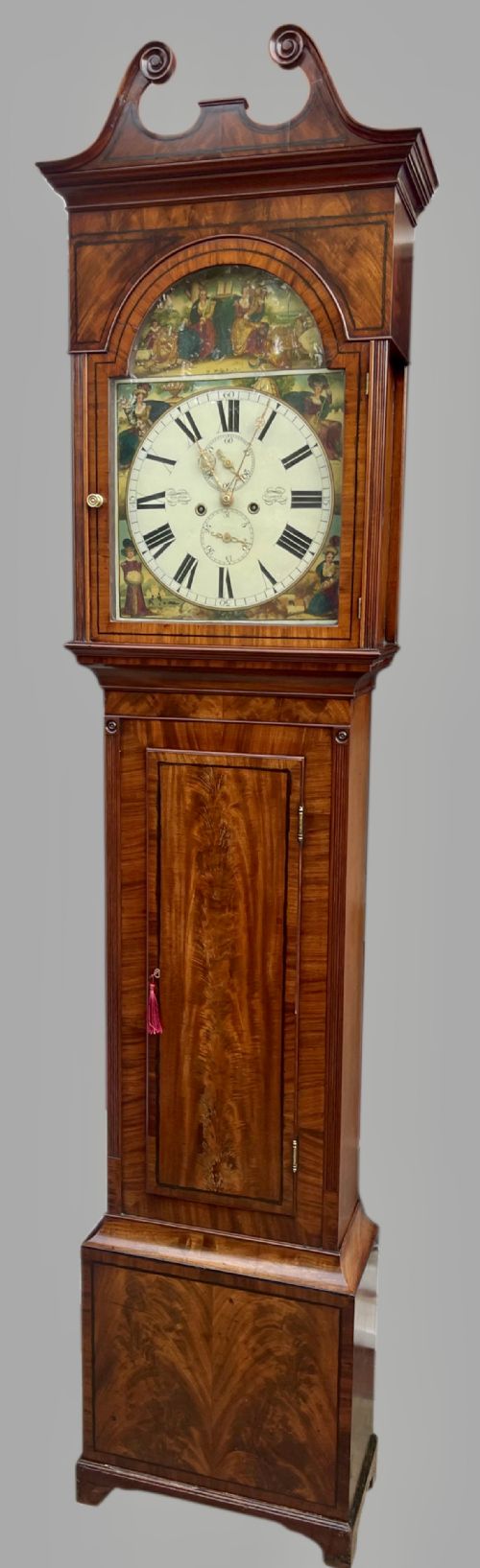
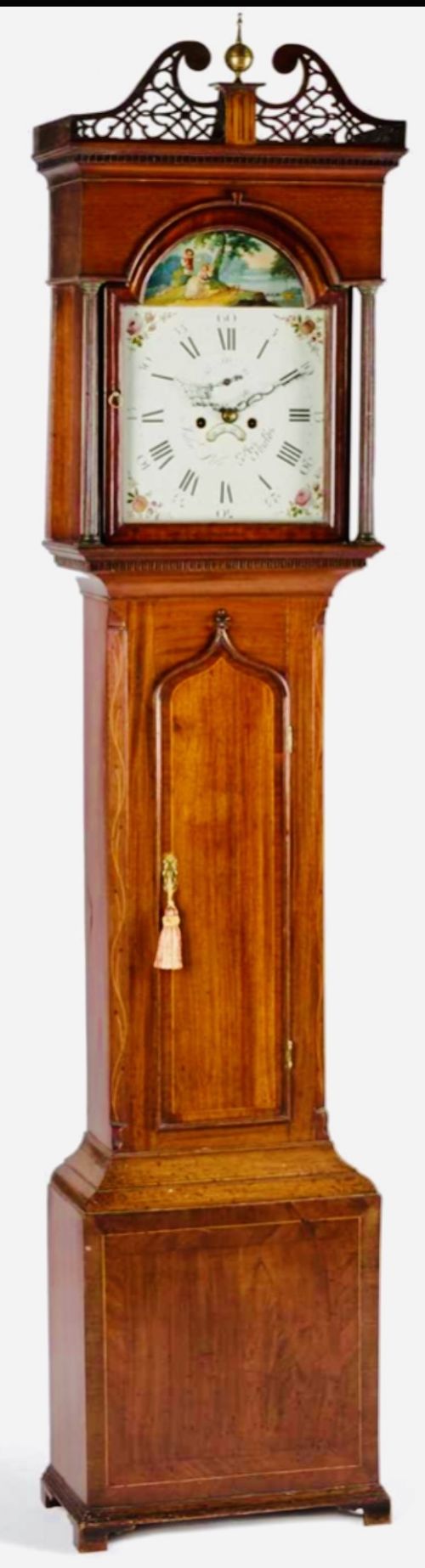
Georgian Longcase Clock Painted Dial
A georgian longcase clock painted dial brings together brass movement, timber case and artistry, offering the timeless ticking heart every traditional room needs.
Georgian Longcase Clock Painted Dial
A georgian longcase clock painted dial is a tall floor-standing timepiece housing a brass or iron movement behind a decorated face, originating primarily through the 18th century, Georgian and 19th century periods.
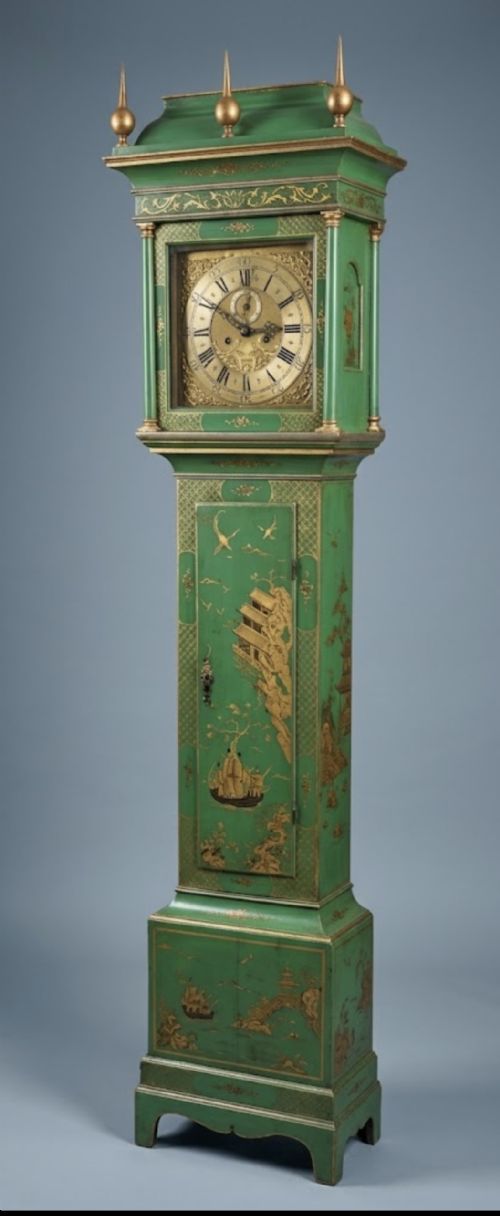
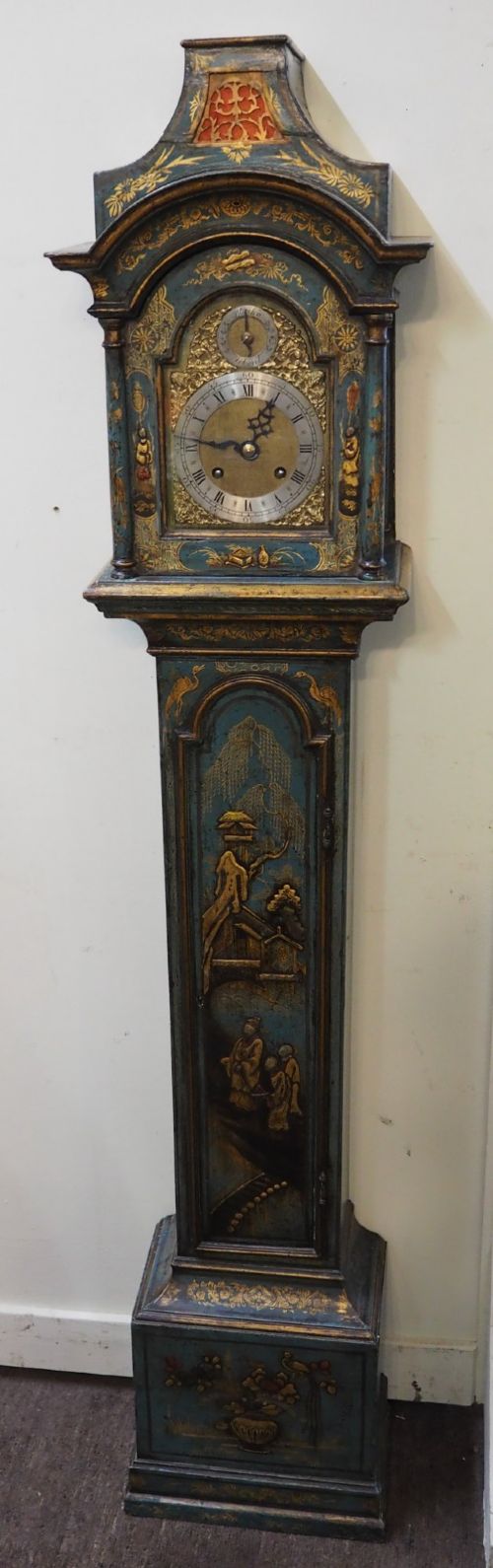
Buyers encounter forms varying from grand mahogany or oak bodies down to smaller grandmother clocks and blue or green lacquered chinoiserie cases.
Regional origins span English towns from London to Birmingham alongside Scottish and Welsh workshops.
How they were made
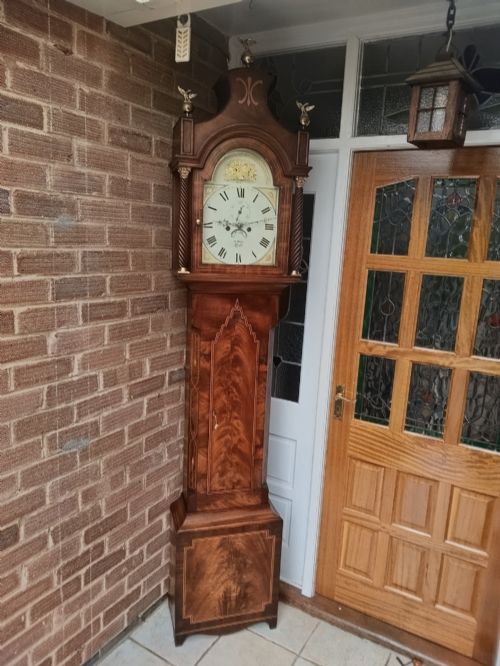
Cases utilise solid timbers including mahogany, oak, pine and lacquered wood, often accented with inlay or carved details.
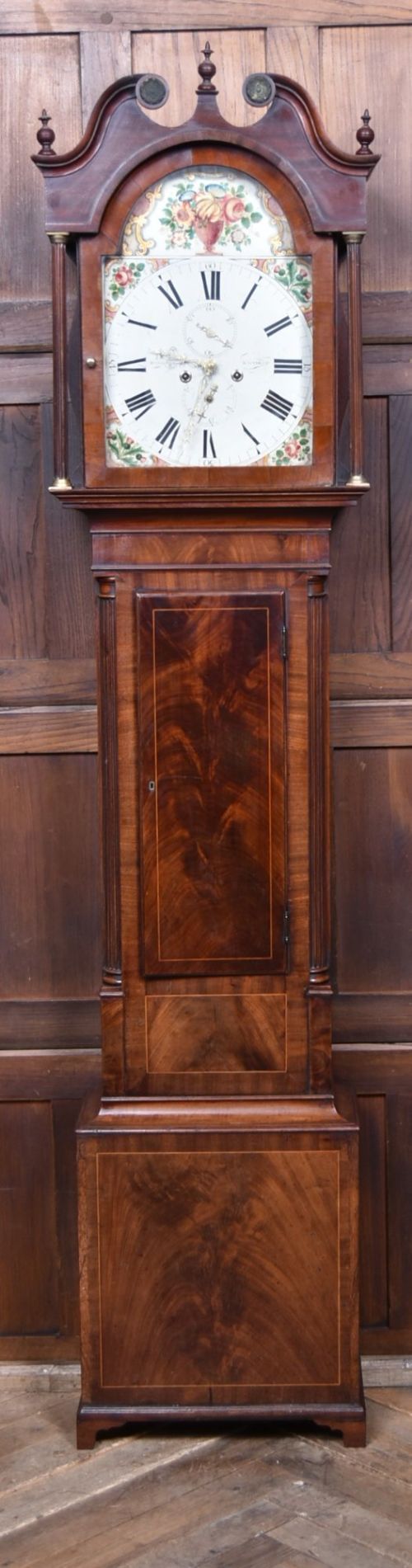
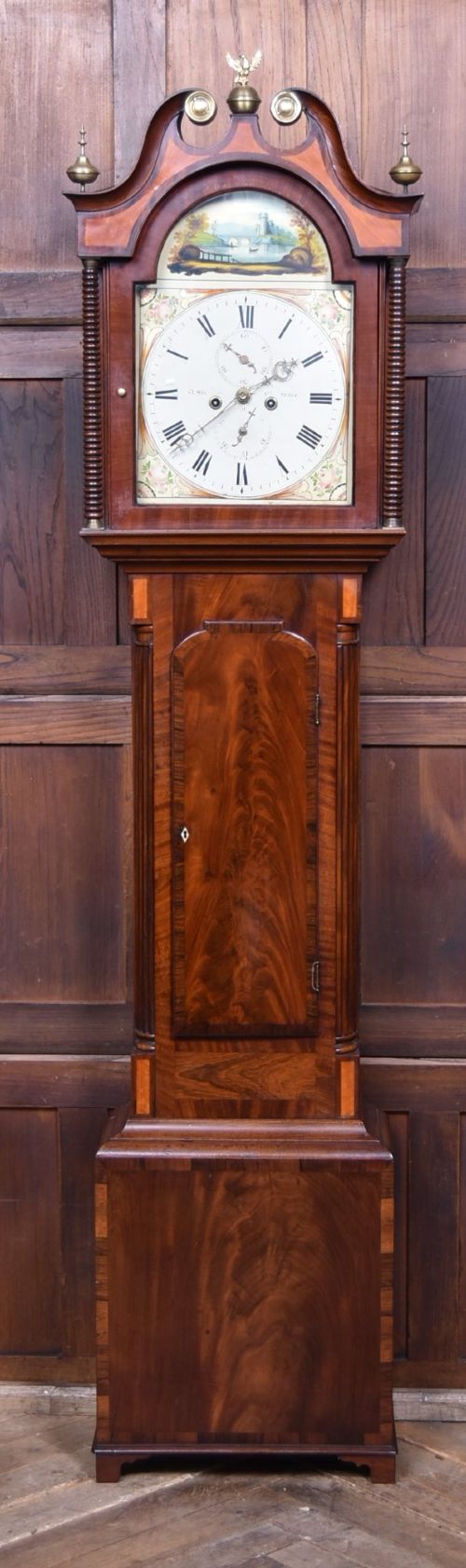
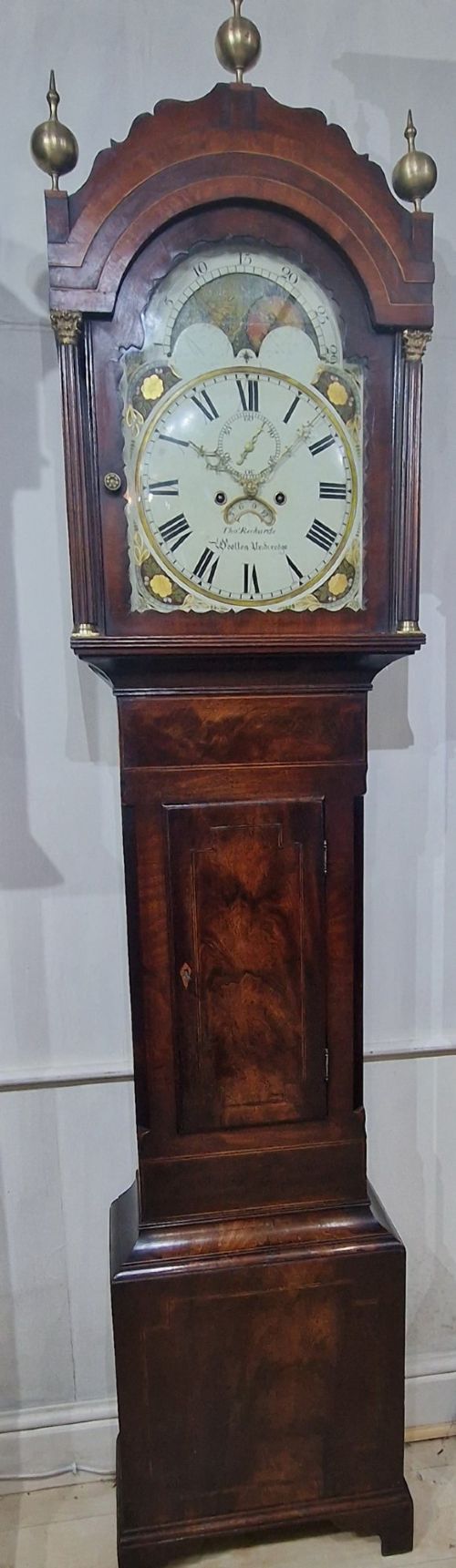
Faces feature painted iron or enamel alongside brass components, driven by weights and brass movements housed inside glass-fronted hoods.
Listings feature oak, mahogany, pine and lacquered wood cases housing movements created across the Georgian and Victorian eras.
What varies in quality
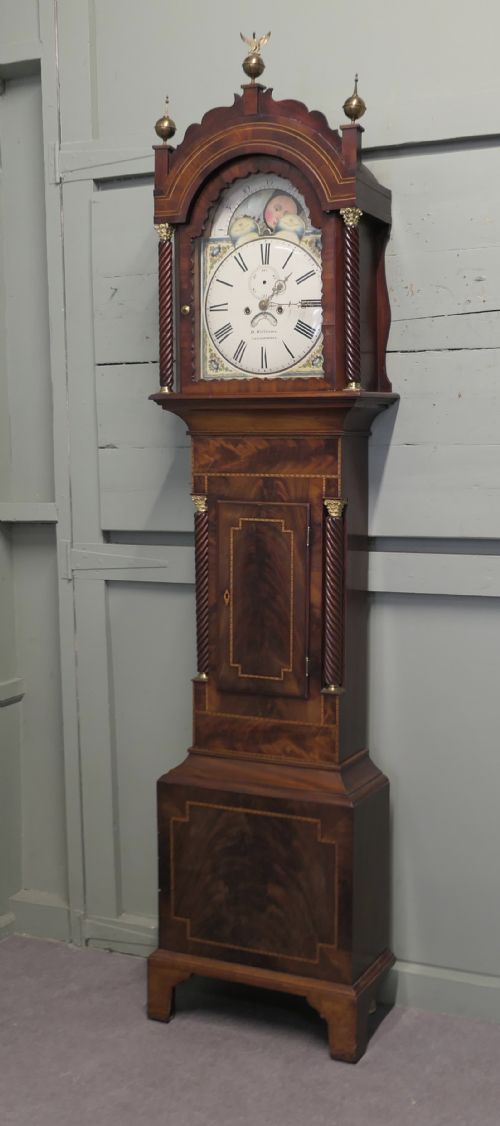
The refinement of the painted dial artistry distinguishes standard utility work from finer regional examples, particularly where moon phase mechanisms or specialist hand arrangements are present.
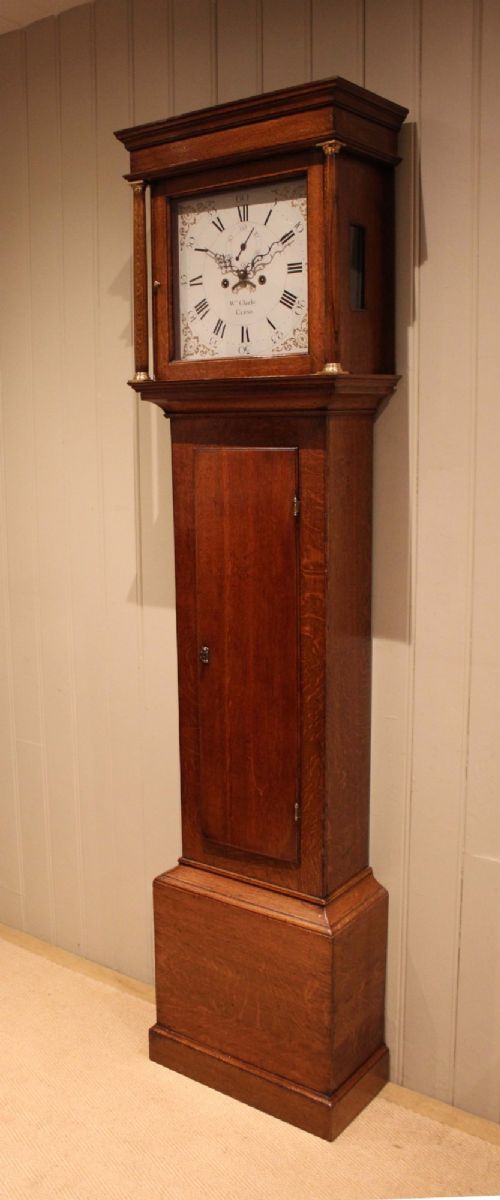
Cabinetry execution dictates standing appeal, separating simple planked oak housings from figured flame mahogany cases adorned with detailed banding and inlay.
John fielder of Alton·Hendrie Ogg·D. Straiton·Parkinson Bros·Wotton Under Edge·D Williams·William McEwan·Edward Shepley·Thomas Webbe·Richard Sharkey·Thwaites·Charles Dowsett·John Denbigh·Edward White·Will Lassell·John Hancock
The Georgian Longcase Clock Painted Dial Glossary
- Longcase clock
- A tall pendulum clock enclosed in a wooden case standing directly on the floor. Also commonly referred to as a grandfather clock.
- Painted dial
- A clock face made of iron or enamel decorated with hand-painted numerals, floral spandrels or scenic scenes. These replaced engraved brass faces from the later 18th century onwards.
- Moon phase
- A mechanical complication on the dial tracking the lunar cycle via a rotating disc. It shows whether the moon is waxing, full, waning or new.
- Chinoiserie
- European decorative style imitating Chinese artistic traditions. It appears on lacquered clock cases featuring raised motifs in gold and colour.
- Grandmother clock
- A smaller, more slender version of the traditional longcase clock. These compact timepieces suit rooms with lower ceilings.
Georgian Longcase Clock Painted Dial: Frequently Asked Questions
What is a painted dial longcase clock?
A tall floor-standing timepiece featuring an iron or enamel face decorated with painted numerals and artwork rather than engraved brass.
These faces became widespread during the late 18th and early 19th centuries across English, Scottish and Welsh workshops.
How do I wind an 8 day clock?
Most traditional mechanical longcase clocks require winding every week using a crank key inserted into winding holes on the dial.
Weights suspended inside the trunk power the movement as they slowly descend over the eight-day cycle.
What is the difference between a grandfather and grandmother clock?
Grandfather clocks are the standard full-sized floor clocks standing up to two metres or more in height.
Grandmother clocks are scaled-down versions produced in smaller proportions for narrower spaces.
How do I date a longcase clock?
Dating relies on combining the stylistic details of the wooden case, such as mahogany veneers or oak framing, with the construction of the dial and movement.
Signatures inscribed on the painted iron face by makers like John Denbigh or Thwaites often point to specific active decades.