

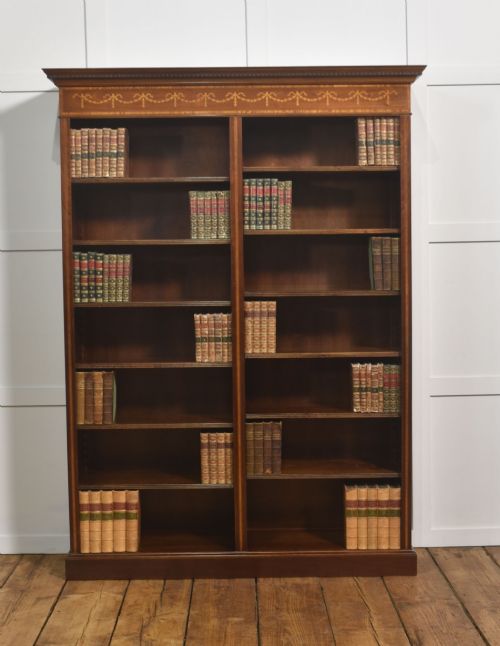
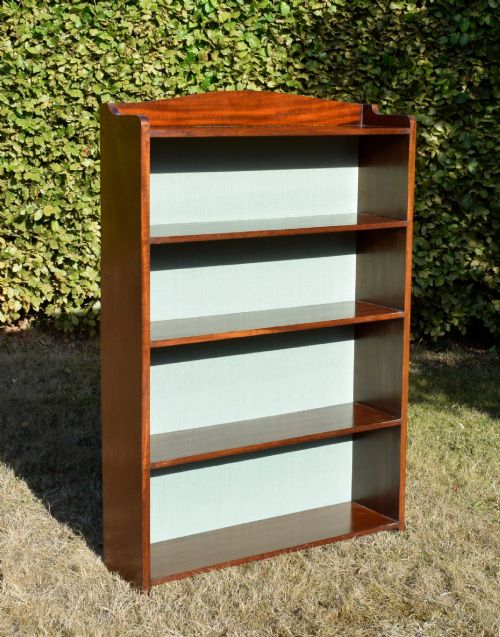
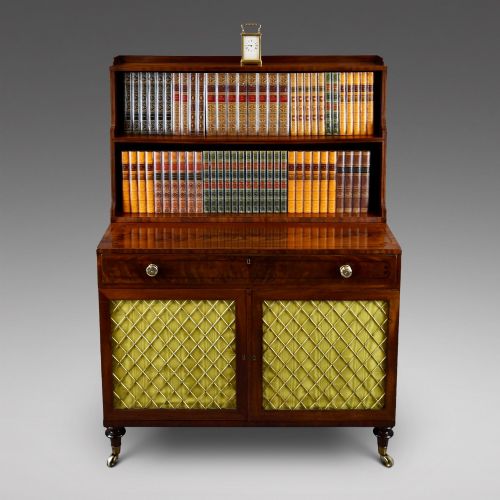
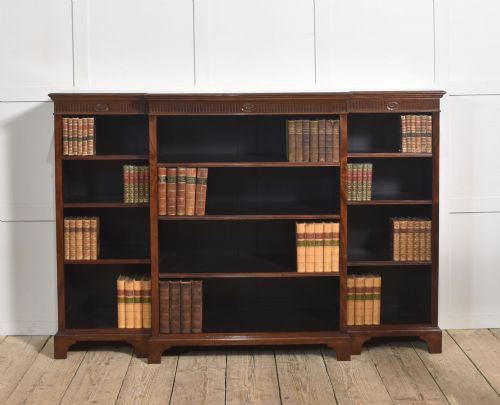
Georgian Library Shelves
Georgian library shelves bring formal mahogany storage into a room, offering adjustable open tiers and enclosed cupboards that suit heavy volumes.
Georgian Library Shelves
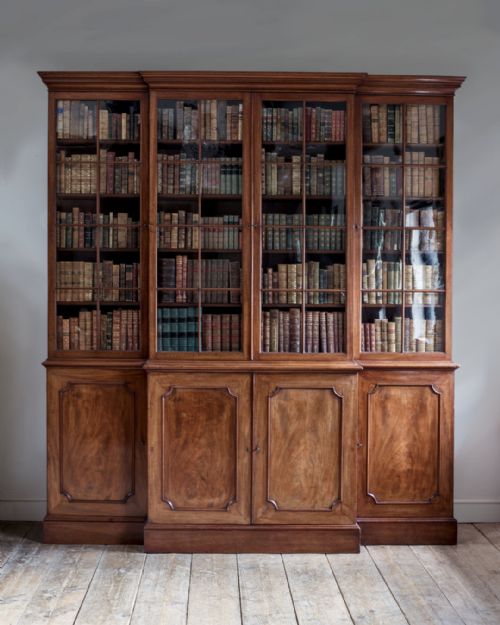
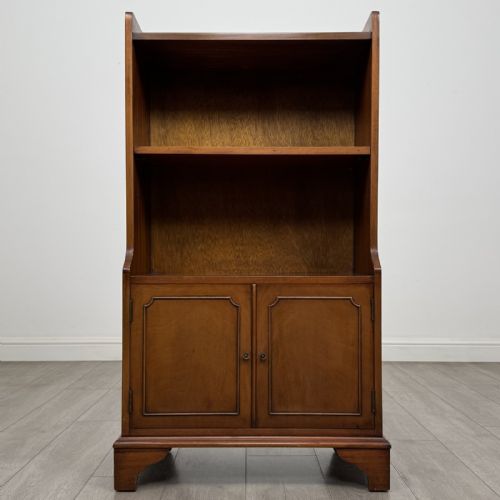
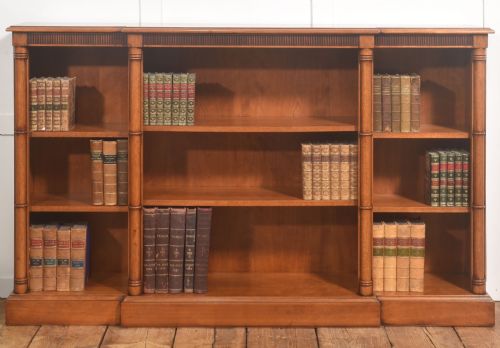
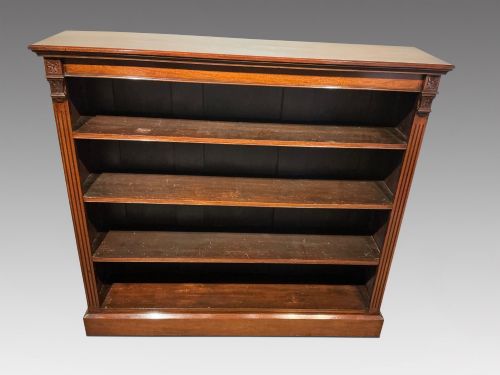
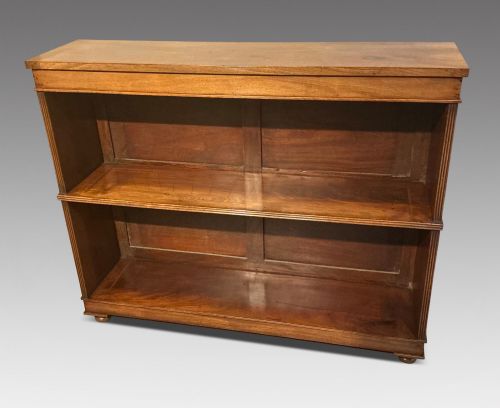
Georgian library shelves encompass open bookcases, breakfront cabinets, and tiered what-nots designed to hold bound volumes in domestic studies and larger rooms. Most examples encountered here are mahogany or walnut constructions dating from the nineteenth and early twentieth centuries, blending Georgian styling with later revival periods.
The primary forms vary from tall open bookshelves to wide breakfront bookcases featuring lower cupboards and adjustable internal timber planks. Buyers also find smaller tier stands and reading tables that serve similar functions for book display and storage.
Originating in the periods of the eighteenth century through to the early twentieth century, these pieces range from authentic late Georgian pieces to Edwardian and Sheraton Revival interpretations. The selection leans heavily towards mahogany timbers, frequently styled with open fronts for immediate access to books.
How they were made
Cabinet makers utilised dense hardwoods such as mahogany, walnut, and rosewood for the structural frames and shelves, often selecting figured veneers for the main display surfaces. Satinwood inlay and brass mounts provided decorative contrast on formal breakfront and revival pieces.
Construction methods relied on traditional joinery techniques to support heavy book weights, incorporating adjustable timber shelving systems and panelled backingboards. Open front designs required stable corner joints and solid plinths to maintain alignment across wide expanses.
Georgian Library Shelves Retail Price Guide 2026
Typical asking prices for georgian library shelves among the pieces listed under this phrase on Sellingantiques today, from the lower quarter to the upper quarter. They describe what is for sale here now, not the wider market.
Mahogany and walnut dominate the listed furniture, appearing alongside occasional examples in oak, rosewood, and satinwood.
What varies in quality
The standard of timber selection largely defines the grade of a bookcase, with figured mahogany and burr walnut commanding attention for their natural grain patterns. Crispness in inlay work and the retention of original brass hardware indicate the level of care taken by the maker.
Structural integrity depends on the precision of the shelf adjustment mechanism and the stability of large breakfront carcases against natural timber movement over time.
Gillows·Waring and Gillows·Maple and Co.
The Georgian Library Shelves Glossary
- Breakfront
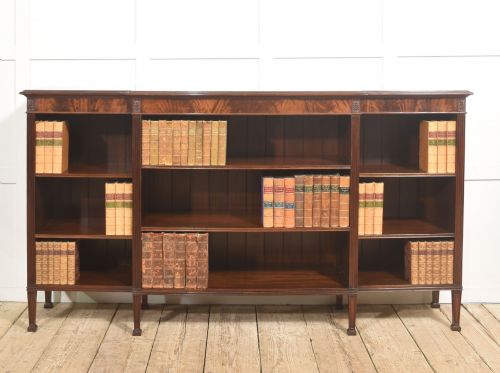
- A cabinet design where the central section projects forward from the flanking wings. This architectural arrangement creates depth and visual interest in large library pieces.
- What-not
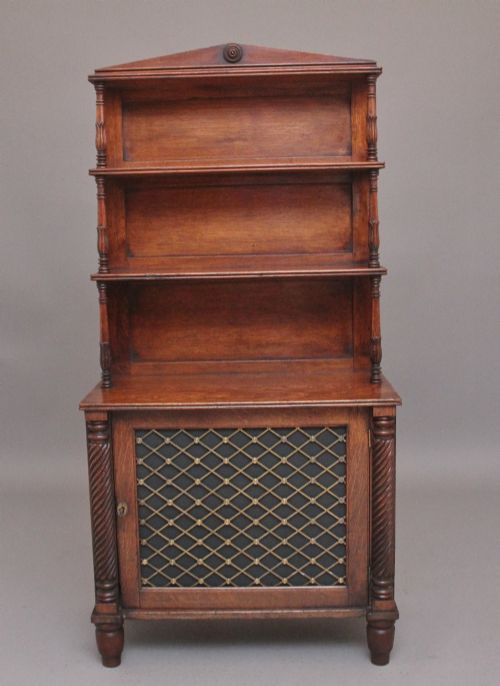
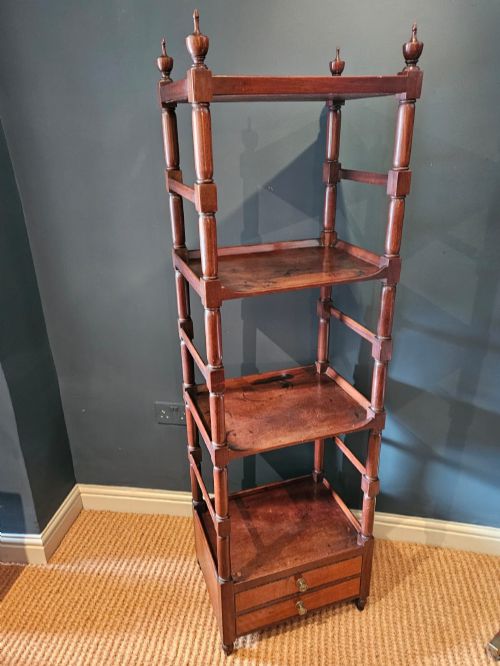
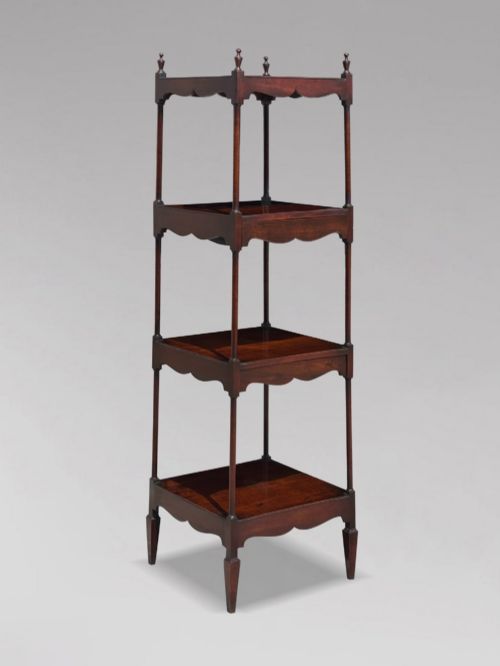
- A set of open shelves supported by slender pillars, used originally for displaying ornaments and small books. These tiered stands date across the nineteenth century.
- Waterfall bookcase
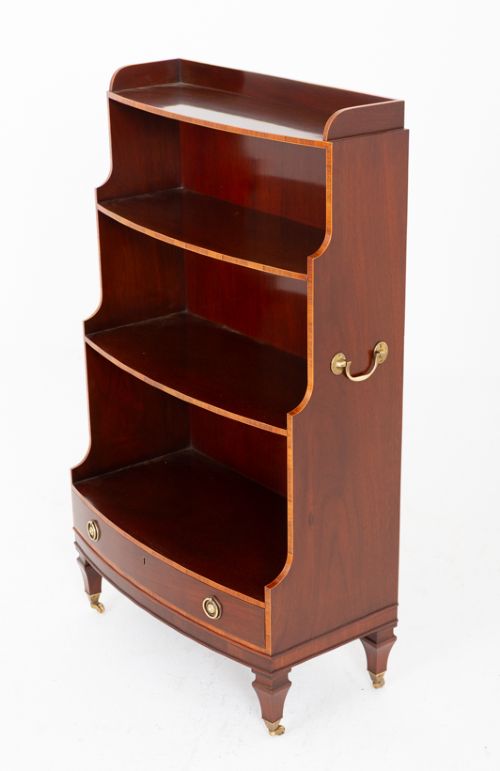
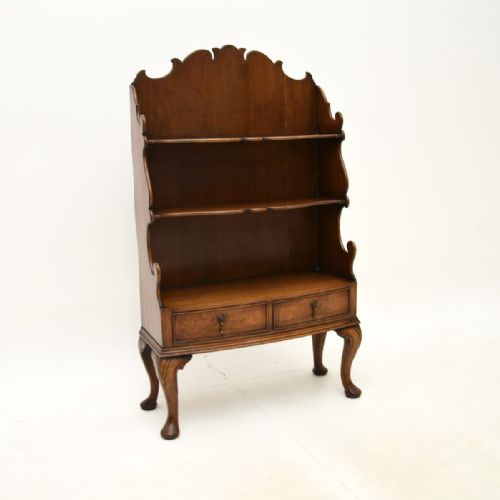
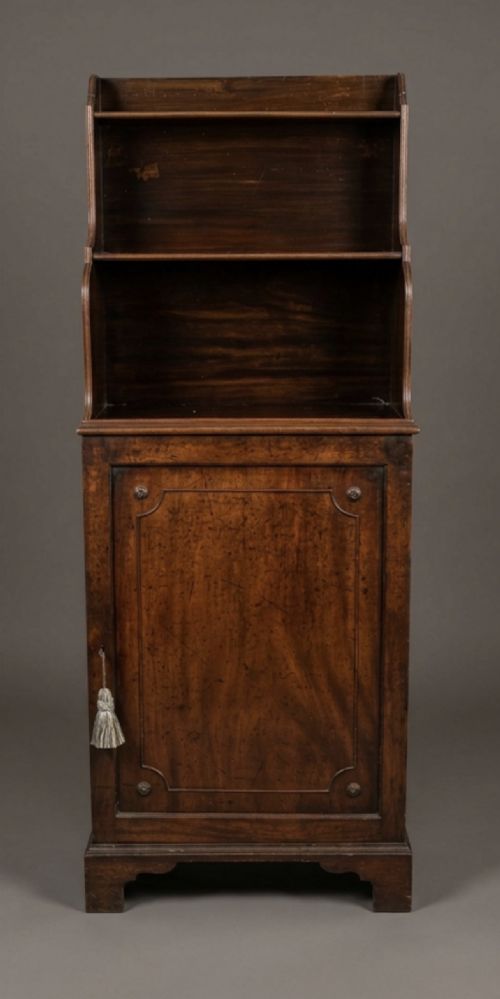
- A set of open shelves where each tier steps back progressively from the one below, following a cascade profile. They appear frequently in mahogany during the Regency and later periods.
- Satinwood
- A pale, hard timber utilised for decorative stringing and inlay work on revival pieces. It provides a bright contrast against darker woods like mahogany.
- Adjustable shelves
- Shelves supported on moveable brackets or ratchets that allow the vertical spacing to be altered. This feature accommodates books of varying heights.
Georgian Library Shelves: Frequently Asked Questions
How do I adjust the shelves?
Many of these bookcases feature traditional wooden ratchets or metal track systems built into the interior uprights. You simply lift the shelf and reposition the supports into the desired slots.
Older pieces may have fixed shelves or wooden pegs that require careful manual placement to avoid damaging the interior veneer.
Are these shelves suitable for heavy books?
Most of these pieces were built by cabinet makers using solid hardwoods like mahogany and walnut to support heavy bound volumes. The inclusion of thick timber planks and sturdy uprights ensures structural durability.
However, very long shelves should be monitored for natural timber sag if loaded entirely with dense folios over extended periods.
How do I distinguish revival styles from original pieces?
Revival pieces from the Edwardian era or the twentieth century often display machine-cut internal components and brighter satinwood inlay alongside older stylistic cues. Original Georgian and Regency pieces show hand-cut joinery marks and timber oxidation appropriate to their age.
Examining the secondary woods used in the backboards and interior framing helps clarify the manufacturing period.