



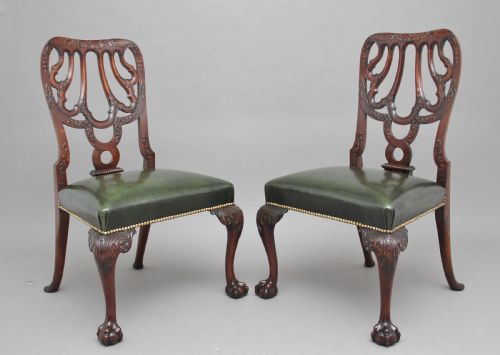


Georgian Leather Dining Chairs
Georgian leather dining chairs bring architectural timber and tactile hides together around the table, offering lasting utility.
Georgian Leather Dining Chairs
When you search for georgian leather dining chairs, you encounter seating designed for formal dining rooms across the eighteenth and nineteenth centuries, alongside later revivals from the twentieth century. These pieces encompass side chairs, carver chairs, and armchairs configured in sets or pairs.
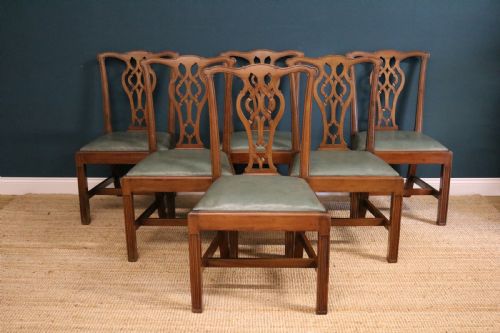
The timber frames reflect periods spanning from the eighteenth century through to the Edwardian era, with George III and Regency designs appearing frequently. Makers utilised architectural styles such as Chippendale, Hepplewhite, and Sheraton alongside vernacular elm and mahogany structures.
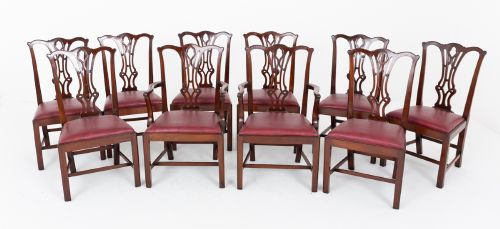
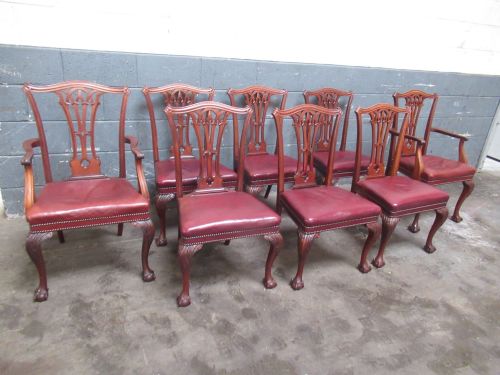
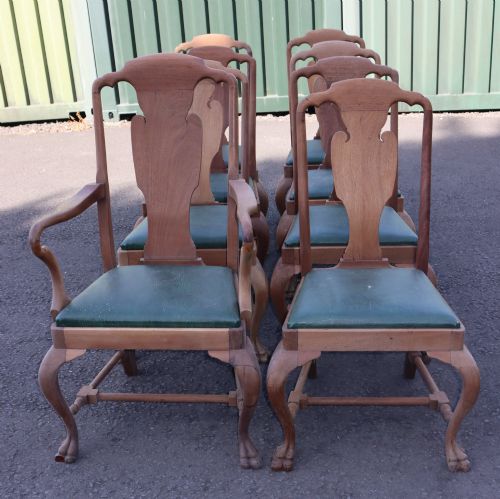
Many survivors pair sturdy mahogany or elm frames with upholstered leather seats, sometimes featuring studded borders or hand-dyed finishes. Sets range from intimate pairs to larger collections numbering up to twelve chairs for grander dining spaces.
Materials and Construction
Construction relies heavily on dense timbers such as mahogany, Cuban mahogany, walnut, and elm, selected for structural integrity and rich grain. Frames are joined using traditional methods to withstand daily dining use over centuries.
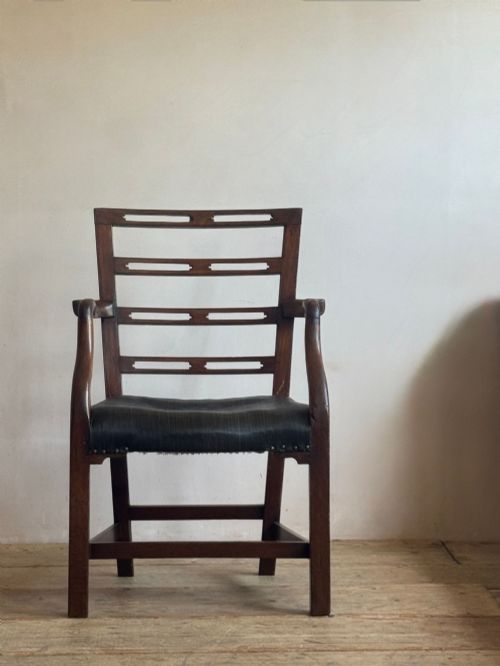
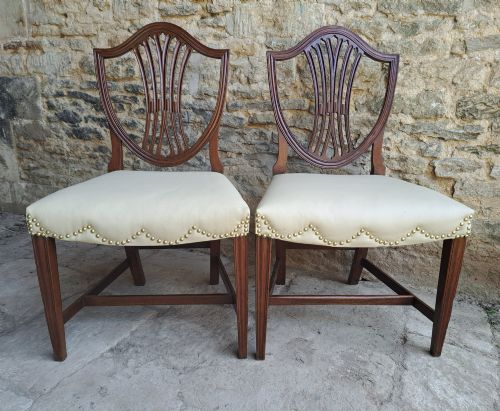
Seats are upholstered in leather, often attached with brass studs and occasionally paired with secondary woods like beech or pine in the internal framing. Hand-dyed green leather and black hides appear alongside polished timber surfaces.
Chippendale, Hepplewhite, and Regency styles dominate the aesthetic range of these dining chairs.
Factors That Determine Quality
The distinction between ordinary and superior pieces rests on the crispness of the carving, the proportion of the frame, and the selection of timber figures like Cuban mahogany or burr walnut. Finer workshops invested greater time in shaping splats, legs, and arm terminals.
Originality of components dictates value, distinguishing untouched period examples from later marriages or extensive nineteenth-century restorations. The quality of the leather upholstery and the integrity of the joinery further separate utilitarian seating from high-status commissions.
Gillows
The Georgian Leather Dining Chairs Glossary
- Carver chair
- An armchair designed specifically for the head of a dining table, featuring supportive armrests. These pieces often match a larger set of side chairs.
- Shield back
- A chair back shaped like a heraldic shield, popularised by Hepplewhite designs during the late eighteenth century. This openwork construction requires skilled joinery.
- Sabre leg
- A concave-curving leg that tapers toward the foot, commonly found on Regency dining chairs. This form draws inspiration from classical Greek furniture.
- Ladder-back
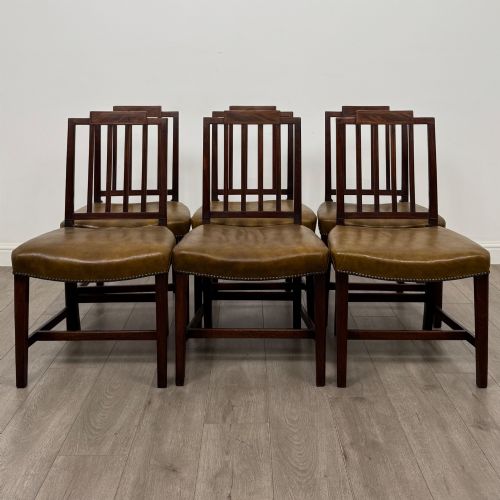
- A chair back featuring horizontal transverse rails resembling the rungs of a ladder. Country vernacular makers frequently adopted this comfortable pattern.
- Elm
- A tough, interlocking timber used in regional country furniture production. Its resistance to splitting made it ideal for vernacular chair seats and frames.
Georgian Leather Dining Chairs: Frequently Asked Questions
How do I spot a true period chair?
Examine the timber shrinkage, joinery methods, and tool marks visible on the underside of the frame. Genuine eighteenth-century pieces show hand-cut pegging and natural wear patterns consistent with age.
Compare the carving depth and secondary woods against documented examples from the same era. Consistency in construction across all chairs in a set confirms whether they started life together.
Are revival chairs worth collecting?
Nineteenth and early twentieth-century revival chairs often display exceptional craftsmanship that rivals their eighteenth-century predecessors. Makers during the Victorian and Edwardian periods closely studied earlier proportions.
These later sets offer robust utility for modern dining rooms while retaining traditional aesthetic appeal. They represent a practical alternative when original eighteenth-century sets are unavailable.
How should I care for leather seats?
Maintain antique leather by applying a suitable conservation-grade wax or leather dressing to prevent drying and cracking. Avoid placing chairs in direct sunlight or near heat sources.
Clean the surface gently with a dry or barely damp cloth, steering clear of modern chemical detergents. Preserving the natural patina protects both the hide and the historical value.
What is the difference between carvers and side chairs?
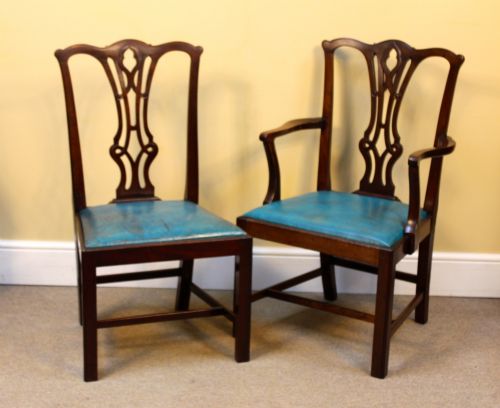
Carver chairs feature armrests and traditionally sat at the head and foot of the dining table for the host. Side chairs lack arms, allowing multiple pieces to tuck neatly along the table sides.
Sets often combine a pair of carvers with six or eight matching side chairs to complete a uniform dining arrangement.