

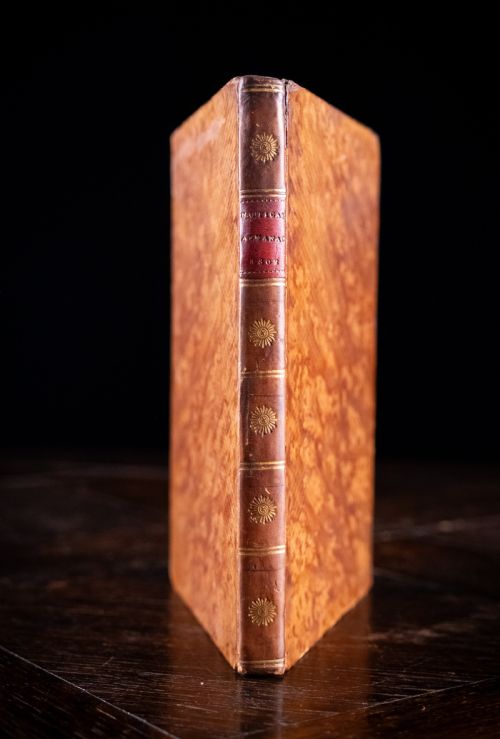
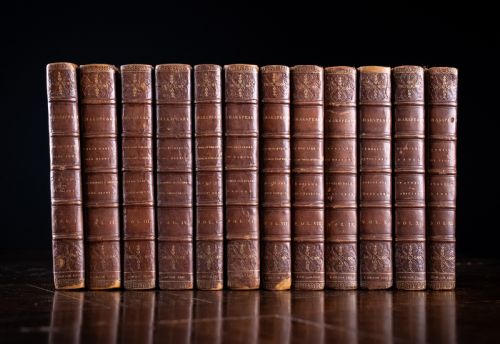
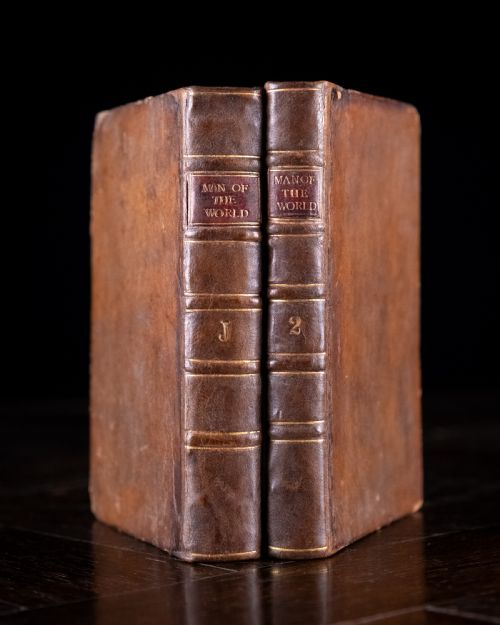


Georgian Leather Bound Volumes
Georgian leather bound volumes bring the weight of centuries onto your shelves, offering tactile history through traditional calfskin and gold tooling.
Georgian Leather Bound Volumes
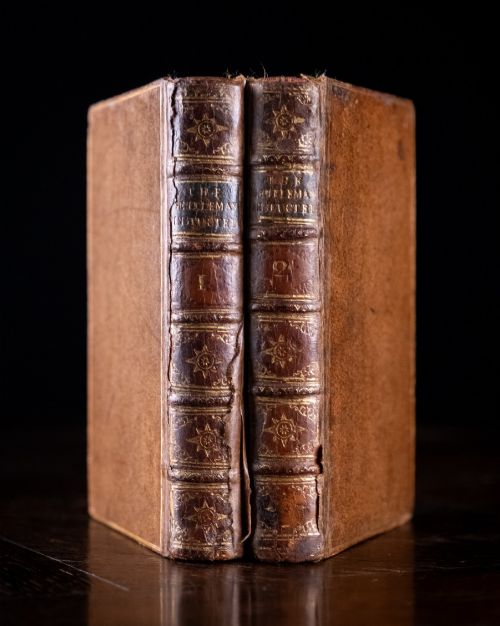
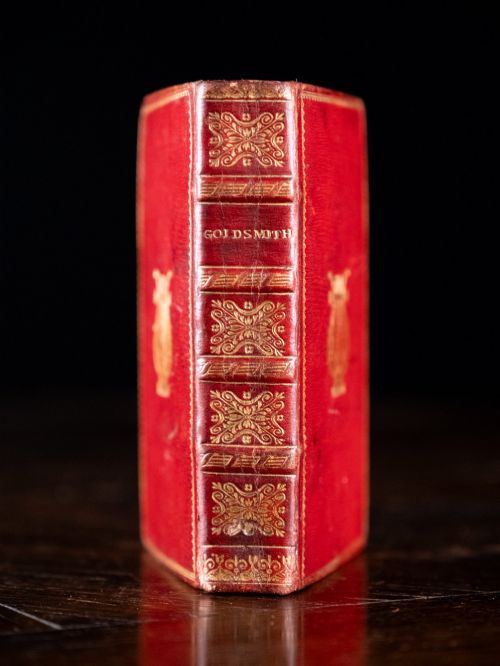
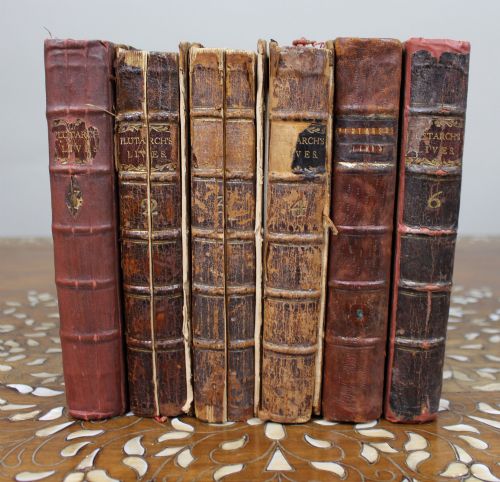
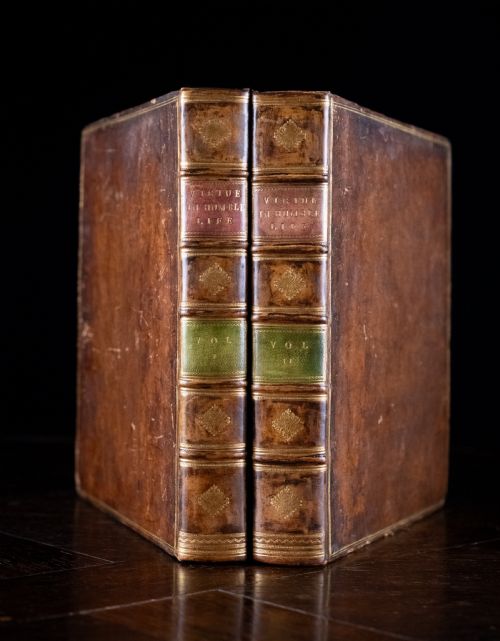
Georgian leather bound volumes encompass antiquarian books and multi-volume sets produced during the eighteenth and early nineteenth centuries. These pieces appear as single miniature books, extensive multi-volume sets such as Shakespeare or Plutarch, and specialised publications like almanacs or religious texts.
The material presentation typically relies on calfskin leather combined with paper pages, often accented by gold leaf detailing on spines and boards. Surviving items span periods from the early eighteenth century through the Regency era, reflecting the distinct publishing standards of those decades.
Materials and construction methods
Binders utilised genuine calfskin leather to encase the paper text blocks, creating durable covers designed to protect the printed contents. This leather was frequently stretched over sturdy boards and treated to achieve smooth or textured finishes suitable for domestic display.
Gold leaf was applied to impress lettering and decorative motifs onto the spines and covers, contrasting against the darker tones of the leather. Printers and binders worked by hand to assemble multi-volume sets, sewing sections of paper together before attaching the outer bindings.
Listings feature materials such as calfskin leather, paper, gold leaf, and metal, spanning the eighteenth century through the Regency period.
Judging quality and condition
Quality in these volumes lies in the integrity of the original binding and the crispness of the gold leaf tooling upon the spine. Sets that remain complete across multiple volumes demonstrate superior preservation compared to scattered individual books.
The fineness of the calfskin leather and the legibility of the typography throughout the paper pages distinguish superior examples. Uniformity across a complete multi-volume set indicates careful historical stewardship and higher original production standards.
J. & R. Tonson·J. Wheble
The Georgian Leather Bound Volumes Glossary
- Calfskin
- A fine leather derived from calf hide, traditionally utilised for binding antiquarian books due to its smooth surface and durability. This material takes gold tooling exceptionally well.
- Gold leaf
- Extremely thin sheet gold applied to decorate and letter the spines and boards of leather bound volumes. It provides a lasting metallic contrast against the darker leather.
- Miniature book
- A tiny printed volume produced for easy portability or personal devotion. These diminutive books require specialised binding techniques to scale down standard publishing formats.
- Thumb bible
- A small format religious text designed to fit easily into the hand. These miniature editions feature abbreviated script and compact calfskin bindings.
Georgian Leather Bound Volumes: Frequently Asked Questions
How should I care for antique leather books?
Keep these volumes away from direct sunlight and extreme humidity to prevent the calfskin leather from drying out or cracking.
Handle them gently by supporting the spine rather than pulling them from shelves by the headcap.
Are multi-volume sets usually complete?
Completeness varies significantly among historical sets, with some surviving as full sequences like twelve-volume Shakespeare editions or eight-volume histories.
Checking the specific volume count in each listing ensures you know exactly how many books are included.
What is a thumb bible?
A thumb bible is an exceptionally small religious publication designed for personal use and easy transport during the Georgian period.
These miniature books feature condensed biblical texts housed in diminutive calfskin covers.
How do I identify a Regency binding?
Regency bindings date from the early nineteenth century and often reflect the specific decorative preferences of that stylistic era.
Look for characteristic gold leaf tooling patterns and typography styles typical of the period around eighteen hundred to eighteen thirty.