
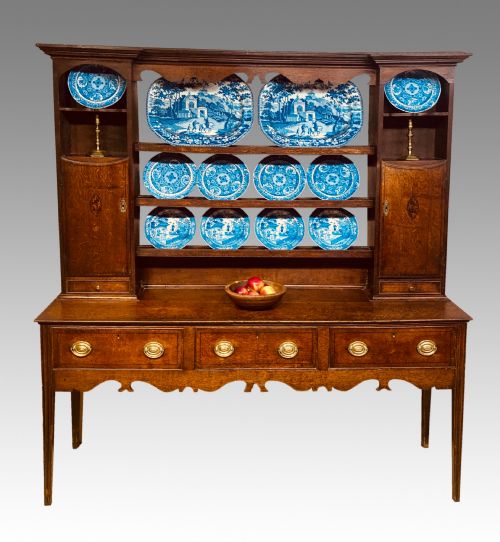


Georgian Kitchen Shelves
Georgian kitchen shelves offer robust country utility and warm timber character, making them a practical choice for displaying ceramics and everyday kitchenwares.
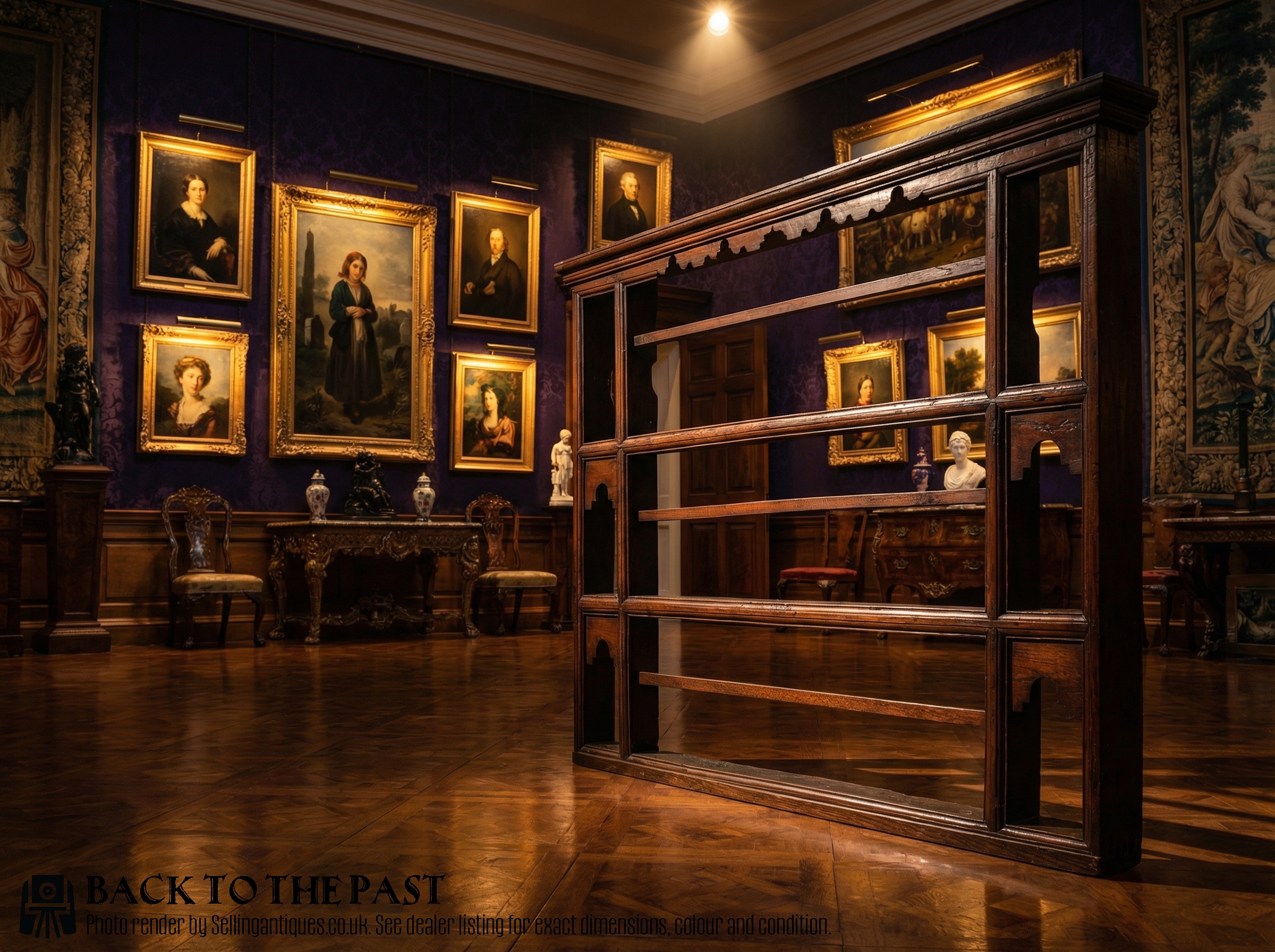
Georgian Kitchen Shelves
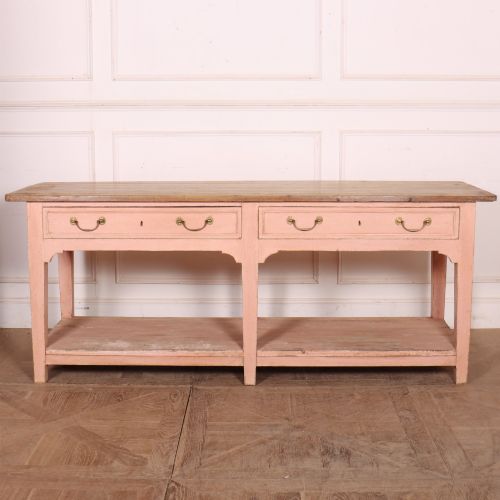
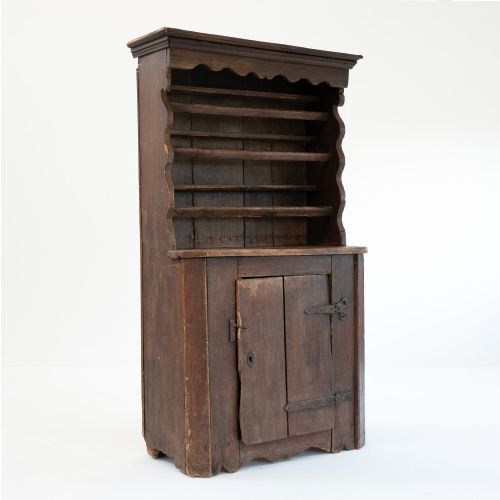
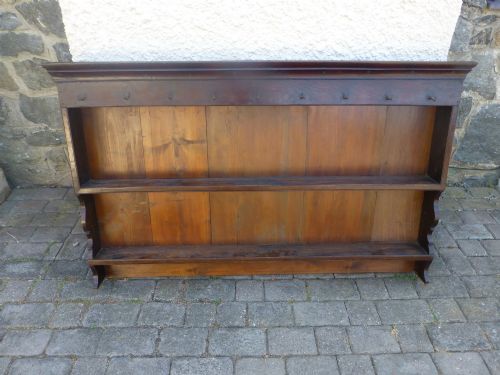
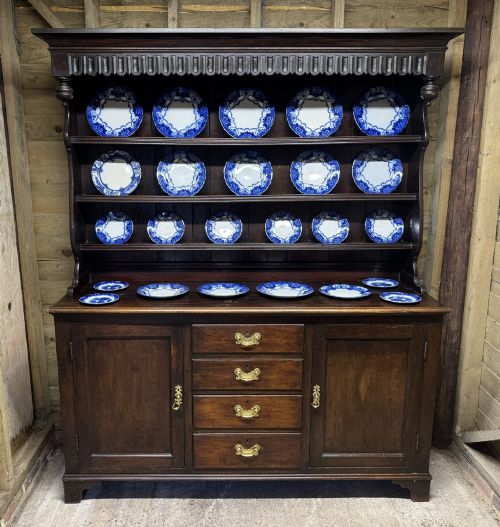
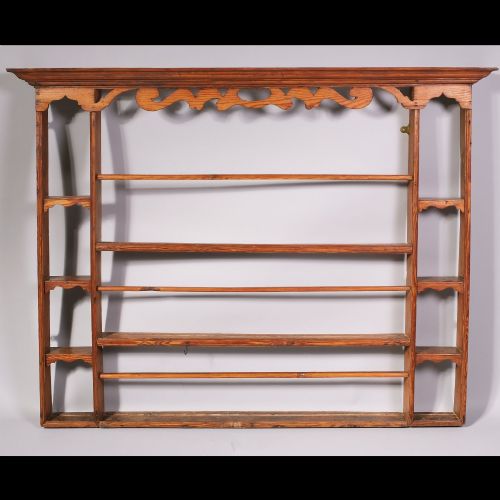
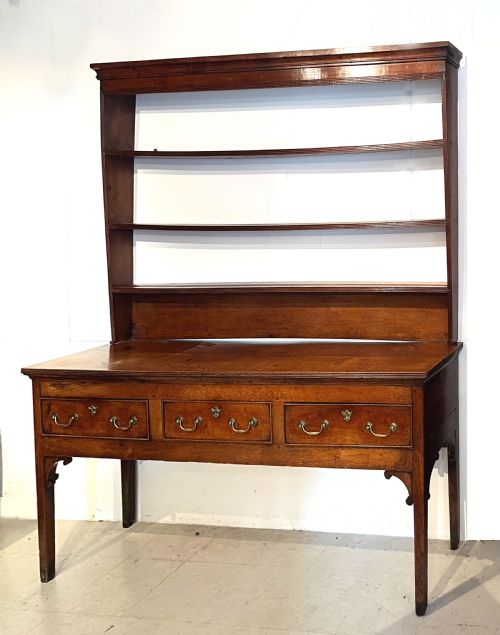
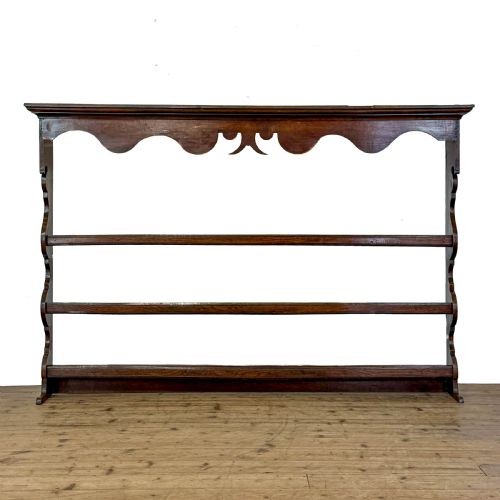
When you search for georgian kitchen shelves, you are looking at utilitarian timber storage pieces that range from wall-mounted plate racks to large multi-tier dressers. These items come from periods spanning the eighteenth and nineteenth centuries, reflecting regional English, Welsh, Irish, and Scottish farmhouse traditions.
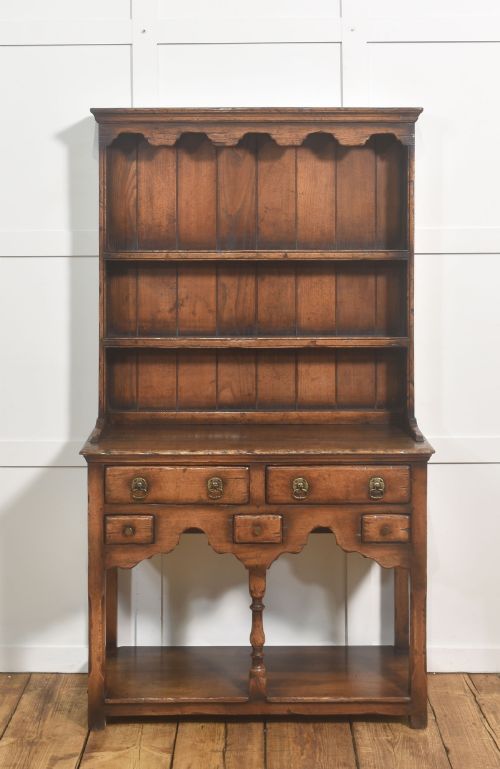
You are most likely to meet oak and pine wall-mounted plate racks, alongside two-part dressers featuring open shelving above base cupboards or potboards. These pieces were built for working domestic spaces to hold delftware and kitchen utensils securely.
The styles present strong country craftsmanship, including rustic farmhouse and Georgian country characteristics. Pieces often show the practical influence of regional workshops rather than high urban cabinet-making.
Assessing quality in country storage
Quality rests primarily on the integrity of the timber and the honesty of the construction. Retained original surfaces, such as early paint or undisturbed patinated oak, elevate a piece above later adaptations.
Proportion and regional character distinguish finer examples from standard utility items. Well-executed fretwork or balanced rack dimensions show the maker's careful eye within a vernacular tradition.
Some pine racks display spirited fretwork cut by hands that clearly spent too long listening to the wind.
The Georgian Kitchen Shelves Glossary
- Delft rack
- An open wall-mounted shelving unit designed to display ceramic plates and platters upright. These racks formed an essential part of the working kitchen for daily crockery storage.
- Potboard
- A lower slatted shelf fitted between the legs of a dresser base. This open space accommodated heavy pots and pans in traditional farmhouses.
- Dresser base
- The lower section of a kitchen storage unit featuring cupboards or drawers. These sturdy units stood alone or paired with an upper plate rack.
- Fretwork
- Openwork ornamentation cut into thin timber boards using a saw. This decorative technique often appears along the top or side panels of pine plate racks.
- Talwrn dresser
- A distinct regional variant of Welsh furniture. These pieces reflect specific local cabinet-making methods and proportions.
Georgian Kitchen Shelves: Frequently Asked Questions
What is the difference between a plate rack and a dresser?
A plate rack is a wall-mounted shelving unit designed specifically to hold ceramic plates upright against a wall. They function independently or attach above a separate counter or table.
A dresser combines the upper shelving rack with a lower base cabinet or potboard into a single furniture piece. These larger units provided complete storage for kitchen crockery and cookware.
Were these shelves used only in kitchens?
These timber shelves served primarily as practical storage in farmhouse and cottage kitchens. Families relied on them to keep everyday ceramics and utensils within easy reach during food preparation.
Over time, many pieces transitioned into dining rooms and living spaces for decorative display. Their open shelves made them ideal for showing off collections of delftware and earthenware.
How do I date an oak plate rack?
Dating relies on examining the timber grain, construction marks, and joinery methods. Hand-sawn boards, pegged joints, and period-specific mouldings point towards eighteenth-century craftsmanship.
Surface paturation also provides strong clues about age and use. Natural wear and early accumulated finishes indicate decades of domestic service.
Can these wall shelves support heavy ceramics?
Period wall shelves were built from solid hardwoods like oak and pine to handle heavy earthenware. Their sturdy construction safely accommodated large collections of daily kitchenware.
Installation requires careful fixing to secure wall studs or masonry. Modern mounting must match the considerable weight of old timber and historic ceramics.
What woods were commonly used?
Oak and pine dominate the surviving examples from regional workshops. Oak provided exceptional strength for heavy dressers and structural plate racks.
Pine offered a softer timber suited to painted finishes and delicate fretwork details. Elm and walnut appear less frequently in specific regional pieces.