





Georgian Kitchen Server
A georgian kitchen server brings utilitarian charm to modern homes, offering sturdy surfaces and open potboards rooted in centuries of rural domestic life.
Georgian Kitchen Server
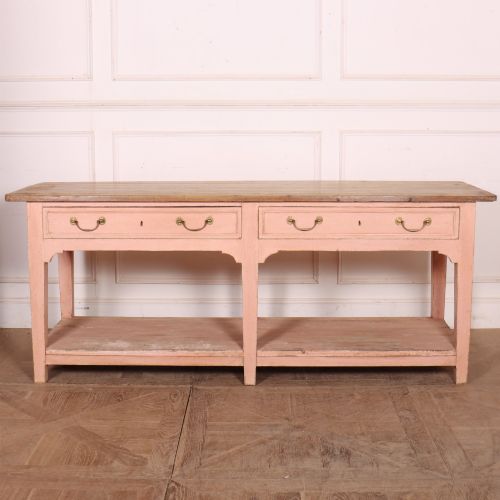
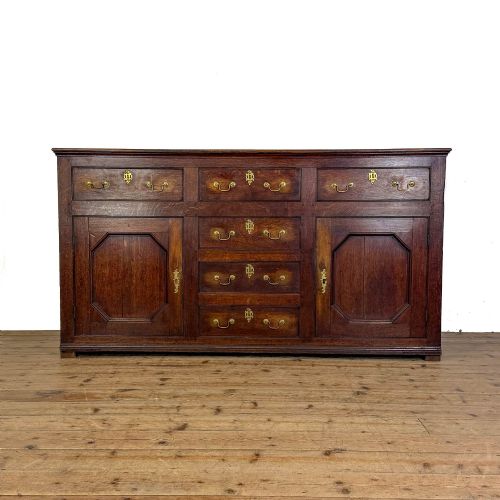
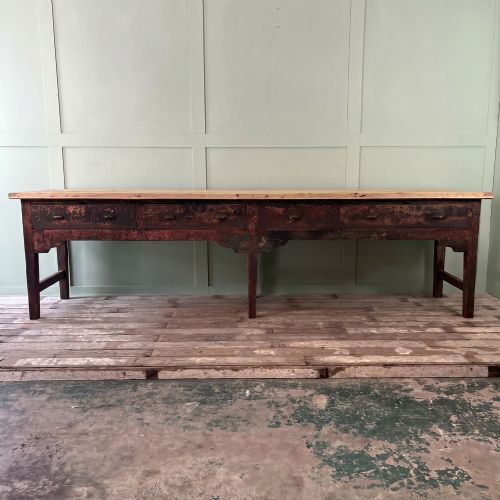
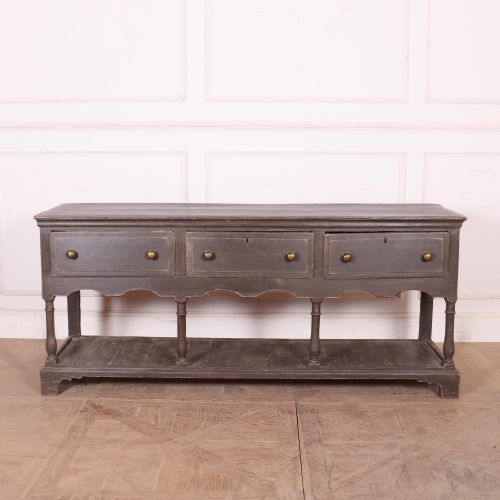
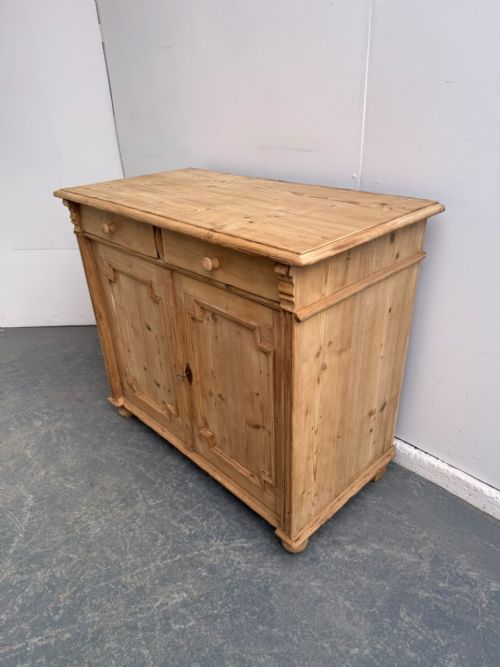
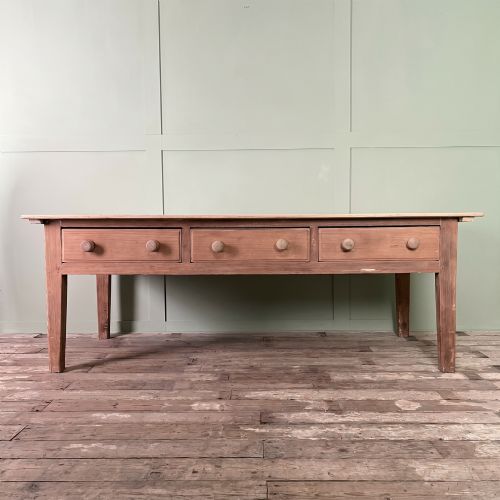
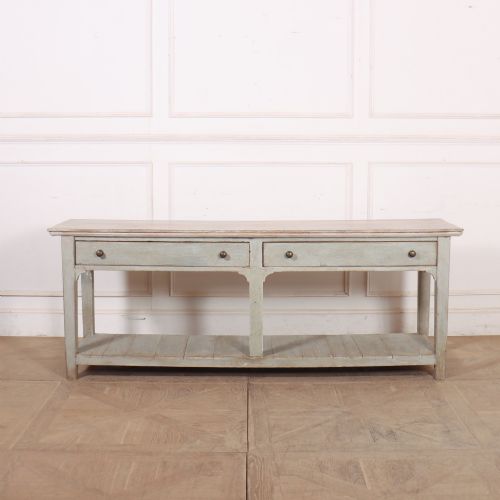
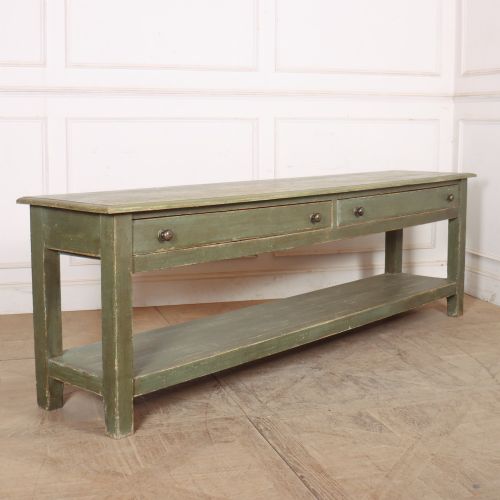
A georgian kitchen server typically takes the form of a heavy oak or pine dresser base, serving table, or potboard sideboard designed for heavy daily use. You will most frequently encounter English and Welsh regional pieces dating from the eighteenth and nineteenth centuries.
These items range from simple rustic country work tables to grander George II and George III potboard dressers featuring multiple drawers. The primary function centres on food preparation and storage, making them deep, low-slung surfaces suited to contemporary kitchens or dining rooms.
Materials and Construction
Construction relies heavily on native timbers such as oak, pine, and sycamore, chosen for durability and availability in English and Welsh workshops. Joinery is straightforward and robust, utilising pegged tenons and thick timber boards designed to withstand heavy domestic labour.
Surface treatments vary from bare waxed wood to historic painted finishes in various colours, reflecting generations of utilitarian upkeep. Metal hardware is typically utilitarian brass or iron, kept minimal to serve practical rather than decorative ends.
Many surviving servers bear generations of flour dust deeply embedded in their scrubbed pine grain.
Judging the Standard
Quality rests upon the integrity of the timber and the preservation of original surfaces, whether unpolished oak or early painted finishes. Thick planks, minimal timber replacement, and untouched structural joints distinguish better examples from heavily restored pieces.
Proportion and regional character dictate desirability, with well-balanced drawer arrangements and open potboard lower tiers commanding greater attention. The presence of original backboards, brass handles, and authentic wear marks adds distinct character to superior items.
The Georgian Kitchen Server Glossary
- Potboard dresser base
- A low sideboard or table featuring an open lower shelf traditionally used for storing pots and pans. This lower tier sits just above the floor on sturdy legs.
- Chiffonier sideboard
- A compact low cabinet or sideboard with drawers and doors developed during the Regency period. These pieces offer enclosed storage compared to open potboards.
- Dairy prep table
- A heavy utilitarian table constructed from scrubbed timbers like sycamore and pine. These surfaces were built specifically for food handling and dairy work.
- Geometric carvings
- Shallow decorative incisions carved into drawer fronts or panels, often seen on seventeenth and eighteenth-century oak furniture. These patterns add subtle texture without complex moulding.
Georgian Kitchen Server: Frequently Asked Questions
How do I clean a pine server?
Clean unpainted pine surfaces with a damp cloth and mild soap, avoiding harsh chemical strippers that ruin the patina.
Apply a traditional beeswax polish occasionally to nourish the dry timber and protect against everyday moisture.
Can I use these in modern kitchens?
These servers function exceptionally well as kitchen islands or prep stations thanks to their deep timber tops.
Ensure hot pans are placed on trivets to protect the historic wax or paint finishes from heat damage.
What is a potboard base?
A potboard base is an open-bottomed table or dresser base featuring a low shelf near the floor.
This shelf provides sturdy storage for heavy kitchenware and adds structural stability to the overall frame.
How do I spot an 18th-century piece?
Look for hand-planed surfaces, pegged mortise and tenon joints, and native timbers like quartersawn oak.
Construction details on older items often reveal irregular board widths and handmade iron or brass fixings.