





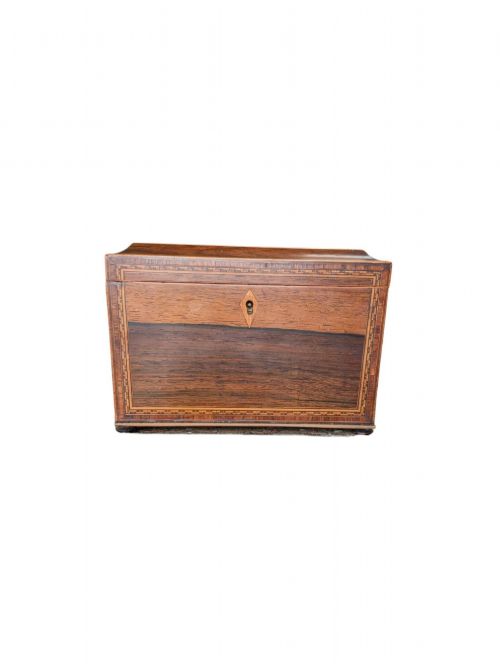


Georgian Inlay Caddy Box
A georgian inlay caddy box brings cabinet-maker refinement to the tea table, storing precious leaves in satinwood, mahogany, and rosewood.
Georgian Inlay Caddy Box
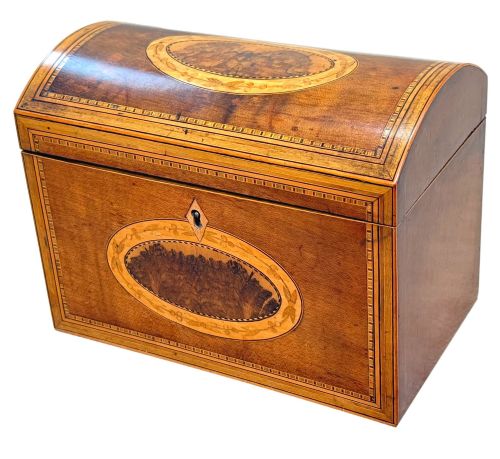
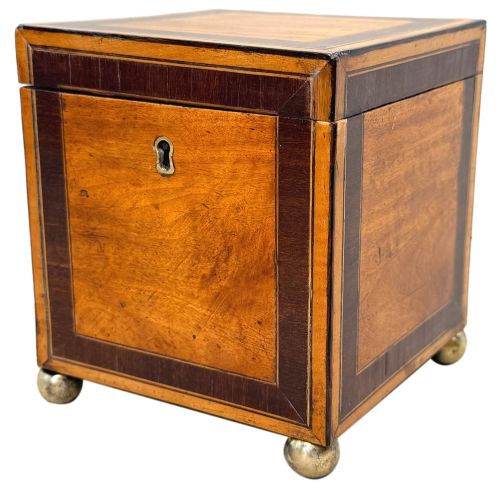
A georgian inlay caddy box is a small lidded container designed to hold dried tea leaves securely under lock and key. These pieces span the eighteenth century, the regency era, and into the nineteenth century, reflecting changing domestic habits around tea consumption.
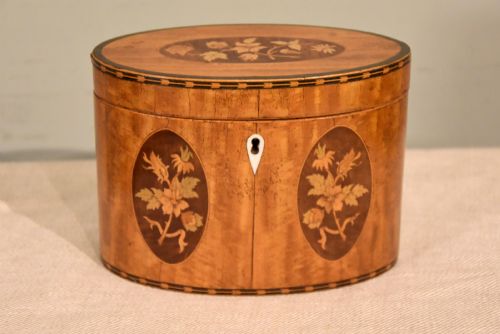
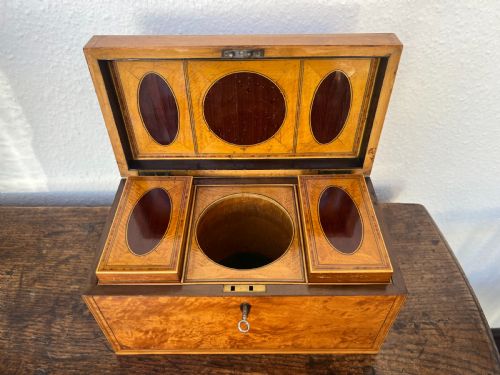
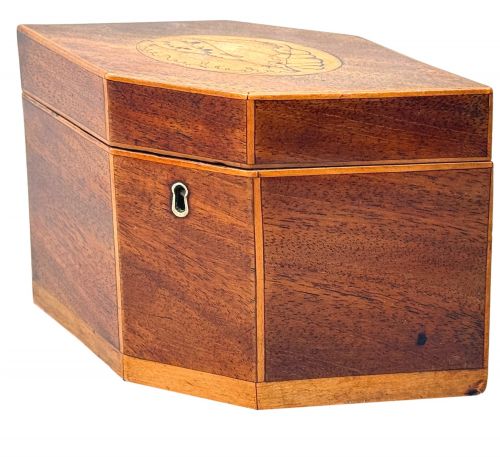
The versions most commonly met on this page are rectangular, oval, or hexagonal boxes fashioned from dense hardwoods. Many display geometric stringing, shell motifs, or butterfly patterns set into contrasting veneers.
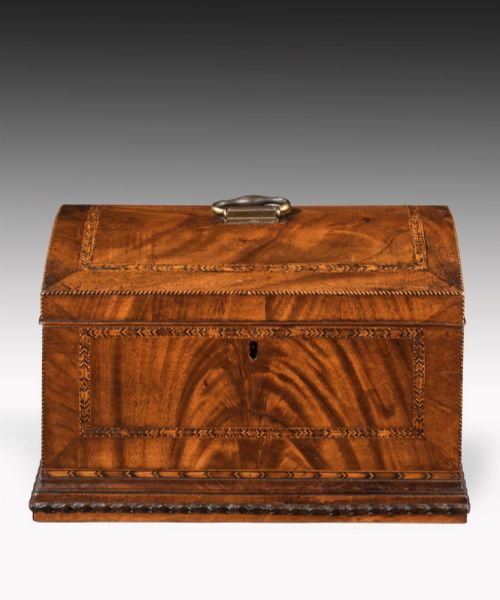
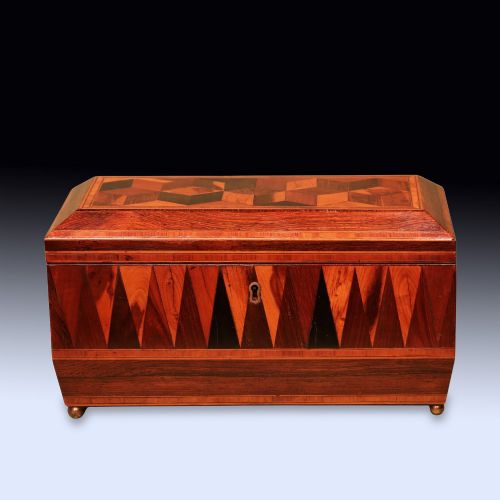
Makers shaped these containers as sarcophagus caddies, domed boxes, and small teapoys, often dividing the interior for different leaf varieties.
Materials and technique
Cabinet-makers constructed these boxes using structural carcases of mahogany or pine, overlaid with decorative veneers of satinwood, rosewood, harewood, and yew. Precision sawing allowed exotic timbers to be sliced thinly for external decoration.
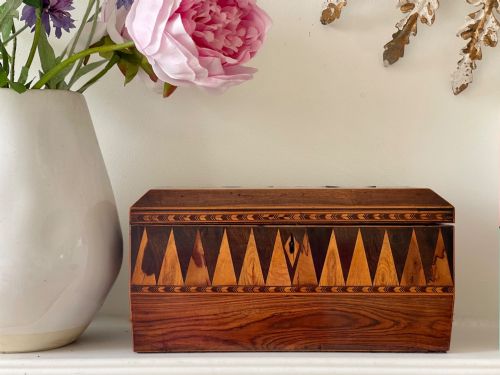
Inlay techniques included stringing, parquetry, and marquetry, alongside delicate Tunbridge ware mosaic work and brass banding. Craftsmen contrasted dark woods with pale boxwood and bone to create crisp geometric or pictorial panels.
Georgian Inlay Caddy Box Retail Price Guide 2026
Typical asking prices for georgian inlay caddy box among the pieces listed under this phrase on Sellingantiques today, from the lower quarter to the upper quarter. They describe what is for sale here now, not the wider market.
Listings feature woods including satinwood, rosewood, burr yew, harewood, and partridge wood across the eighteenth and nineteenth centuries.
Judging the work
Quality rests upon the crispness of the inlay and the selection of figured timber veneers. Grain alignment and the subtle gradation of shaded woods demonstrate superior cabinet-making.
Internal arrangements, such as original mixing bowls, fitted compartments, and working locks with functional keys, elevate the standing of a piece. The survival of polished brass handles and lion mask mounts indicates higher workshop standards.
The Georgian Inlay Caddy Box Glossary
- Sarcophagus form
- A box shape featuring a sloping lid and a stepped, flared body reminiscent of a stone coffin. This architectural style gained popularity during the regency period.
- Stringing
- Thin lines of contrasting wood inlaid into channels cut into the surface of the box. It frames panels and outlines the edges of lids.
- Marquetry
- Elaborate veneer patterns forming pictorial or abstract designs using various coloured woods. Craftsmen cut multiple layers simultaneously to fit pieces together precisely.
- Tunbridge ware
- Small items decorated with intricate geometric mosaics made from thousands of tiny wood blocks. The technique originated in Kent during the eighteenth century.
- Teapoy
- A small stand or large caddy fitted with internal compartments for storing tea. They often sat beside a chair or sofa in the drawing room.
Georgian Inlay Caddy Box: Frequently Asked Questions
What is a georgian inlay caddy box?
It is a decorative wooden container built to store expensive tea leaves during the eighteenth and early nineteenth centuries. These boxes feature intricate wood inlays like satinwood, harewood, and shell motifs.
Inside, the space was often divided into lidded compartments to keep black and green teas separate and aromatic.
How were these boxes used?
Tea was a costly commodity in the Georgian period, kept securely locked away by the mistress of the house. The key remained on her person to control consumption.
Servants brought the caddy to the parlour, where tea was measured out using small spoons before brewing.
How do I date a caddy box?
Stylistic clues and timber choices indicate the period of manufacture. Earlier eighteenth-century pieces often favour mahogany and simple satinwood ovals, while regency examples frequently use rosewood with brass inlay or sarcophagus shapes.
Interior construction methods and lock types also help narrow down the decade.
Are the interiors original?
Many retain their fitted wooden lids, foil linings, and sometimes glass mixing bowls. Replacements or alterations occurred frequently over centuries of domestic use.
Inspecting the interior woodwork reveals whether the dividing walls and compartments remain undisturbed.
How do I care for antique wood?
Keep wooden boxes away from direct sunlight and heat sources to prevent the veneers from lifting. Maintaining a stable room temperature protects the delicate inlay work.
Apply occasional appropriate wax polish to nourish the timber and preserve the historic finish.